US Army 4.5-Inch Siege Rifles at Chatham Manor
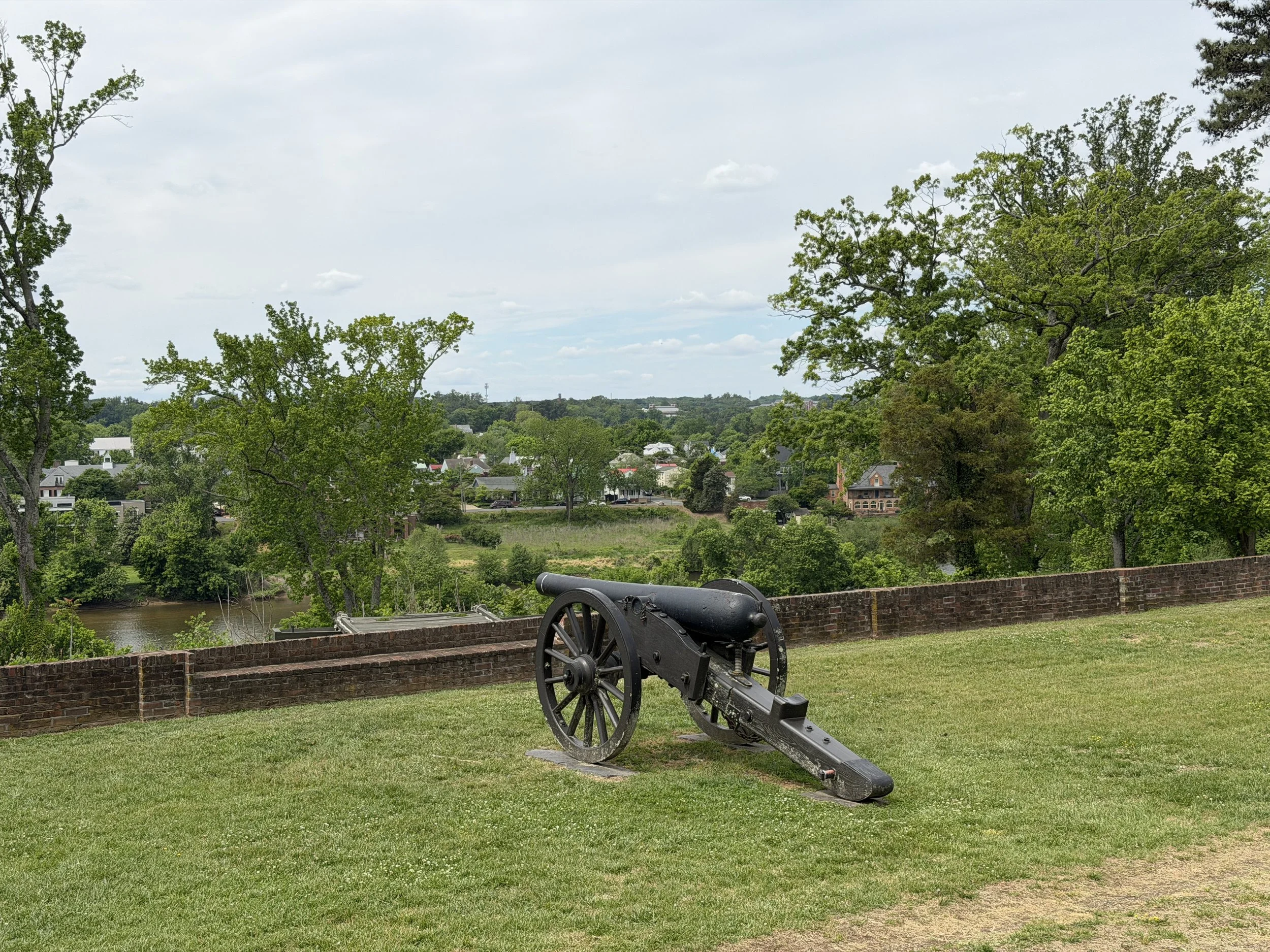
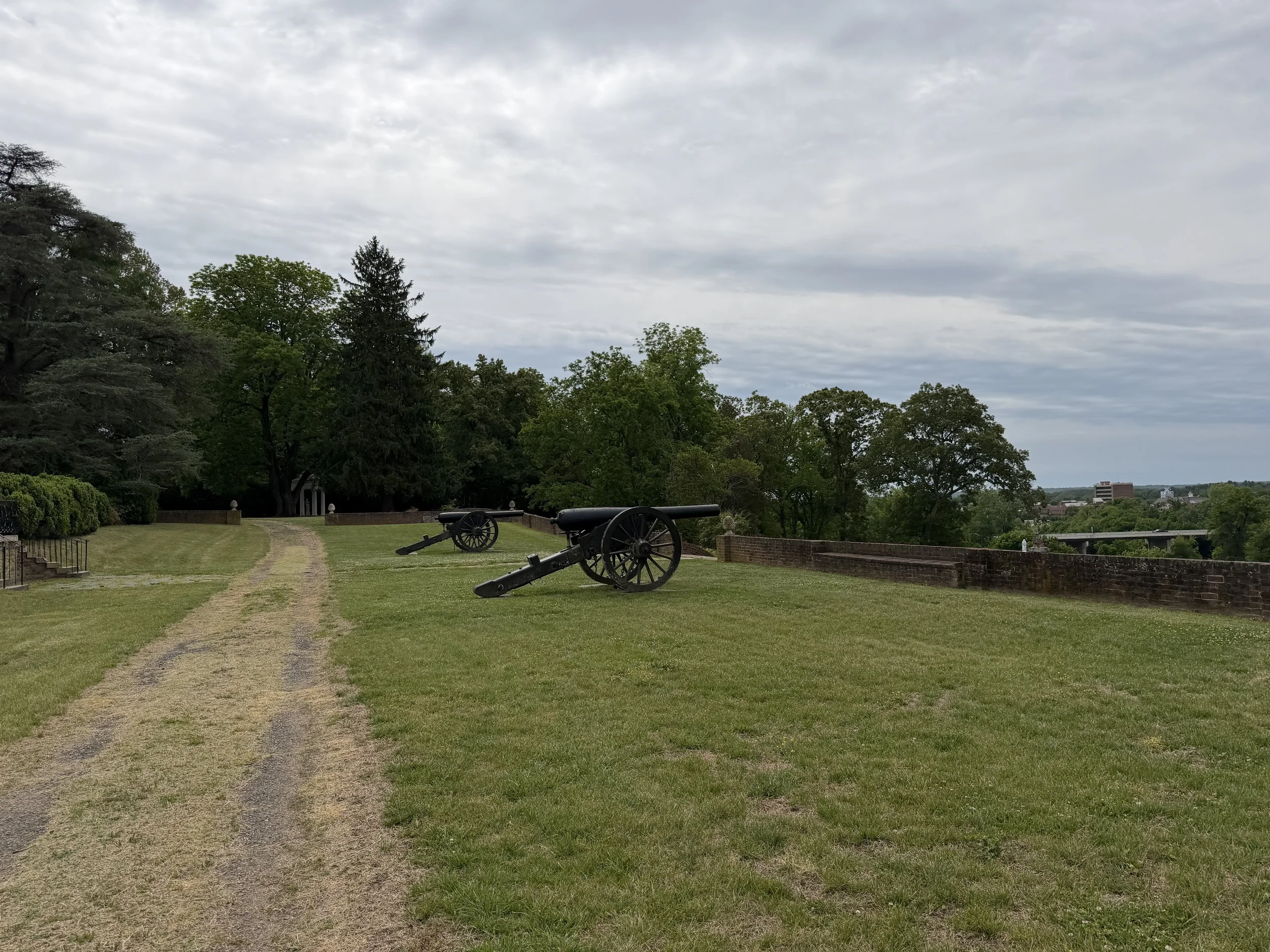
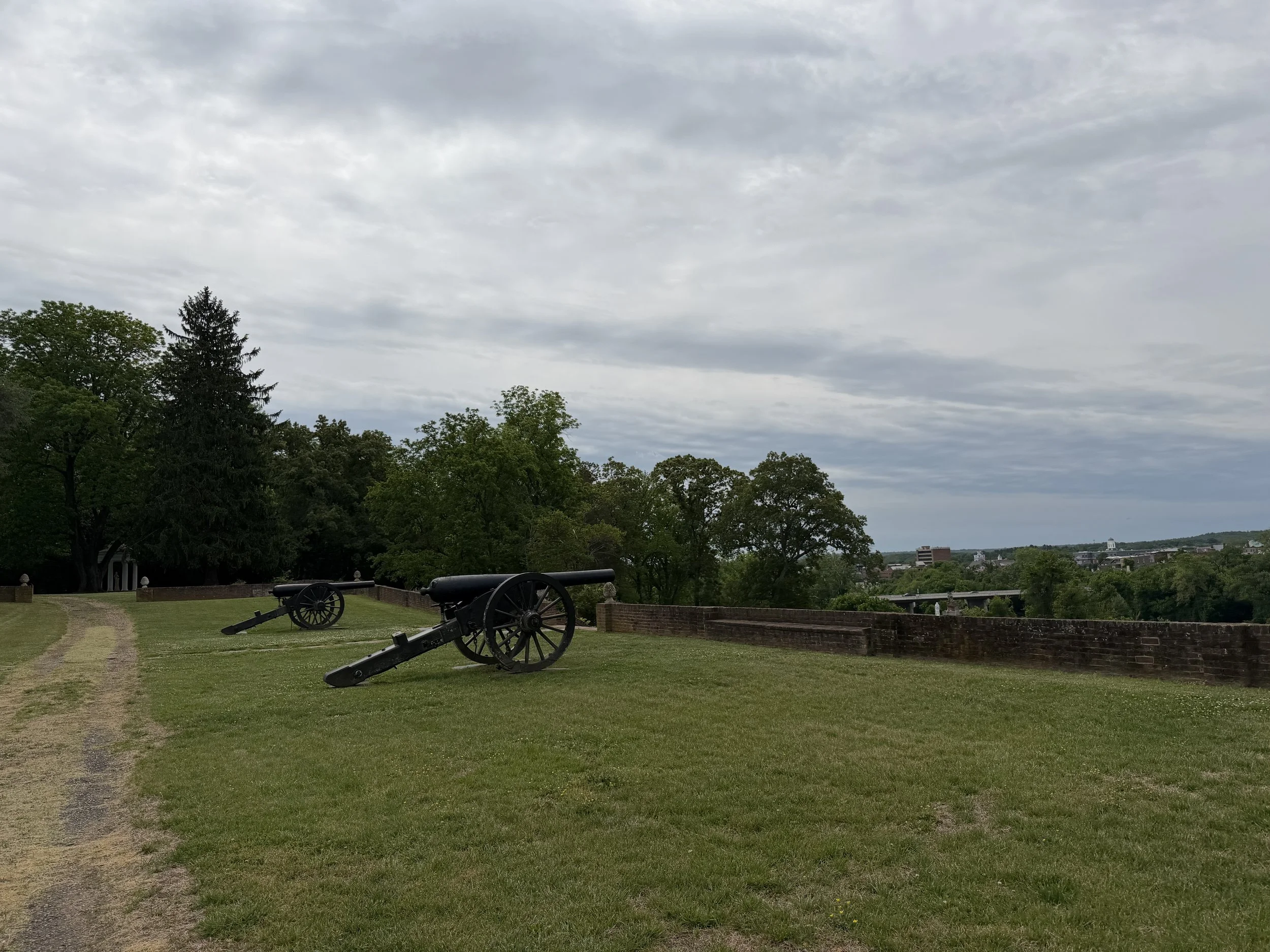
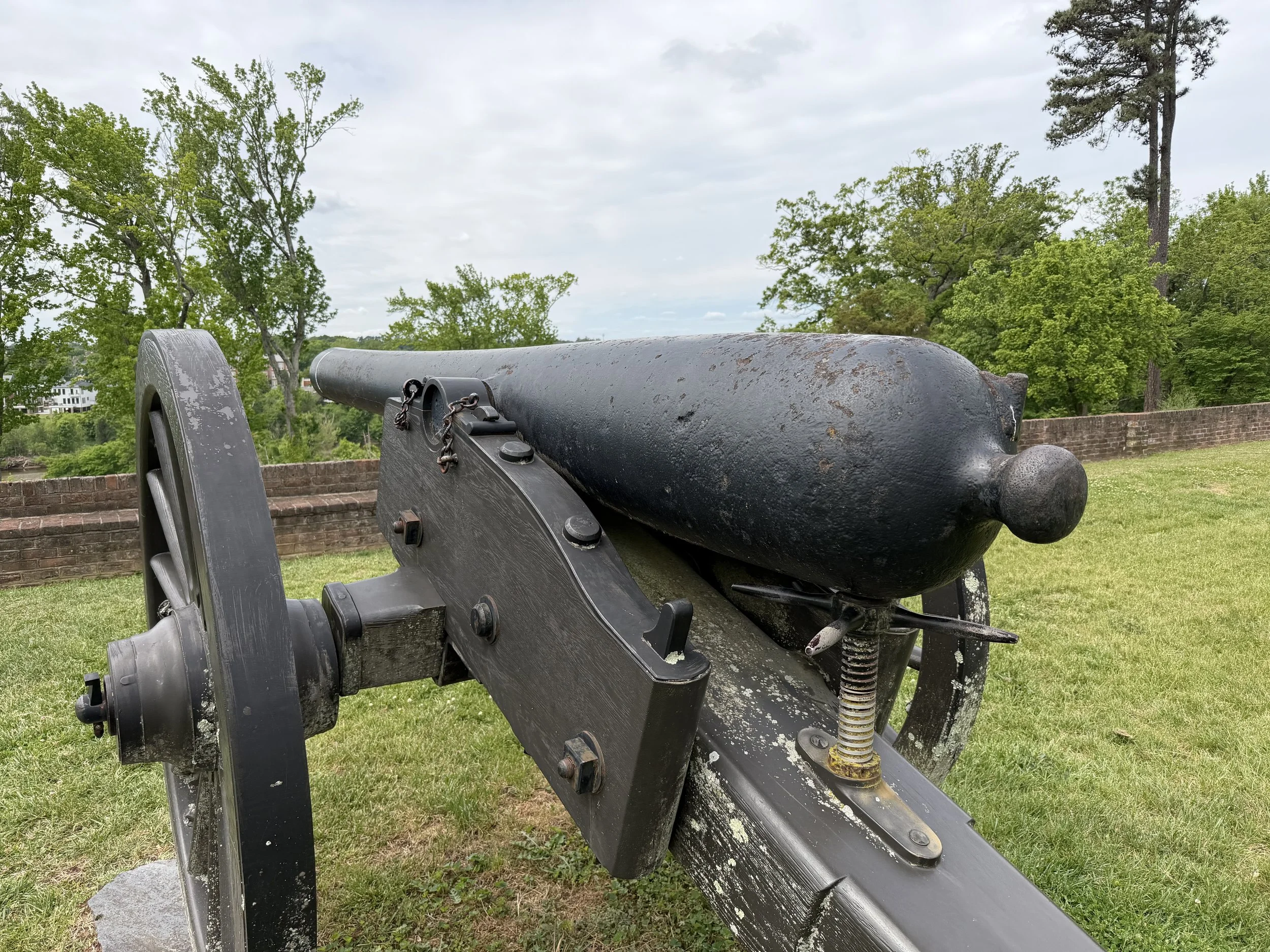
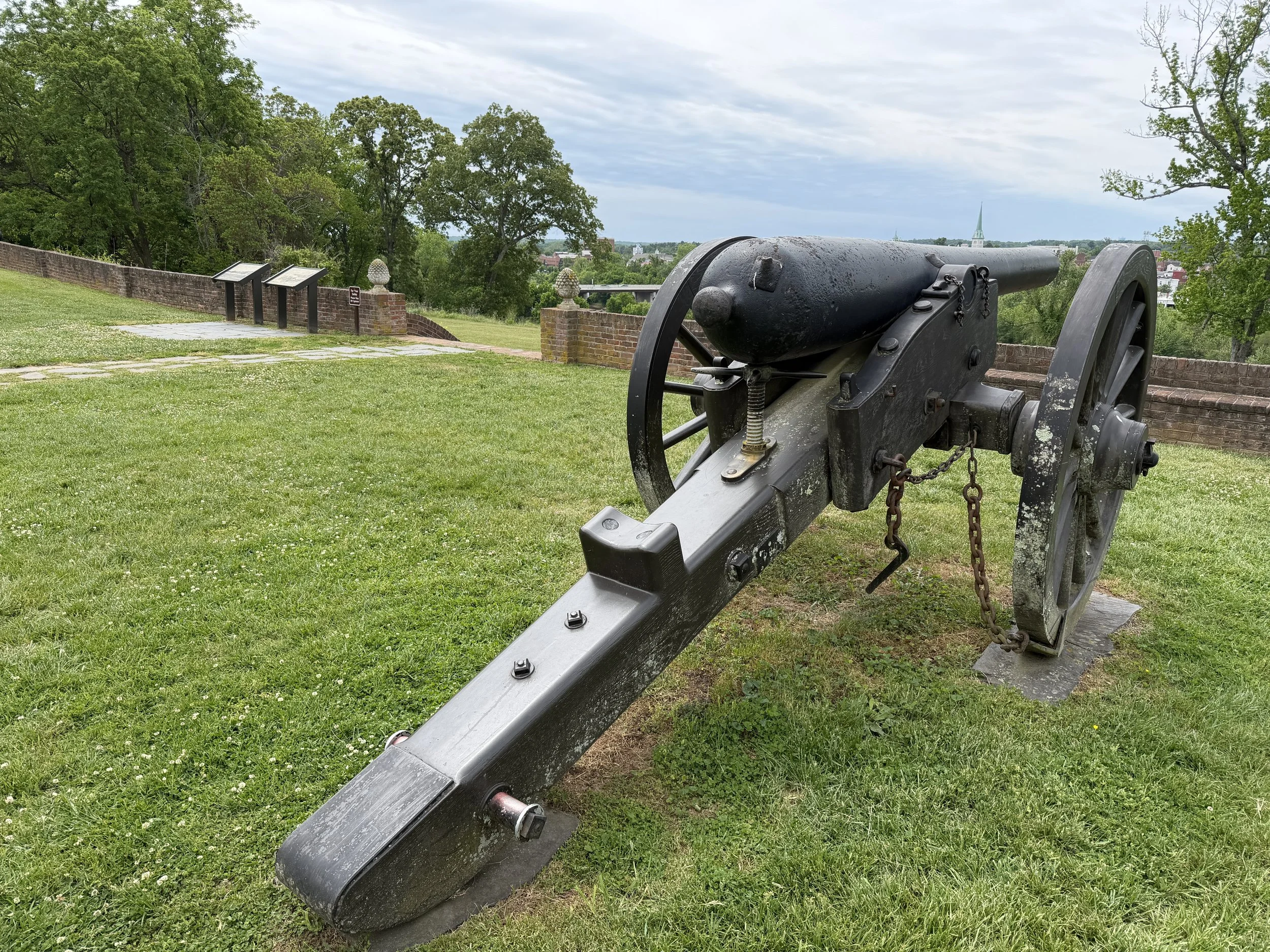
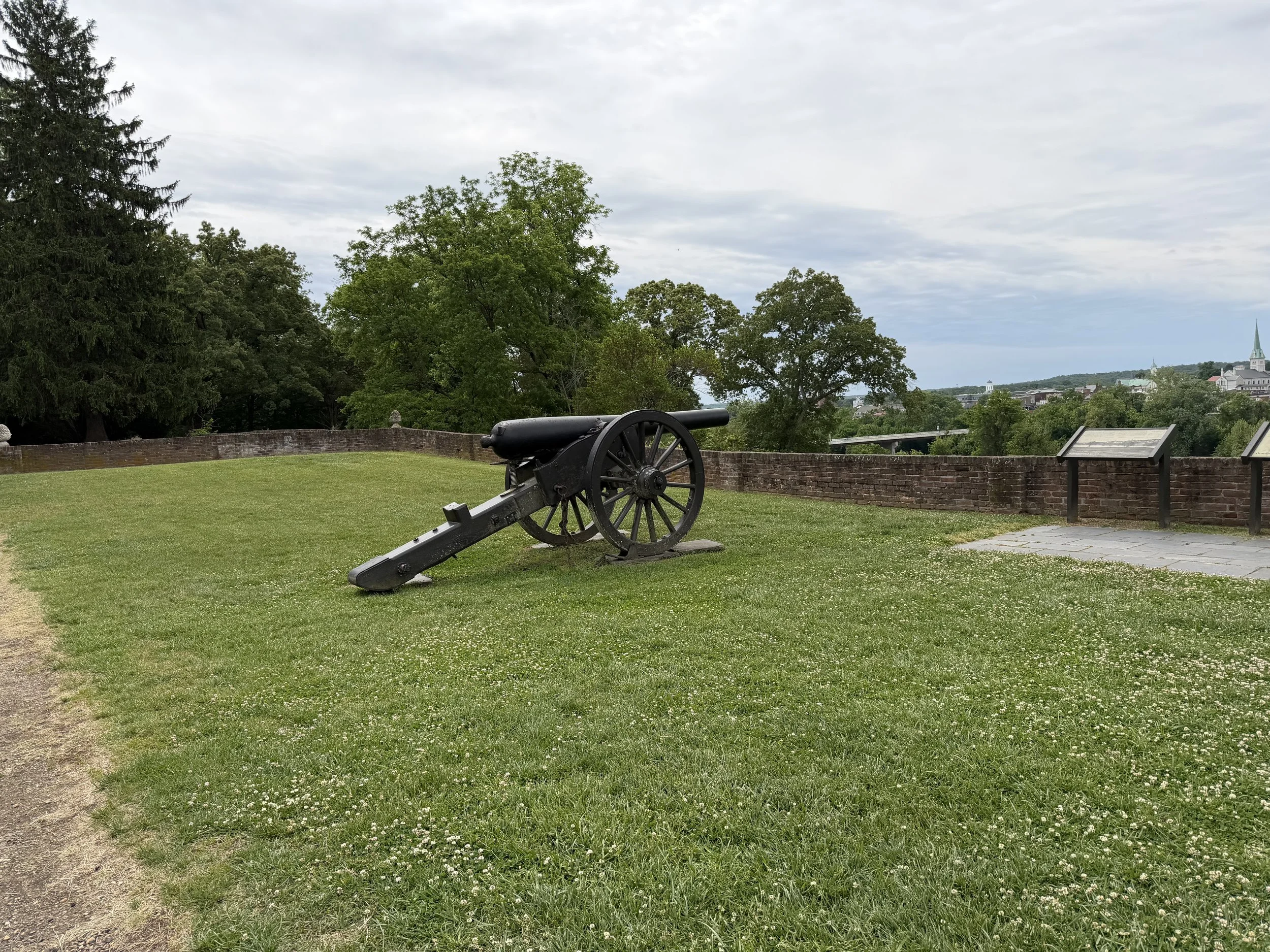
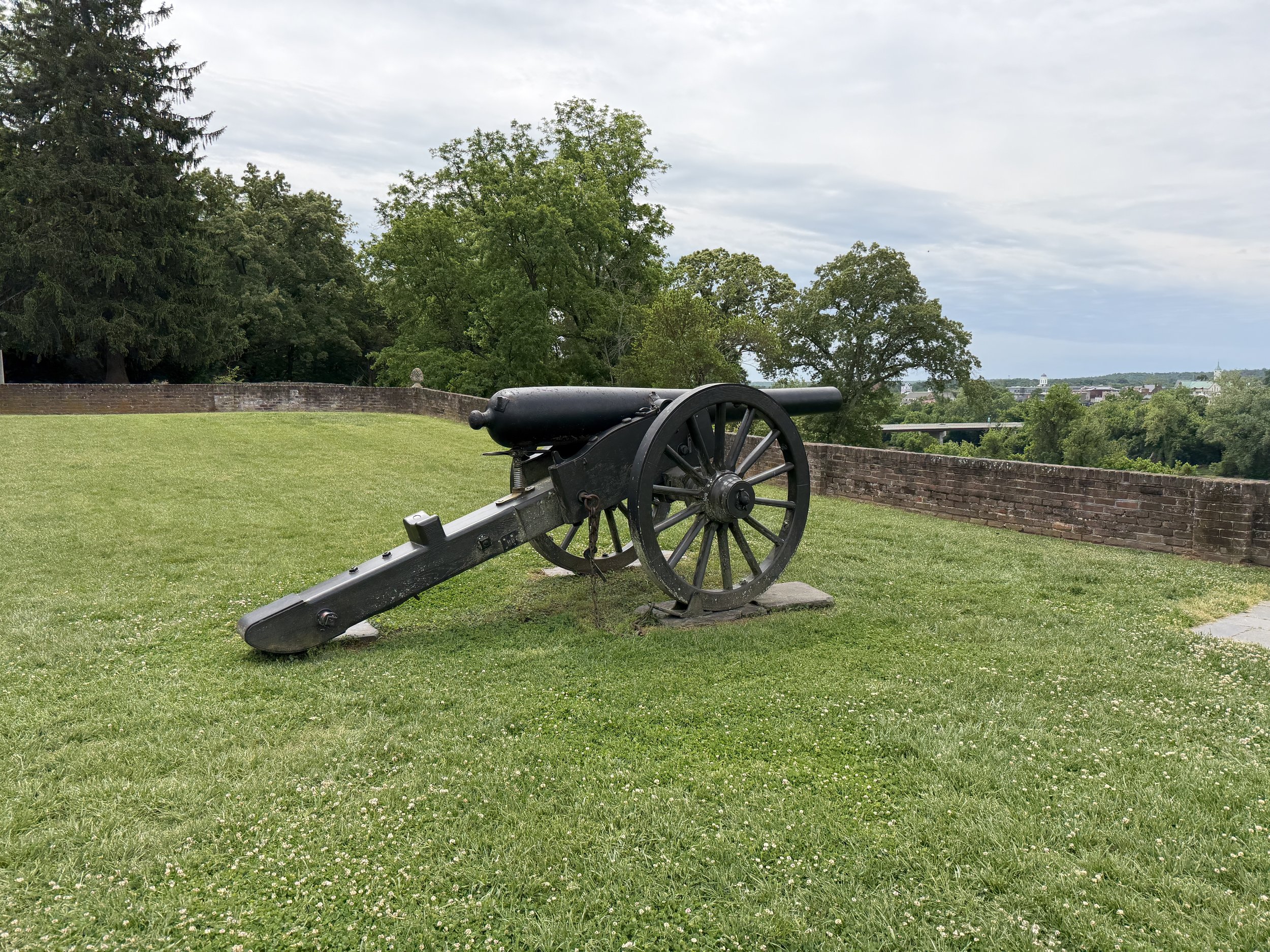
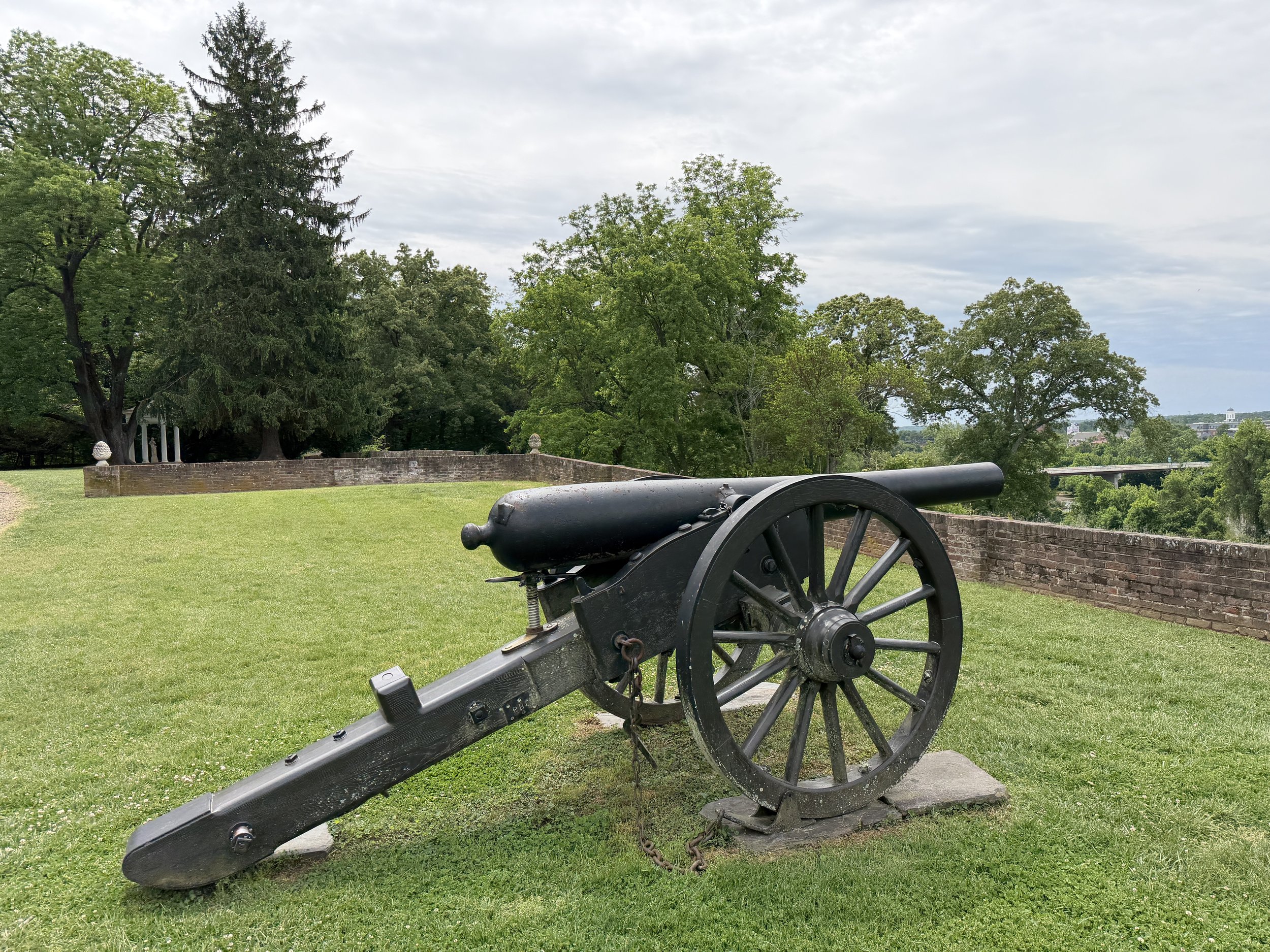
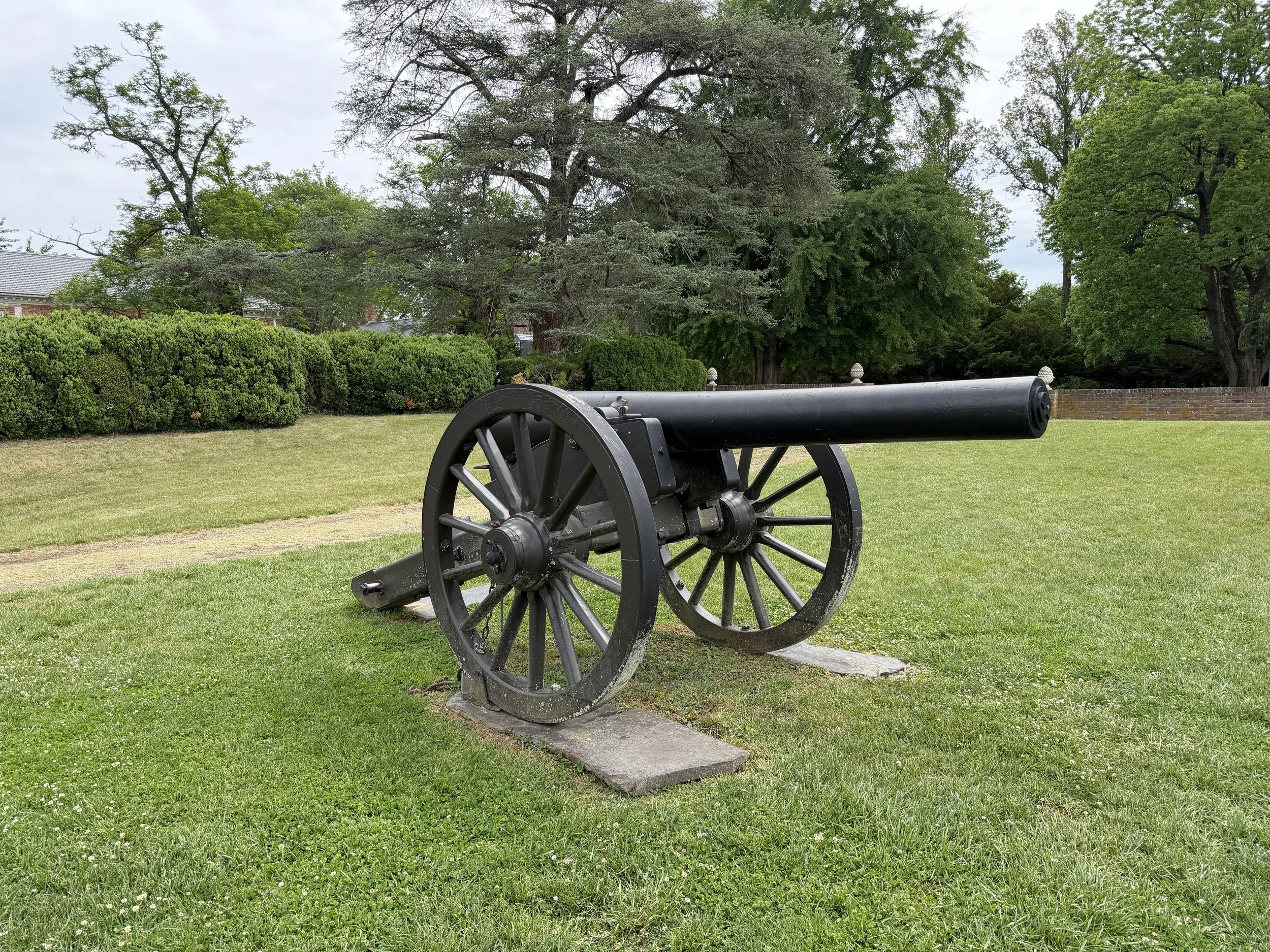
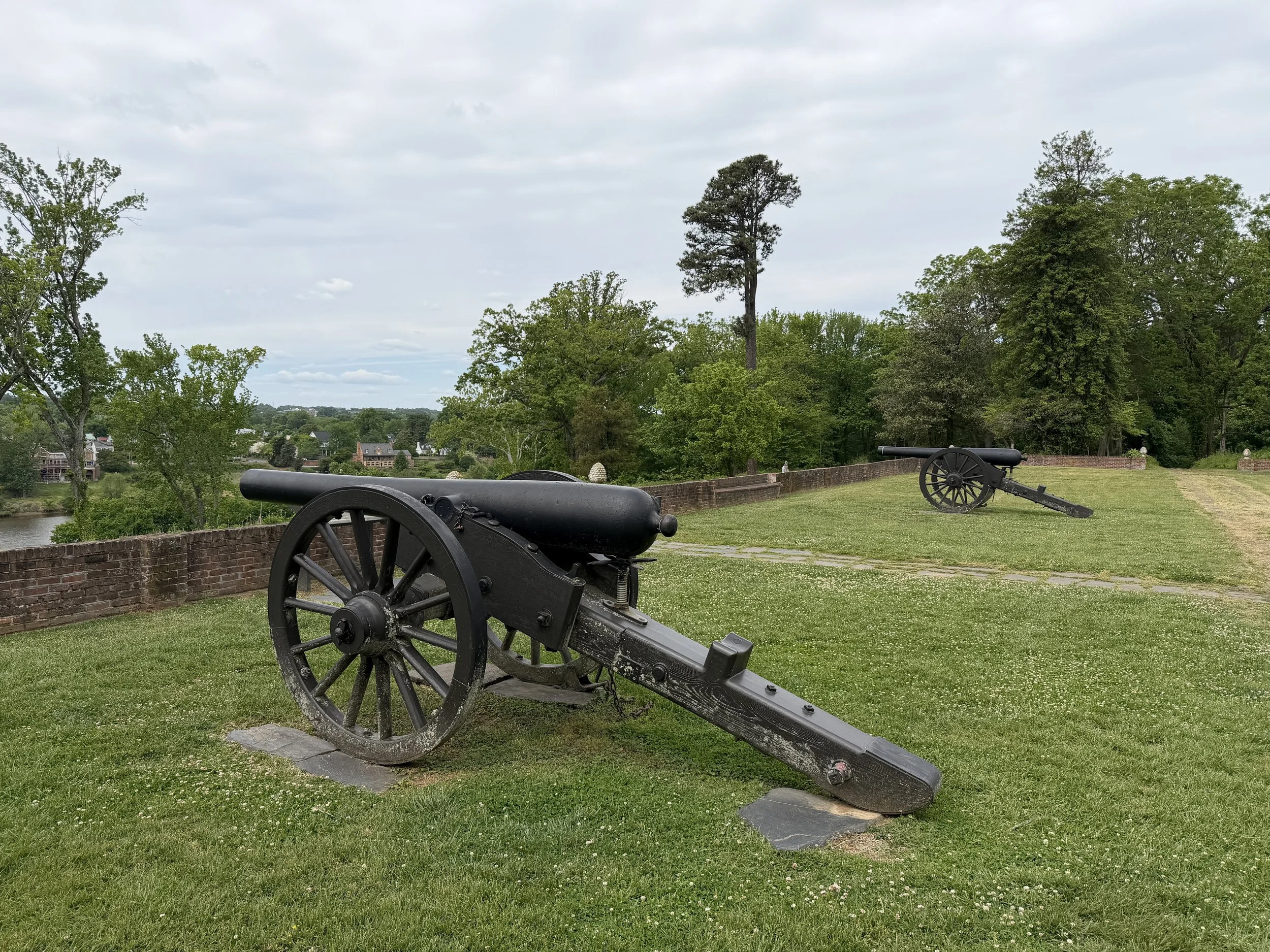
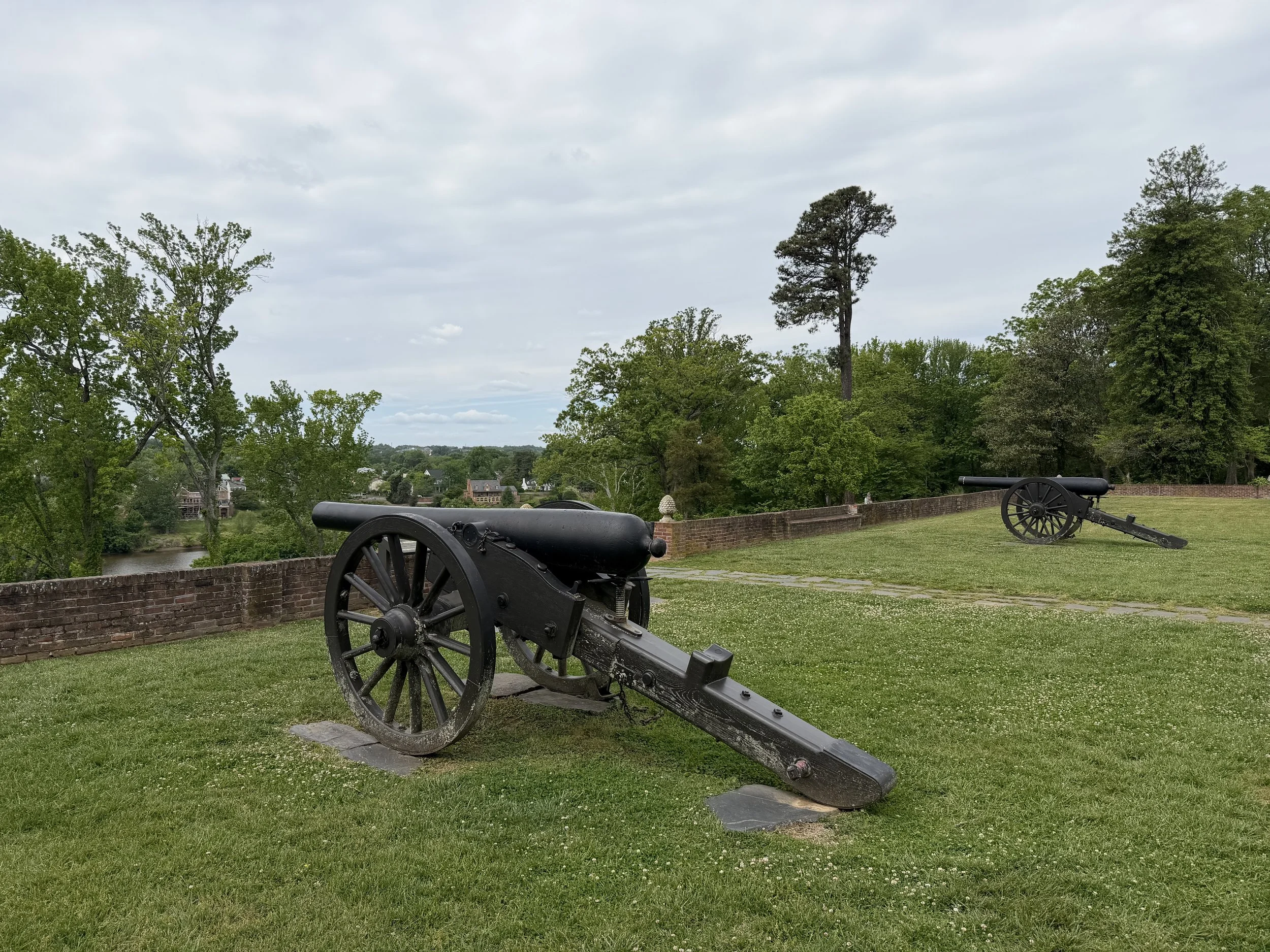
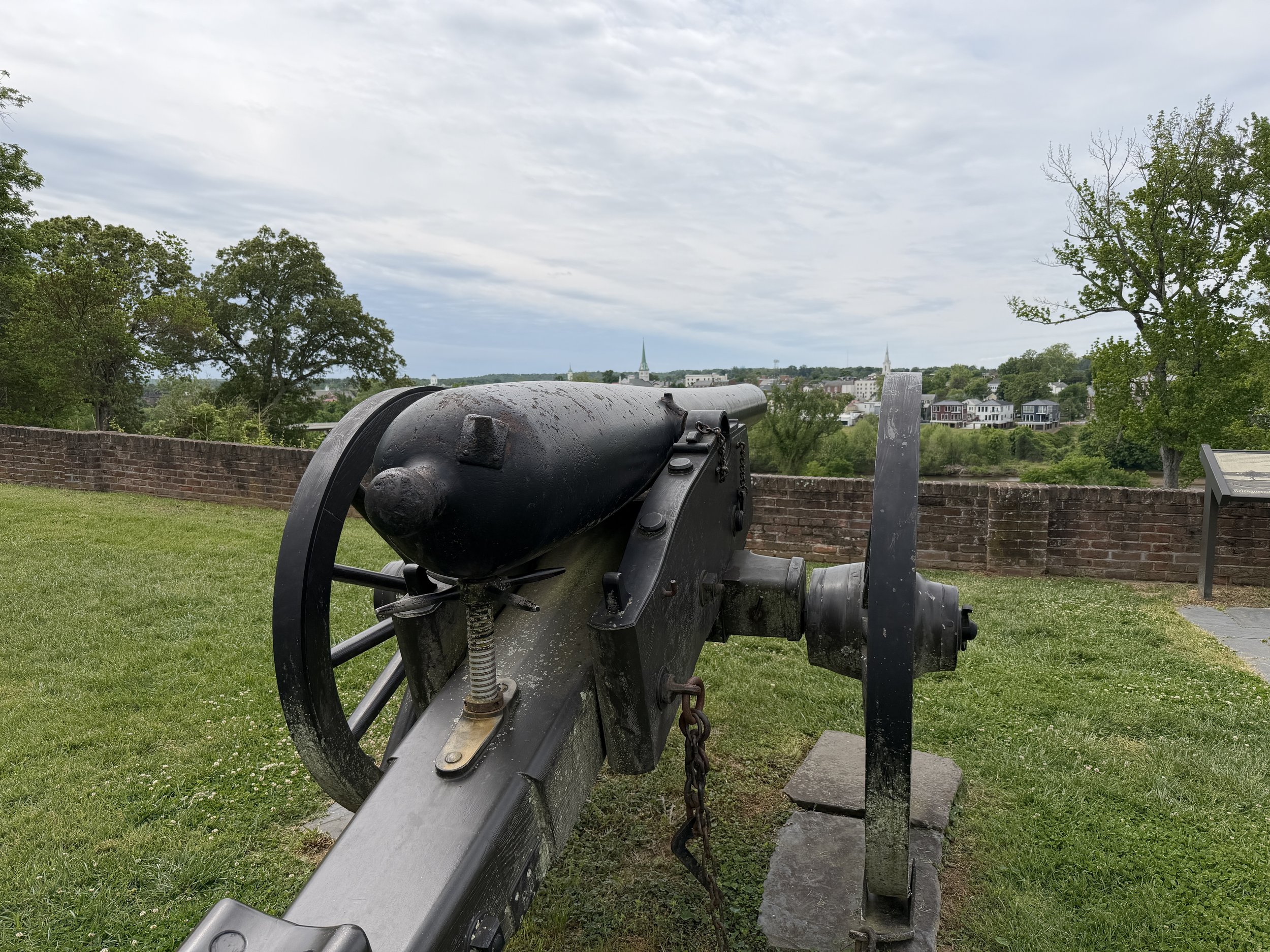
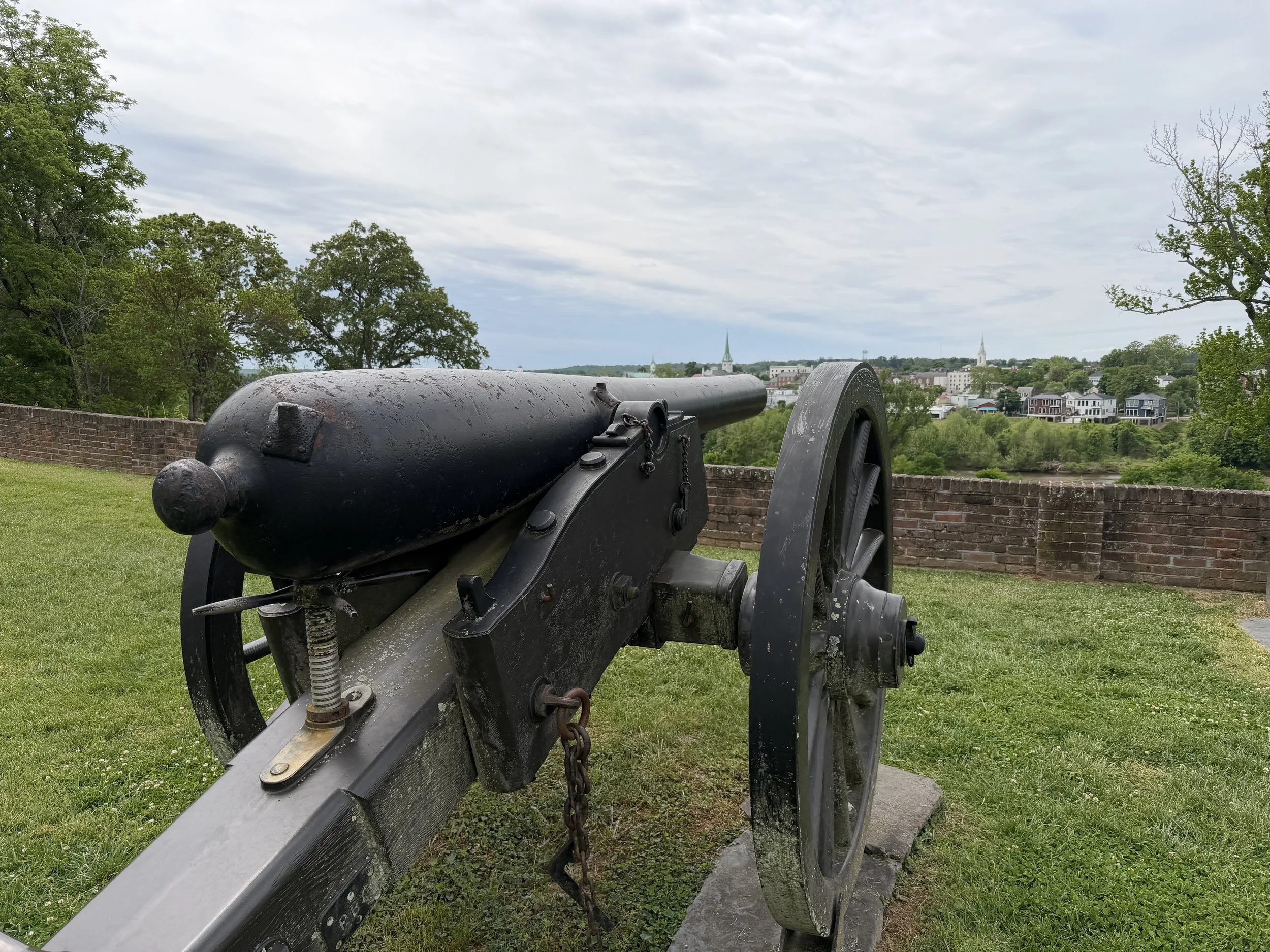
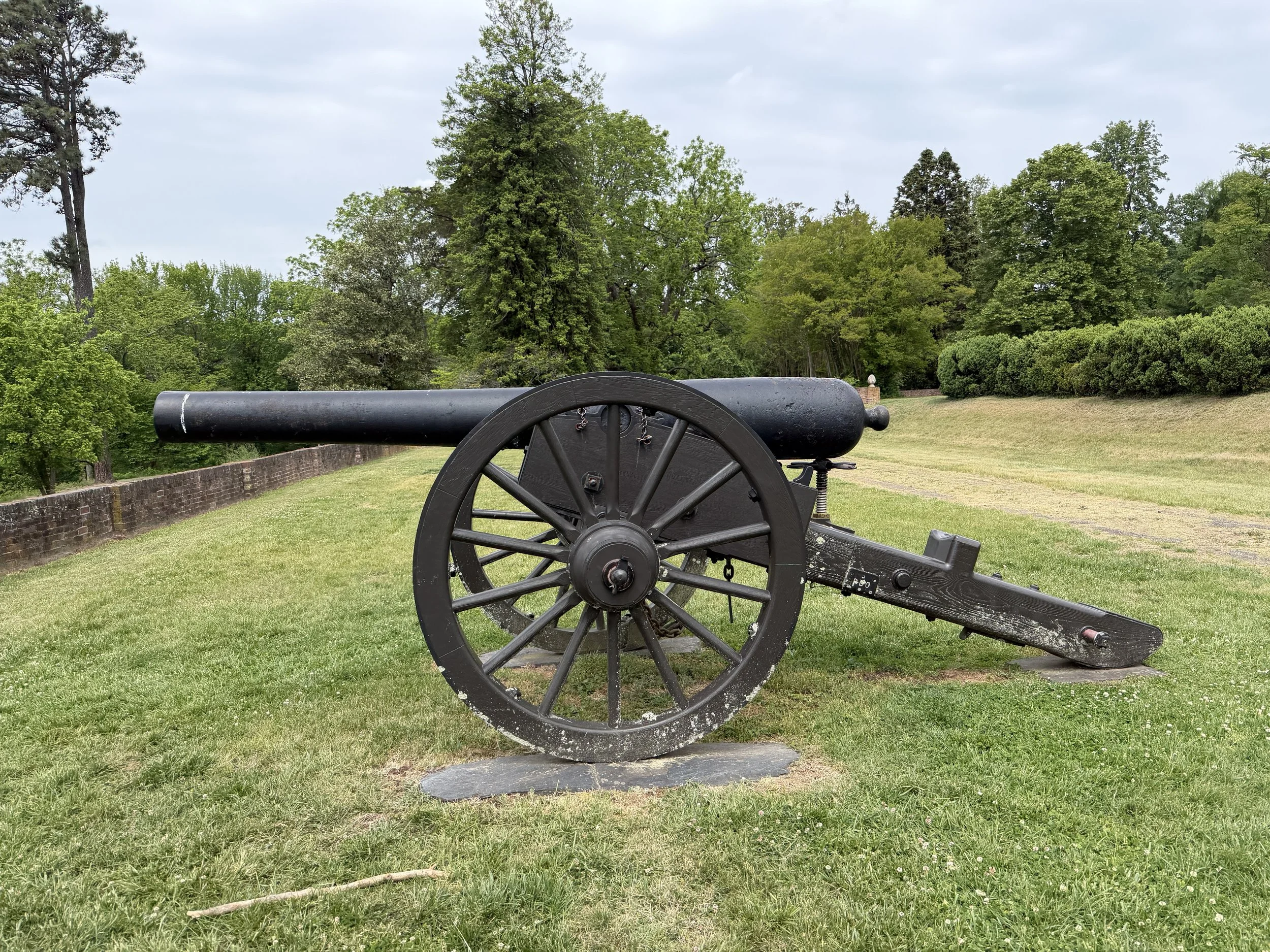
Two US Army 4.5-Inch Siege Rifles are displayed at Chatham Manor on the Rappahannock River across from Fredericksburg
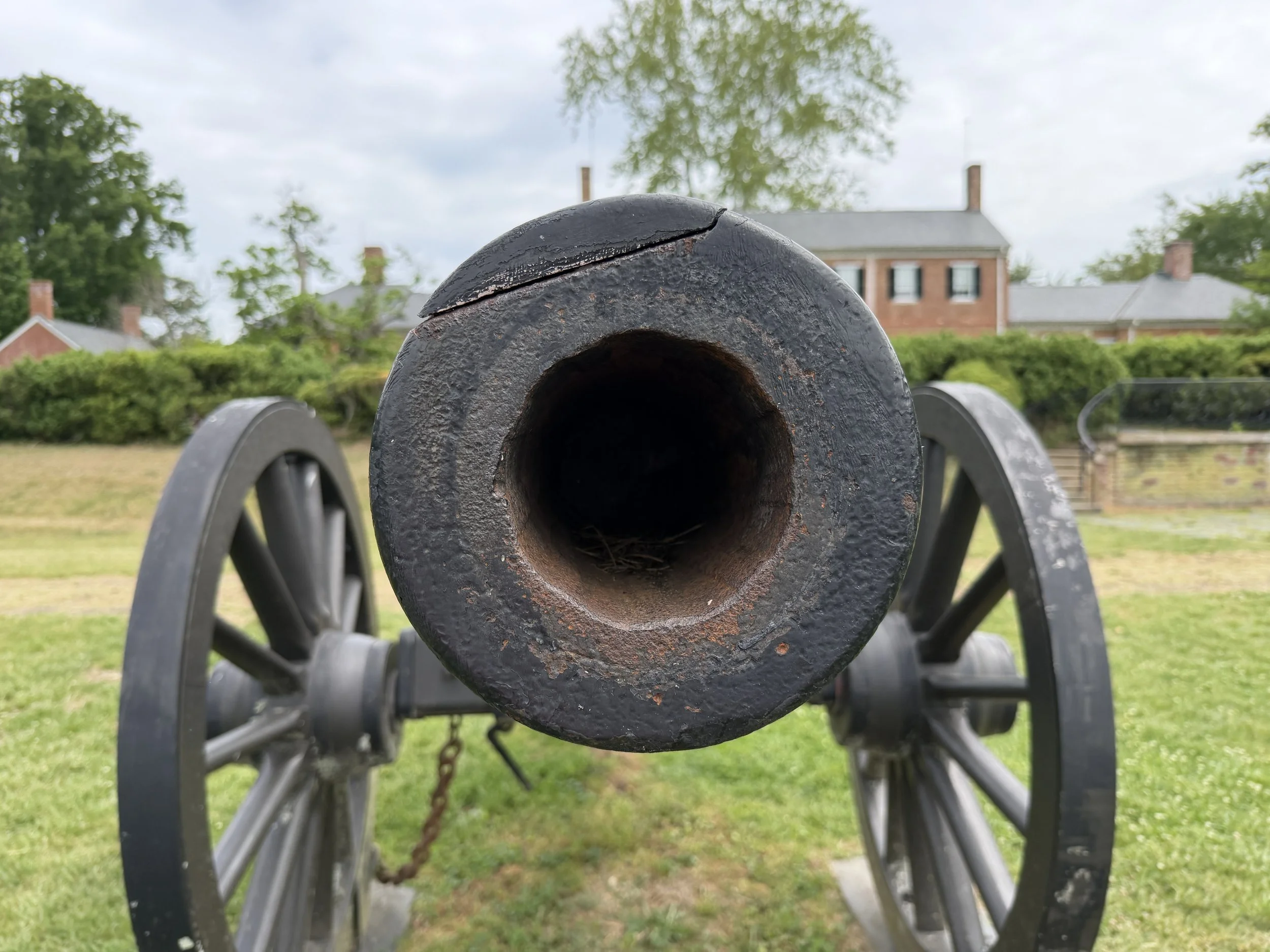
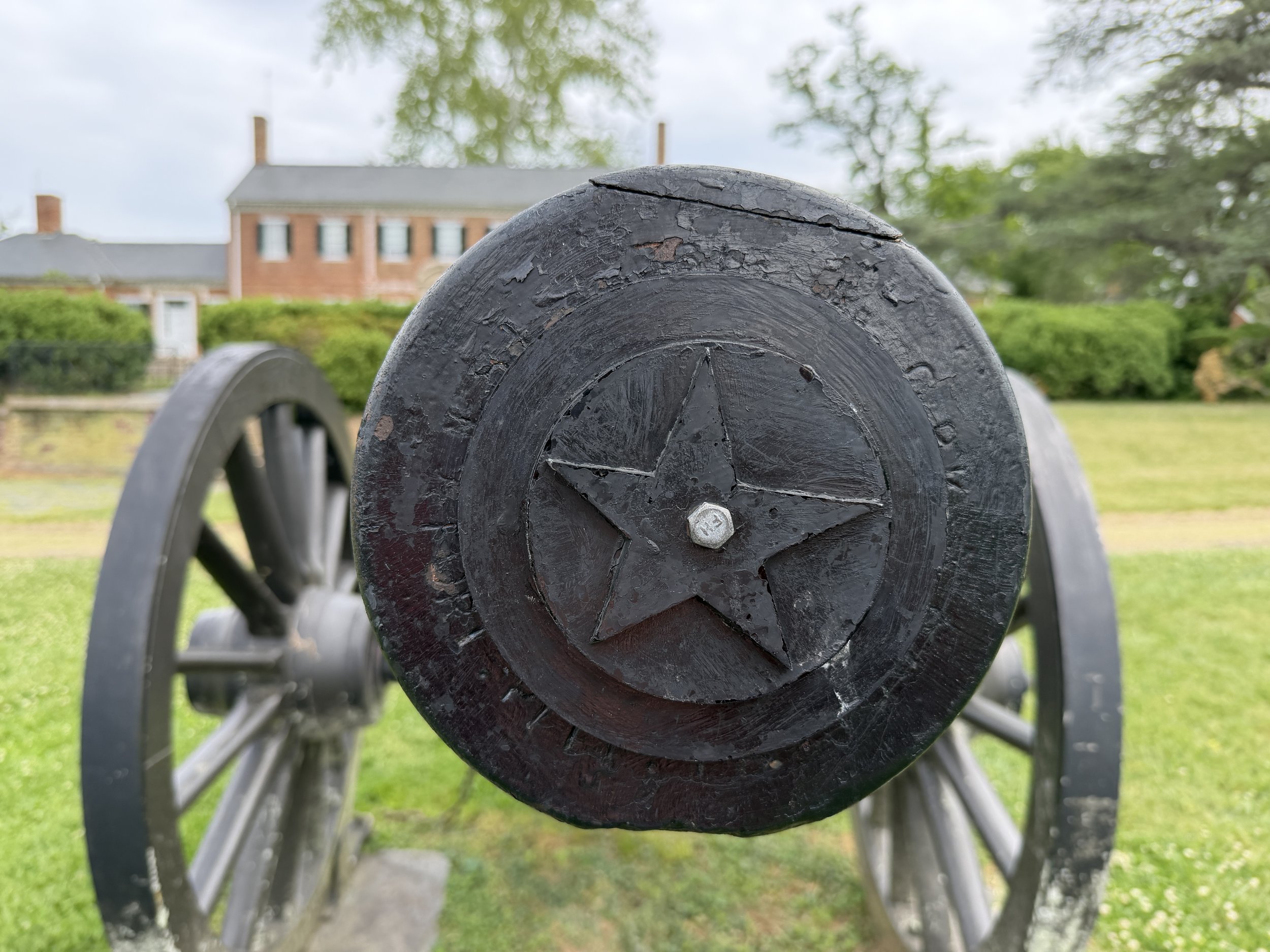
Two US Army 4.5-Inch Siege Rifles are displayed at Chatham Manor on the Rappahannock River across from Fredericksburg. According to Olmstead et al., the two are:
US Army 4.5-Inch Siege Rifle, Pattern 1861, Number 81 manufactured at Fort Pitt Foundry in 1863. Weight as Manufactured 3,616 pounds.
US Army 4.5-Inch Siege Rifle, Pattern 1861, Unknown Number (damaged at muzzle).
The display of these two 4.5-Inch Rifles recalls a war time photo of a battery of three of the type limbered but in position overlooking Fredericksburg. Three 4.5-Inch Siege Rifles were deployed as part of the US Army’s artillery support during the Battle of Fredericksburg in December, 1862. The three rifles of Battery B, 1st Connecticut Artillery were the heaviest guns in the Union line - the rest of the deployed artillery being field pieces the largest of which were 20-Pounder Parrotts (OR. Ser. 1. Vol. 21. Pg. 181).
Chatham Manor was completed in 1771. During the Battle of Fredericksburg, it was used as a headquarters by the US Army. Following the battle, “Chatham’s stately rooms were transformed into a field hospital. Clara Barton, Mary Walker, and Walt Whitman served in the hospital at Chatham, caring for sick and wounded soldiers” (National Park Service Website).
Three US Army 4.5-Inch Siege Rifles overlook Fredericksburg. While they are limbered to move, they are emplaced upon wooden beds. Library of Congress Photo: https://www.loc.gov/item/2018671498/
The Type: The US Army 4.5-Inch Siege Rifle resembles the smaller 3-Inch Ordnance Rifle in outward form. Unlike the smaller wrought-iron field piece, the 4.5-Inch Rifle was manufactured in cast iron at Fort Pitt Foundry. Also unusual among purpose-designed cast iron rifles of the American Civil War, it lacks a reinforcing band. Ripley notes that the piece was sometimes distrusted by artillerymen as the trial gun went to pieces after only eight hundred rounds in testing and that the piece “as issued was not bouched, a neglect which resulted in rapid erosion around the vent. On the other hand, bouching was relatively easy” (Ripley, pg. 164).
Brigadier General Henry L. Abbot who had commanded US Army artillery at Petersburg noted that the 30-Pounder Parrott was “preferred to the 4.5-Inch Ordnance Pattern by battery commanders who had used both.” Abbot listed three reasons: concerns about durability given the bursting of the trial gun, the quick erosion of the vent, and inferiority in accuracy to the Parrott with available projectiles. On the other hand, the 4.5-Inch Rifle was about 750 pounds lighter than the 30-Pounder Parrott and “more convenient to handle.” (Abbot, pg. 86.)
On the other hand, the 4.5-Inch Rifle was lauded for its mobility. Abbot wrote, “The two siege batteries of 4.5-inch Ordnance guns, which accompanied the Army of the Potomac in all its movements from Fredericksburg until the final crossing of the Rapidan, were of great use, from their superior range and accuracy, in silencing troublesome field batteries and in other field service; and could be moved with the reserve artillery without impeding the march of the army” (Abbot, pg. 124).
Indeed, the 4.5-Inch Rifle was compared favorably in terms of its mobility to the much lighter 20-Pounder Parrott Rifle (1,700 pounds). Captain F. A. Pratt of the 1st Connecticut Artillery wrote that the 4.5-Inch Rifles “are more readily moved than the 20-Pounder Parrott batteries whose weight is thrown on the rear axle (Abbot, pg. 154). And Brigadier General Henry Hunt, Commander of the Army of the Potomac’s artillery, noted that the 4.5-Inch Rifle required the same number of horses and and half the drivers as the 20-Pounder and was much more effective as an artillery piece (OR. Ser. 1. Vol. 21. pg. 189).
Post-war, the 4.5-Inch Siege Rifle was kept in service, being described as “In Service, Of the System” whereas the 30-Poudner Parrott was described as “In Service, Not of the System” in Tidball’s Manual of Heavy Artillery Service. Indeed, as late as the 4th Edition in 1891, the 4.5-Inch Rifle is described as the US Army’s siege rifle. The tables below come from that 1891 edition (they are unchanged from the 1879 Edition).