US Navy 32-Pounder of 41 Hundredweight in Washington, North Carolina
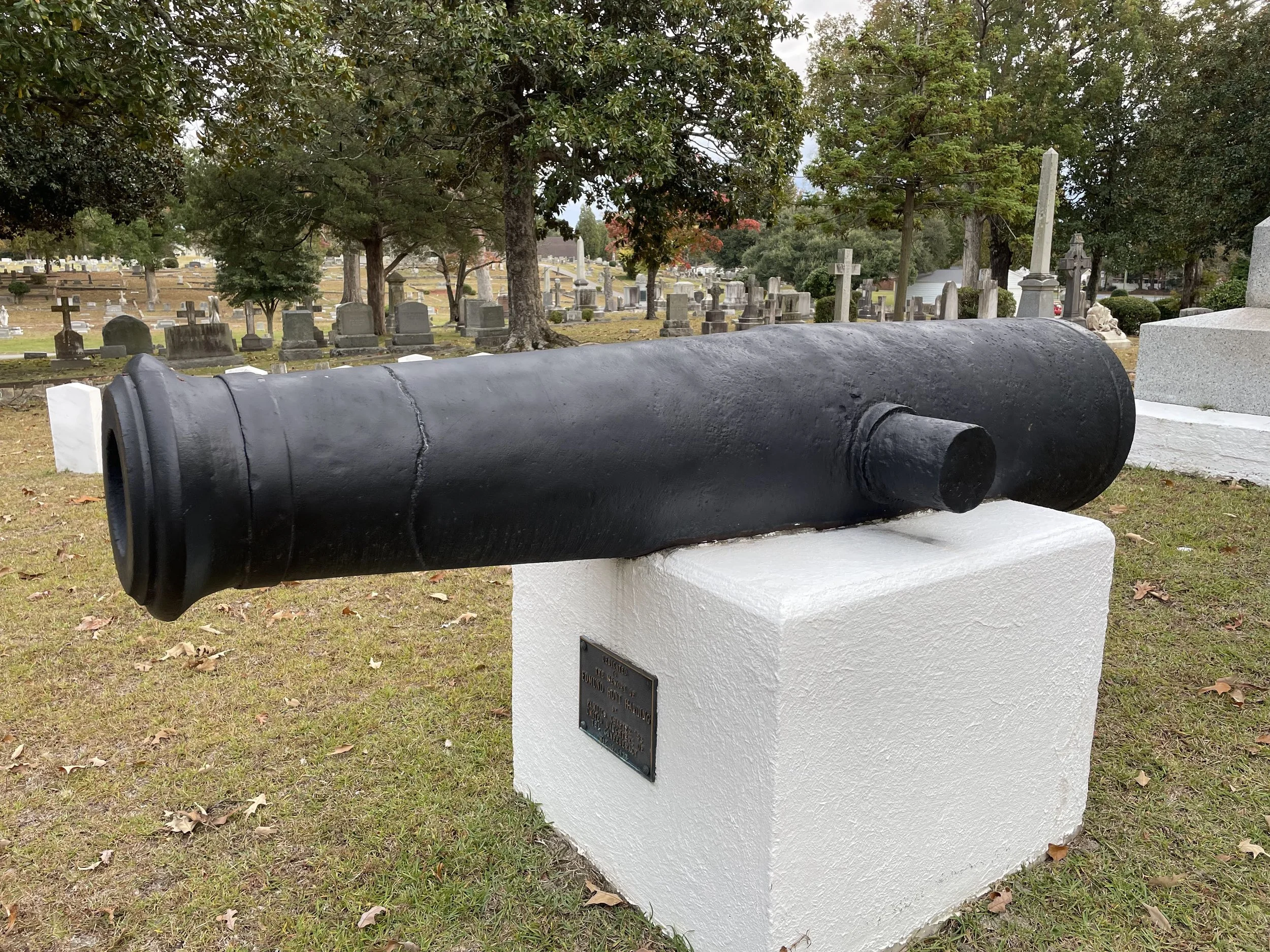
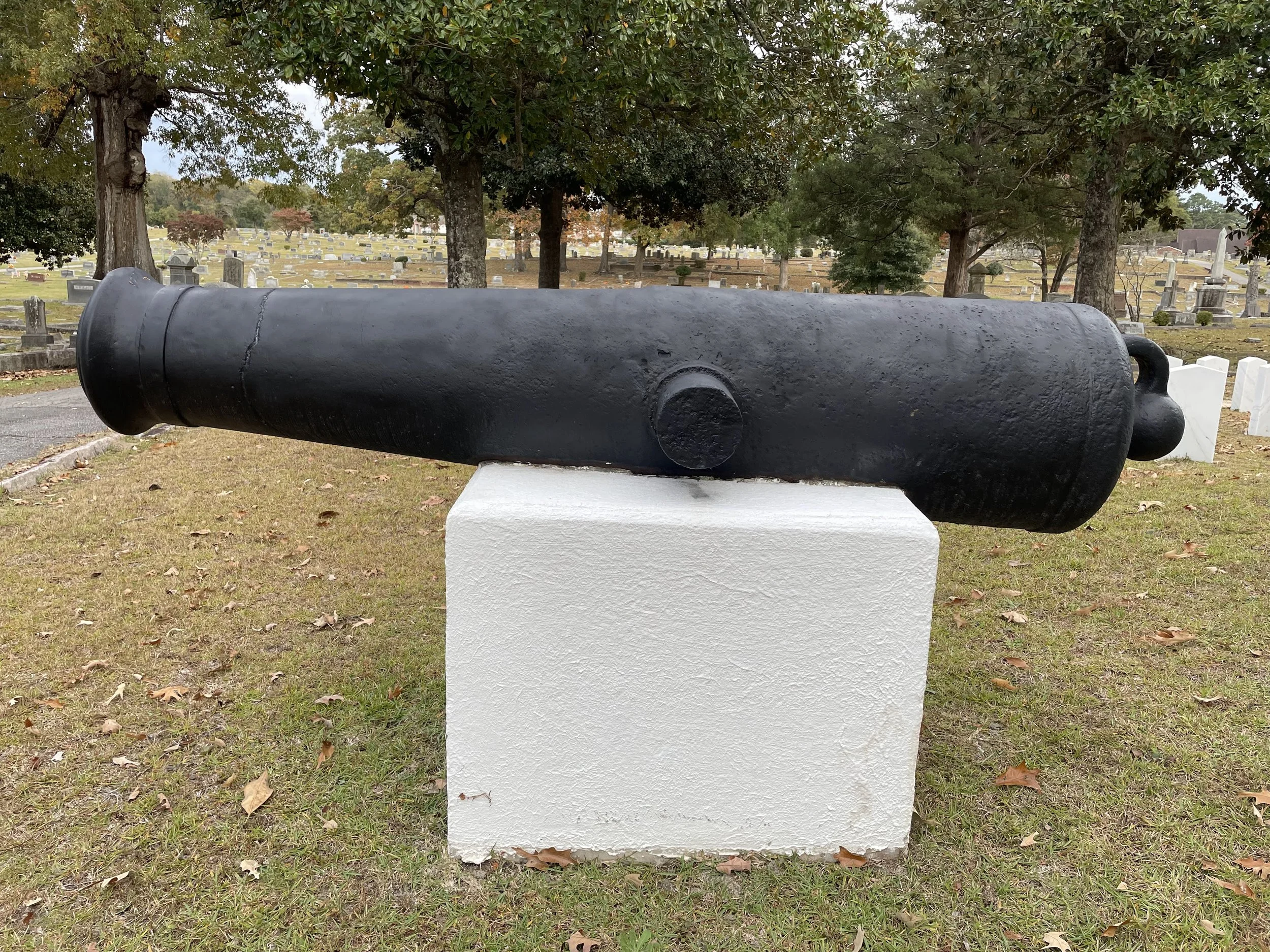
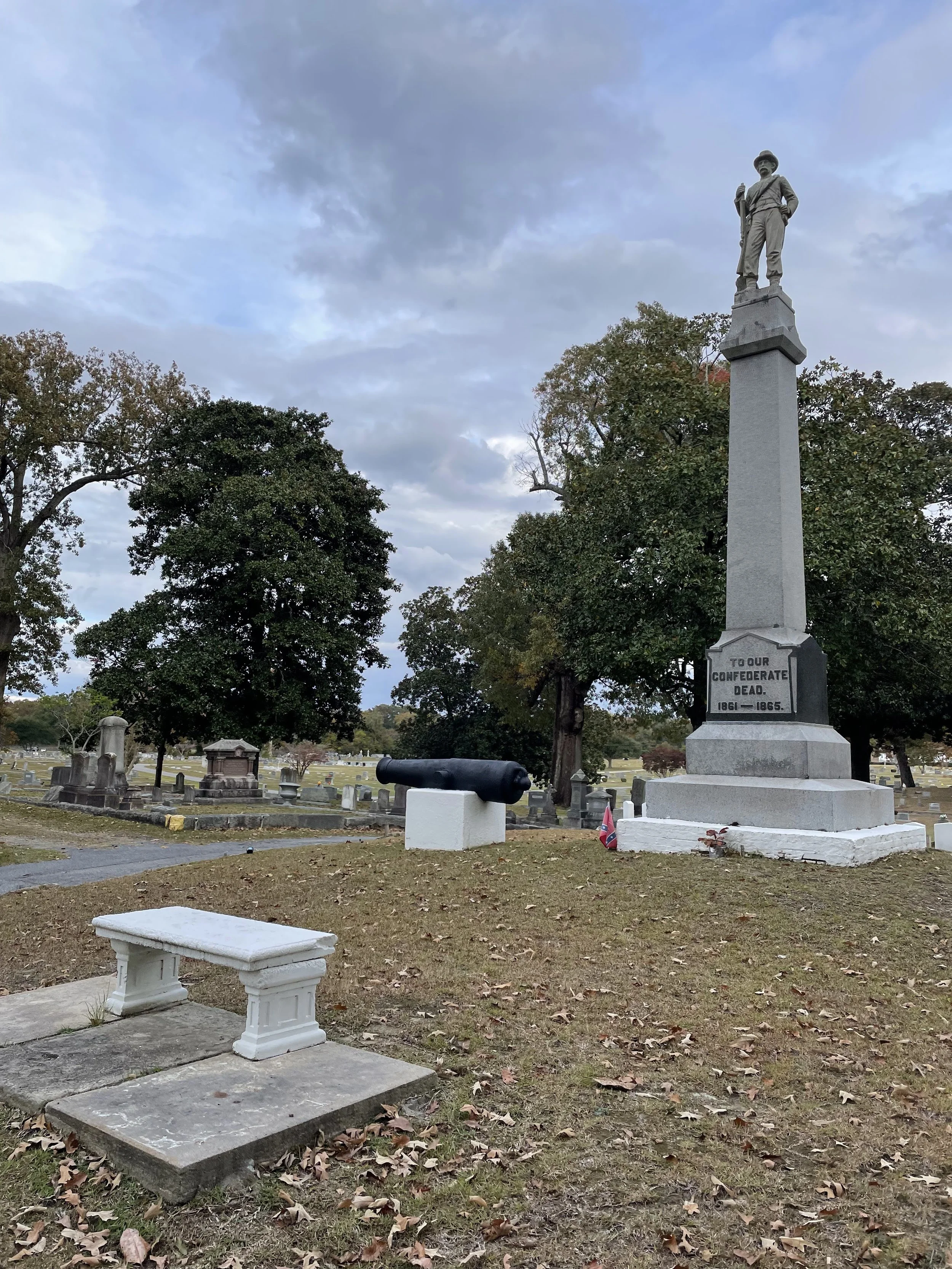
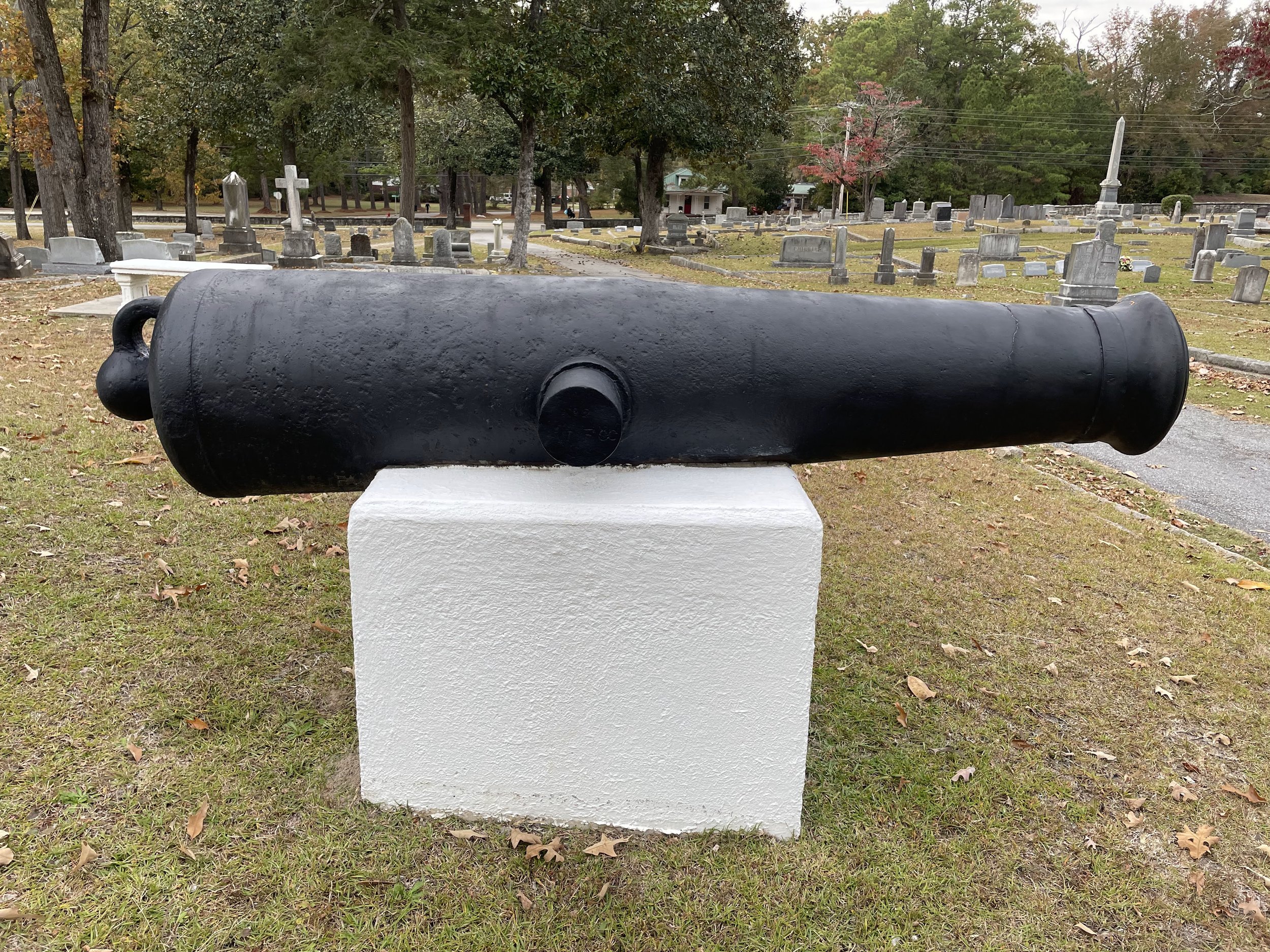
A US Navy 32-Pounder of 41 Hundredweight is displayed at Oakdale Cemetery in Washington, North Carolina
A US Navy 32-Pounder of 41 Hundredweight is displayed at Oakdale Cemetery beside the Confederate Monument in Washington, North Carolina. It bears the registry number “2” and was cast at West Point Foundry (New York) in 1837. As manufactured it weighed 40-3-27 Hundredweight (4,591 pounds - though only the “27” of the weight was clearly visible to me.) This 32-Pounder is the only known survivor of its specific type. (The Navy ordered additional 32-Pounders of 41 Hundredweight in the early 1840s but to a different design.) The type was soon superseded in the Navy by the 32-Pounder of 42 Hundredweight.
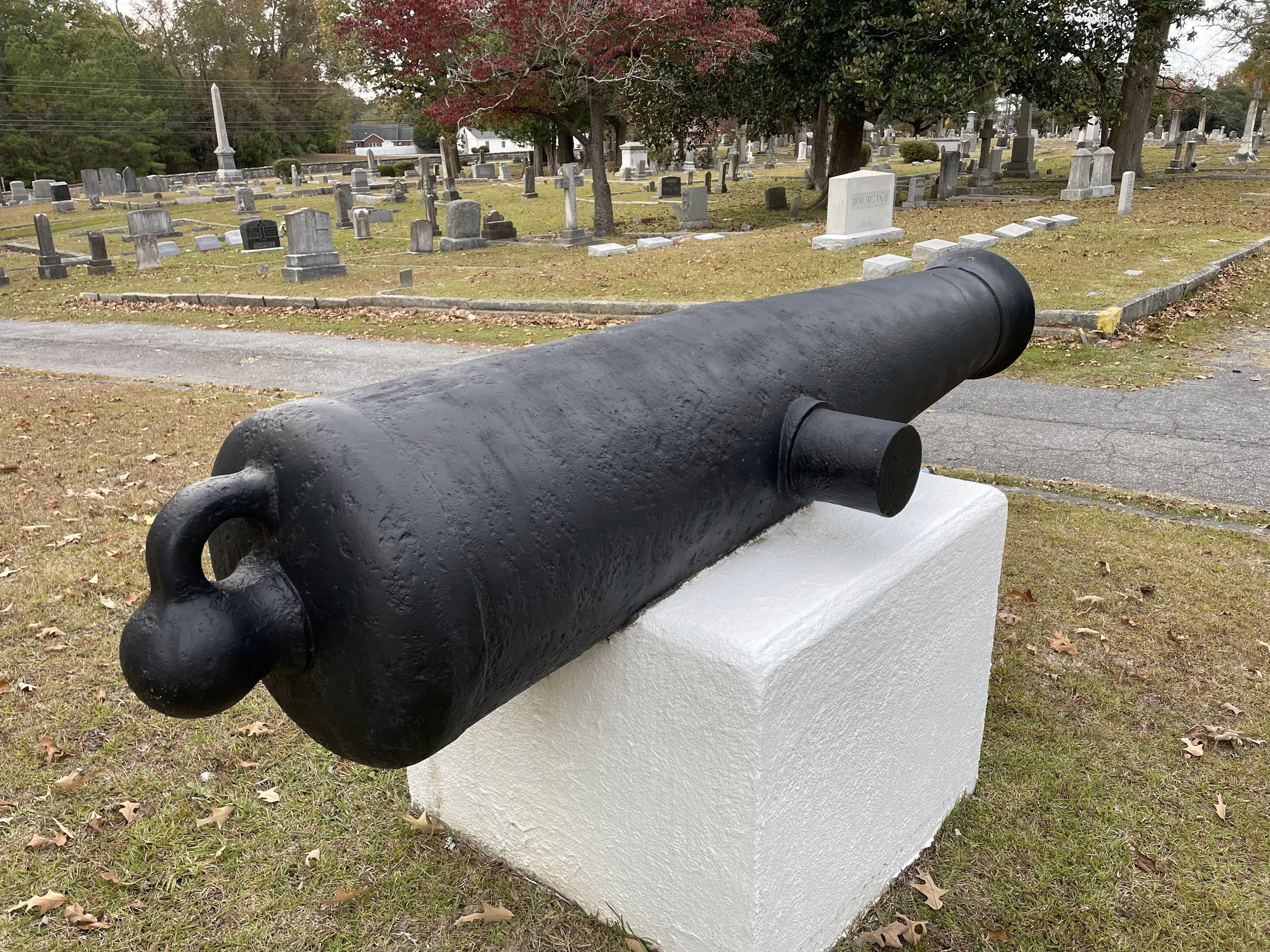
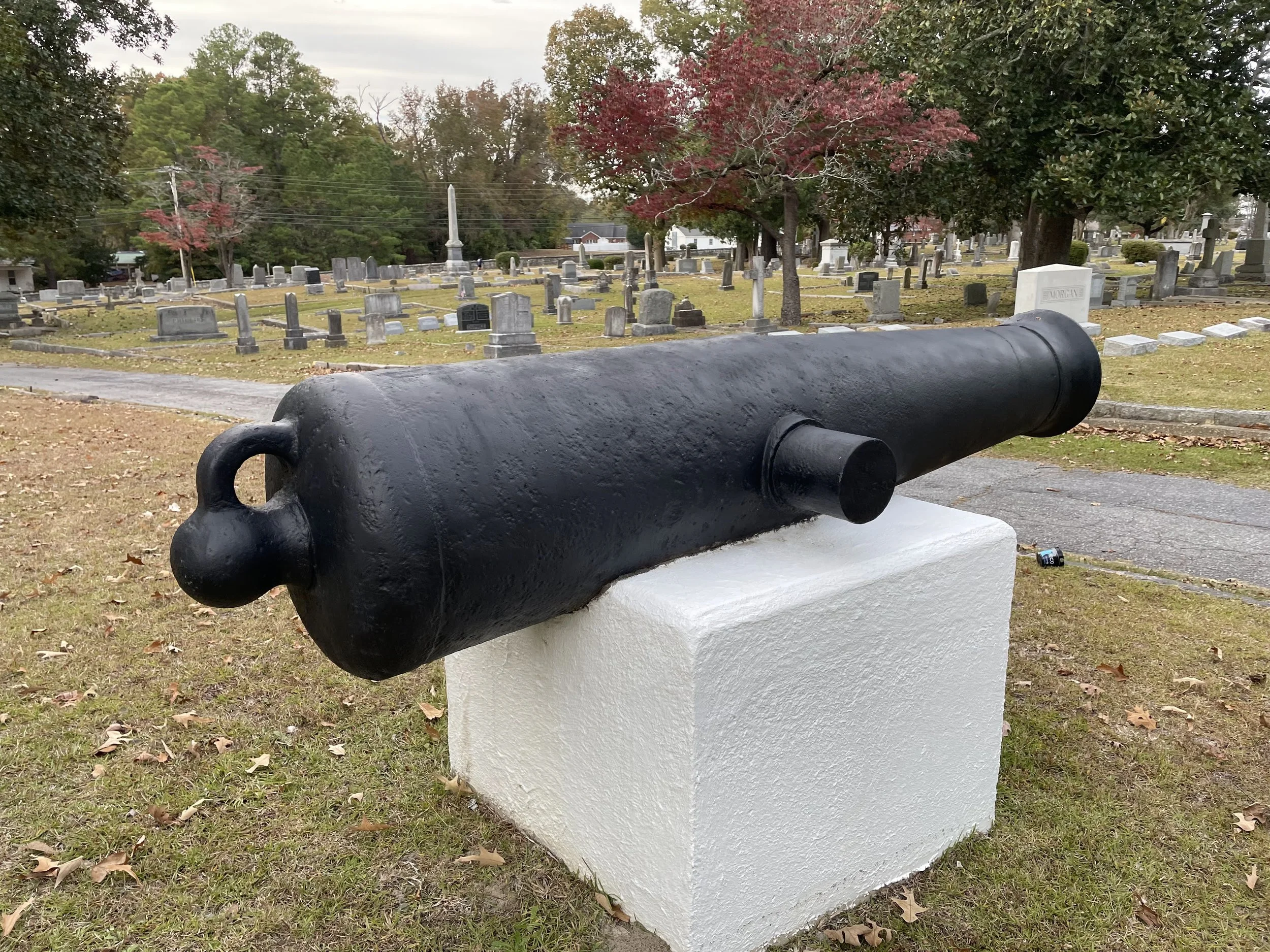
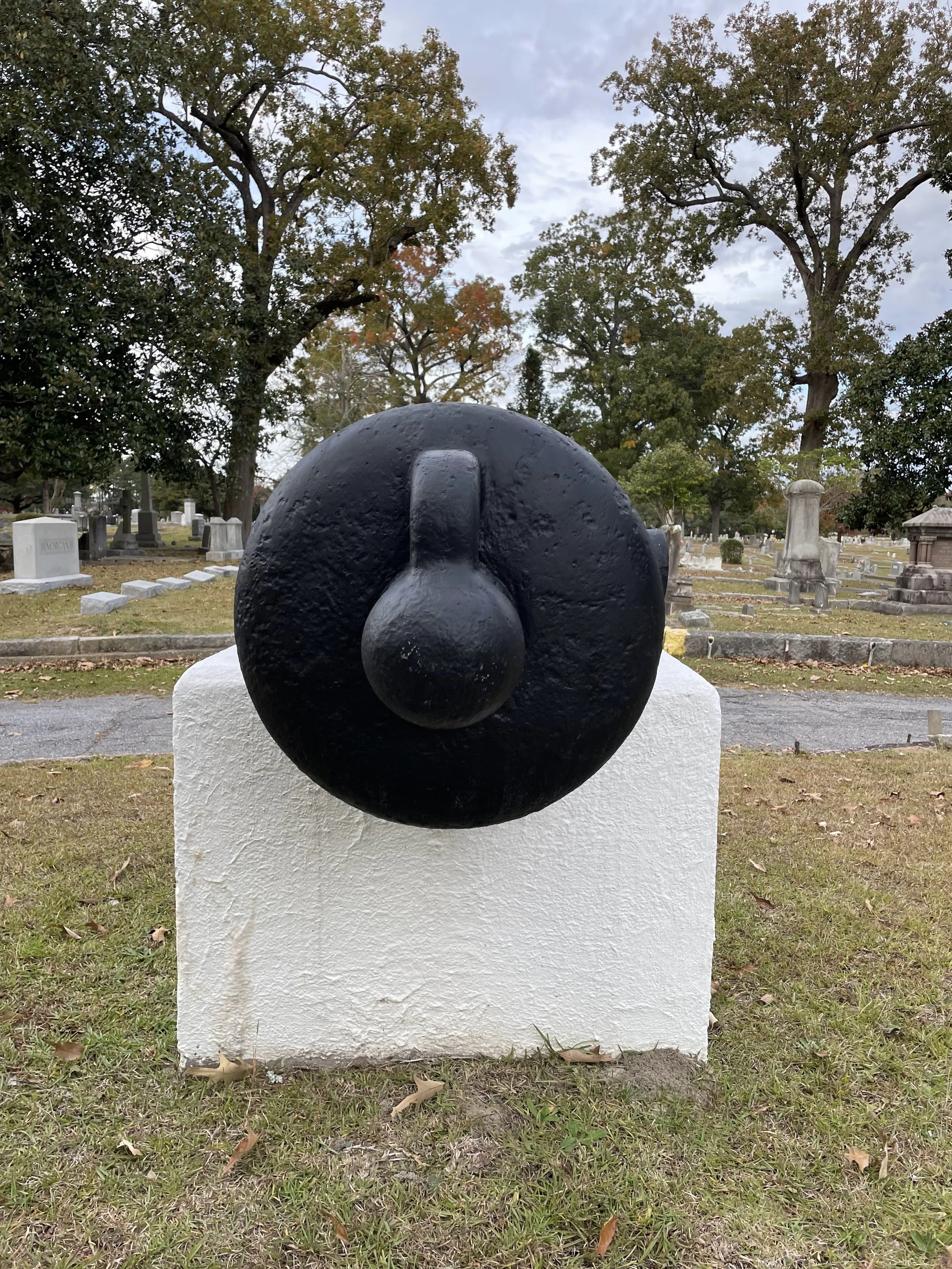
The cannon displays a significant fracture in the chase near the muzzle. It has a loop over the cascabel for a breeching rope (used afloat to check recoil).
The 32-Pounder of 41 Hundredweight was midway in both capability and weight between the short ranged 32-Pounder carronade (about 20 hundredweight) and the heavy 32-Pounders which armed the Navy’s largest ships (about 61 hundredweight). The propellant charge which it fired, likewise, would have been midway between the carronade and the full sized gun. Its weight was similar to a War of 1812 era 18-pounder. The type represents one of the Navy’s first moves toward standardizing on the 32-Pounder as a common caliber. See my post on the 1845/1846 system.
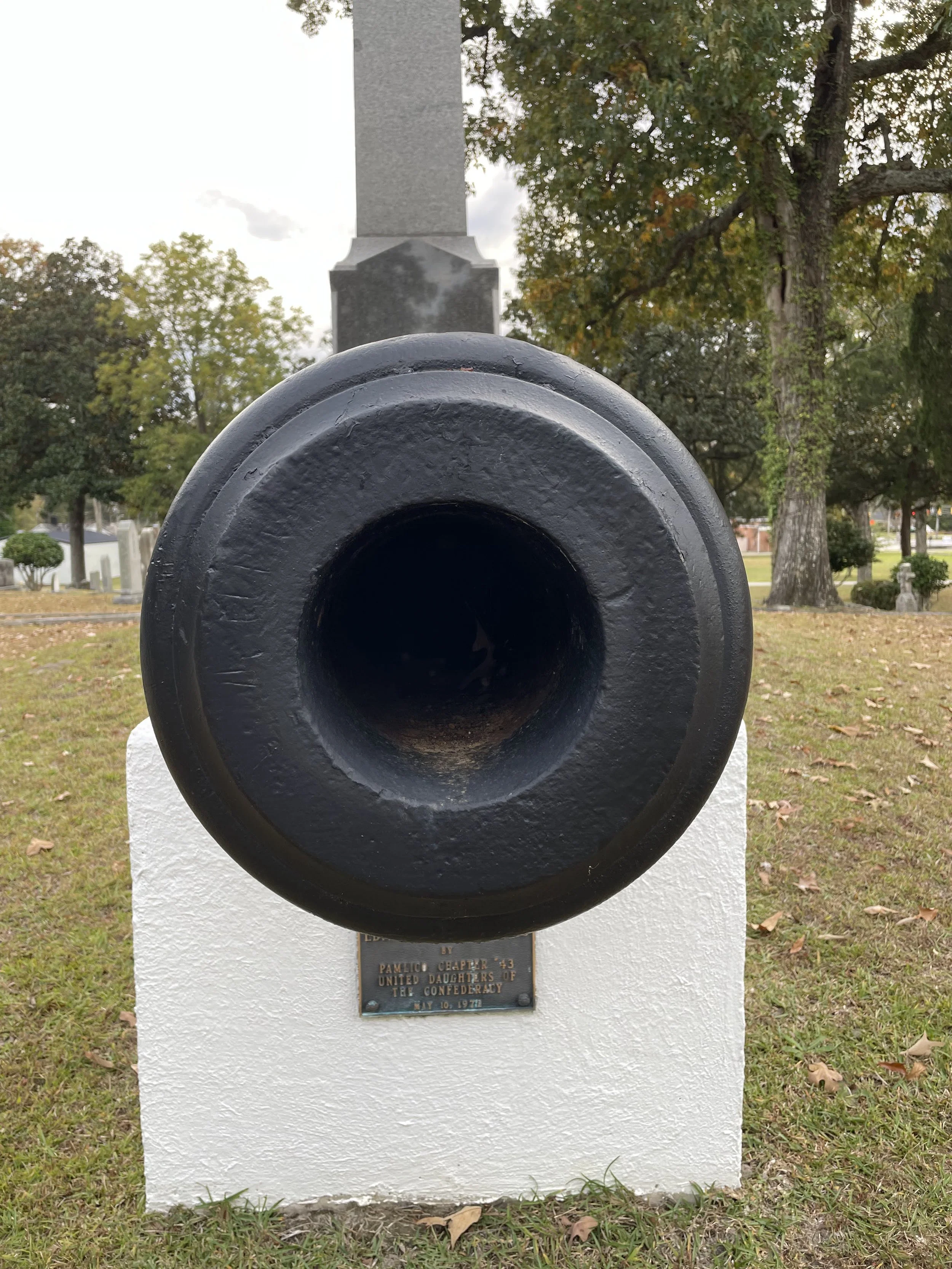
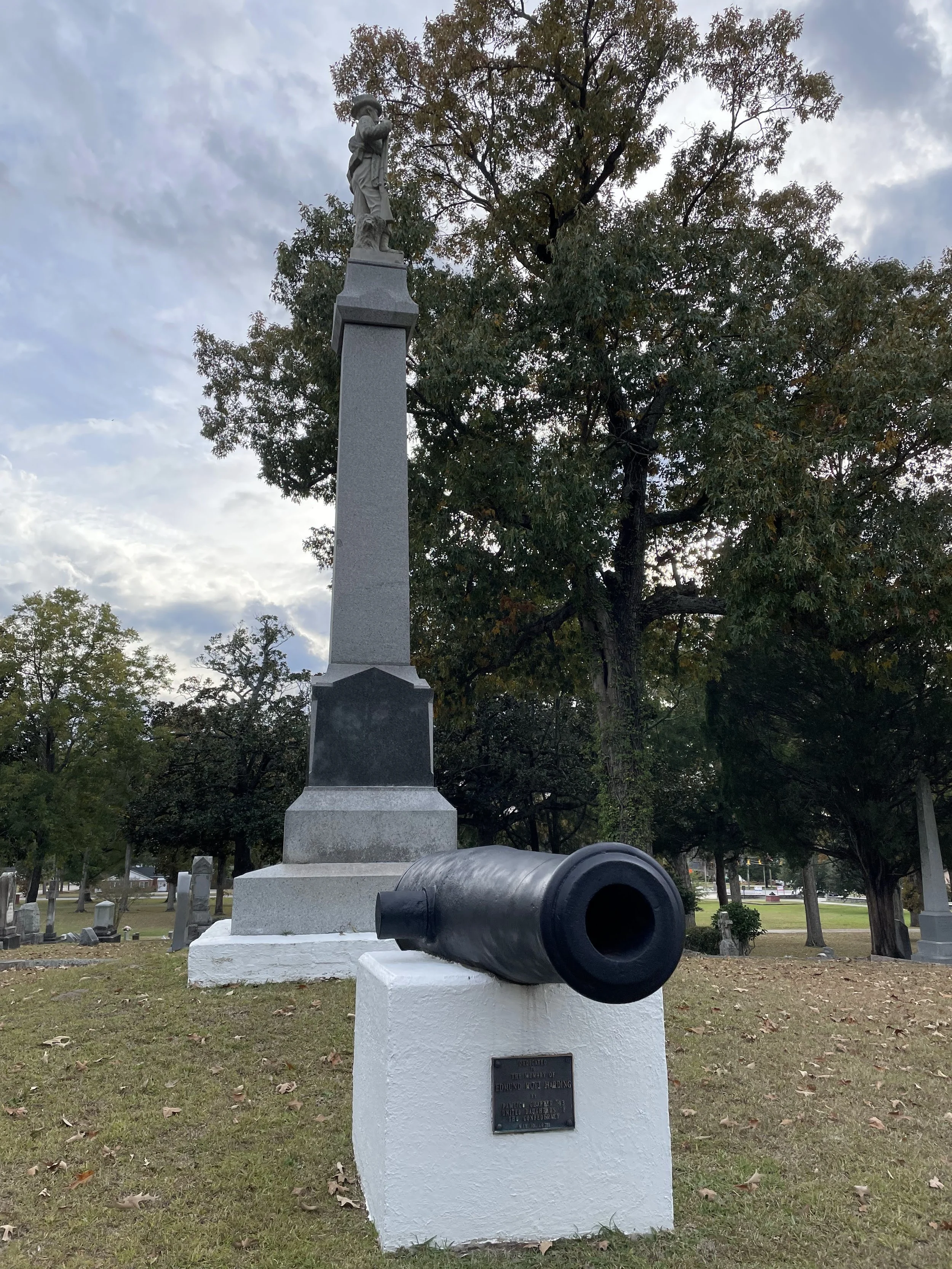
Articles published in the Washington Daily News on May 3rd and May 8th, 1972 state that the cannon had been found on the property of John Havens Moss. The cannon was presented to the Pamlico Chapter of the United Daughters of the Confederacy who placed it at the cemetery on Memorial Day, 1972. The accompanying plaque and the newspaper articles note that the cannon was placed in memory of noted Washington resident Edmund Hoyt Harding.
According to Olmstead, Stark, and Tucker, this cannon was one of forty manufactured by West Point in 1837 for use aboard the new sloops USS Cyane and USS Levant.
USS Constitution fought and captured HMS Cyane and HMS Levant in a night action on February 20th, 1815. This was the last of USS Constitution’s battles of the War of 1812. The US Navy ordered two new ships named Cyane and Levant in 1837. Naval History and Heritage Command: https://www.history.navy.mil/content/history/nhhc/our-collections/art/exhibits/conflicts-and-operations/the-war-of-1812/the-uss-constitution-vs-hms-cyane-and-hms-levant-/view-of-the-action-between-the-u--s--frigate-constitution-and-th.html
These two ships were named after HMS Cyane and HMS Levant which were captured by USS Constitution in a night battle fought on February 20th, 1815. Though HMS Levant was quickly recaptured by the Royal Navy, Cyane was successfully brought into port becoming the first USS Cyane. The first USS Cyane served on anti-slavery patrols off of Africa in the 1820s and would also see service on the Mediterranean and Brazilian stations. By the 1830s she was in ordinary at Philadelphia where she would first sink and then be broken up around 1836.
The Sloop USS Cyane in the 1840s drawn by Gunner William H. Meyers - Naval History and Heritage Command: https://www.history.navy.mil/content/history/nhhc/our-collections/photography/numerical-list-of-images/nhhc-series/nh-series/NH-54000/NH-54486.html
In 1837 the US Navy built two new sloops, (the second) USS Cyane and USS Levant. Sloops-of-War, much smaller than large frigates like USS Constitution, were nevertheless oceangoing ships useful for “showing the flag” in peacetime and attacking merchant shipping in wartime. USS Cyane served in the Mediterranean from 1838-1841 before being sent to the Pacific squadron in 1841-1844 and again in 1845-1848 - during which time she captured several Mexican ships and took part in the US occupation of San Diego. She would eventually be laid up at Mare Island, California and sold in 1887. USS Levant served on the West Indies, Pacific, Mediterranean, and East India Stations. She seized Monterrey, California and bombarded forts at Canton, China. She was lost somewhere between Hawaii and Panama in 1860. (See Silverstone’s The Sailing Navy, pg. 42).
Punishment aboard USS Cyane in 1842-1843 drawn by Gunner William H. Meyers. The guns in this illustration resemble “Number 2” quite strongly. As the gunner is the artist, the details of the gun and carriage may be quite accurate. Naval History and Heritage Command: https://www.history.navy.mil/content/history/nhhc/our-collections/photography/numerical-list-of-images/nhhc-series/nh-series/NH-01000/NH-1905.html
32-Pounder 41cwt Number 2 seen from the breech.
The service history of the 32-Pounder of 41cwt, Number 2, now in Oakdale Cemetery is presently unknown to me. Bureau of Ordnance records of its US Navy service may exist in the National Archives (Record Group 74 - records which I hope one day to thoroughly explore). It is possible it was aboard either USS Cyane or USS Levant during the 1840s. The above illustration suggests strongly that they were aboard in the 1840s, in which case Washington’s 32-Pounder Number 2 may be a significant artifact of Mexican War and California history.
While the details of the gun and carriage are interesting for the purposes of tracing the possible history of Number 2, the subject matter - a sailor being flogged - slows that the Navy was still flogging sailors as it would do until the practice was outlawed by Congress in the 1850s. On whatever ship Number 2 served, it may well be a witness to this aspect of naval life, as well as many others. See Naval History and Heritage Command’s article on flogging.
What brought the cannon to Washington is also presently unknown. Many navy guns were captured by Virginia Secessionists at the Gosport Naval Shipyard (now Norfolk Naval Shipyard) in April of 1861 and subsequently sent throughout the Confederacy for the arming of forts and gunboats. If “Number 2” was at Gosport, it would have been one of the smallest, lightest, and least capable 32-Pounders available there. It may be imagined that this modest cannon was sent to the Washington area to arm a fortification there. If a known Confederate work was on what was later Moss family property, that may be a clue. The fracture in the chase may be the reason the gun was left in place when United States forces took Washington - the old gun was just not worth taking.
The story of 32-Pounder of 41 Hundredweight Number 2 is still to be fully told, but it may be a fascinating one indeed.
USS Cyane (right) with USS Delaware in a drawing also by Gunner William H. Meyers. Delaware’s sister ship was USS North Carolina. Naval History and Heritage Command: https://www.history.navy.mil/content/history/nhhc/our-collections/photography/numerical-list-of-images/nhhc-series/nh-series/NH-02000/NH-2022.html
1837 Plan of USS Cyane and USS Levant in Howard Chapelle’s The History of the American Sailing Navy.
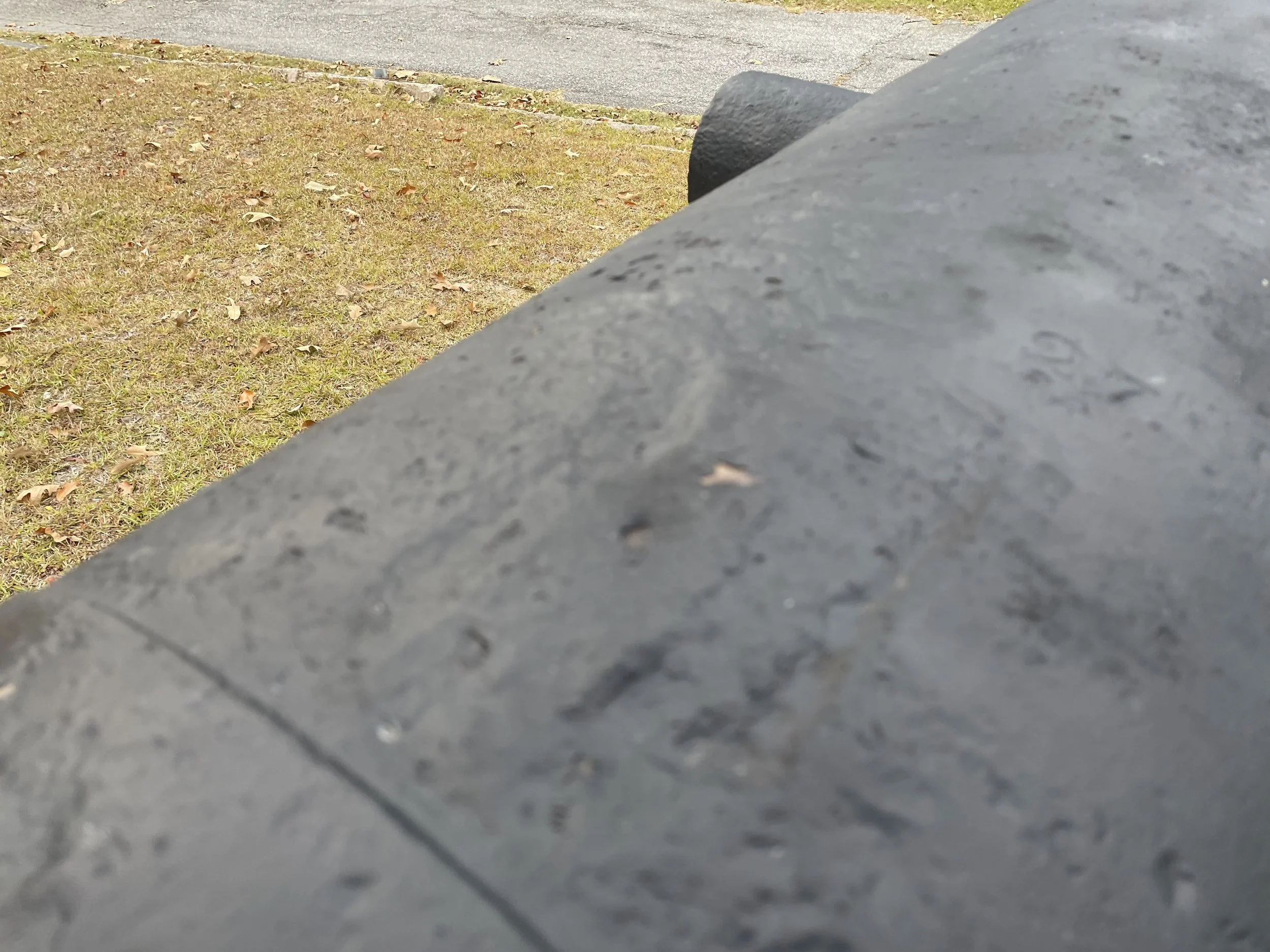
US Navy Registry “No. 2” and the marking for West Point Foundry can be seen on the right trunnion.
“27 is the final part of the weight stamping “40-3-27” which was previously visible to be recorded in Olmstead, Stark, and Tucker.
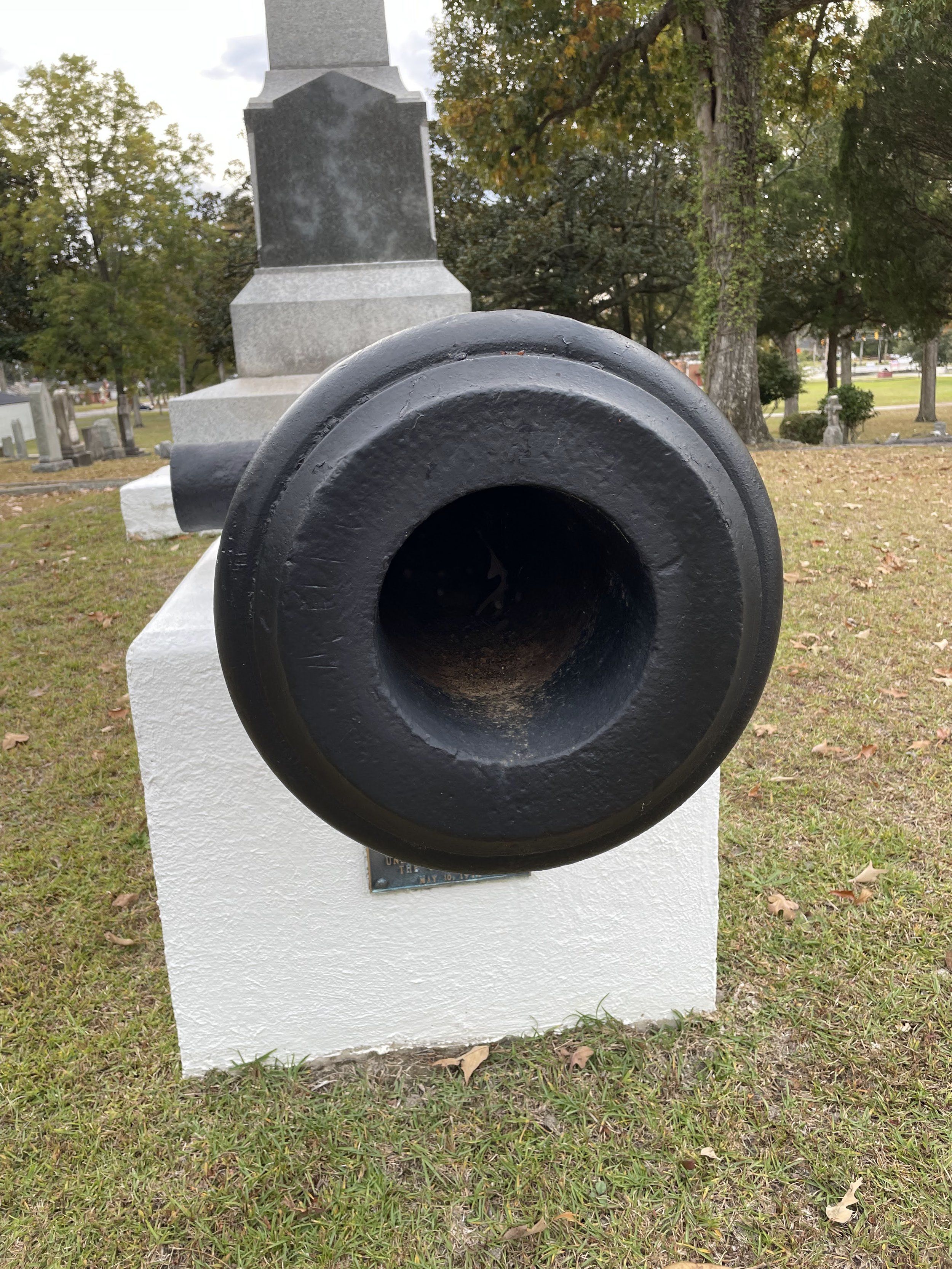
The significant fracture in the chase near the muzzle is clearly seen - and may explain why the gun was left alone to be found after the war.
The 32-Pounder is displayed beside the Confederate Monument and near Confederate Graves at Oakdale Cemetery in Washington, North Carolina
The plaque dedicated to Edmund Hoyt Harding seen on the concrete pedestal.
The left trunnion should show the date “1837” and possibly inspector’s initials “WBS”, though this was difficult to distinguish, if at all, to me.