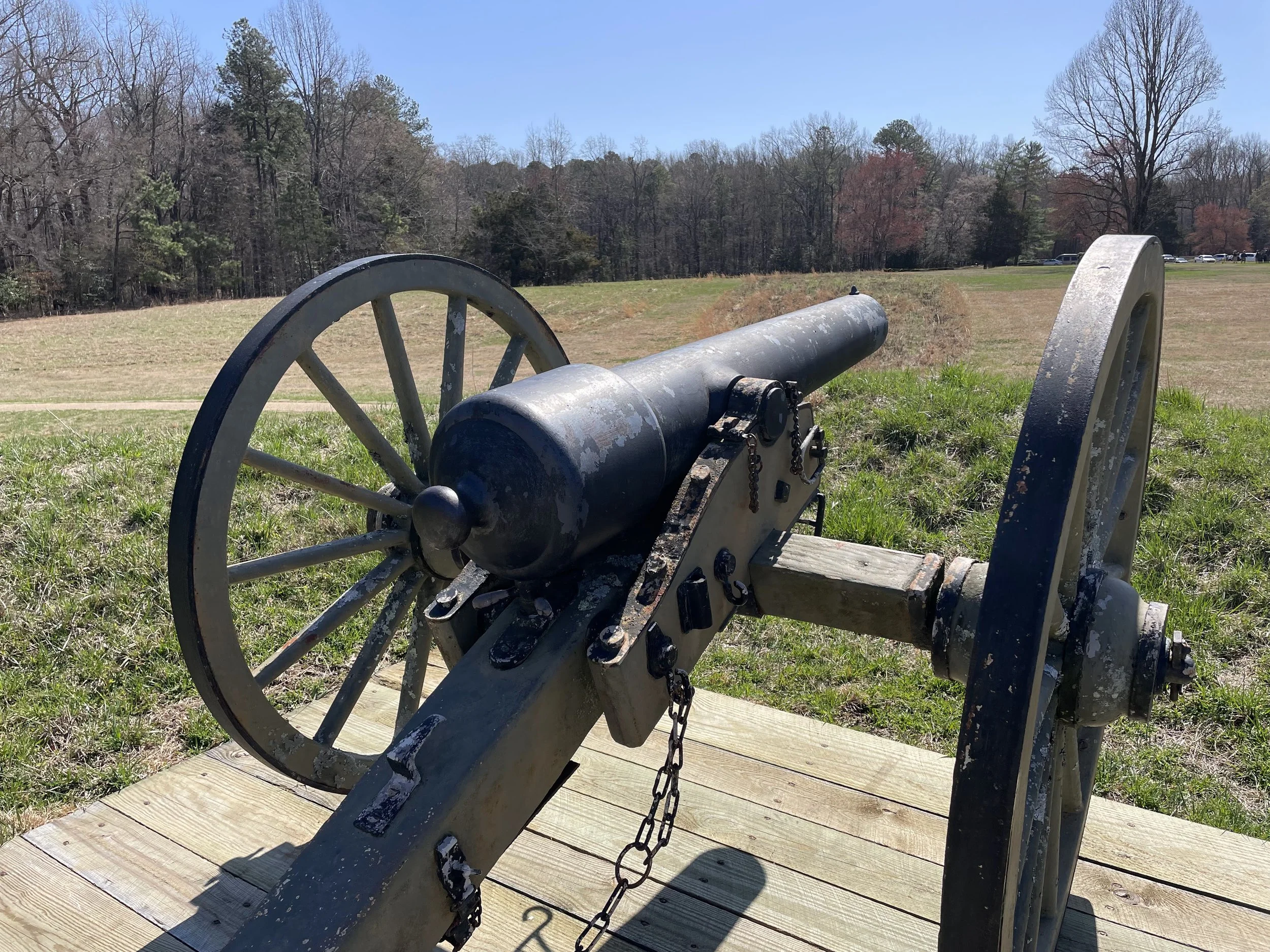
12-Pounder Confederate “Iron Napoleon” at Petersburg
12-Pounder Banded Smoothbore "Confederate Iron Napoleon" at Petersburg National Battlefield, Battery 5. Tredegar's foundry number 2243 is visible on the left trunnion. This piece was cast in January of 1865. As bronze became scare, the Confederacy turned to manufacturing the "Napoleon" in iron. Weight of the tube, 1,249 pounds, is similar to earlier bronze examples.
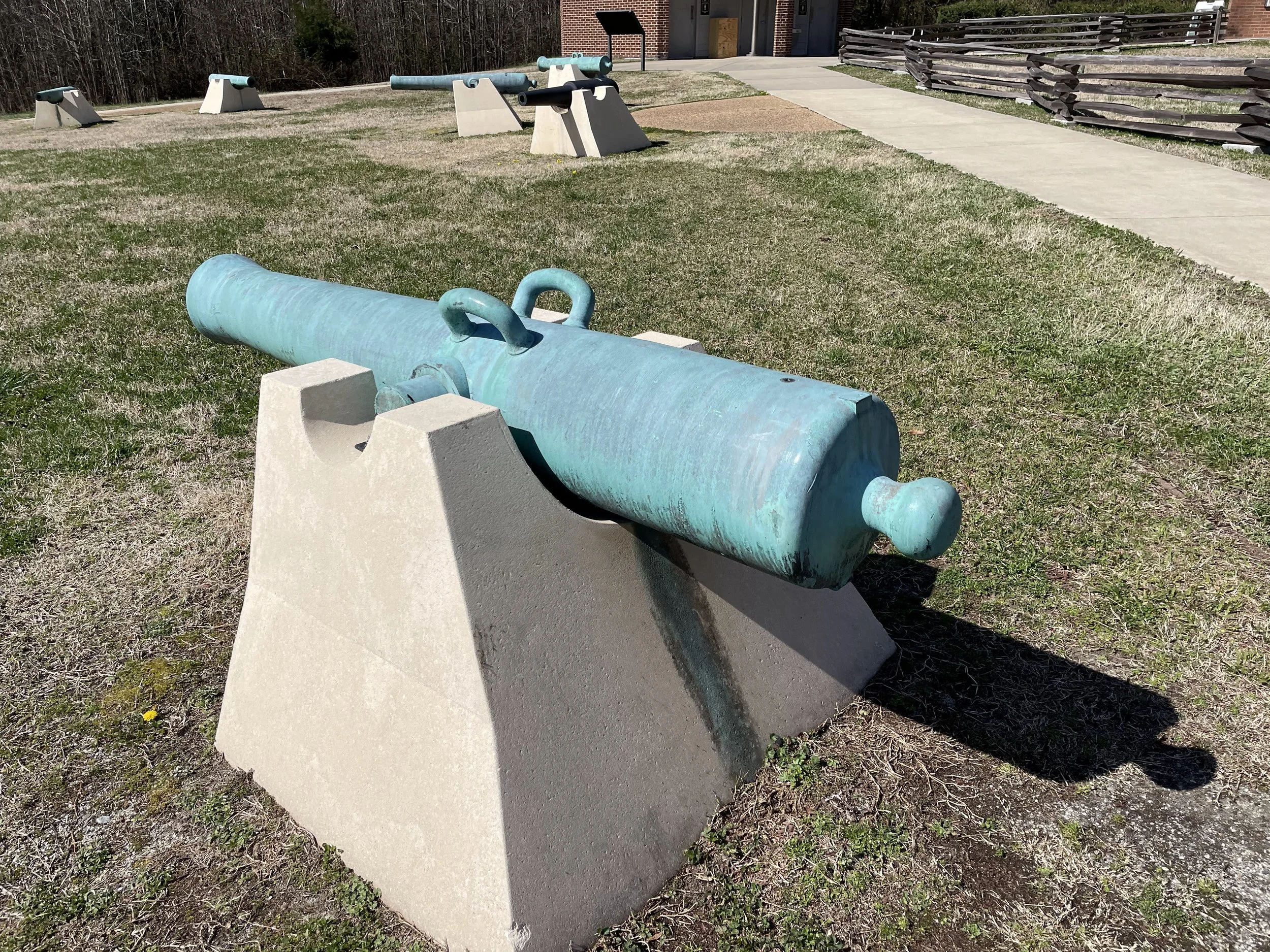
Early US Army Napoleons at Petersburg National Battlefield
Two early examples of US Army 12-Pounder "Napoleons" are displayed at Petersburg National Battlefield. Having handles above their trunnions, they are among the first examples of the 12-Pounder, Light, Pattern 1857 manufactured for the US Army.

The 24-Pounder Howitzer of CSS Georgia
An iron 24-Pounder Howitzer cast in 1862 by A. N. Miller in Savannah, Georgia is displayed at Old Fort Jackson near Savannah. The tube was recovered from the wreck of CSS Georgia in 1984 by the U.S. Army Corps of Engineers. It weighs roughly 1,500 pounds and is displayed upon a naval carriage. It is the only example of its type known to exist.

The 32-Pounder of 57 Hundredweight at Fort Branch
A rifled and banded 32-Pounder of 57 Hundredweight is displayed at Fort Branch near Hamilton, North Carolina. The fort, which overlooks the Roanoke River and was built to counter any attempt by US Navy gunboats to press up river, was evacuated in April of 1865. The seven cannons recovered there (plus a fragment of a burst gun), remains of original carriages, projectiles, and other artifacts represent a truly remarkable collection of artillery connected with a single site and displayed there.
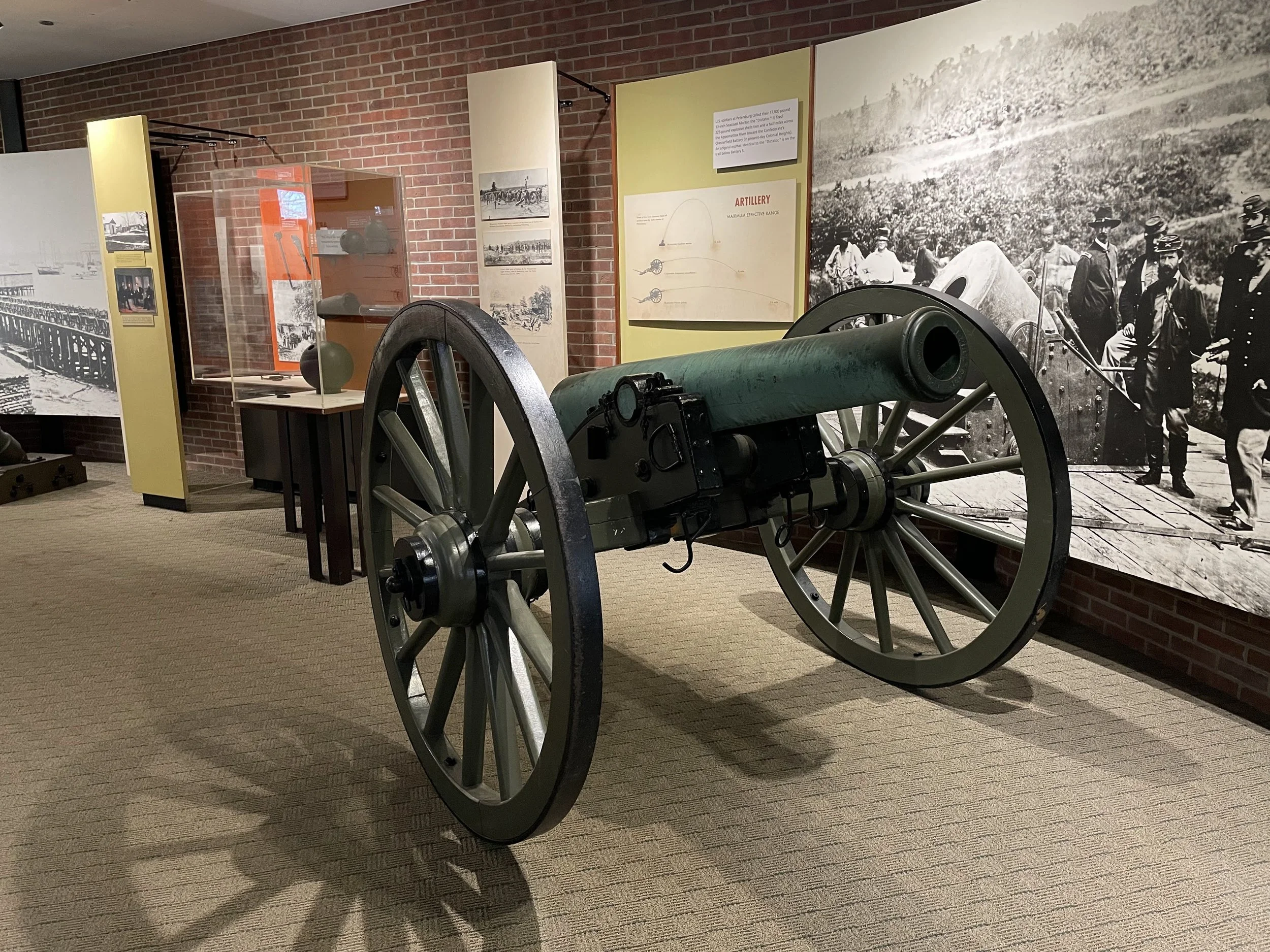
12-Pounder Napoleon, Revere Copper Company Number 253, at Petersburg
This Revere Copper Company 12-Pounder Napoleon, Number 253, in the visitor center at Petersburg National Battlefield bears a placard which states: "This 12-Pounder bronze Napoleon tube was captured by the Confederates during the Battle of Reams Station, August 25th, 1864.
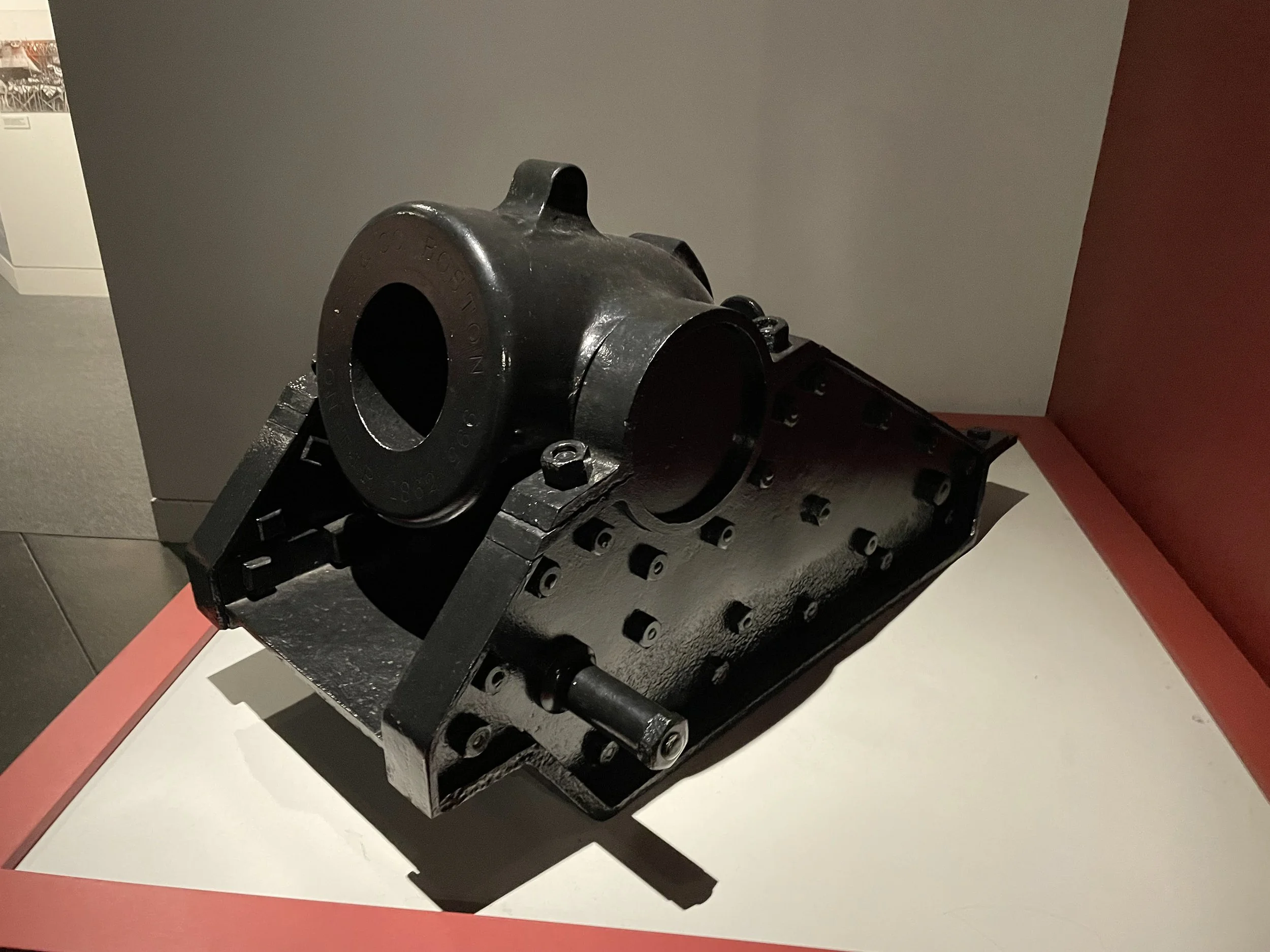
8-Inch Siege Mortar, Pattern 1861, at the Mariners’ Museum
US Army 8-Inch Siege Mortar manufactured by Cyrus Alger and Company in 1862. Registry Number 7. Thomas Jackson Rodman, Inspector. 995 pounds as manufactured. Displayed at the Mariners' Museum in Newport News, Virginia

The 8-Inch Rifles at the University of Maine
Two US Navy 8-Inch (180-Pounder) Muzzle Loading Rifles have been displayed at the University of Maine in Orono since Llewellyn N. Edwards, Class of 1898, facilitated their donation by the Navy in 1932. The cannons, originally cast as 11-Inch Dahlgrens, would serve aboard US Navy ships including USS Pensacola, USS Juniata, and USS Galena in the 1870s and 1880s.
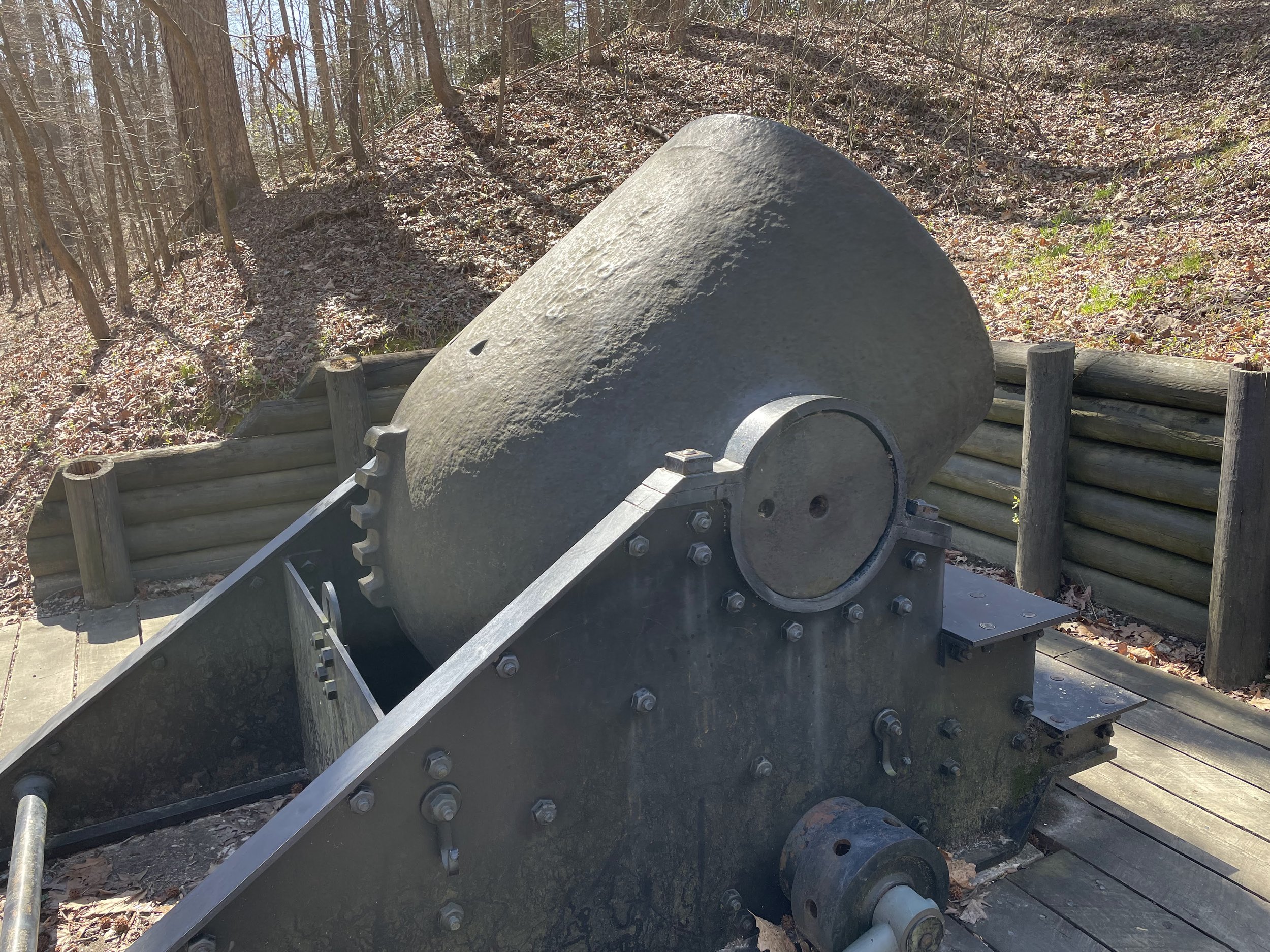
Dictator: The 13-Inch Mortar of Petersburg
In 1864 a 13-Inch Seacoast Mortar, Pattern 1861, was used by the United States Army in the siege of Petersburg. The mortar was mounted on a railcar - named the Petersburg Express - and used against Confederate fortifications. The fame of this heavy mortar may be greater than it's impact upon the siege. Whether the "Dictator" is among the approximately thirty 13-Inch Mortars which survive to the present is a matter of conjecture.
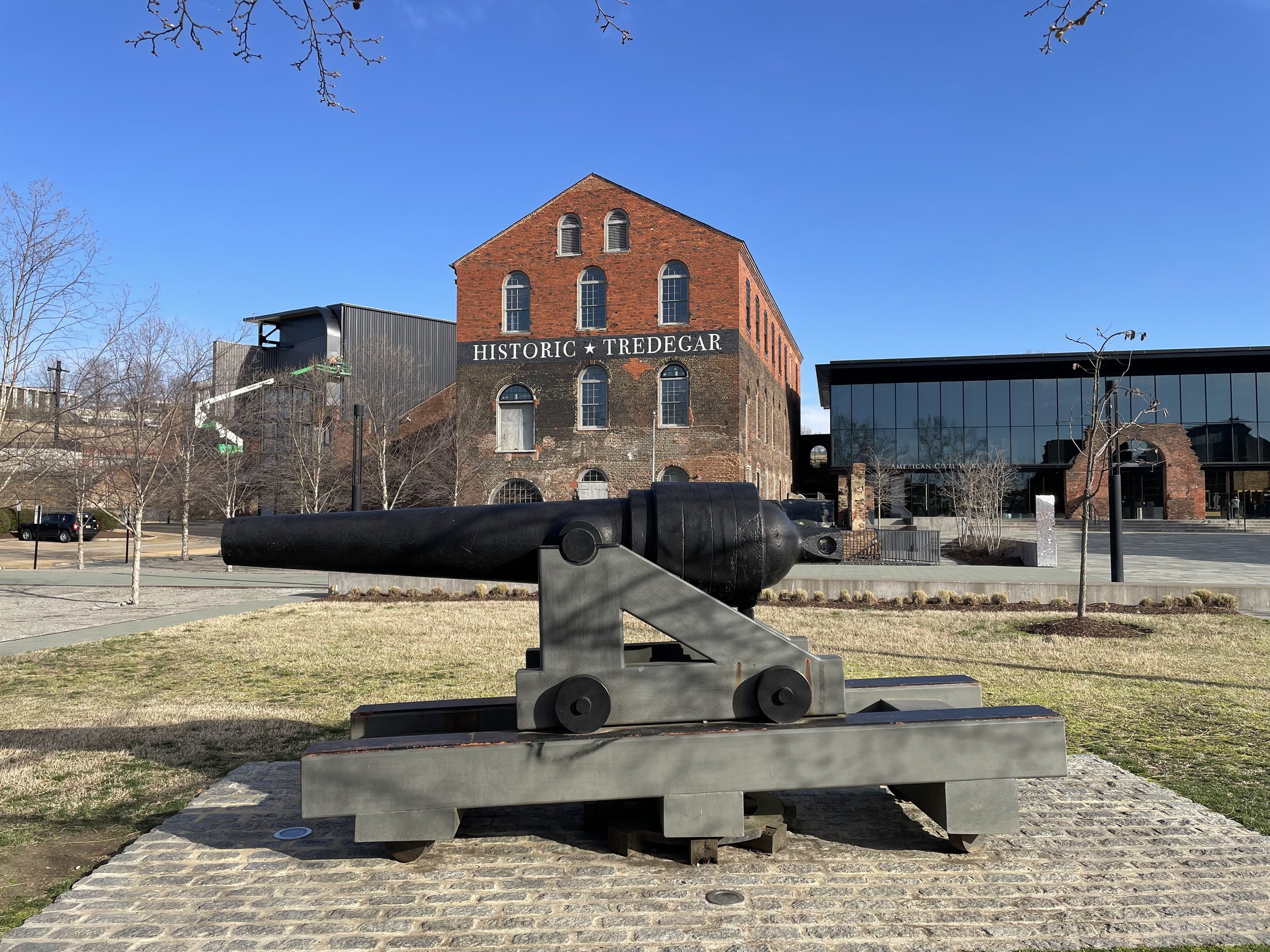
The 6.4-Inch Brooke at Historic Tredegar
A Double Banded 6.4-Inch Brooke Rifle is displayed outside of Historic Tredegar Ironworks in Richmond, Virginia where it was originally manufactured in 1862.
The Brooke in Richmond is marked with the Tredegar foundry number 1633 and as weighing 9,400 pounds as manufactured. Number 1633 was cast at Tredegar on or about July 26th, 1862.
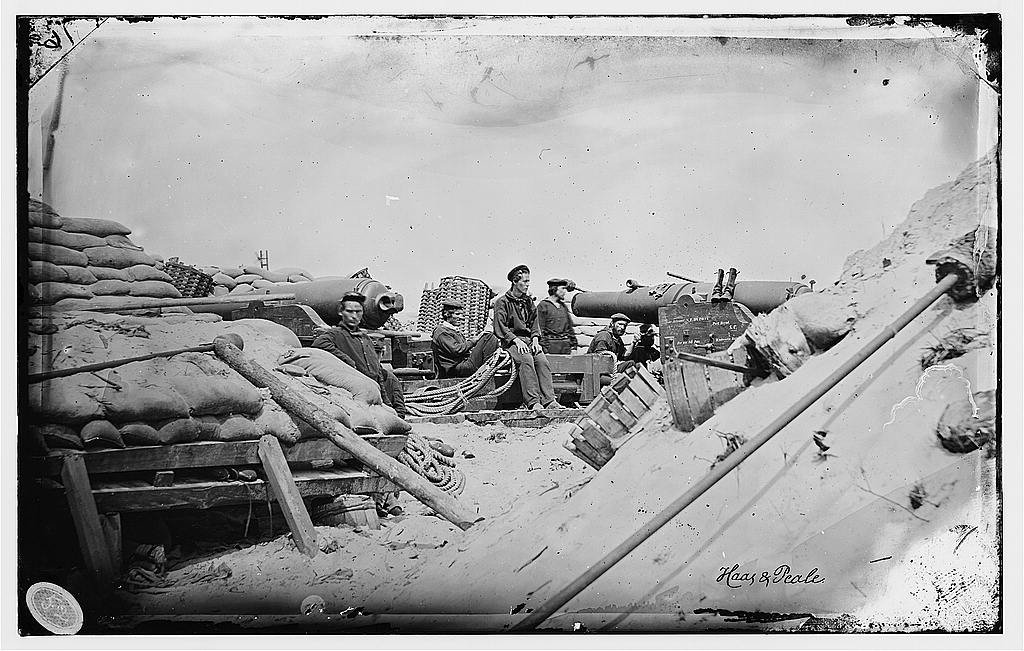
The Whitworth Rifles of the Naval Battery on Morris Island
Four 5-Inch Whitworth Muzzle Loading Rifles were captured by the US Navy when the Blockade Runner S.S. Princess Royal was captured by USS Unadilla off of Charleston. Two of the four survive. One at West Point bearing a plaque stating that it was used on Morris Island. The other is at the Washington Navy Yard where it may have been tested in the experimental battery there.

24-Pounder of 32 Hundredweight at Fort Pulaski
A Medium 24-Pounder of 32 Hundredweight cast in 1826 at Bellona Foundry may be seen on the parapet of Fort Pulaski. This type of cannon was designed for the Boston-class sloops of the US Navy in the 1820s. This cannon is recorded as serving aboard USS Fairfield.

24-Pounder Dahlgren Boat Howitzer at Petersburg, Virginia
24-Pounder Dahlgren Boat Howitzer Number 388 is displayed at the Petersburg National Battlefield. According to the research reflected in Olmstead et al., this particular boat howitzer was aboard USS Granite City when that ship was captured by Confederate infantry and artillery at Calcasieu Pass, Louisiana. I do not know what subsequent Confederate service the howitzer saw nor what brought it to Petersburg.

4.62-Inch Gorgas Rifle at Stony Creek, Virginia
A 4.62-Inch Siege Rifle cast by Bellona Foundry (near Richmond) in 1862 may be found in Stony Creek, Virginia. Weight of 5,360 pounds is stamped on the breech. The right trunnion reads "BF / JLA" (Bellona Foundry / Junius L. Archer).
Olmstead et al. identifies this cannon as a "Gorgas Rifle", a type manufactured by both Tredegar and Bellona. This example is the only known survivor of the type. As noted in "The Big Guns", this rifle is nearly identical to the 4.62-Inch "Gibbon and Andrews" rifle found at Fort Branch except for the latter rifle being banded and therefore eight hundred pounds heavier.

The 32-Pounder of 32 Hundredweight at Petersburg
A 32-Pounder of 32 Hundredweight of the type manufactured for the US Navy beginning in 1846 for use as the main battery aboard smaller sloops is displayed at Petersburg National Battlefield. The 32-Pounder of 32 Hundredweight is a chambered cannon - meaning the chamber in the barrel where the propellant charge is placed is of smaller diameter than the 6.4-Inch diameter of the main portion of the barrel.

30-Pounder Parrott Rifle at Petersburg
US Army 30-Pounder Parrott Rifle Number 227 (manufactured in 1863 at the West Point Foundry, 4,155 Pounds as manufactured) is displayed at Petersburg National Battlefield.
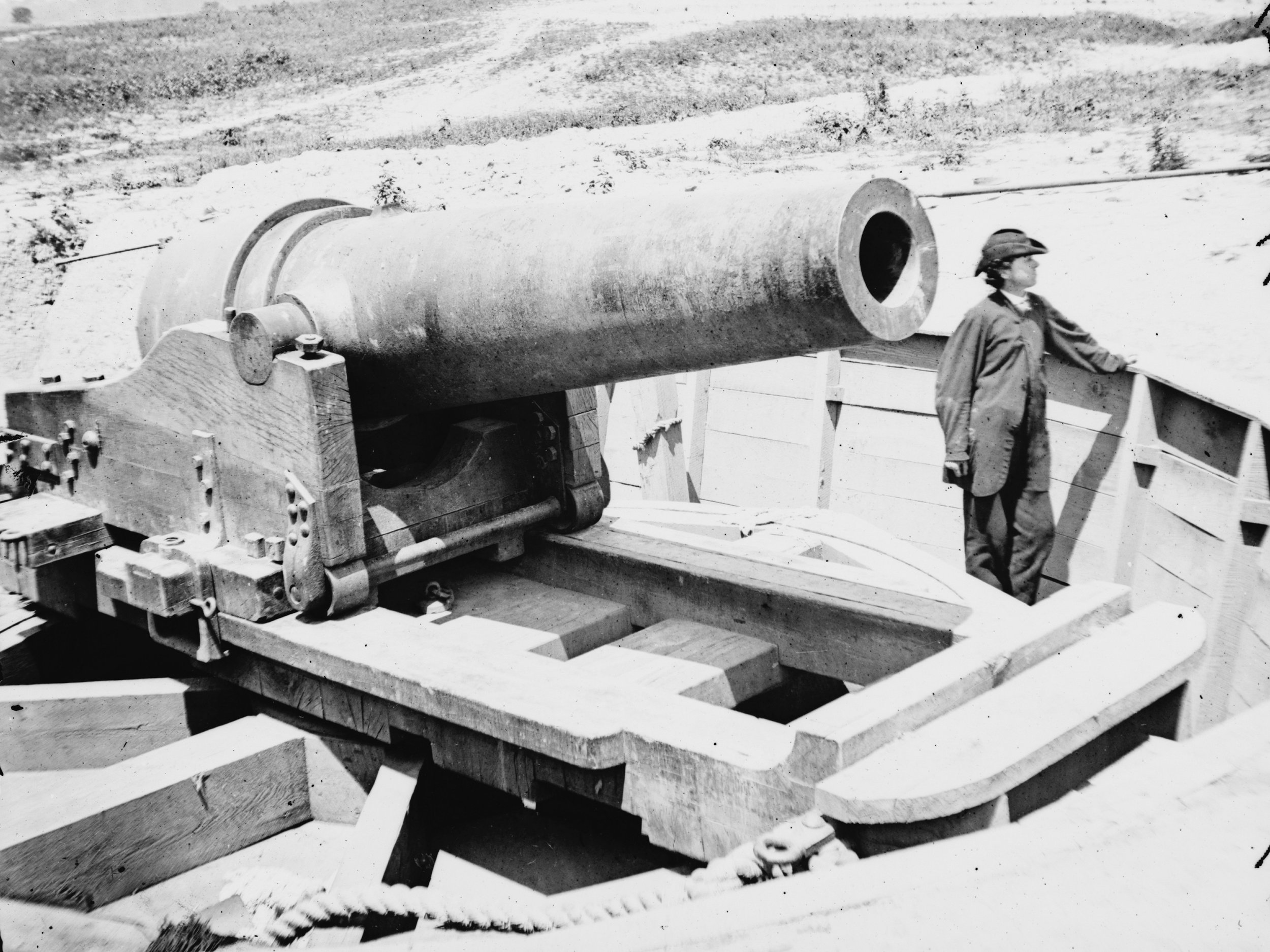
A Brooke Smoothbore at Dutch Gap on the James River
Four photos of the same heavy Brooke Smoothbore seem to have been taken at the same time. The cannon was emplaced overlooking the James River at the Dutch Gap.

The 68-Pounder 95 Hundredweight Gun at Carrickfergus Castle
A Low Moor Ironworks 68-Pounder 95 Hundredweight Smoothboore Muzzleloading Gun displayed at Carrickfergus Castle in Northern Ireland. The carriage is stamped 1860 - a possible date of manufacture for the cannon. The photos in this post are courtesy of page subscriber David Pollock. Many thanks to him for sharing them with us all!
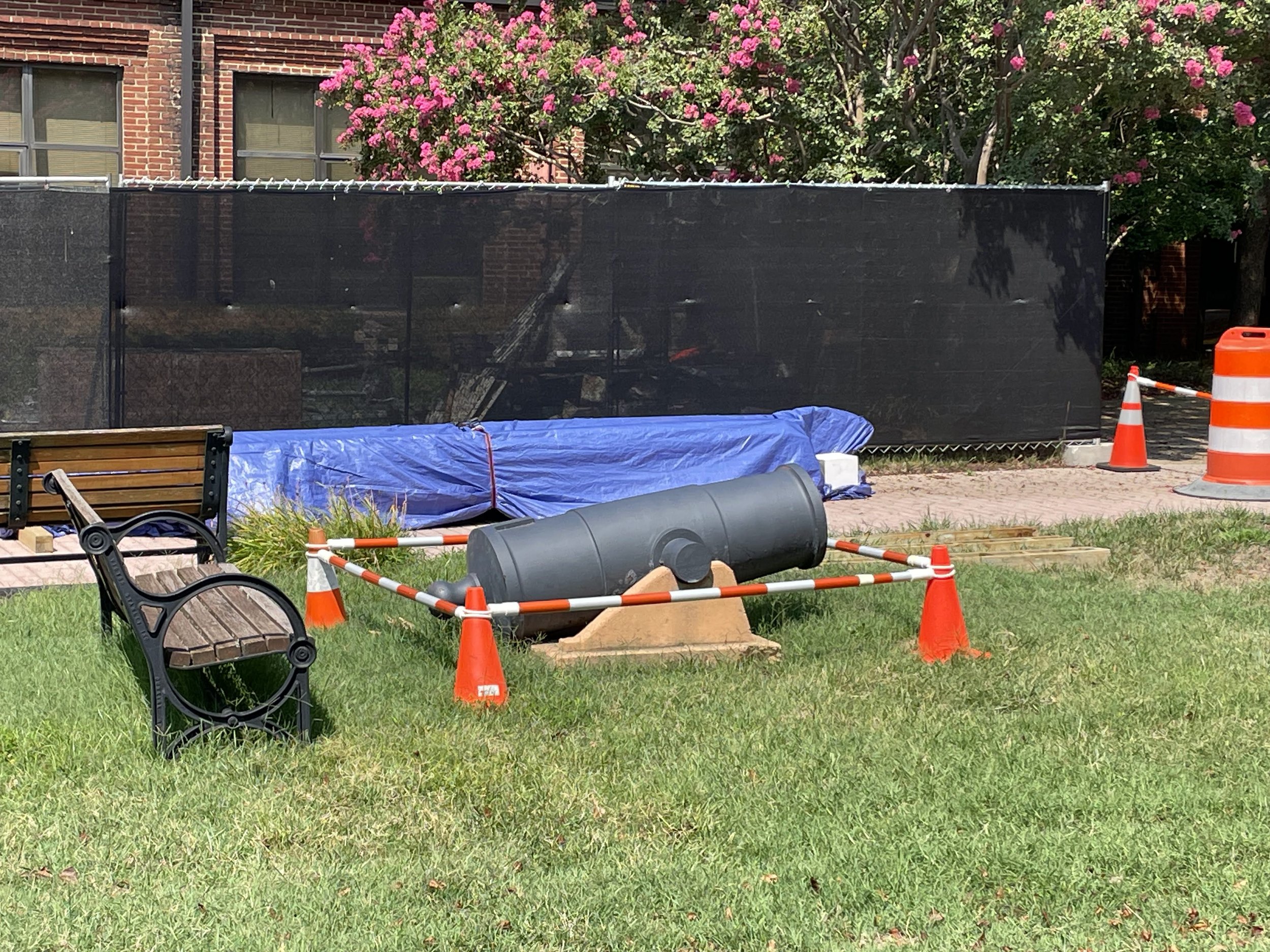
The 8-Inch Siege Howitzer of USS Pawnee
Two 8-Inch Siege Howitzers, Model 1841 (Olmstead et. al say "Pattern 1840") at the Washington Navy Yard.
Both were used in an attempted ambush of USS Marblehead on the Stono River on Christmas Day, 1863. One was subsequently carried as a pet aboard USS Pawnee.
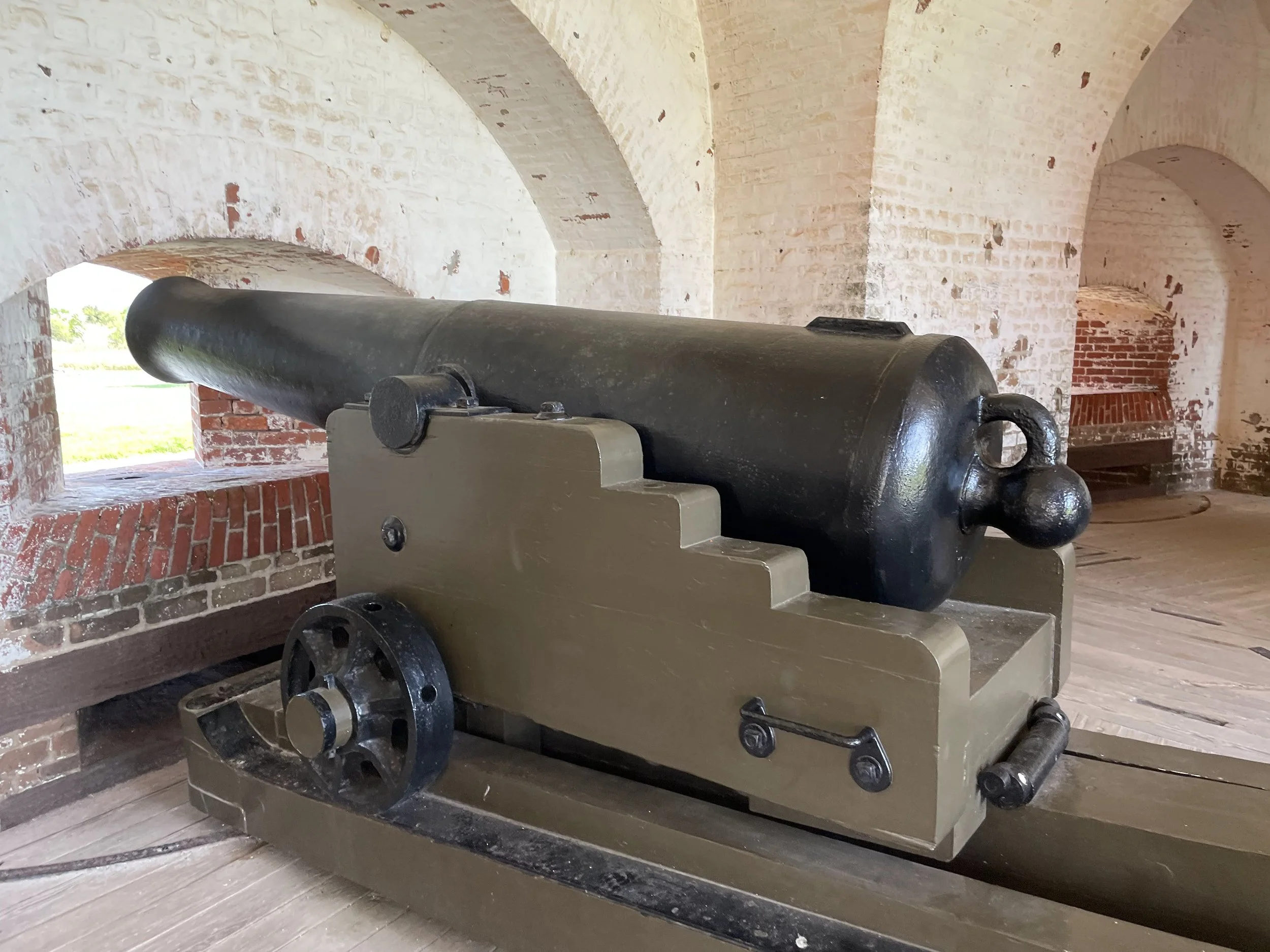
US Army 42-Pounder, Pattern 1831, at Fort Pulaski
US Army 42-Pounder Seacoast Gun, Pattern 1831, is displayed at Fort Pulaski near Savannah, Georgia. It was cast in 1836 at the Columbia Foundry and is mounted on a casemate carriage. According to Olmstead et al., this cannon is registry number 19 and weighs 8,700 pounds.
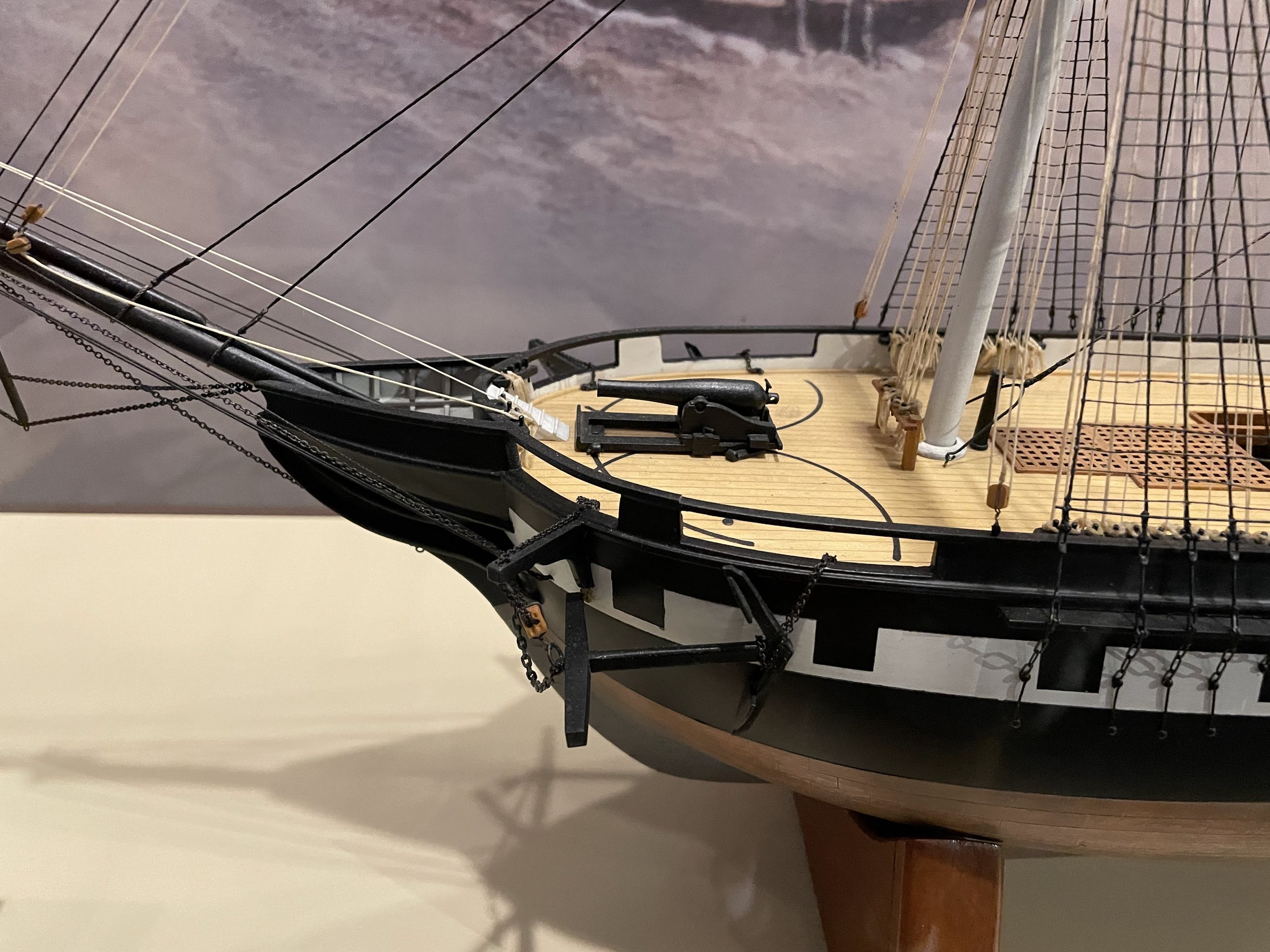
The 10-Inch Dahlgren of USS Cumberland
USS Cumberland, the first ship to be sunk in the Battle of Hampton Roads, carried a 10-Inch Dahlgren as her forward pivot gun. That cannon kept firing against CSS Virginia until Cumberland sank. Artifacts recovered from the wreck of USS Cumberland and displayed at the Hampton Roads Naval Museum are also shown in this post.