
USS Canadaigua’s 11-Inch Dahlgren in La Moille, Illinois
An 11-Inch Dahlgren carried aboard USS Canandaigua is displayed in La Moille, Illinois. The Dahlgren, US Navy registry Number 216, was dedicated on Memorial Day, 1897 by the local Grand Army of the Republic Post Number 66.

The 8-Inch Rodman Rifles on US Navy Carriages at Palisades Park
Two US Army 8-Inch Rifles which were converted from 10-Inch Rodmans in 1885 and 1886 are displayed at Palisades Park in Santa Monica, California. They were installed at the park in 1908
Intriguingly they are mounted on US Navy Carriages intended for the 8-Inch Rifle which was a similar conversion of the 11-Inch Dahlgren.

The 68-Pounder 95 Hundredweight Gun in Warrnambool, Victoria
A 68-Pounder 95 Hundredweight Smoothbore Muzzleloading Gun is displayed outside the Flagstaff Hill Maritime Village in Warrnambool, Victoria, Australia. Many thanks to friend-of-the-page Ivan Dove for taking these photos and sharing them with me.

The French 36-Pounder of the American Privateer General Armstrong
A French 36-Pounder is displayed in the National Museum of the United States Navy (photographed August of 2024). This cannon is a relic of a the "Battle of Fayal" between the American Privateer General Armstrong and the boats of a British squadron as well as the brig-sloop HMS Carnation.

US Army 42-Pounder, Pattern 1845, at the Washington Navy Yard
This US Army 42-Pounder, Pattern of 1845, is displayed at the Washington Navy Yard. It was cast at Bellona Foundry in 1860, and it is marked on the breech as weighing 8,590 pounds as cast. An inscription on the top of the tube notes that it was captured by the Navy from a "Rebel Battery Battery on the Potomac River in July of 1862."

The 7-Inch Blakely of CSS Alabama
CSS Alabama carried two heavy pivot guns: a 68-Pounder Smoothbore and a 7-Inch (or 110-Pounder) Blakely Rifle as well as six 32-pounder broadside guns. The Blakely was recovered from her wreck in 1994 and is displayed at La Cité de la Mer Museum and Aquarium in Cherbourg, France. The cannon is displayed above the remains of its original wooden carriage and with other artifacts related to the ship.

The 6.25-Inch Rifle of CSS Florida at the Washington Navy Yard
A British manufactured 6.25-Inch Rifle captured aboard CSS Florida is displayed at the Washington Navy Yard. According to John C. Reilly's "The Iron Guns of Williard Park", the breech is engraved with the words "32-Pdr Rifled from Anglo-Rebel Pirate Florida." The left trunnion is stamped "Low Moor, 10666".

The 8-Inch Confederate Columbiad at Drewry’s Bluff
An 8-Inch Confederate Columbiad is displayed at Fort Darling at Drewry's Bluff on the James River near Richmond, Virginia. The Columbiad, Number 66, was cast at Bellona Foundry in 1862. The Columbiad, mounted on the commanding position overlooking the James, represents the battery which fought USS Galena and USS Monitor on May 15th, 1862.
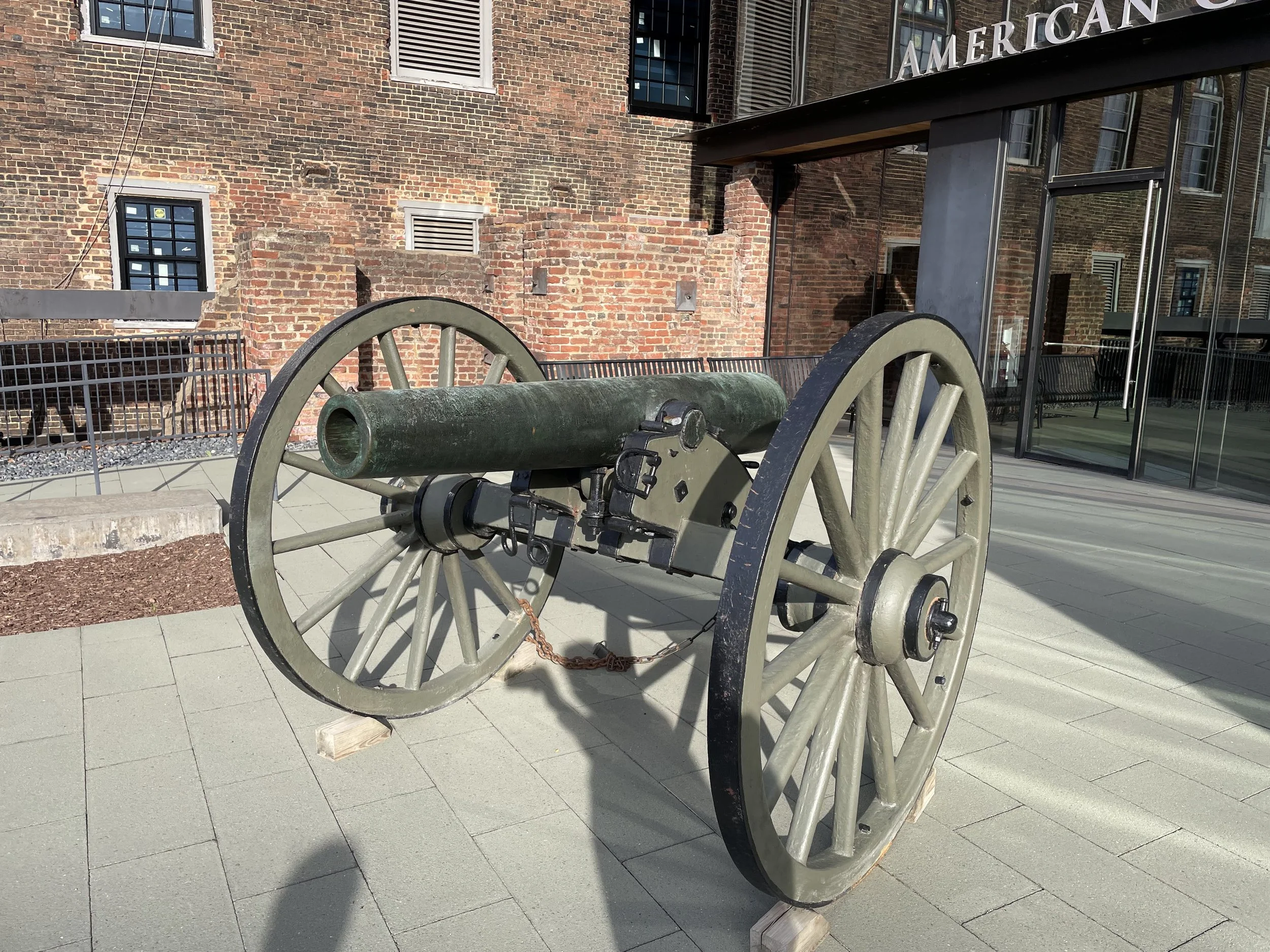
12-Pounder Confederate Napoleon at the American Civil War Museum in Richmond
A 12-Pounder Confederate Napoleon is displayed in front of the American Civil War Museum in Richmond, Virginia. The “Confederate Napoleon”, a bronze smoothbore gun-howitzer, is designed to fire the same shot, shell, canister, and case as the US Army 12-Pounder Napoleon (Pattern 1857). However, given the pressures on Southern industry, most Confederate Napoleons lack the the visual refinements of the US Army model. The Confederate Napoleon typically does not have any muzzle swell. The tube likely was turned on a lathe only enough to function, so it will have a rough appearance. This particular example was cast at Tredegar Foundry - the site of the museum where it is presently displayed.
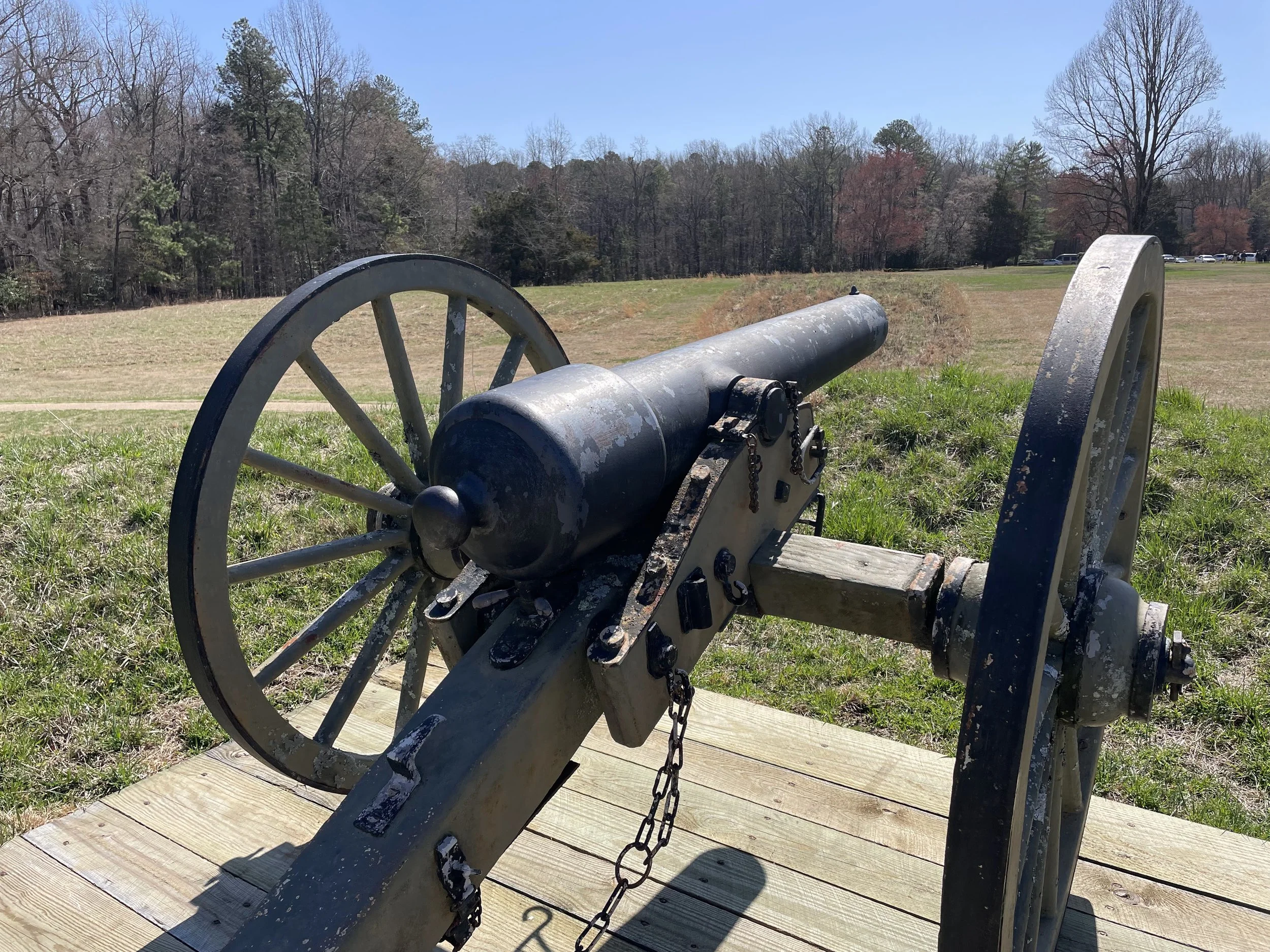
12-Pounder Confederate “Iron Napoleon” at Petersburg
12-Pounder Banded Smoothbore "Confederate Iron Napoleon" at Petersburg National Battlefield, Battery 5. Tredegar's foundry number 2243 is visible on the left trunnion. This piece was cast in January of 1865. As bronze became scare, the Confederacy turned to manufacturing the "Napoleon" in iron. Weight of the tube, 1,249 pounds, is similar to earlier bronze examples.
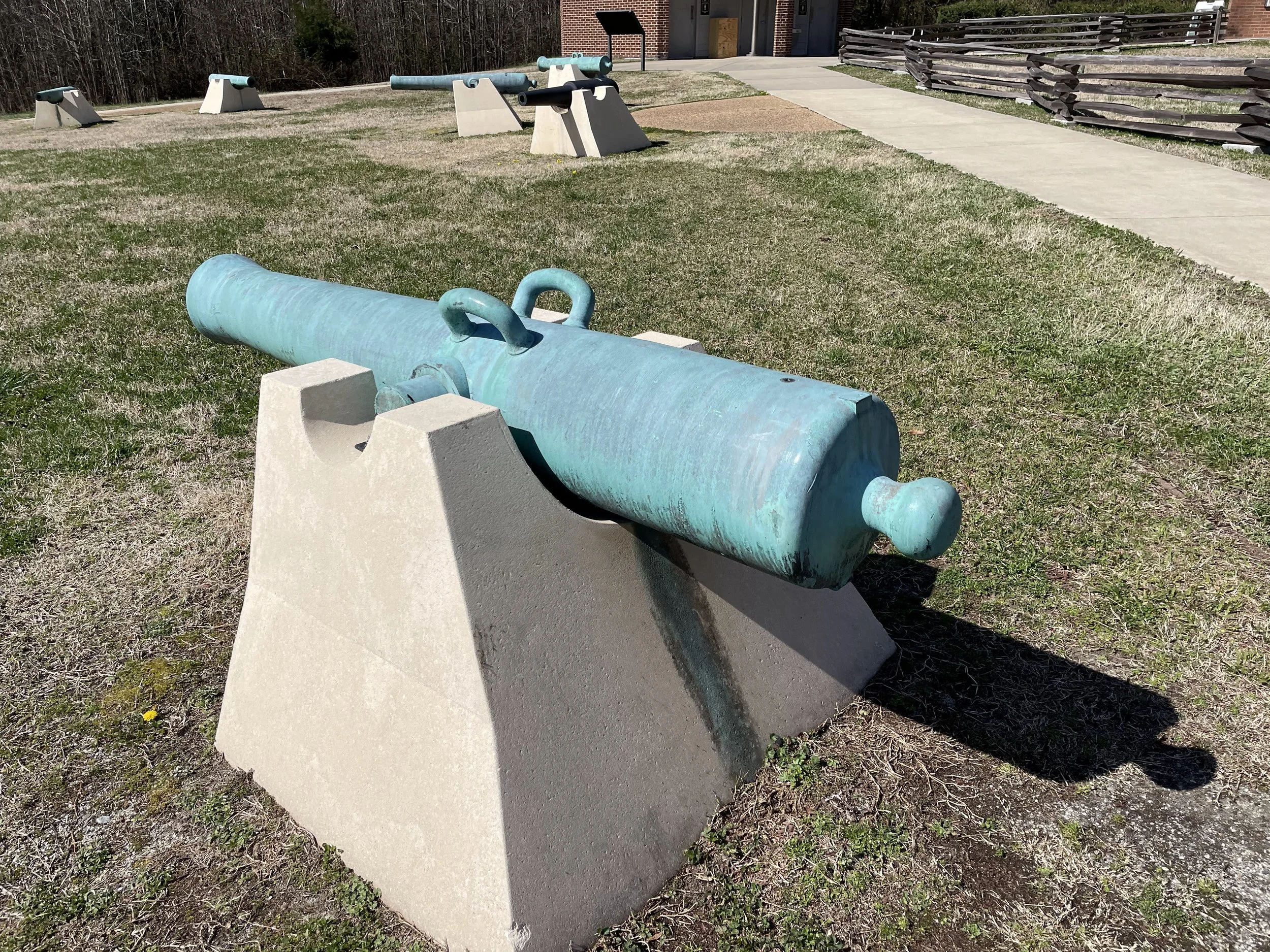
Early US Army Napoleons at Petersburg National Battlefield
Two early examples of US Army 12-Pounder "Napoleons" are displayed at Petersburg National Battlefield. Having handles above their trunnions, they are among the first examples of the 12-Pounder, Light, Pattern 1857 manufactured for the US Army.

The 24-Pounder Howitzer of CSS Georgia
An iron 24-Pounder Howitzer cast in 1862 by A. N. Miller in Savannah, Georgia is displayed at Old Fort Jackson near Savannah. The tube was recovered from the wreck of CSS Georgia in 1984 by the U.S. Army Corps of Engineers. It weighs roughly 1,500 pounds and is displayed upon a naval carriage. It is the only example of its type known to exist.

The 32-Pounder of 57 Hundredweight at Fort Branch
A rifled and banded 32-Pounder of 57 Hundredweight is displayed at Fort Branch near Hamilton, North Carolina. The fort, which overlooks the Roanoke River and was built to counter any attempt by US Navy gunboats to press up river, was evacuated in April of 1865. The seven cannons recovered there (plus a fragment of a burst gun), remains of original carriages, projectiles, and other artifacts represent a truly remarkable collection of artillery connected with a single site and displayed there.
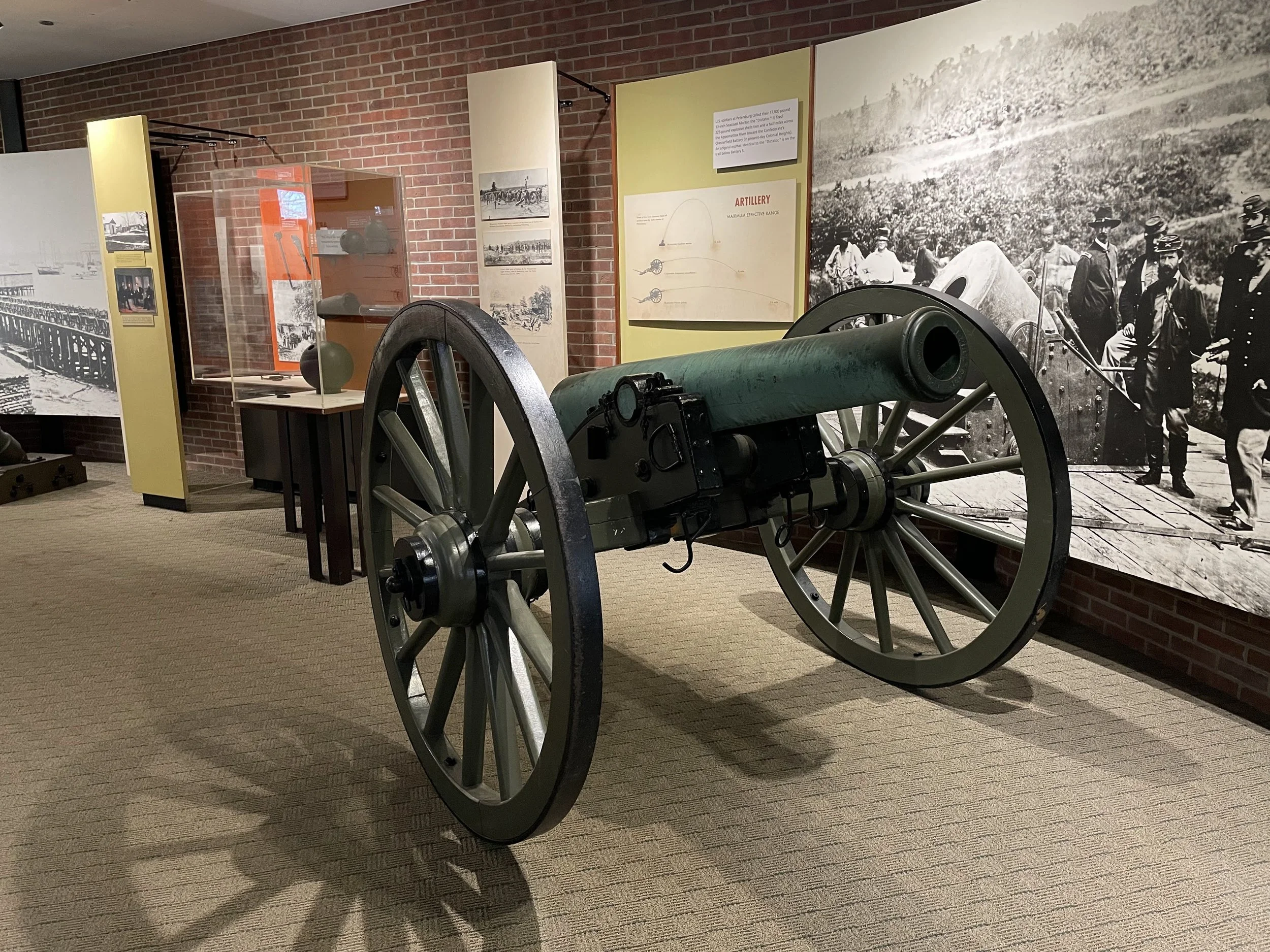
12-Pounder Napoleon, Revere Copper Company Number 253, at Petersburg
This Revere Copper Company 12-Pounder Napoleon, Number 253, in the visitor center at Petersburg National Battlefield bears a placard which states: "This 12-Pounder bronze Napoleon tube was captured by the Confederates during the Battle of Reams Station, August 25th, 1864.
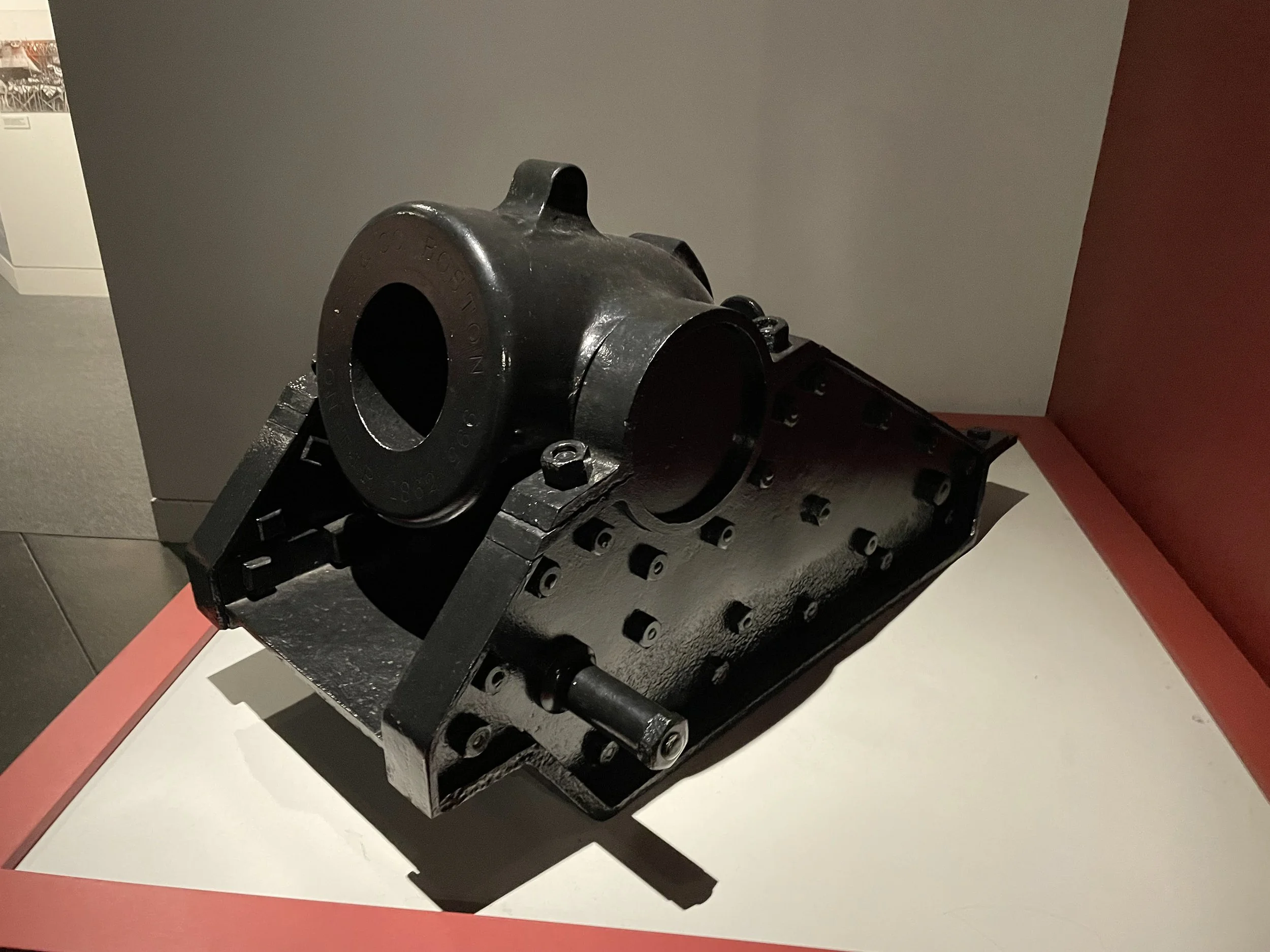
8-Inch Siege Mortar, Pattern 1861, at the Mariners’ Museum
US Army 8-Inch Siege Mortar manufactured by Cyrus Alger and Company in 1862. Registry Number 7. Thomas Jackson Rodman, Inspector. 995 pounds as manufactured. Displayed at the Mariners' Museum in Newport News, Virginia

The 8-Inch Rifles at the University of Maine
Two US Navy 8-Inch (180-Pounder) Muzzle Loading Rifles have been displayed at the University of Maine in Orono since Llewellyn N. Edwards, Class of 1898, facilitated their donation by the Navy in 1932. The cannons, originally cast as 11-Inch Dahlgrens, would serve aboard US Navy ships including USS Pensacola, USS Juniata, and USS Galena in the 1870s and 1880s.
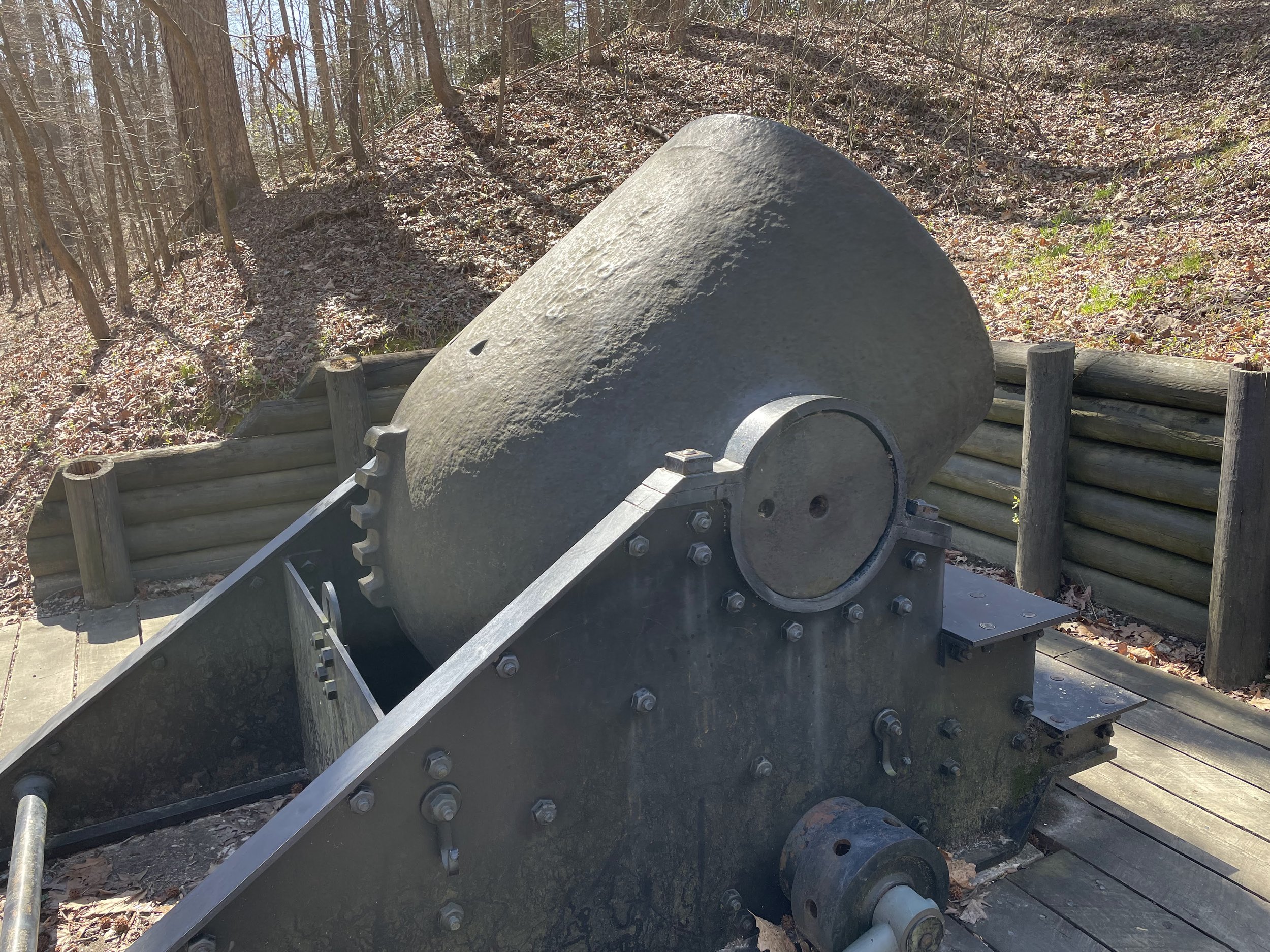
Dictator: The 13-Inch Mortar of Petersburg
In 1864 a 13-Inch Seacoast Mortar, Pattern 1861, was used by the United States Army in the siege of Petersburg. The mortar was mounted on a railcar - named the Petersburg Express - and used against Confederate fortifications. The fame of this heavy mortar may be greater than it's impact upon the siege. Whether the "Dictator" is among the approximately thirty 13-Inch Mortars which survive to the present is a matter of conjecture.
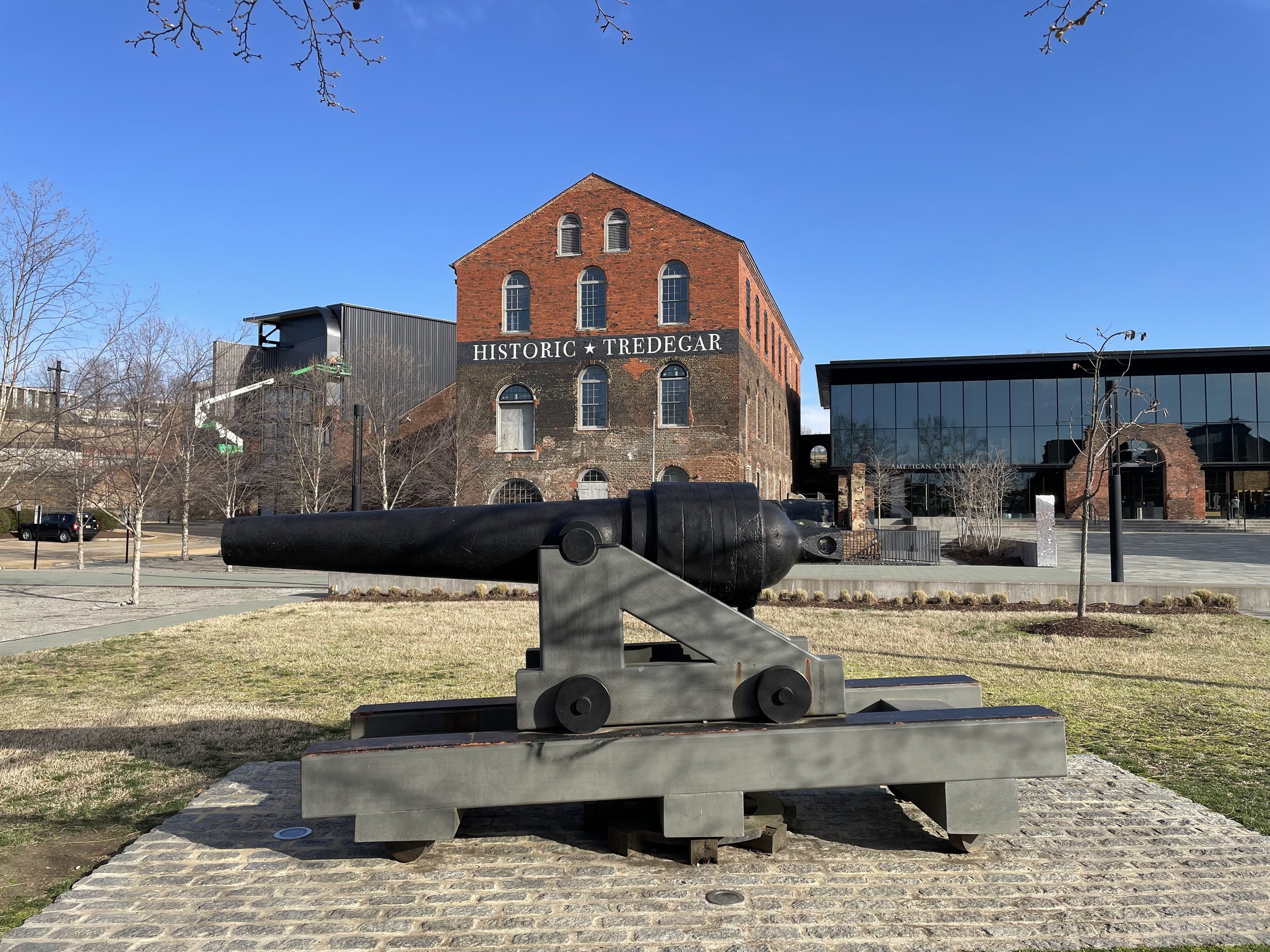
The 6.4-Inch Brooke at Historic Tredegar
A Double Banded 6.4-Inch Brooke Rifle is displayed outside of Historic Tredegar Ironworks in Richmond, Virginia where it was originally manufactured in 1862.
The Brooke in Richmond is marked with the Tredegar foundry number 1633 and as weighing 9,400 pounds as manufactured. Number 1633 was cast at Tredegar on or about July 26th, 1862.
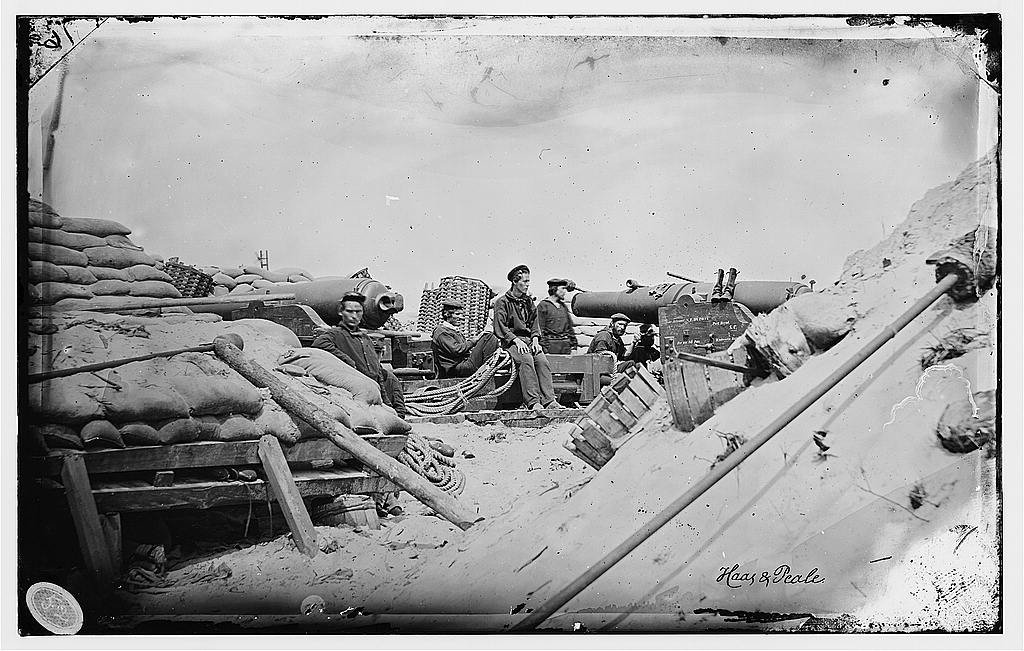
The Whitworth Rifles of the Naval Battery on Morris Island
Four 5-Inch Whitworth Muzzle Loading Rifles were captured by the US Navy when the Blockade Runner S.S. Princess Royal was captured by USS Unadilla off of Charleston. Two of the four survive. One at West Point bearing a plaque stating that it was used on Morris Island. The other is at the Washington Navy Yard where it may have been tested in the experimental battery there.

24-Pounder of 32 Hundredweight at Fort Pulaski
A Medium 24-Pounder of 32 Hundredweight cast in 1826 at Bellona Foundry may be seen on the parapet of Fort Pulaski. This type of cannon was designed for the Boston-class sloops of the US Navy in the 1820s. This cannon is recorded as serving aboard USS Fairfield.