The 10-Pounder Parrott Rifles of Little Round Top
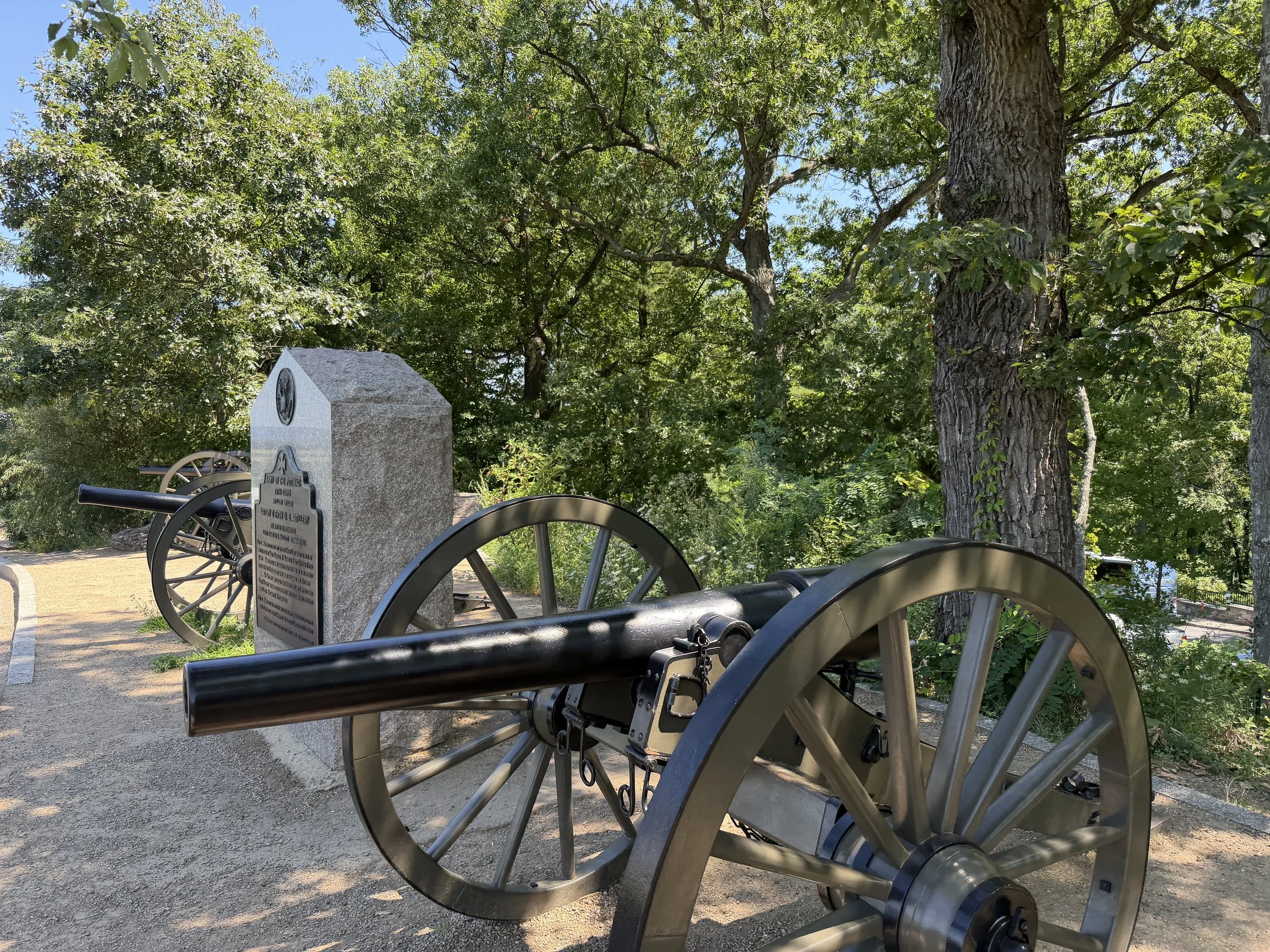
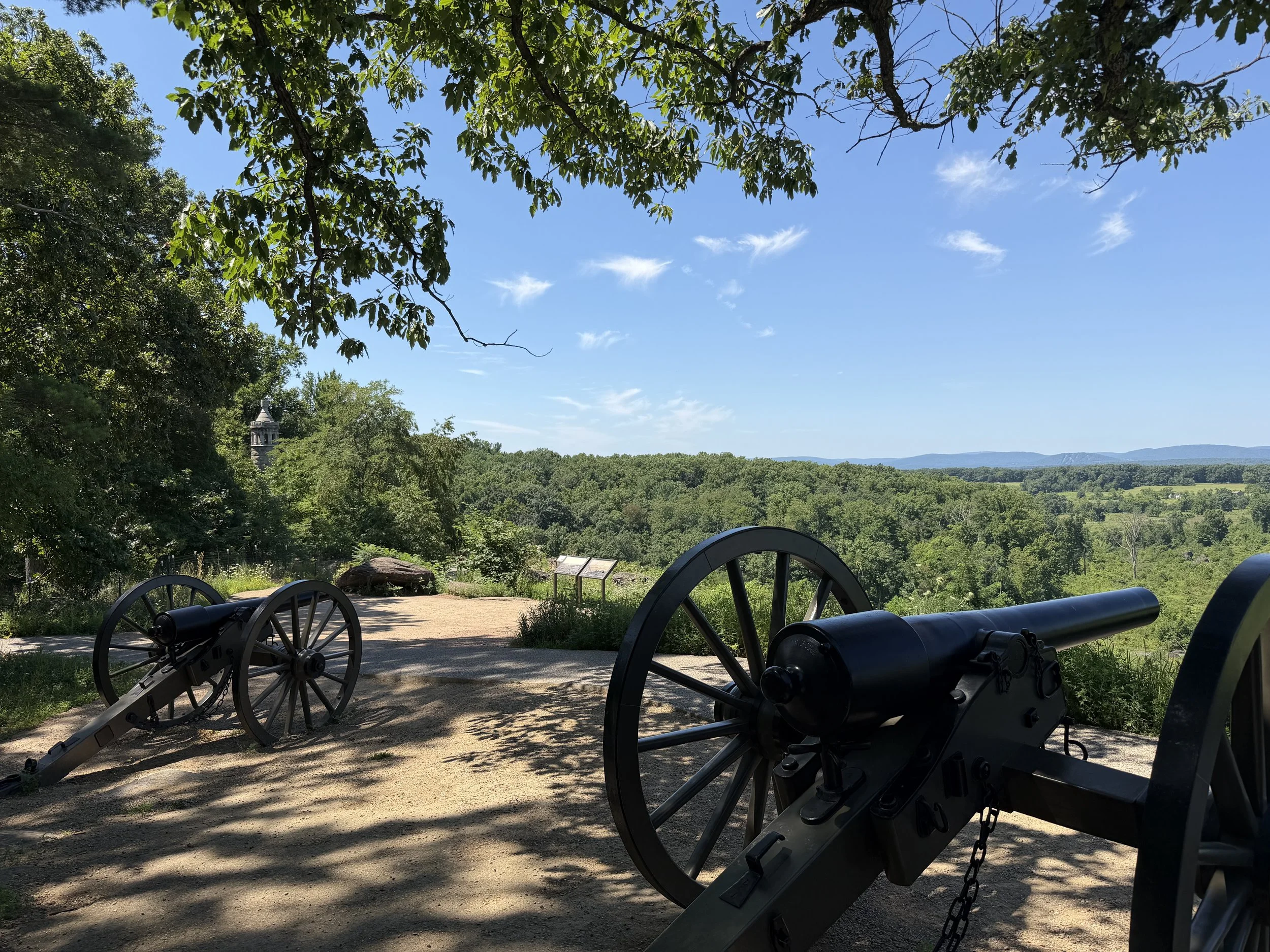
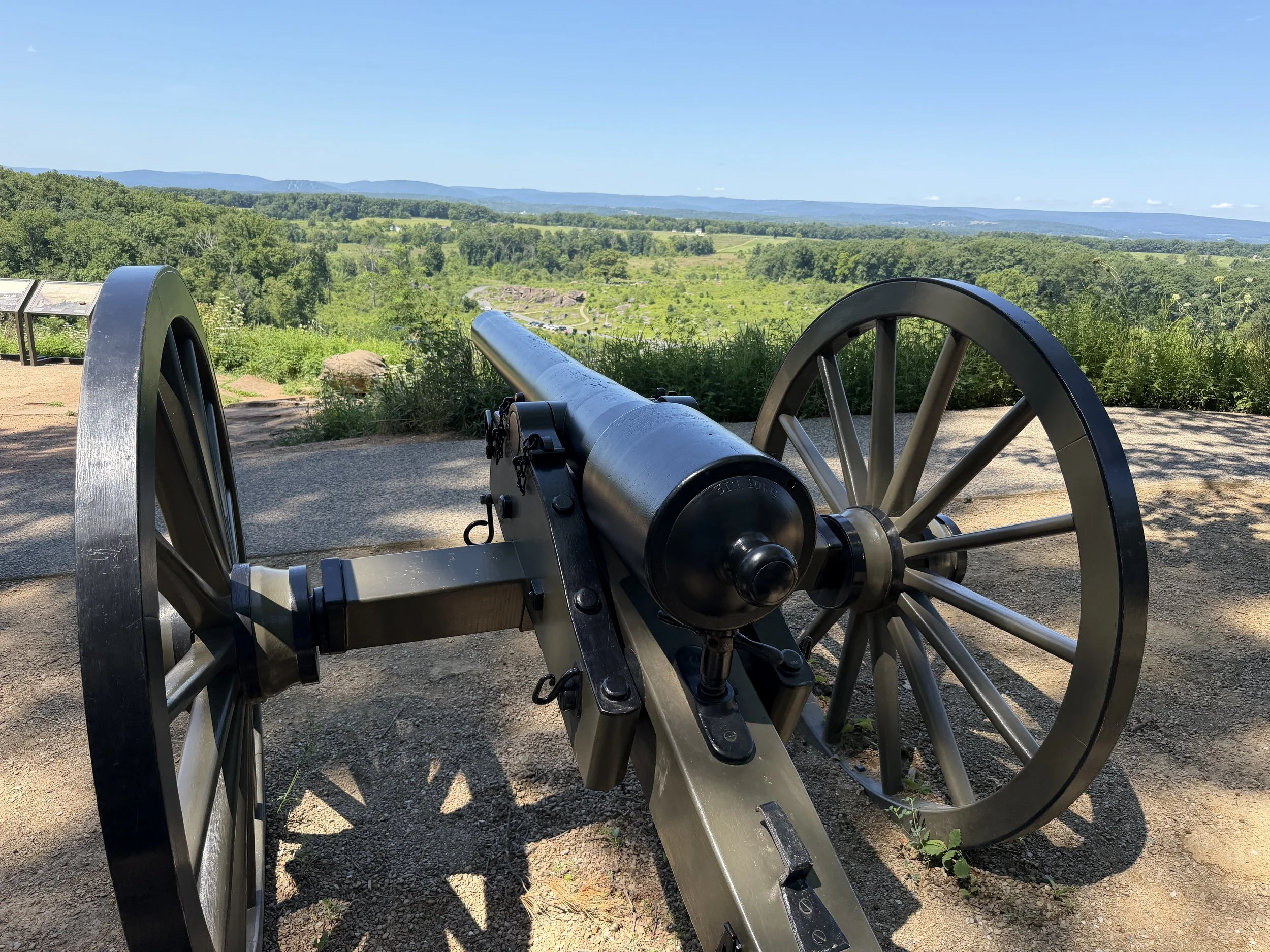
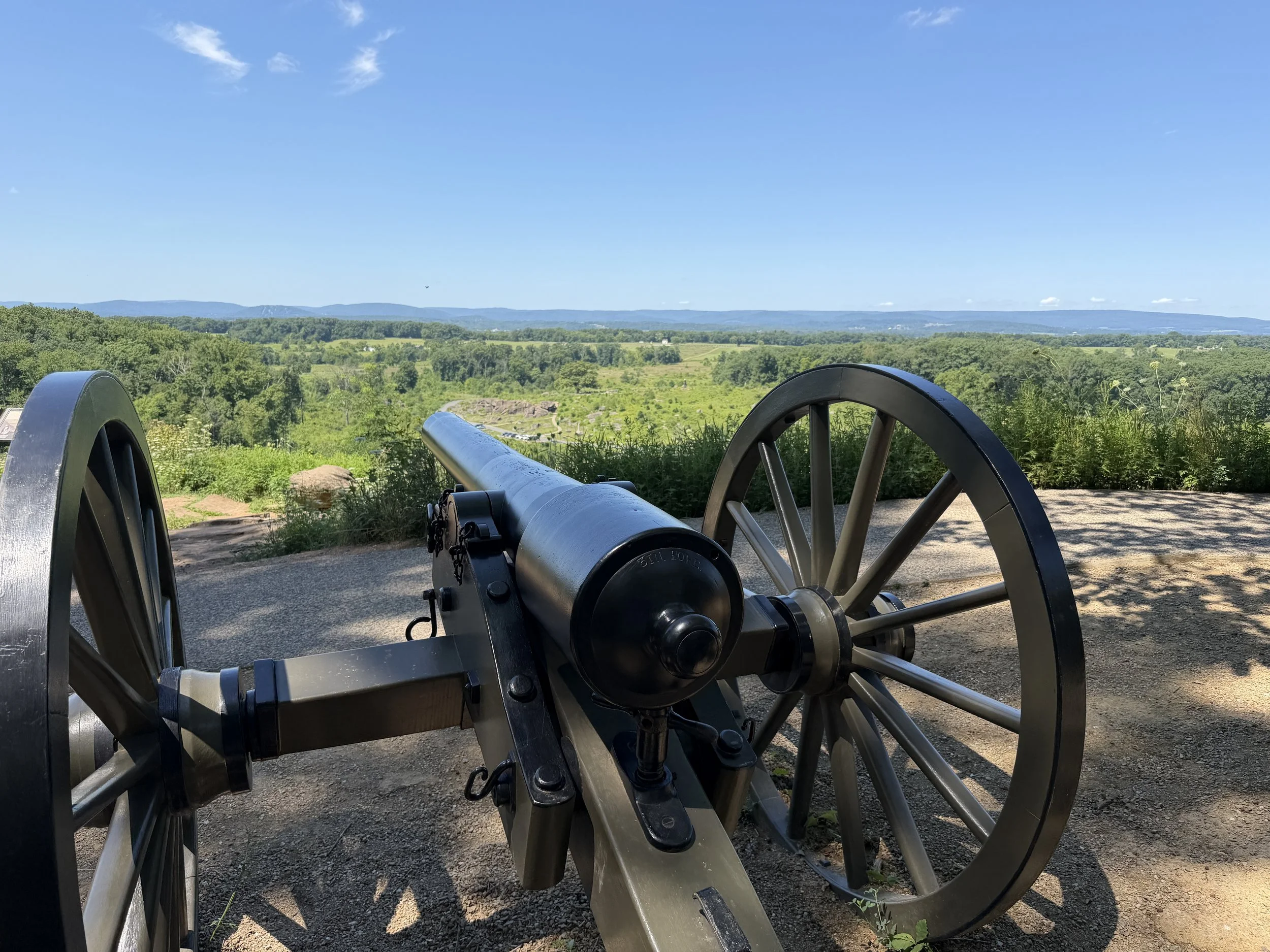
US Army 10-Pounder Parrott Rifles are displayed on Little Round Top at Gettysburg National Military Park
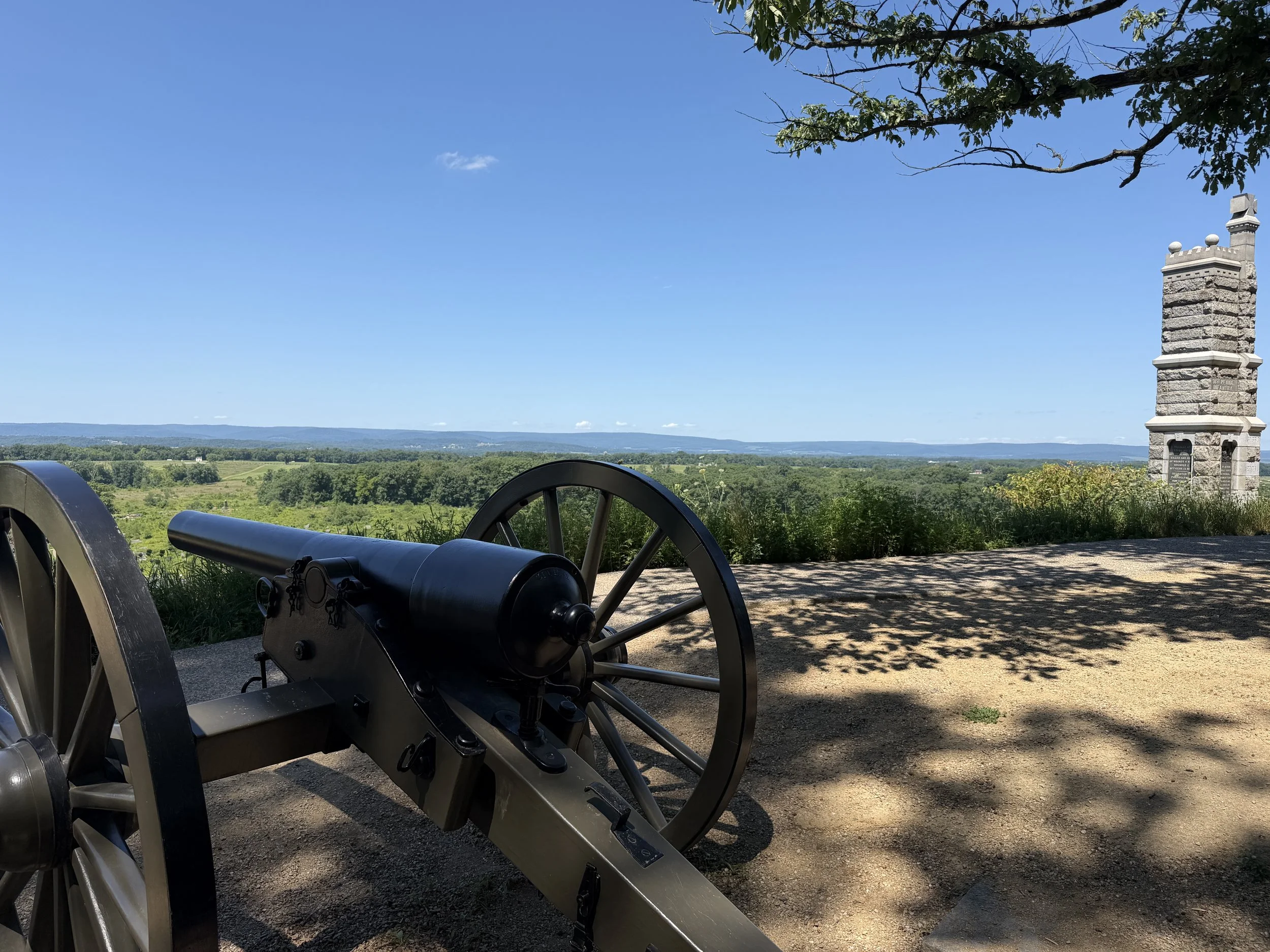
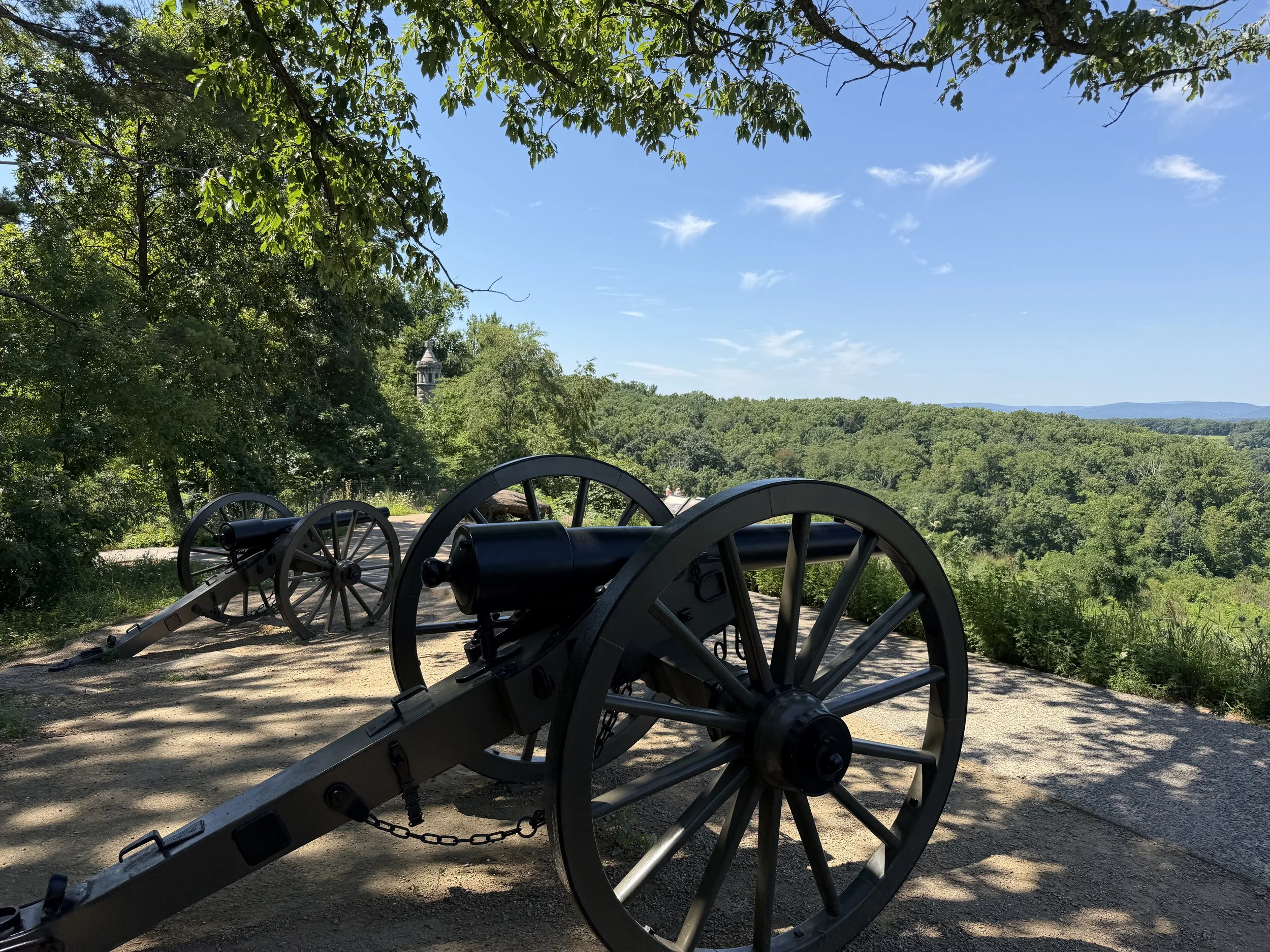
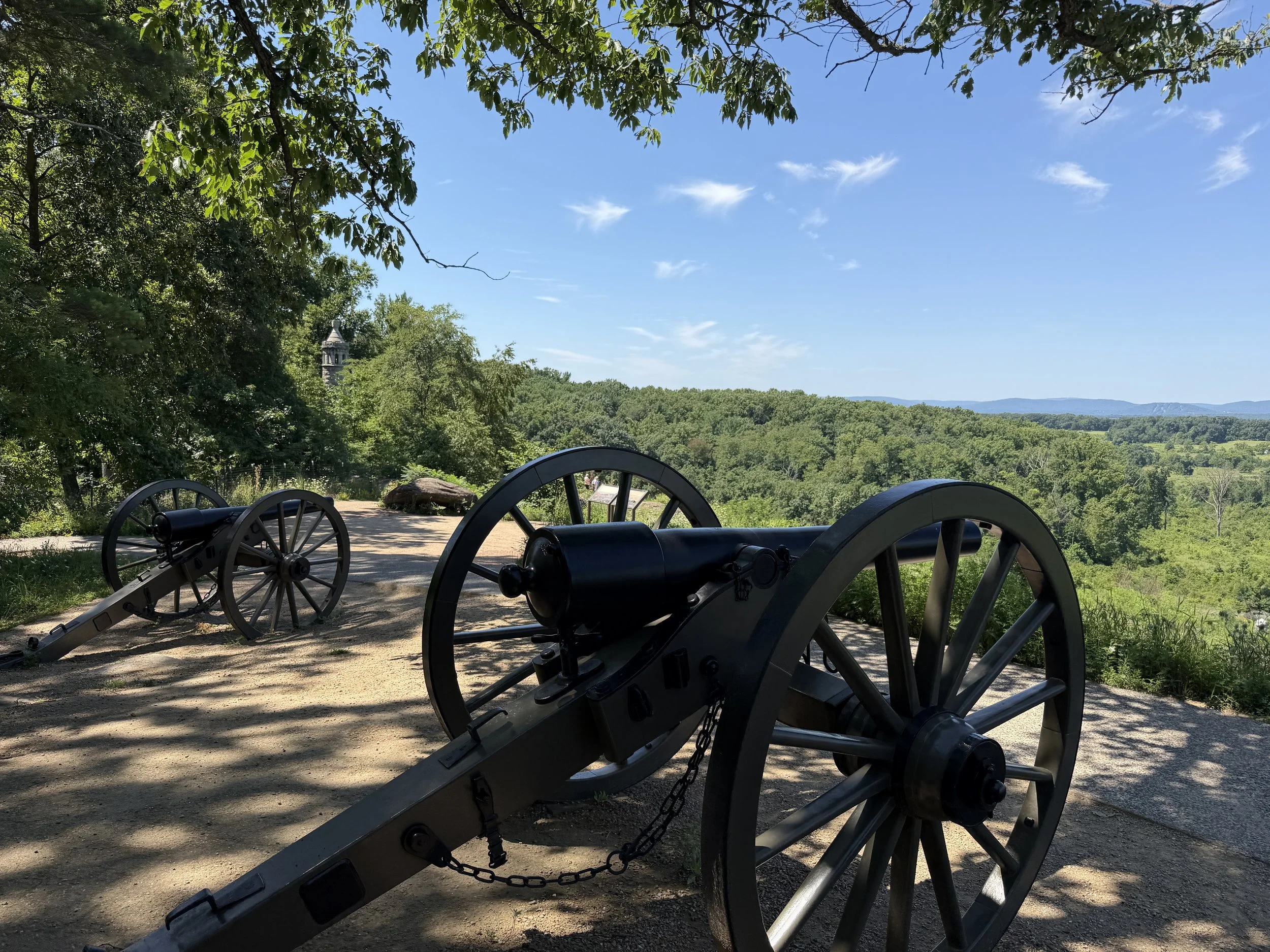
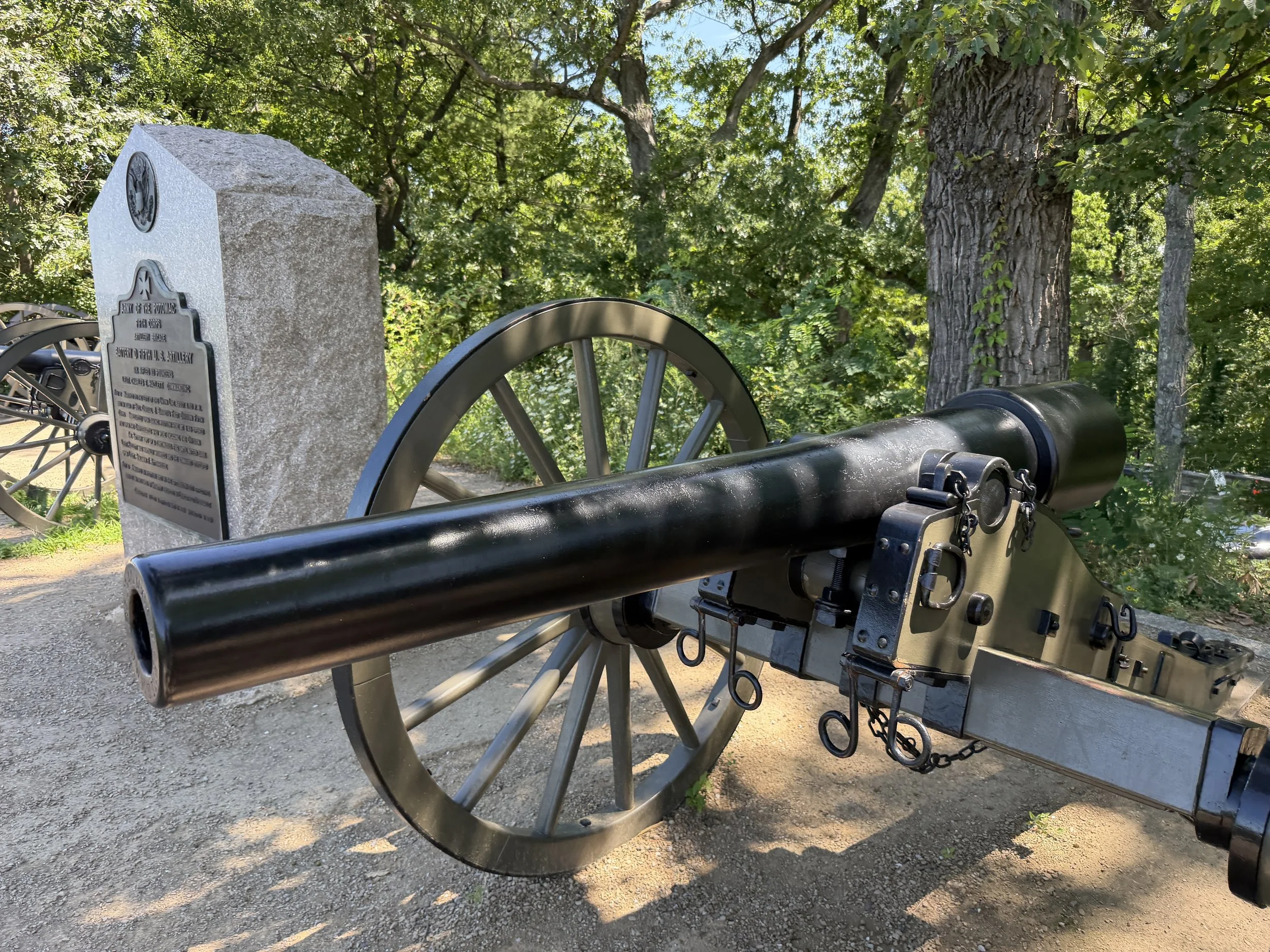
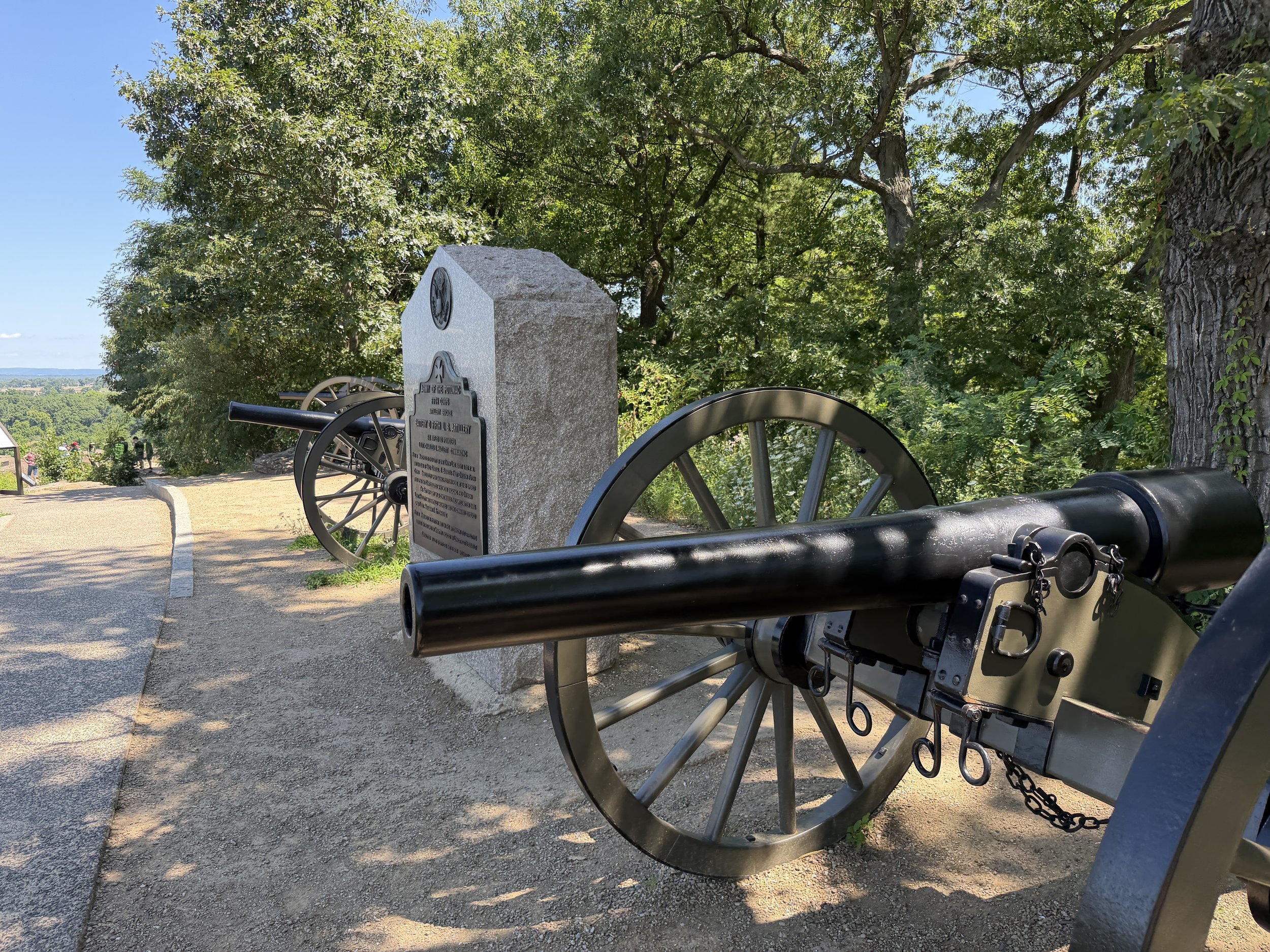
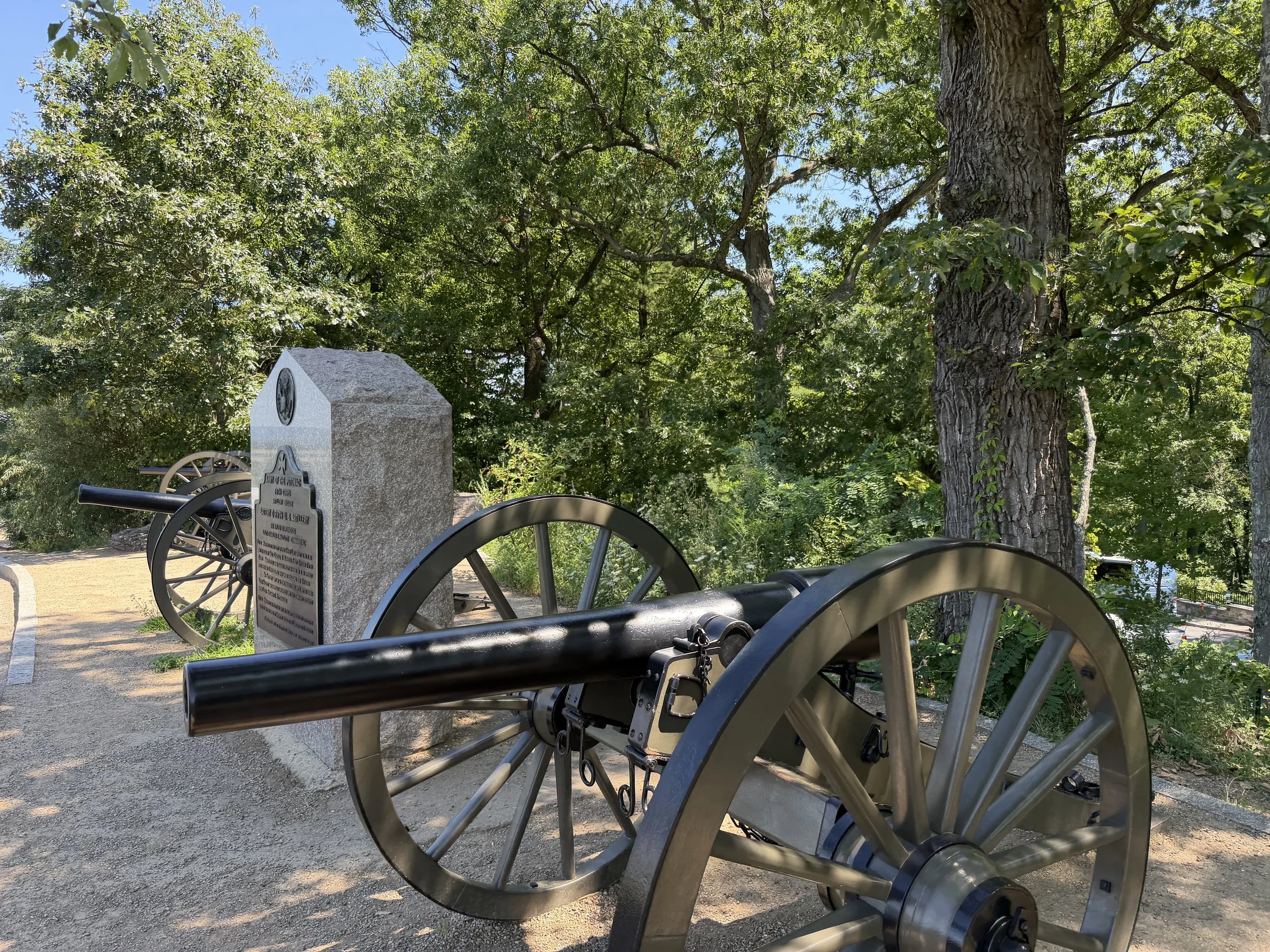
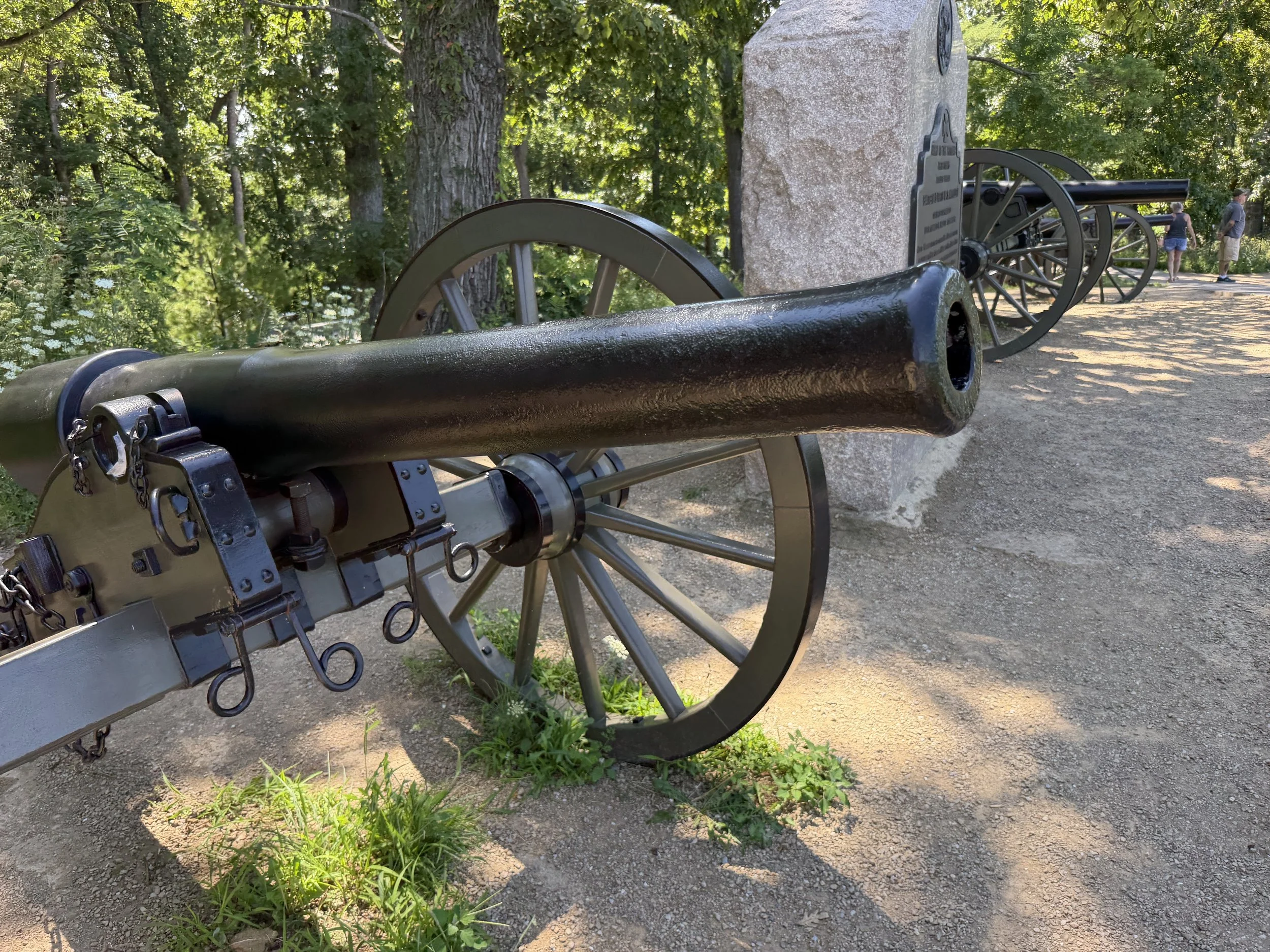
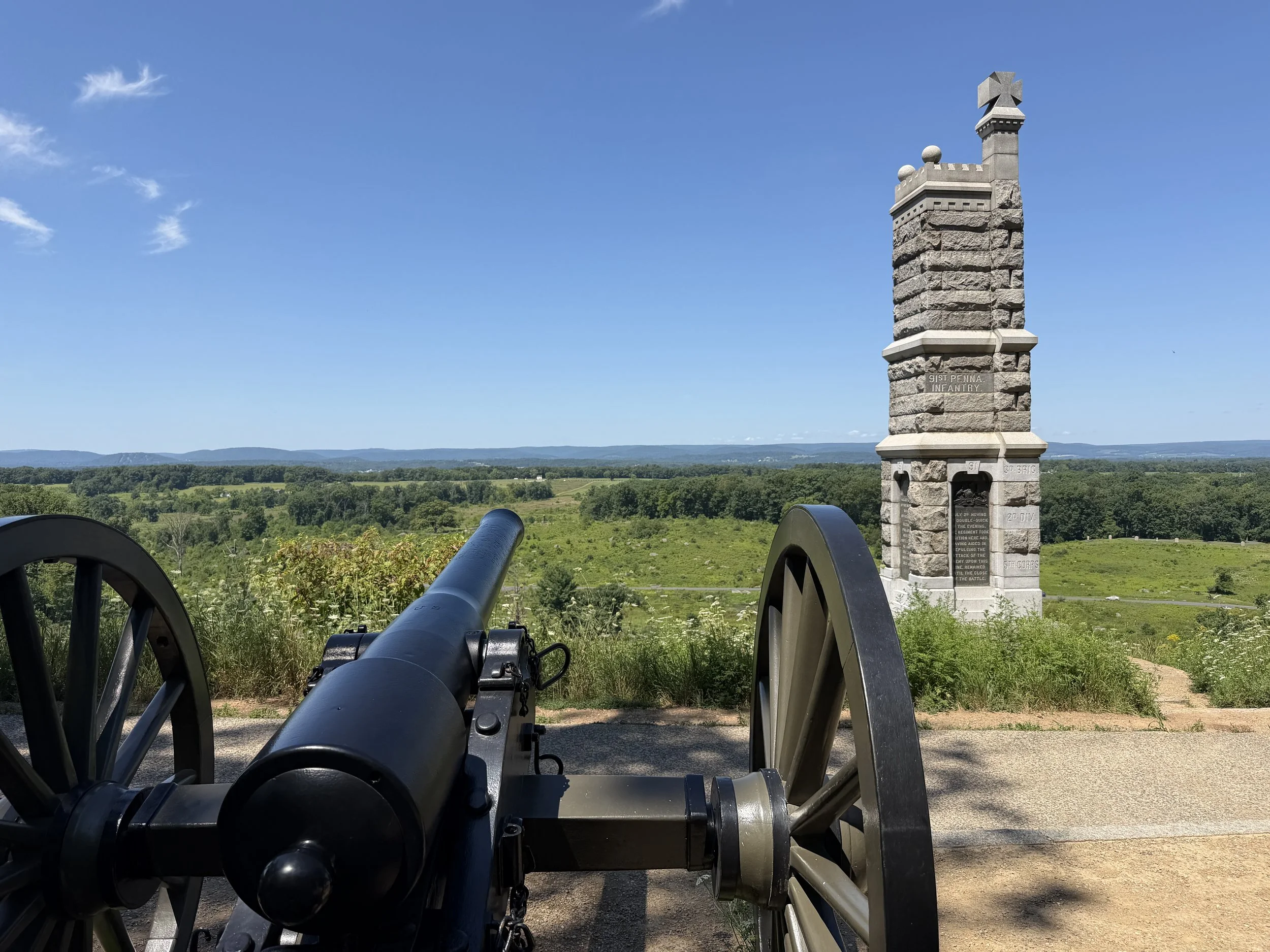
Four US Army 10-Pounder Parrott Rifles are displayed on Little Round Top at Gettysburg National Military Park. The four Parrotts flank a monument which states:
“Army of the Potomac, Fifth Corps, Artillery Brigade, Battery D. Fifth US Artillery. Six Rifled 10-Pounders, Lieut. Charles E. Hazlett, Commanding. July 2nd: Marched to the Left of the Union Line about 4:30pm and in rear of Brig. Gen. J. Barnes’s First Division, Fifth Corps. Immediately upon taking position here at 5:45 opened fire upon the Confederates who were engaging the division. The battery kept up a continuous fire until after dark. Lieut. Hazlett was mortally wounded and the command devolved upon Lieut. Benjamin F. Rittenhouse. July 3: Remained in position and in the afternoon did effective service on the lines of infantry engaged in Longstreet’s assault. Casualties. Killed: 1 officer and 6 men. Wounded: 6 men.”
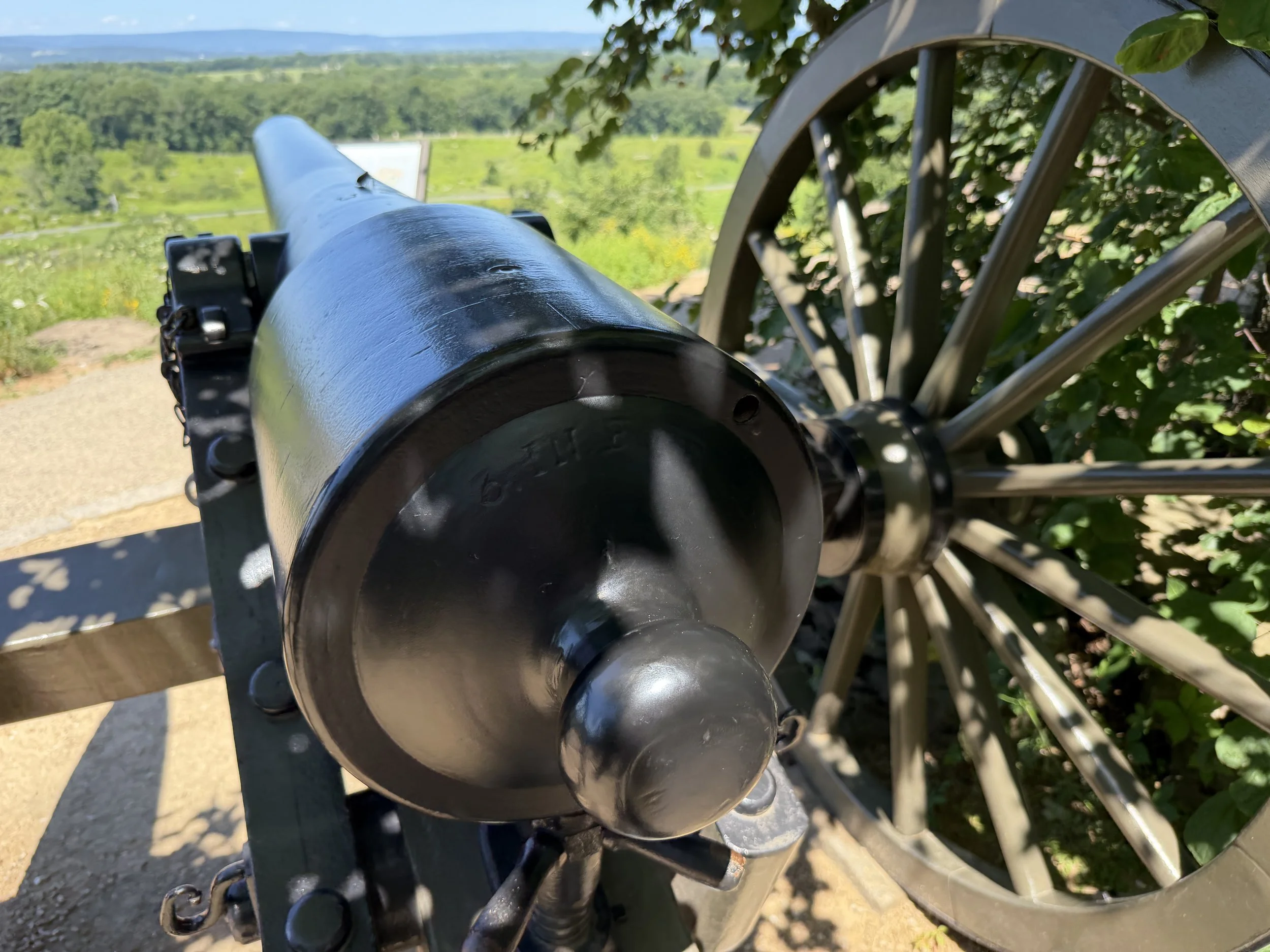
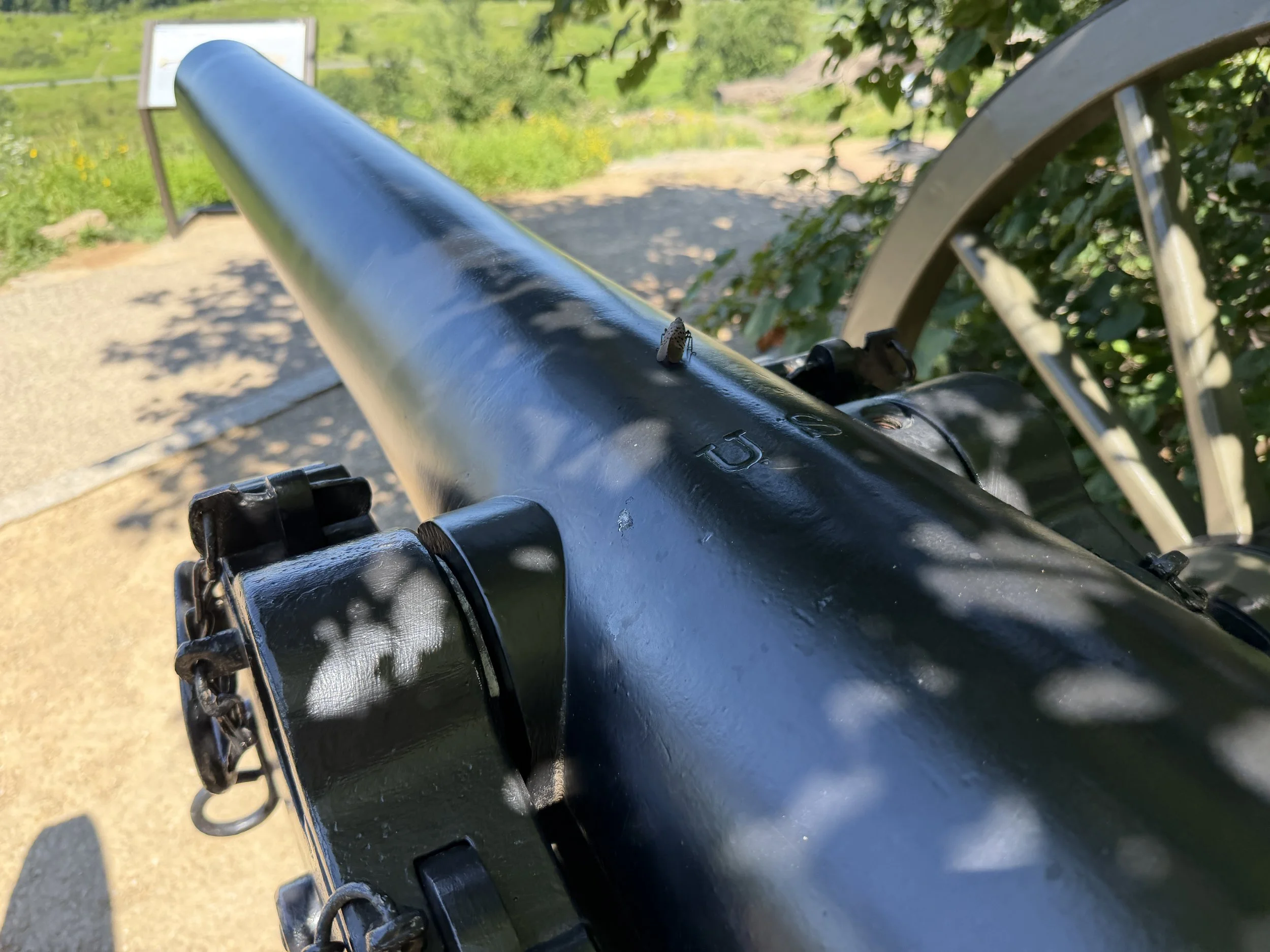
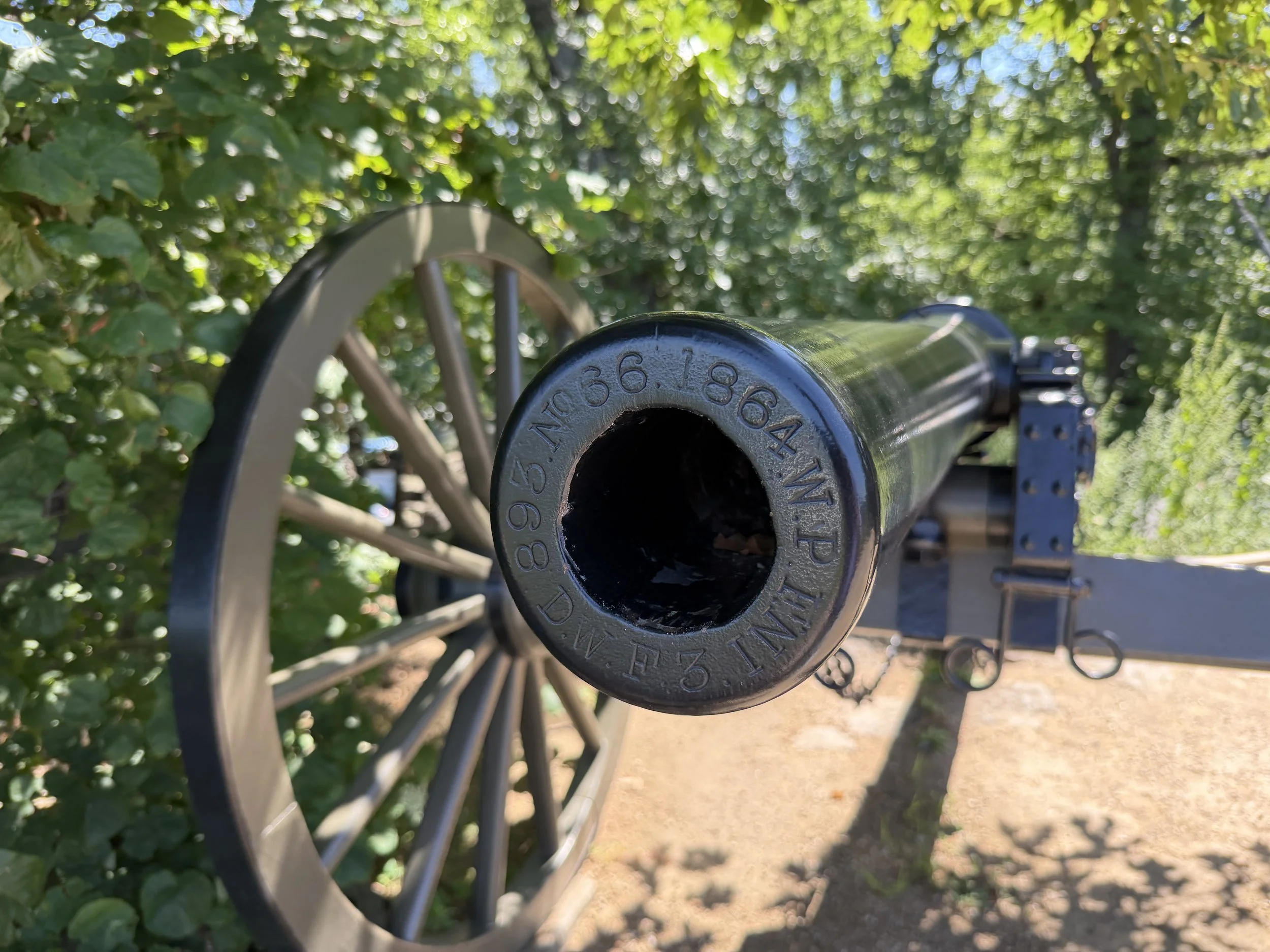
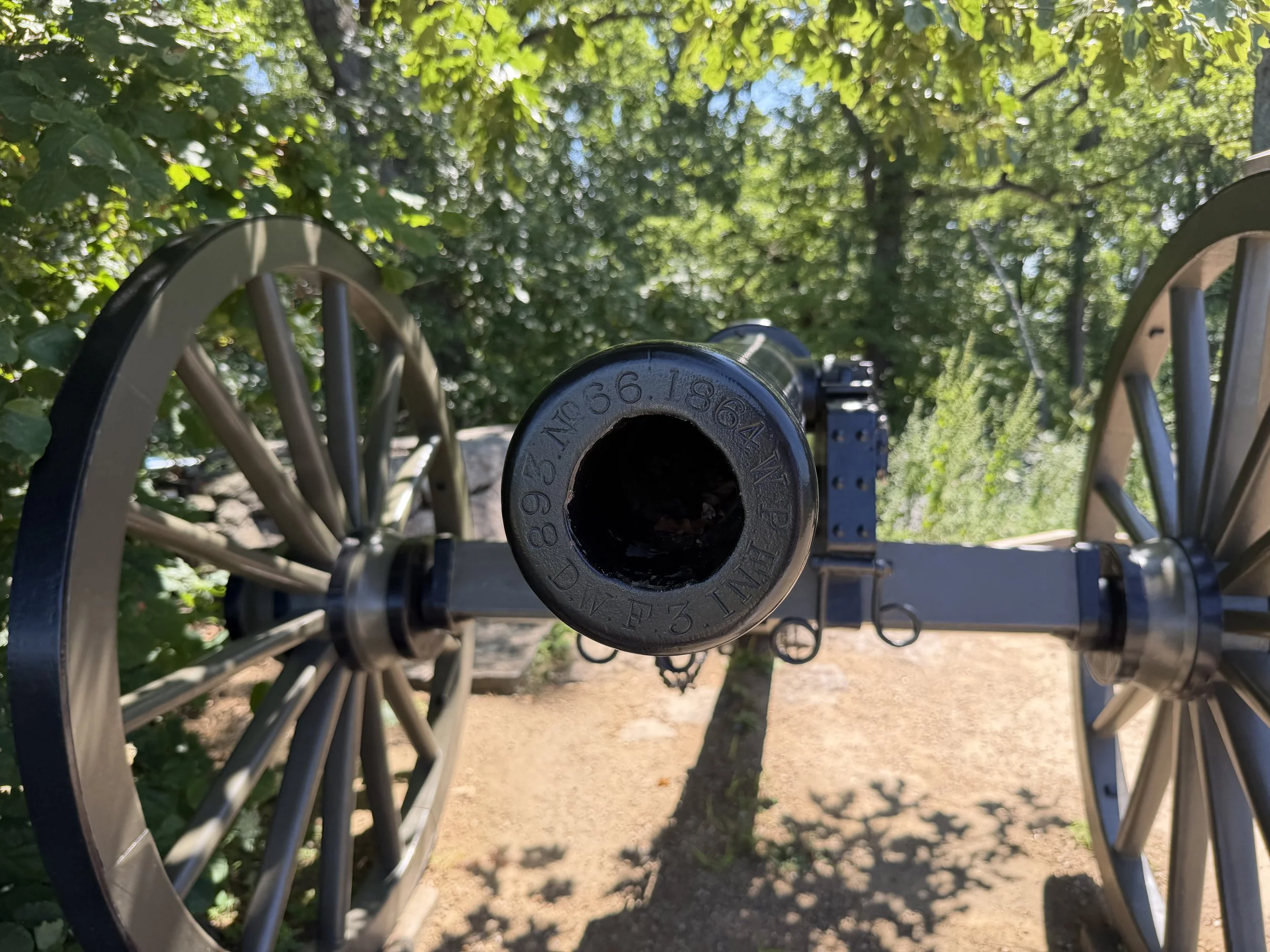
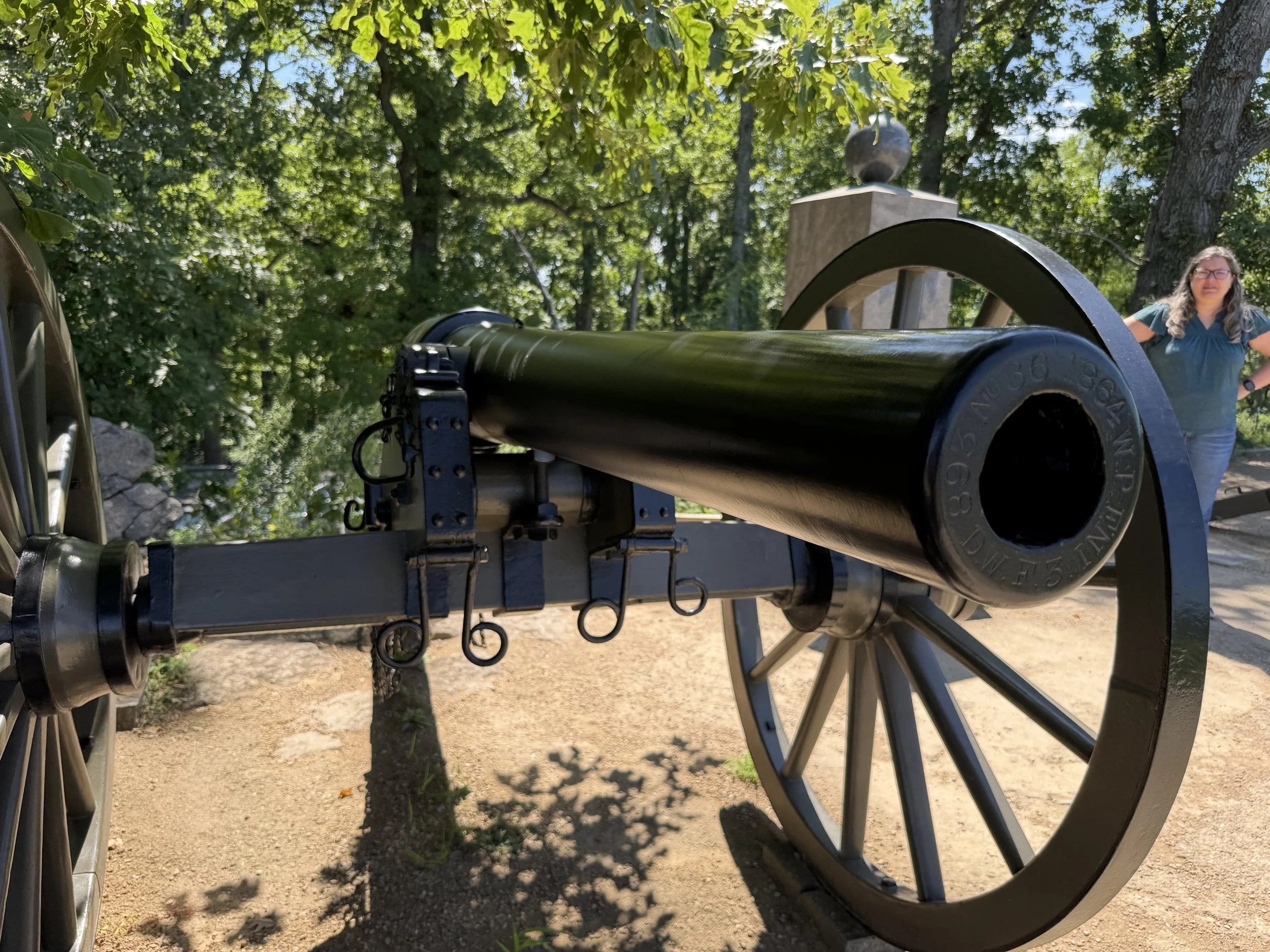
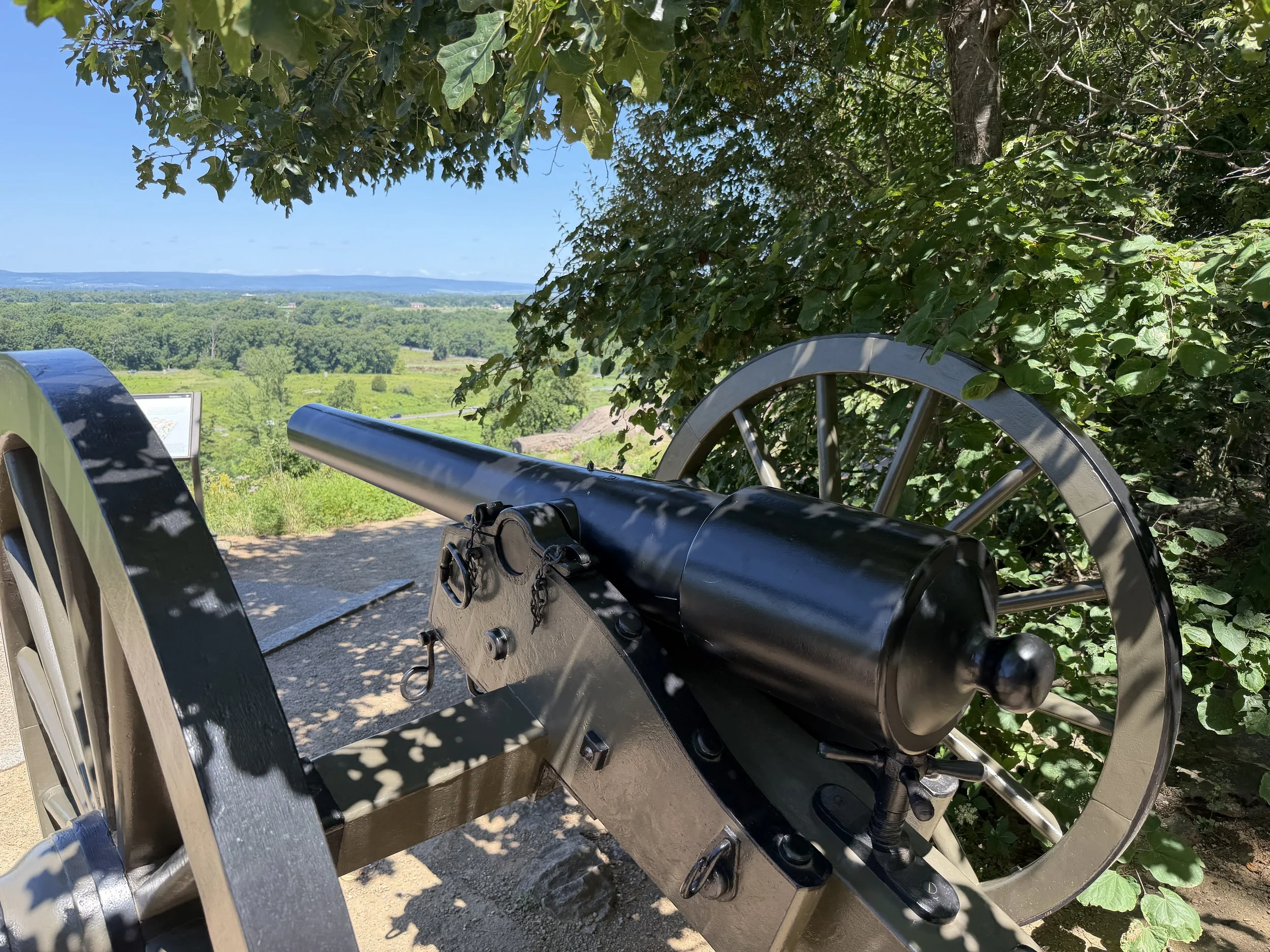
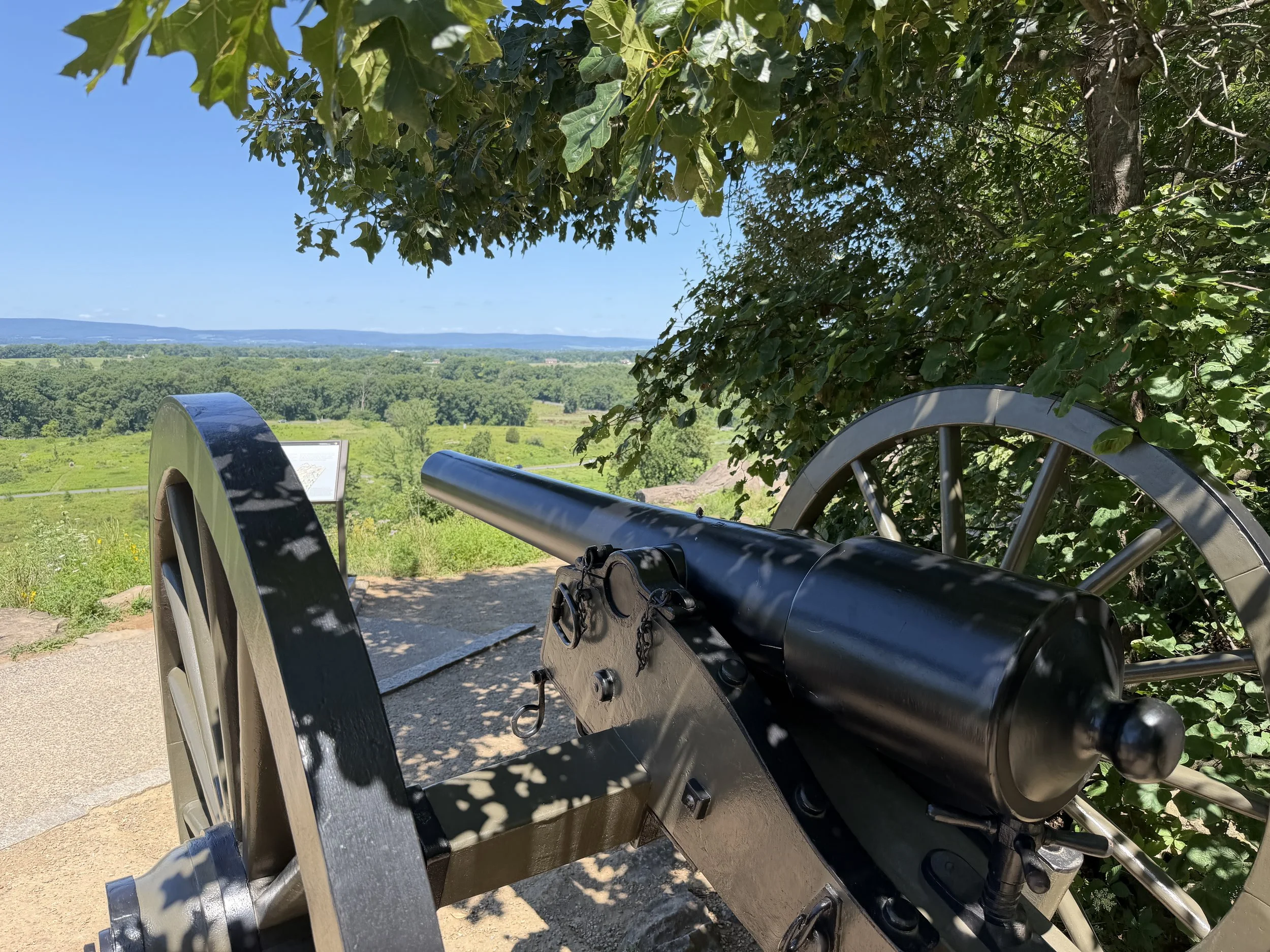
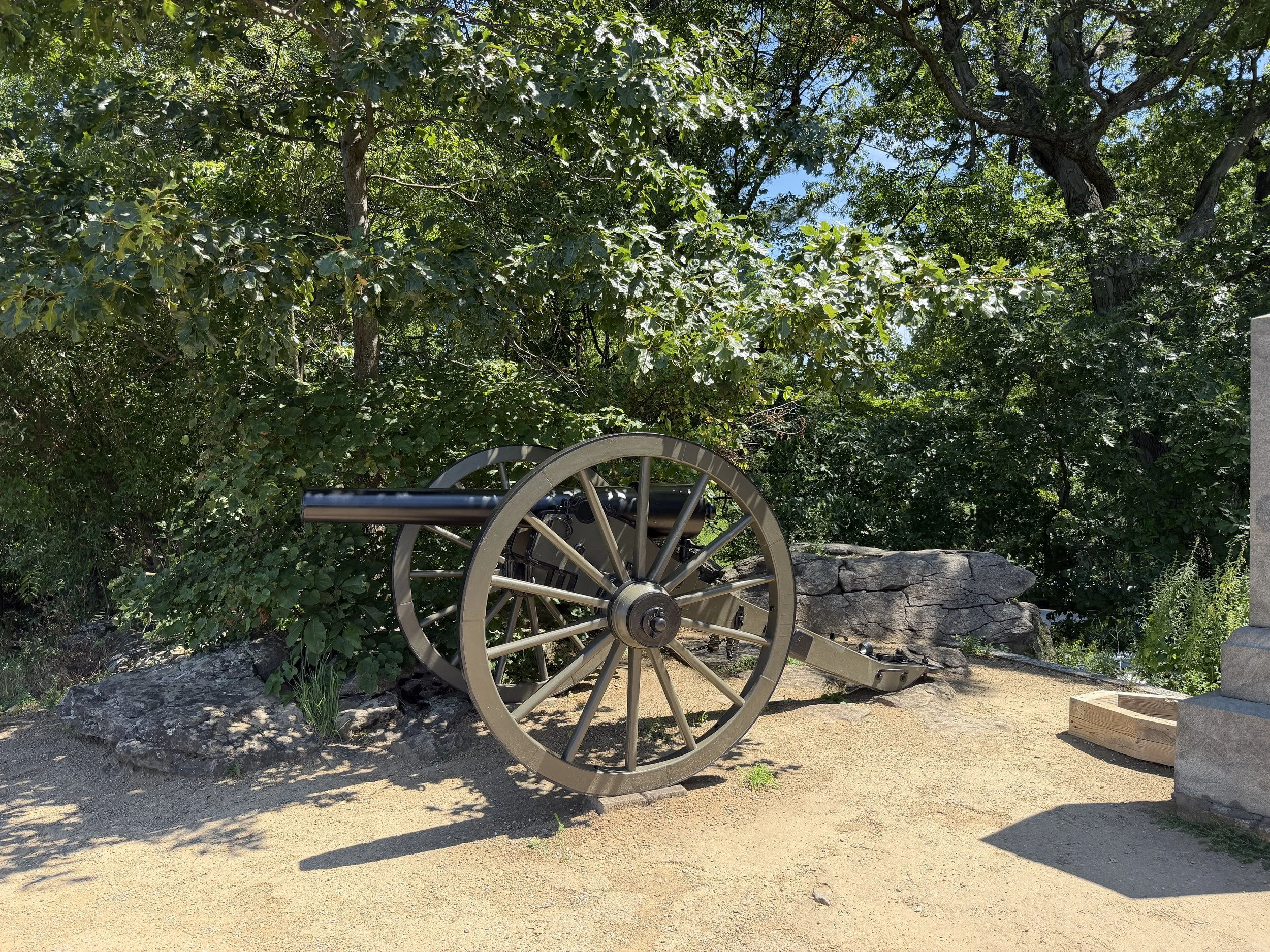
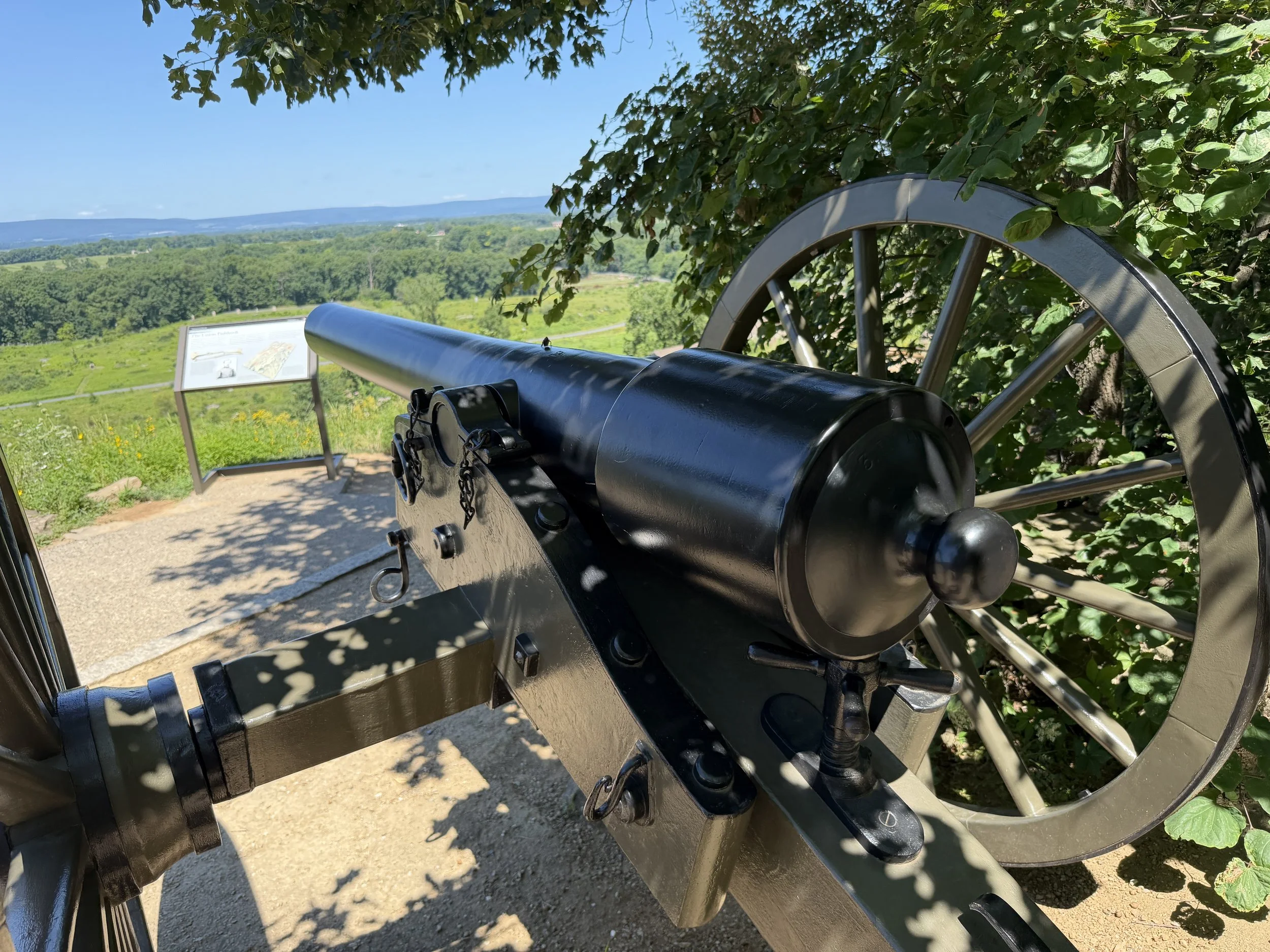
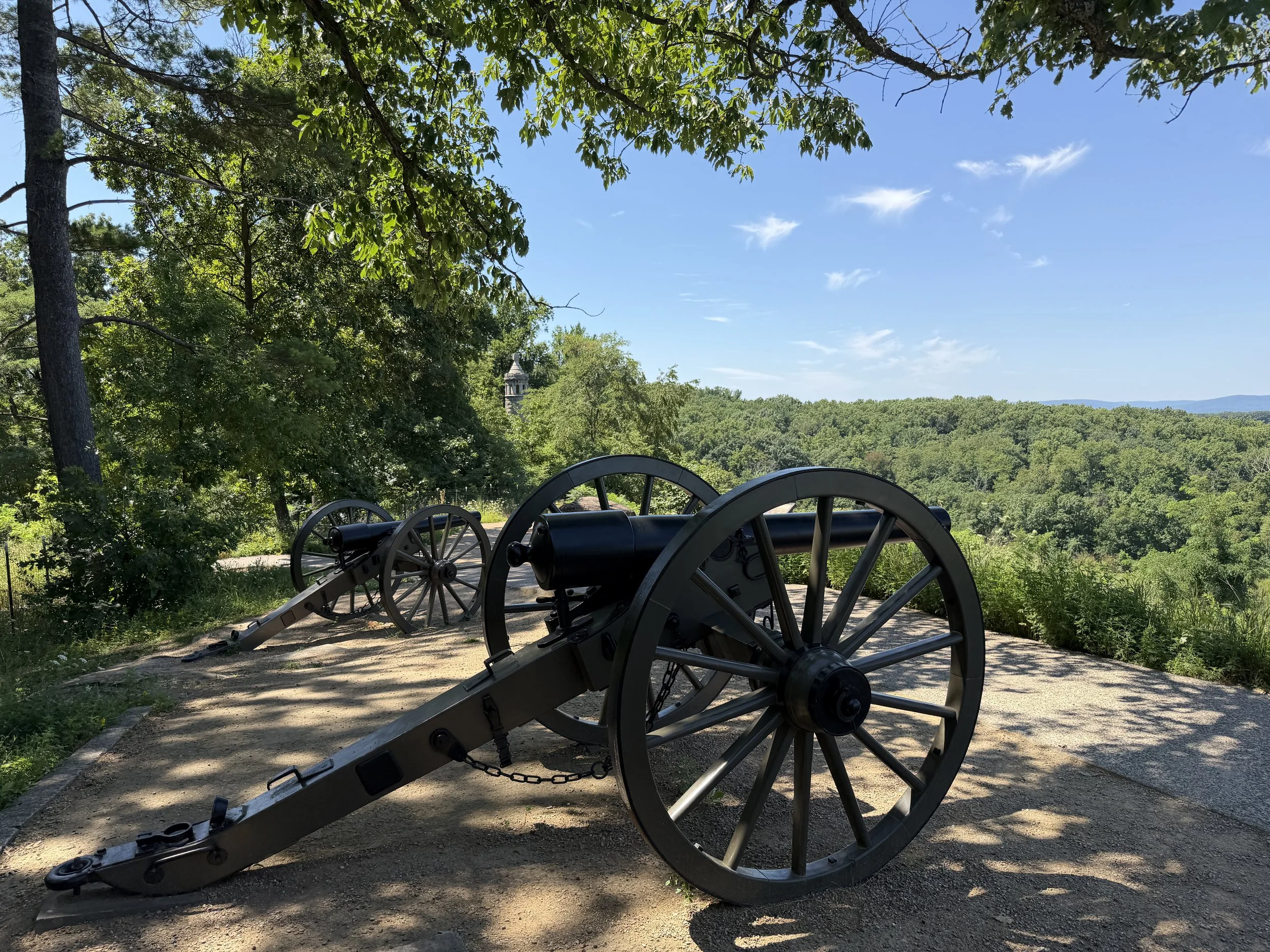
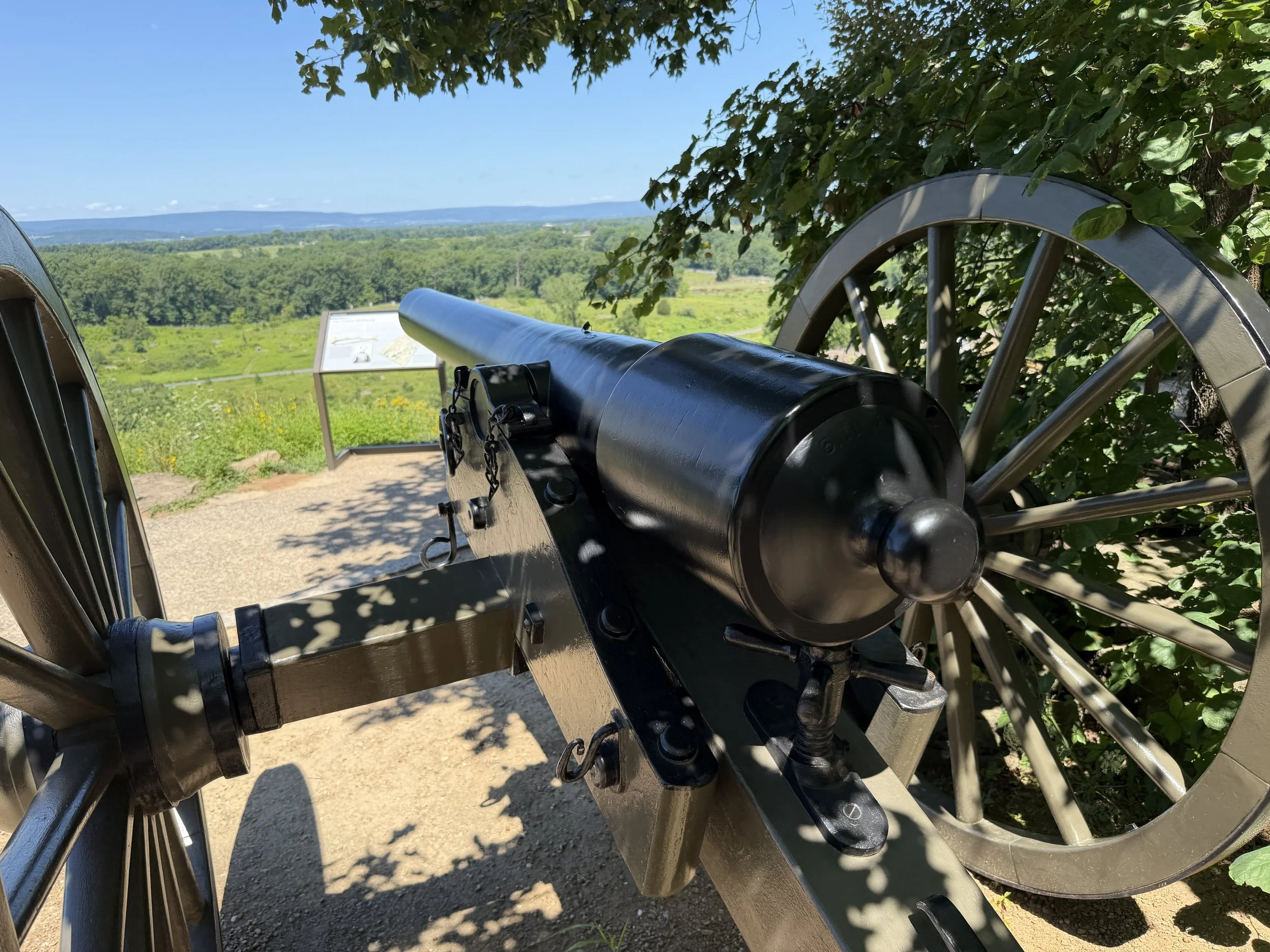
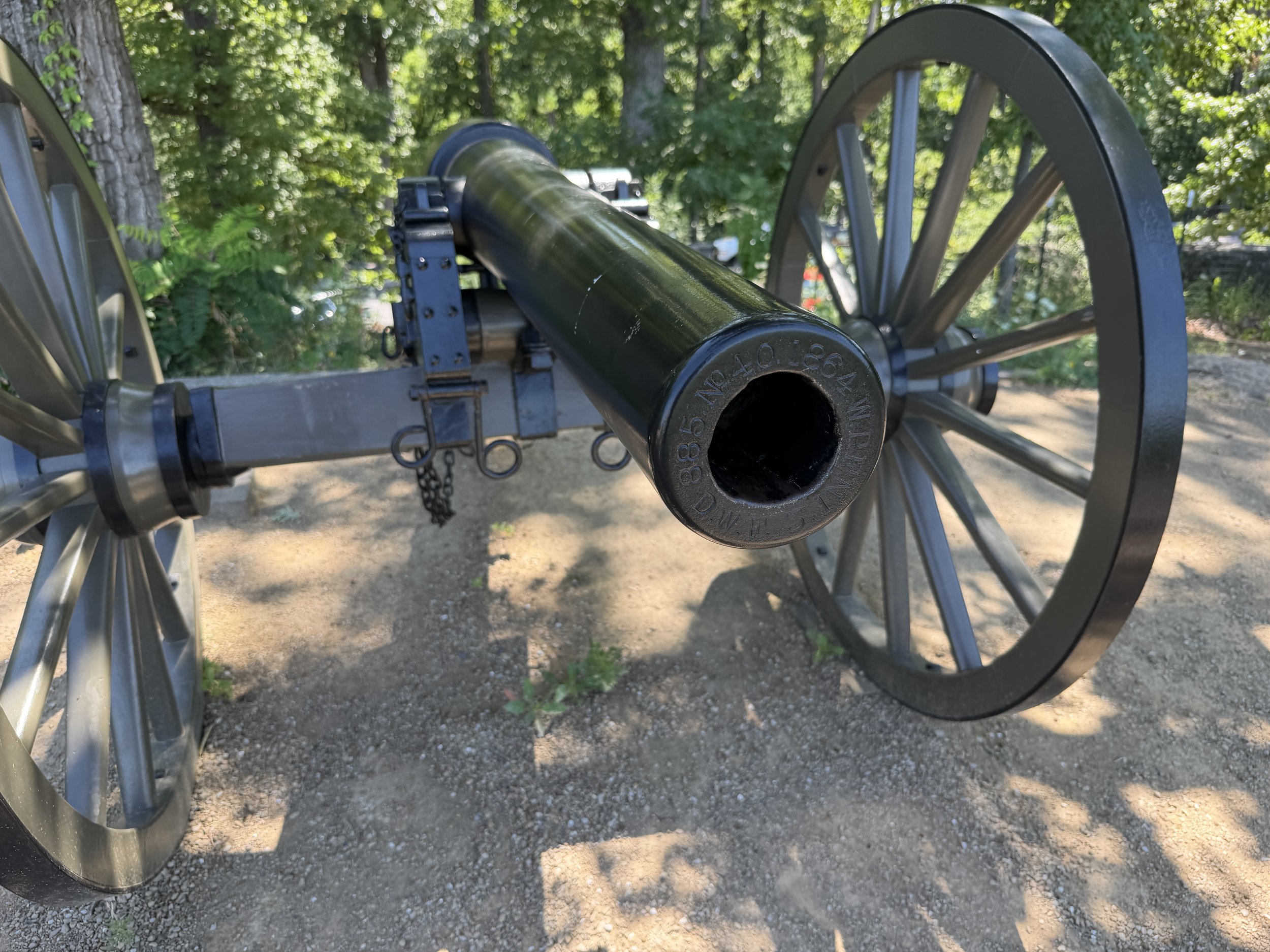
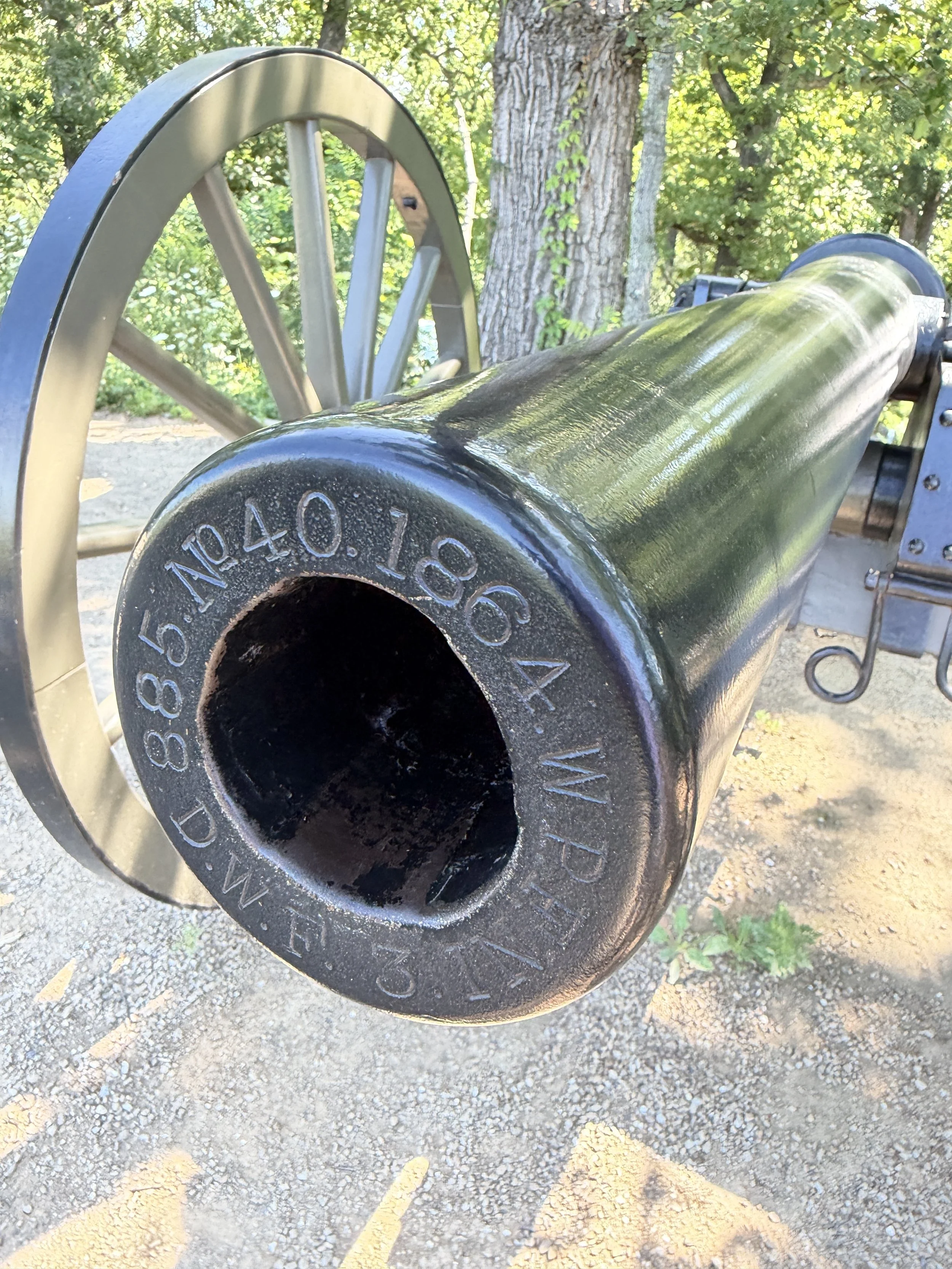
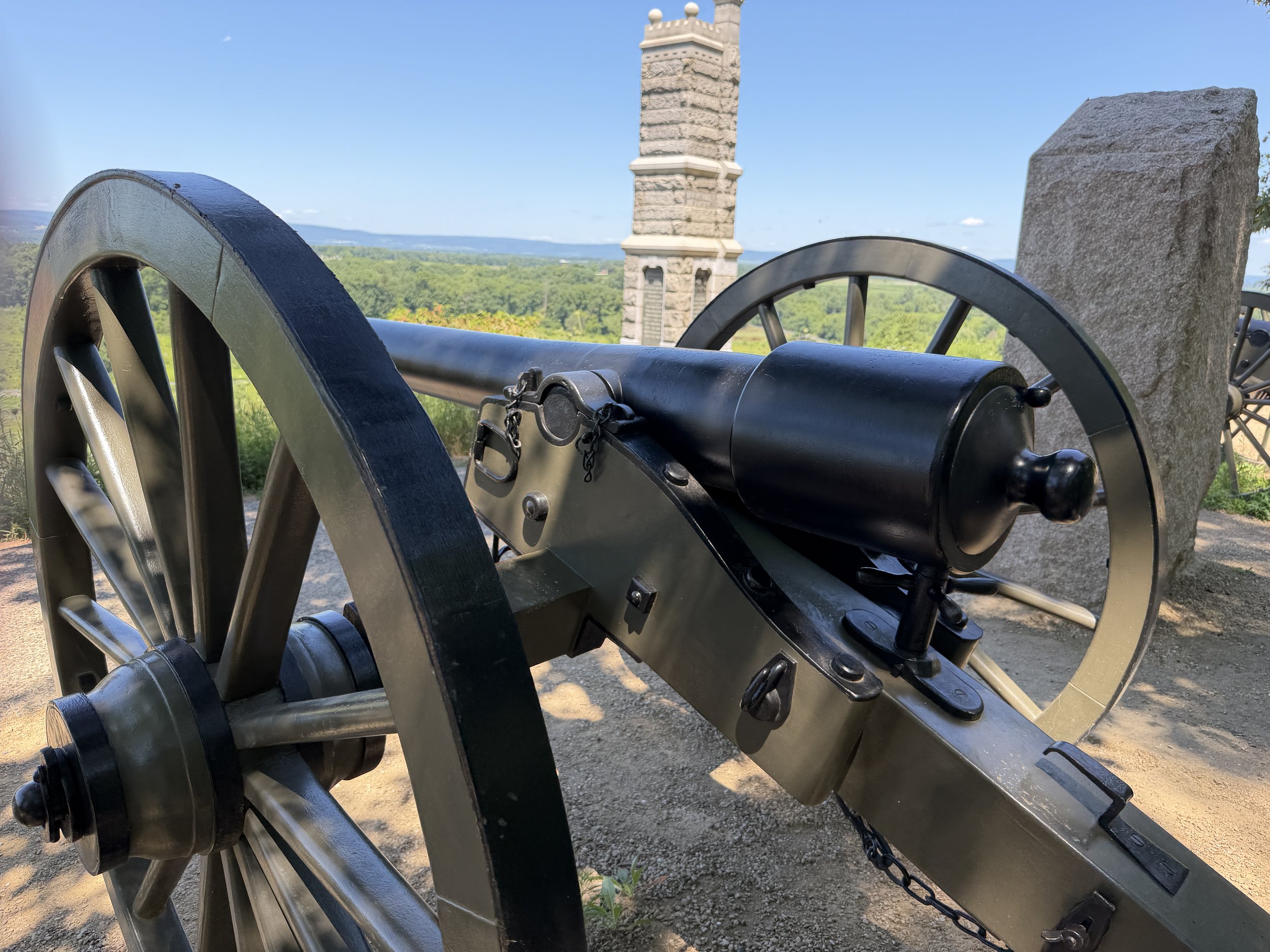
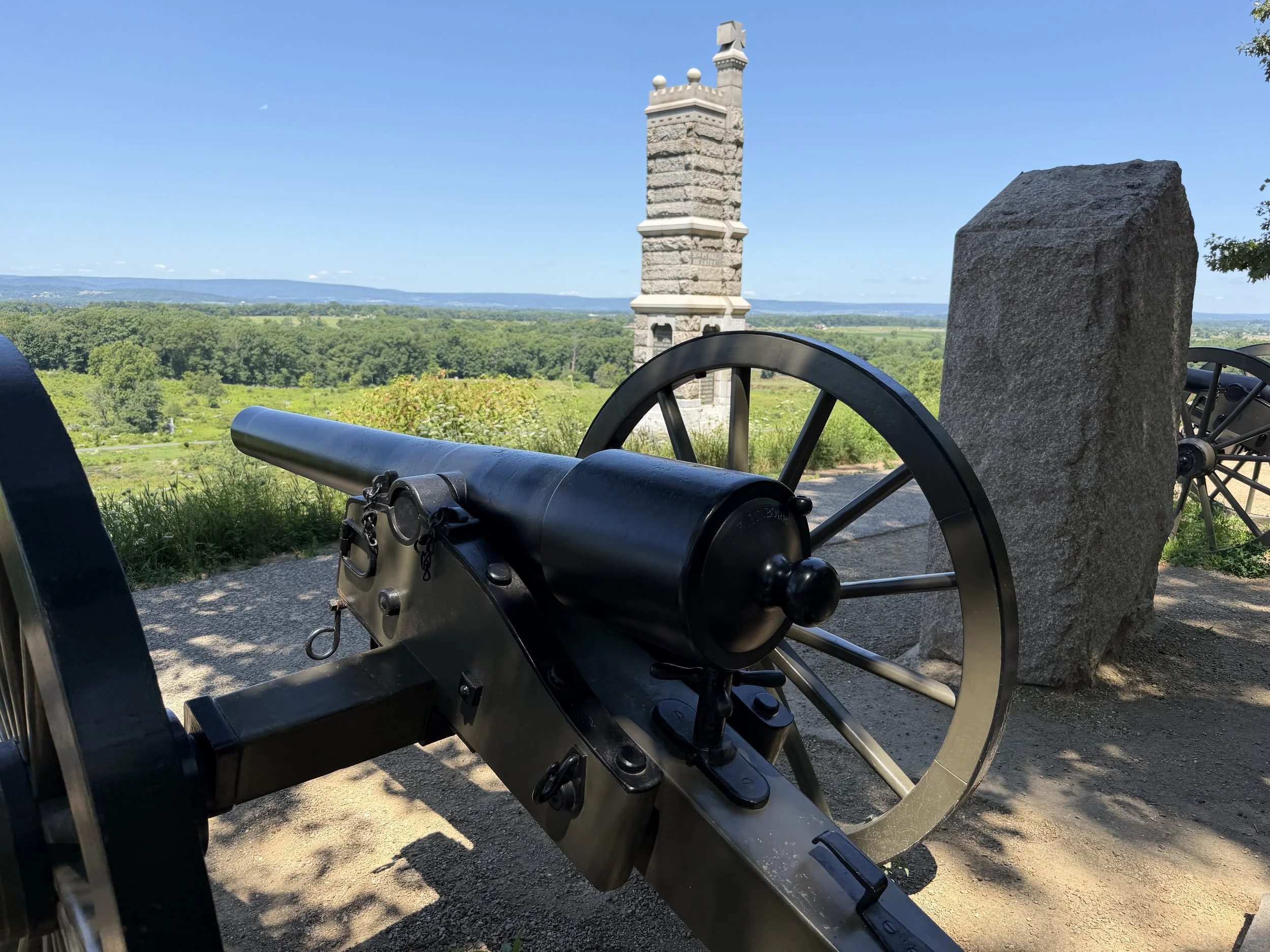
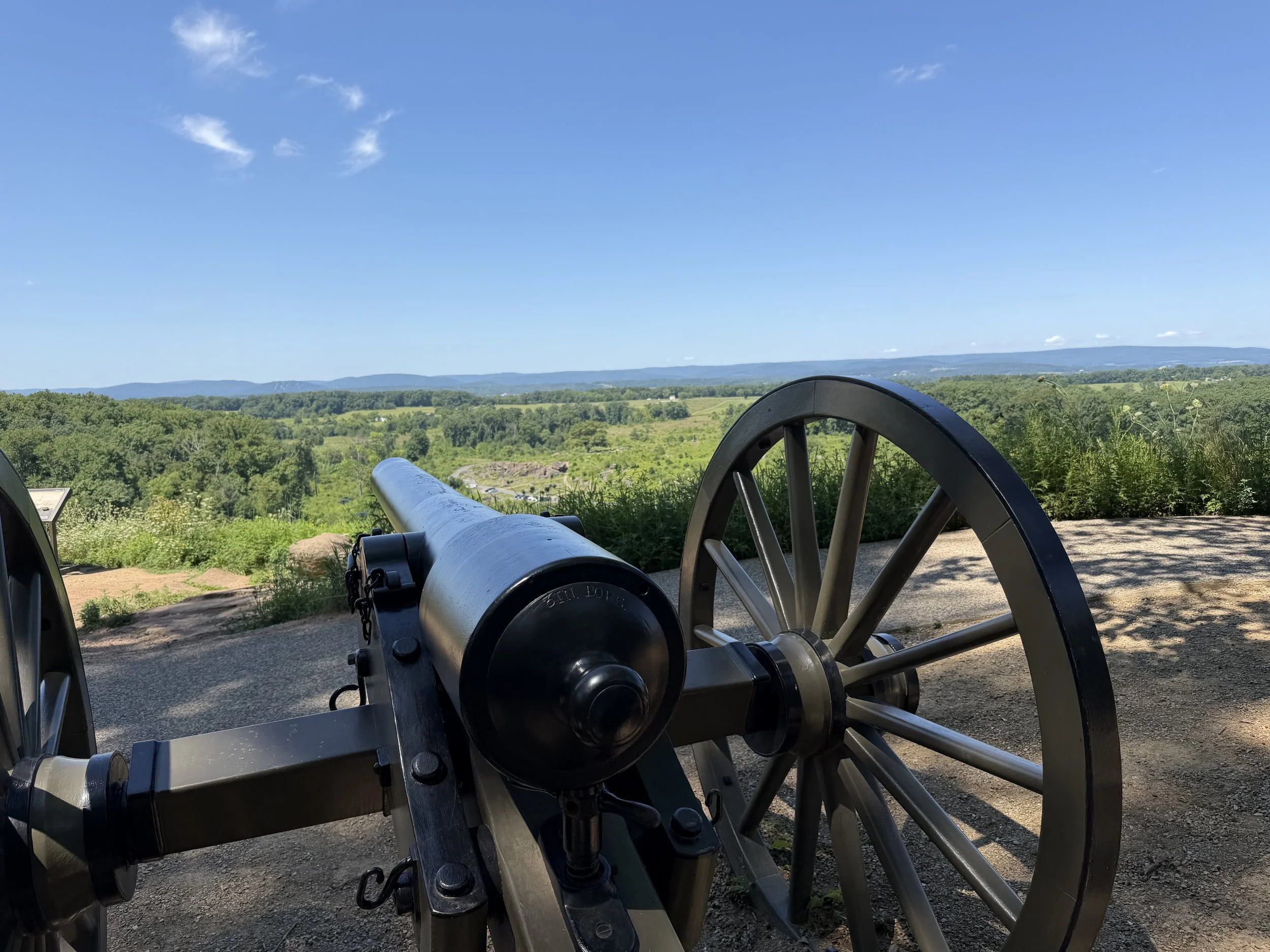
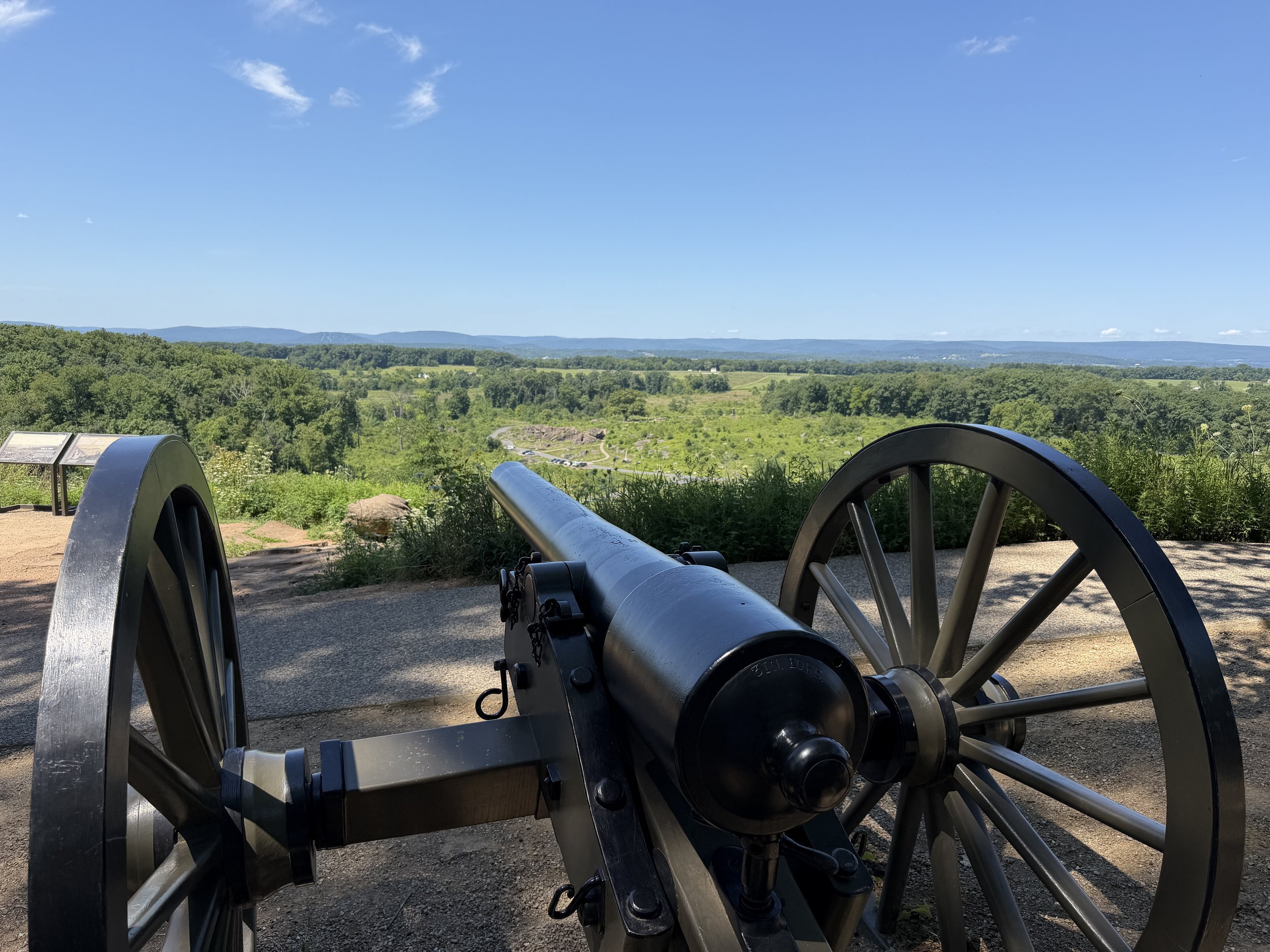
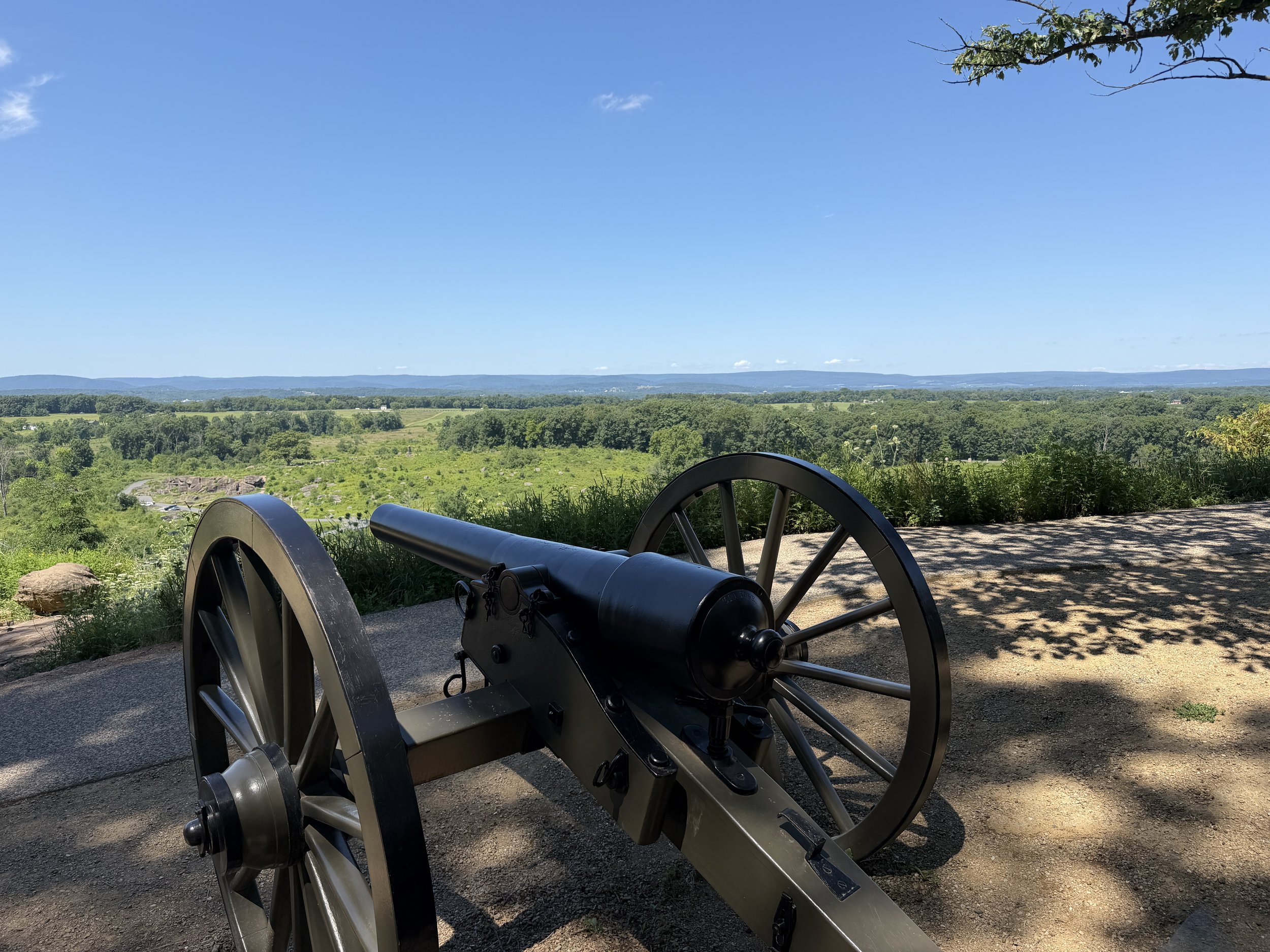
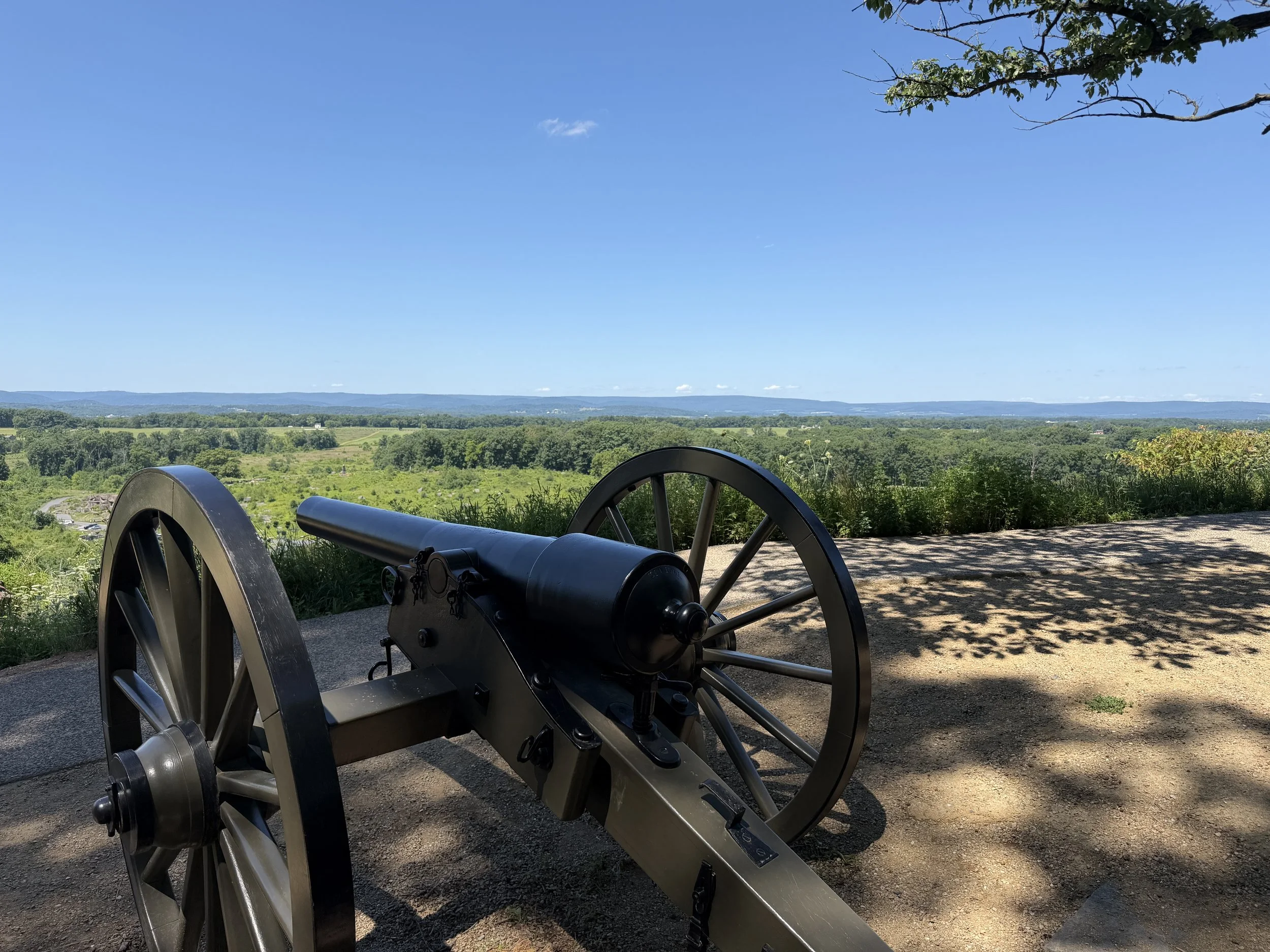
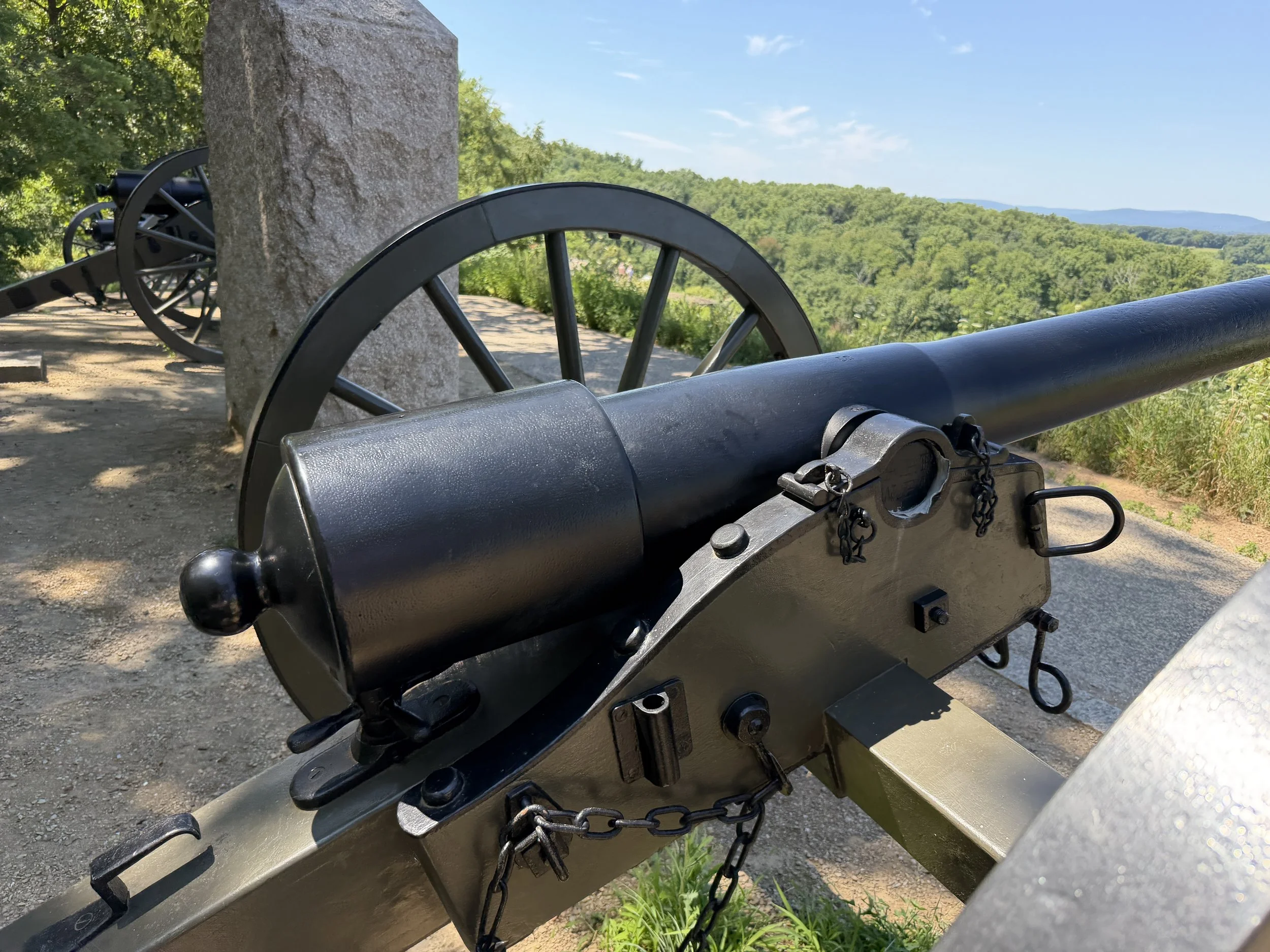
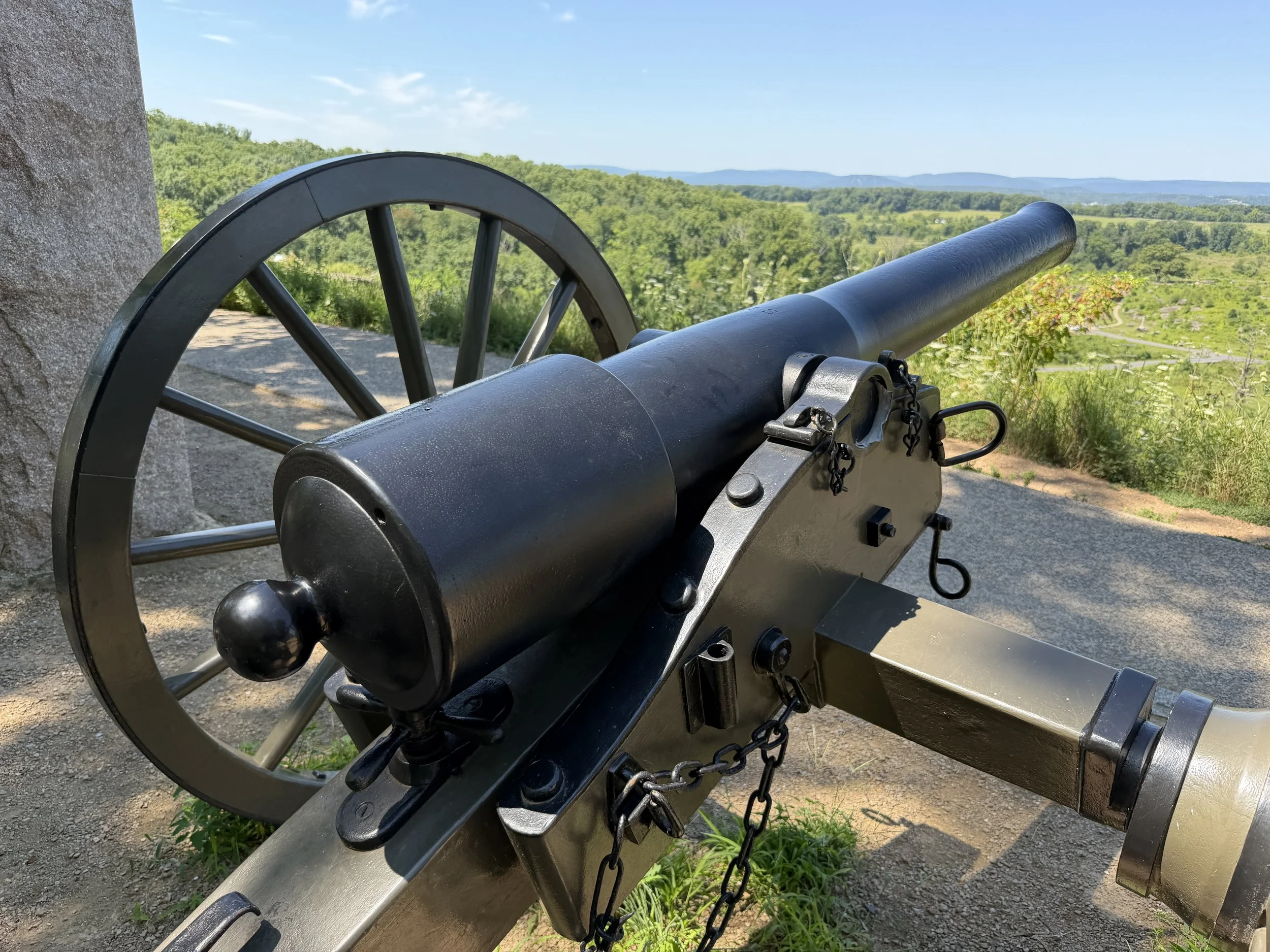
Of the four 10-Pounder Parrotts, one is the 2.9-Inch Pattern 1861 and three are the 3-Inch Pattern 1863. This display allows you to see the subtle differences between the original model which has a pronounced taper just forward of the trunnions and a muzzle swell and the 1863 model which has a gradual taper and no muzzle swell. The change in caliber seems to have been in response to incidents where 2.9-Inch batteries were issued ammunition for 3-Inch Ordnance Rifles by mistake. Hazlett et al. notes that in 1864 a number of 2.9-Inch Parrotts were ordered rebored to 3-Inches, but none of these converted 10-Pounder Parrotts were known to survive at the time of writing “Field Artillery Weapons of the Civil War” (pg. 113).
The 10-Pounder Parrott as its name suggest fired an approximately 10 pound projectile. It is a cast iron rifle with a wrought iron reinforcing band heat shrunk onto the breech. The complete gun tube weighs around 900 pounds. While not as highly regarded as the 3-Inch Ordnance Rifle, it was considerably less expensive to manufacture. The 10-Pounder did not suffer from the same reliability issues of the 100-Pounder and 200-Pounder Parrot Rifles. See my video on the Parrott Rifle system: https://www.youtube.com/watch?v=J5pqOuxqUq0
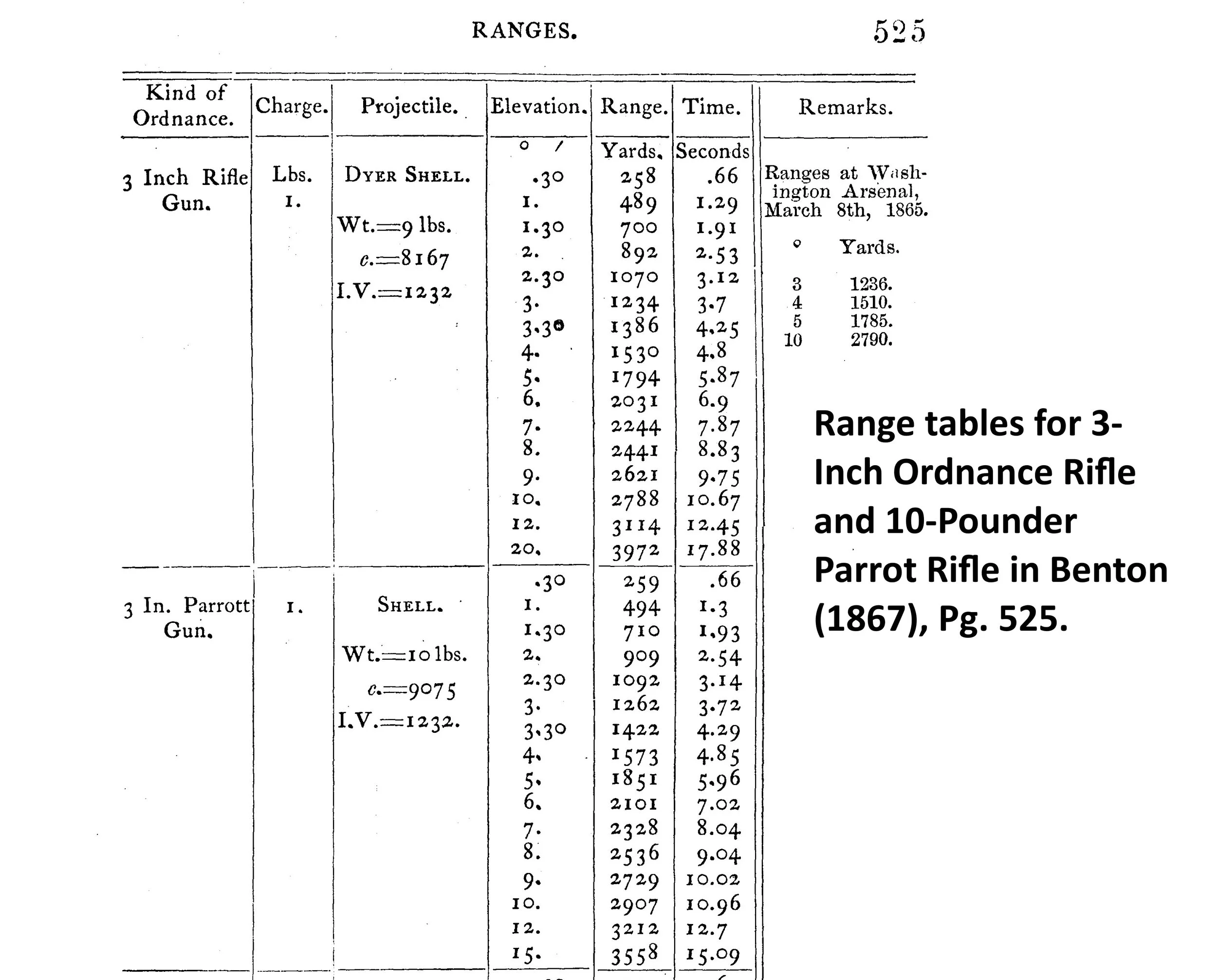
Range tables for the 3-Inch Ordnance Rifle (top) and 3-Inch Parrott Rifle (bottom).
The Battery D. Fifth US Artillery Monument on Little Round Top
The 10-Pounder Parrott, Pattern 1861 (2.9-Inch)
US Army 10-Pounder Parrott Rifle, Pattern 1861 (2.9-Inch) on Little Round Top
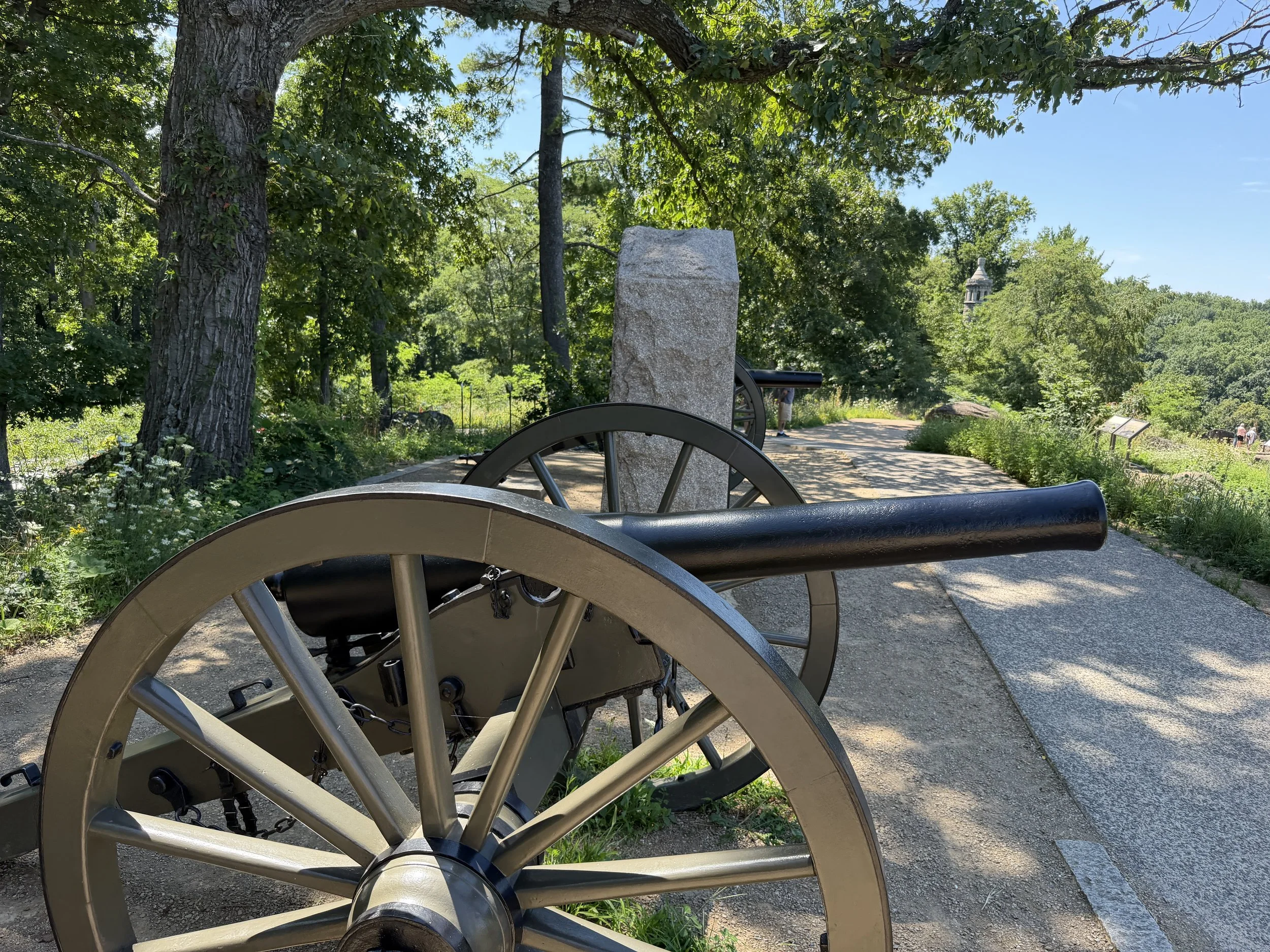
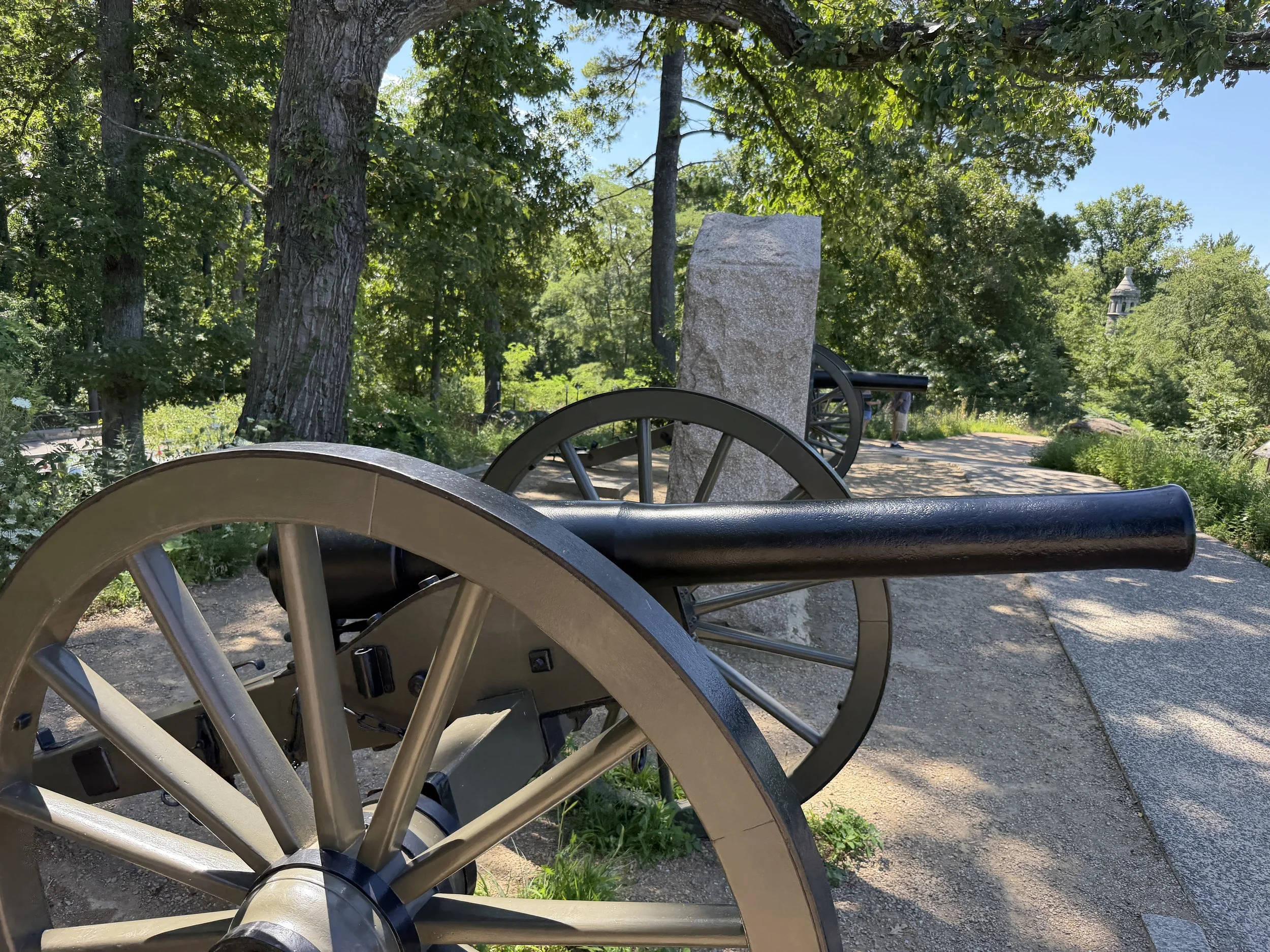
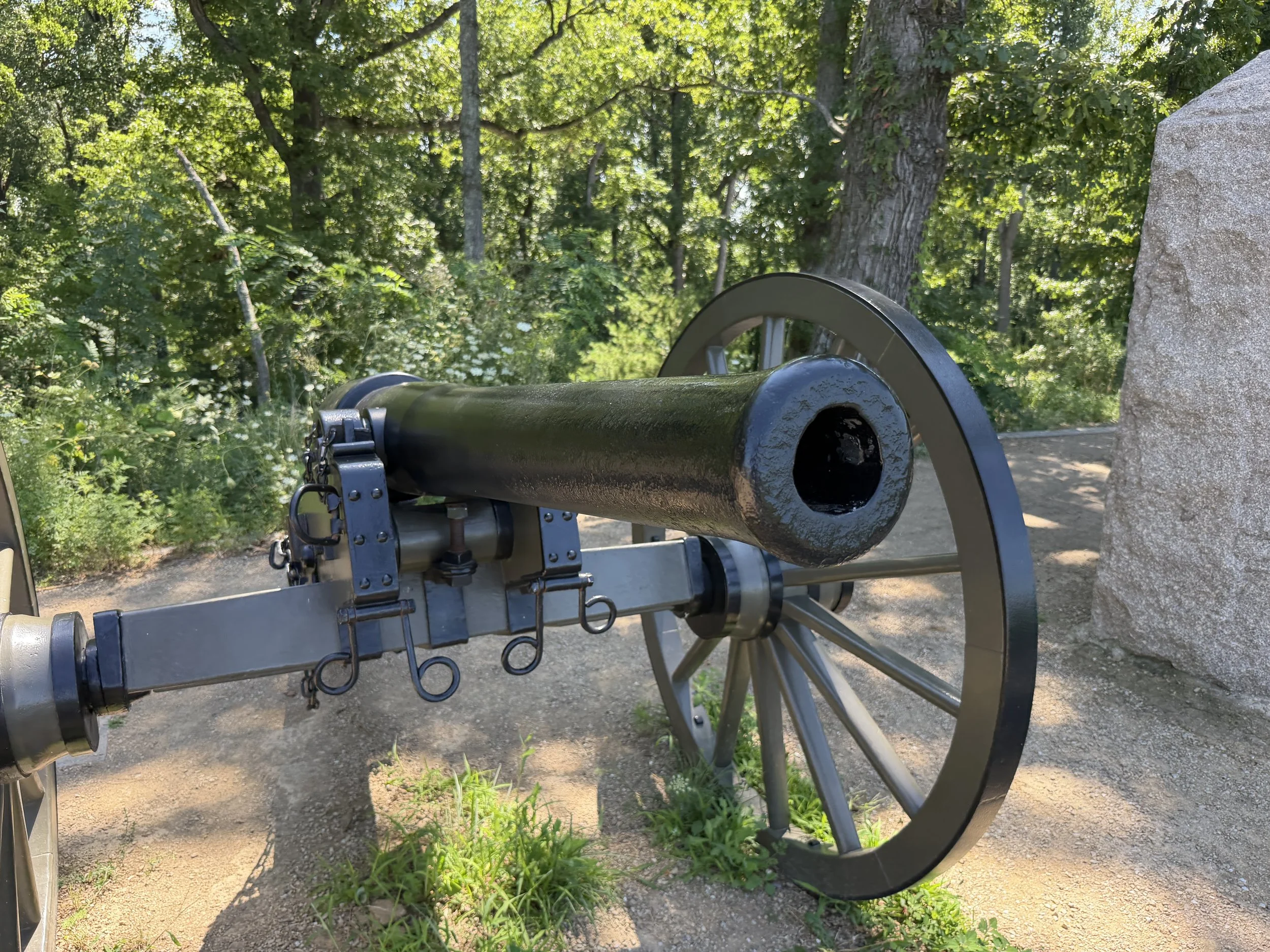
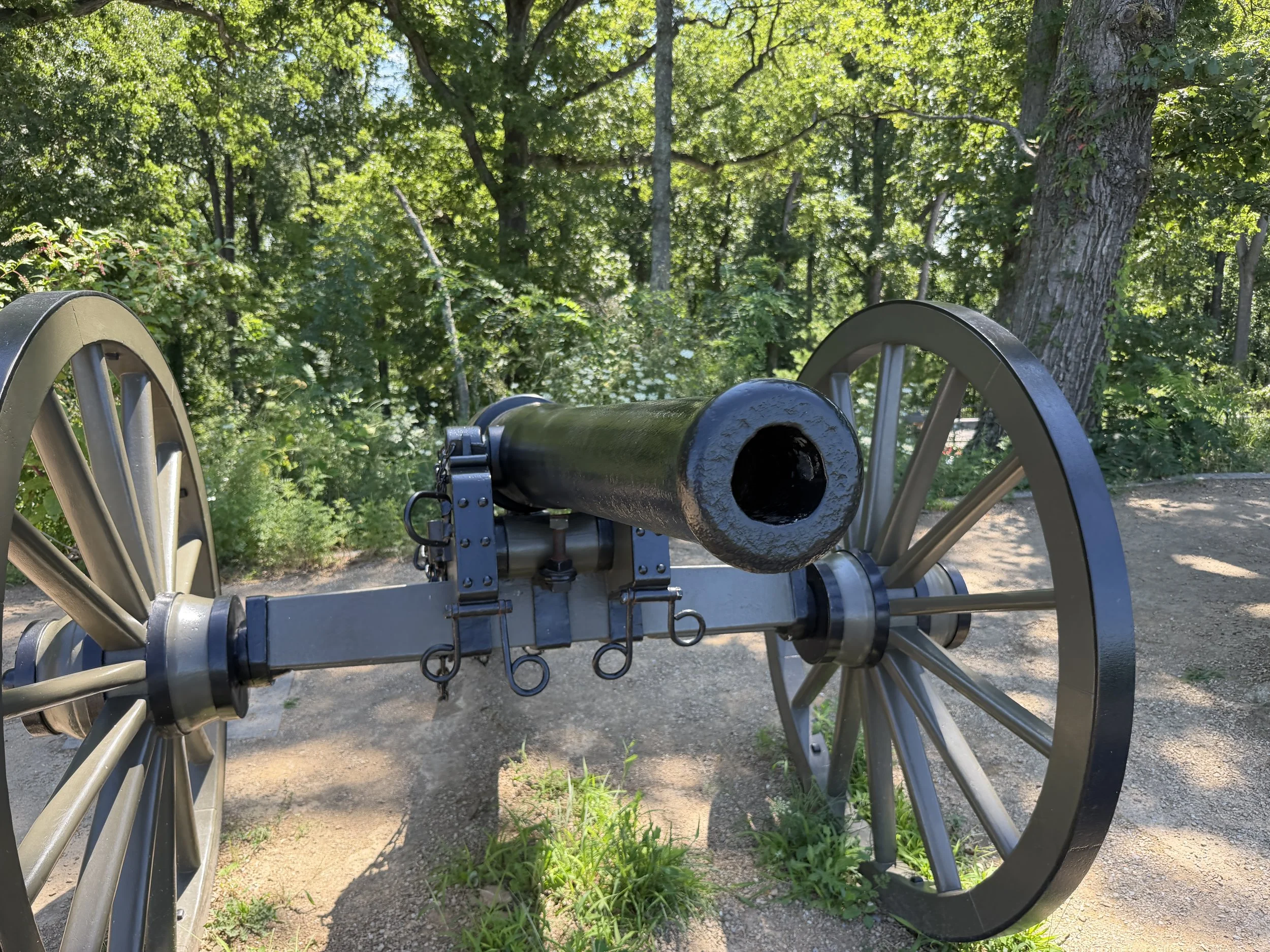
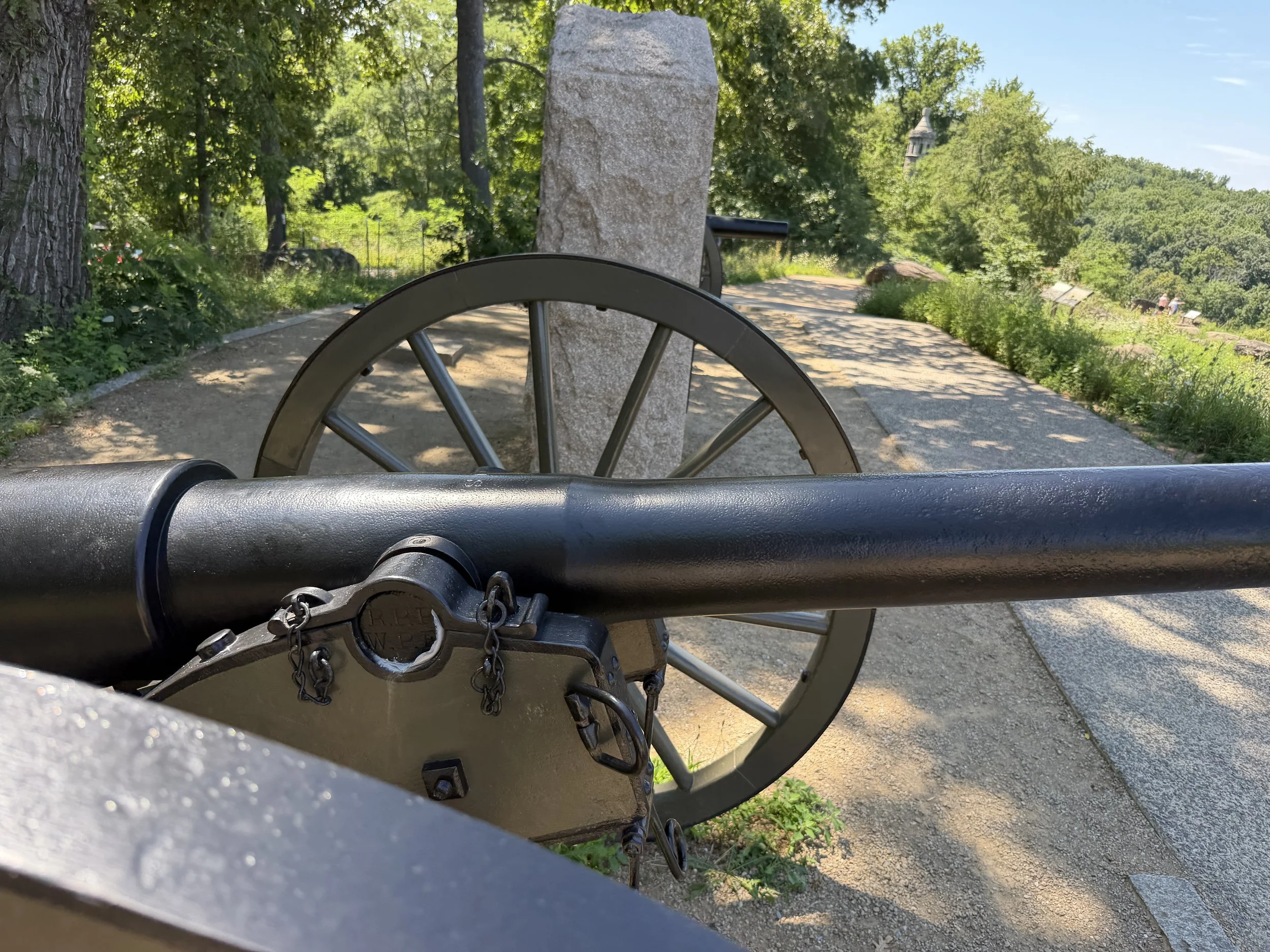
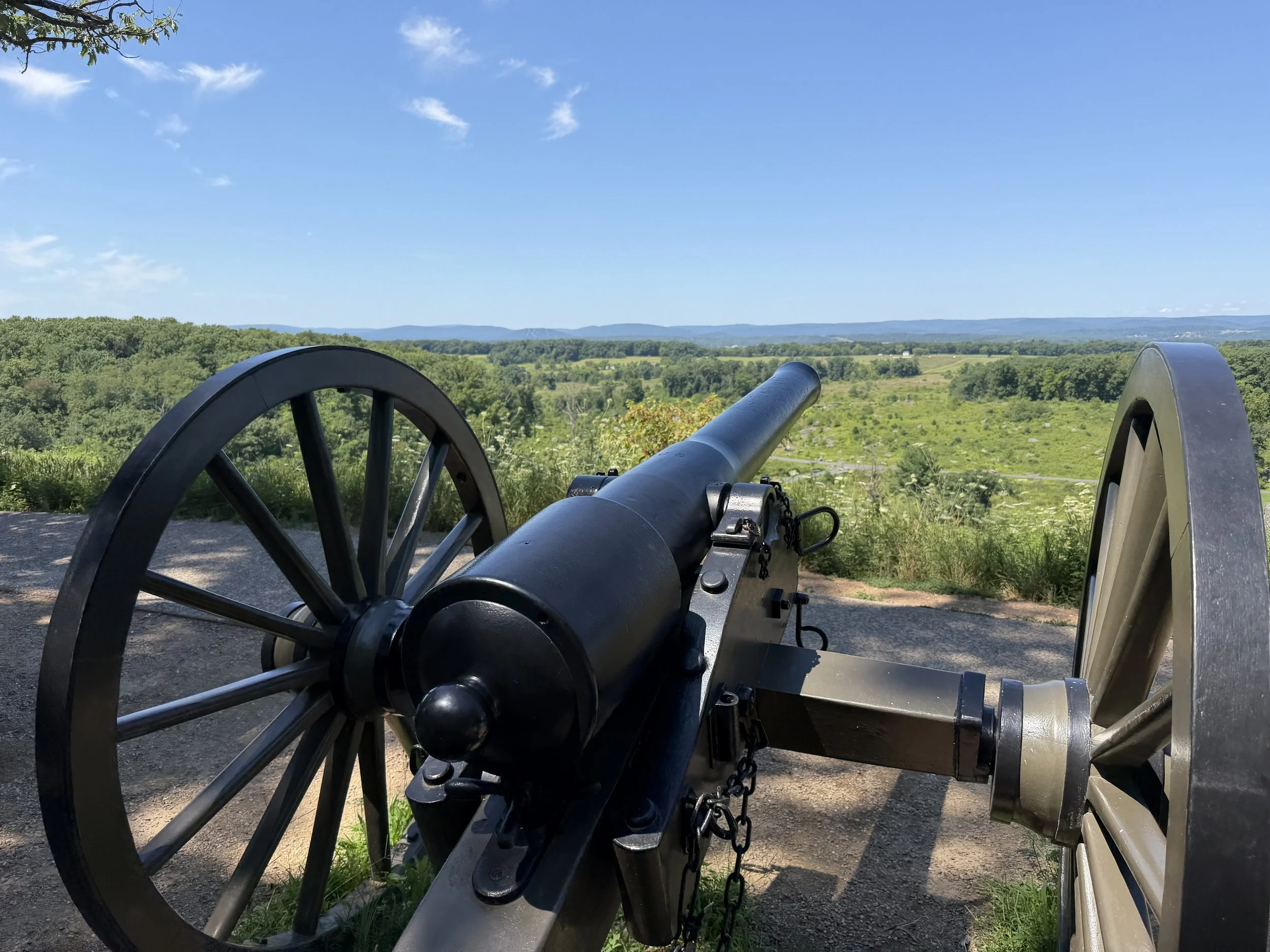
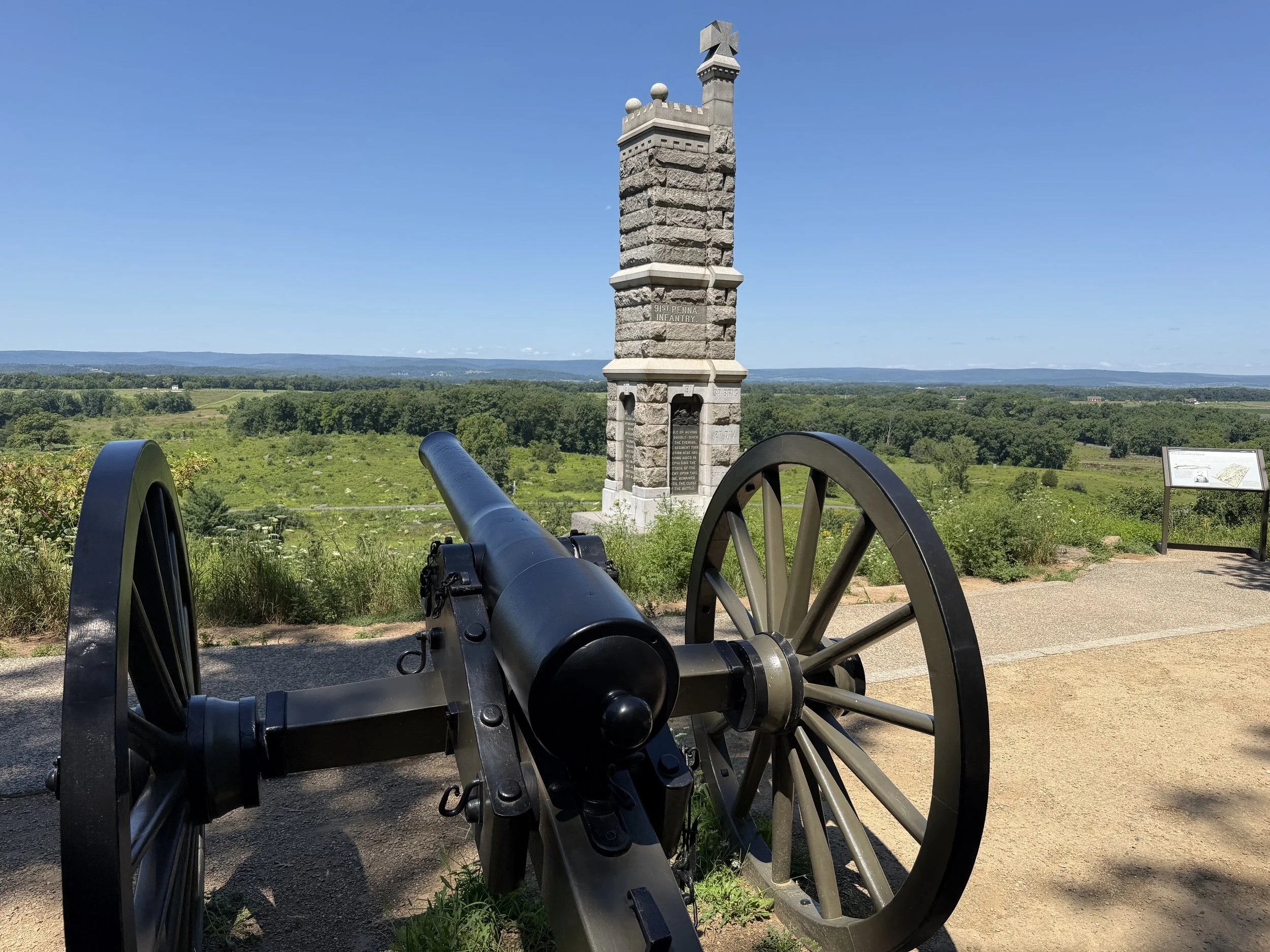
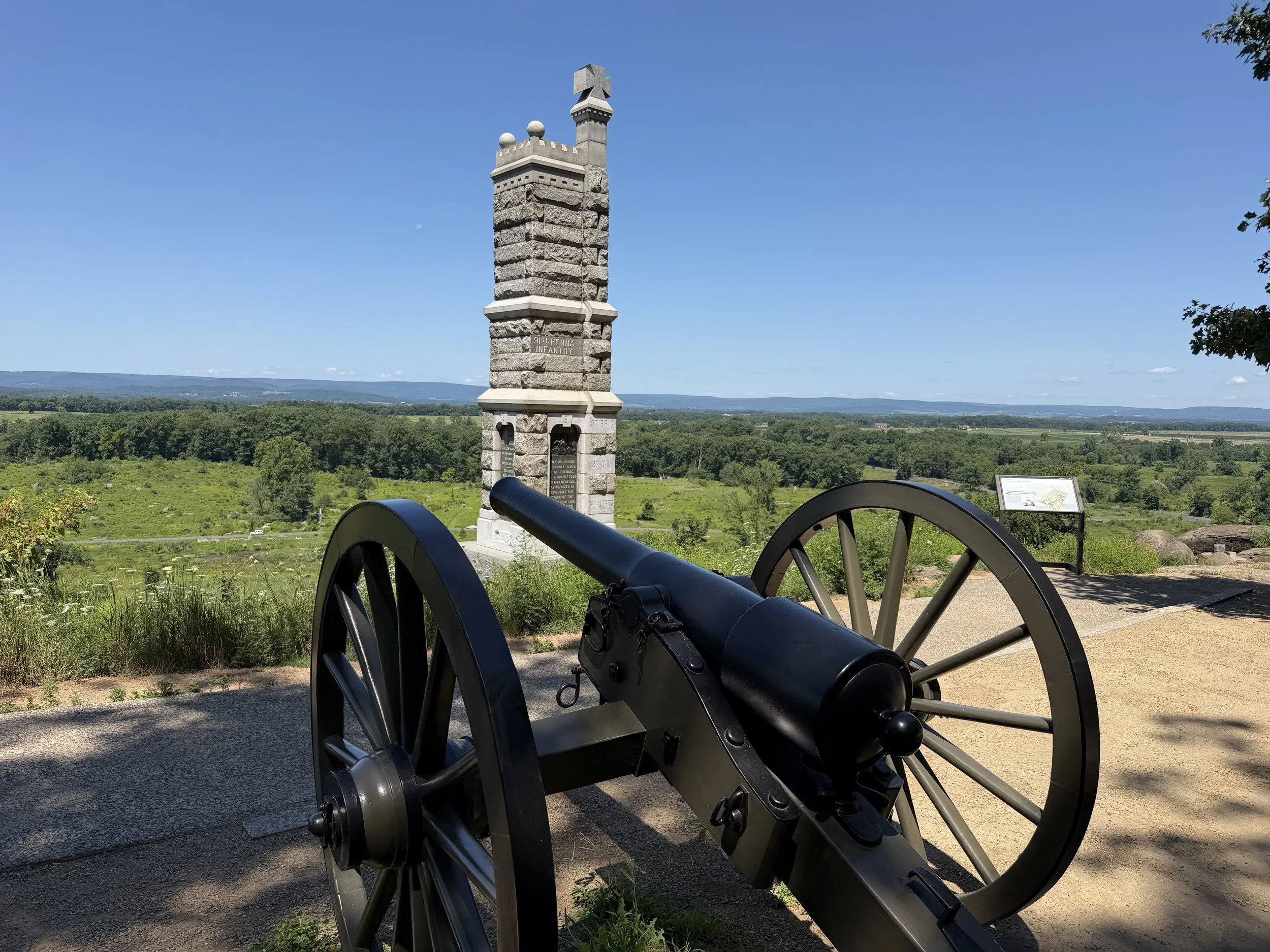
US Army 10-Pounder Parrotts, Pattern 1863 (3-Inch)
US Army 10-Pounder Parrott Rifle, Pattern 1863 (3-Inch)