The Naval Cannons of Fort McClary, Maine
Three cannons produced for the US Navy are displayed in front of the historic Block House at Fort McClary near Kittery, Maine.
Three cannons manufactured for the United States Navy are displayed at Fort McClary near Kittery, Maine. The three cannons are a 9-Inch Dahlgren Shell Gun, an 8-Inch Shell Gun of 6,500 pounds, and a 32-Pounder of 57 Hundredweight. Though Fort McClary was a US Army installation and was armed (at least in her final years) with a mixture of Rodman and Parrott guns, the three naval guns were made available to the fort from nearby Portsmouth Naval Shipyard. The 8-Inch gun in particular shows signs of having been a bollard.
Fort McClary is beautifully situated on a high point overlooking the entrance to Portsmouth Harbor. Two lighthouses (Portsmouth Harbor Lighthouse and Whaleback Lighthouse) can be seen from the fort. It is well worth a visit!
None of the three cannons are listed in the Registry in The Big Guns (published in 1997), leading me to suspect that all three were stored by the US Navy - and perhaps still encased in concrete - at that date. The three cannons are:
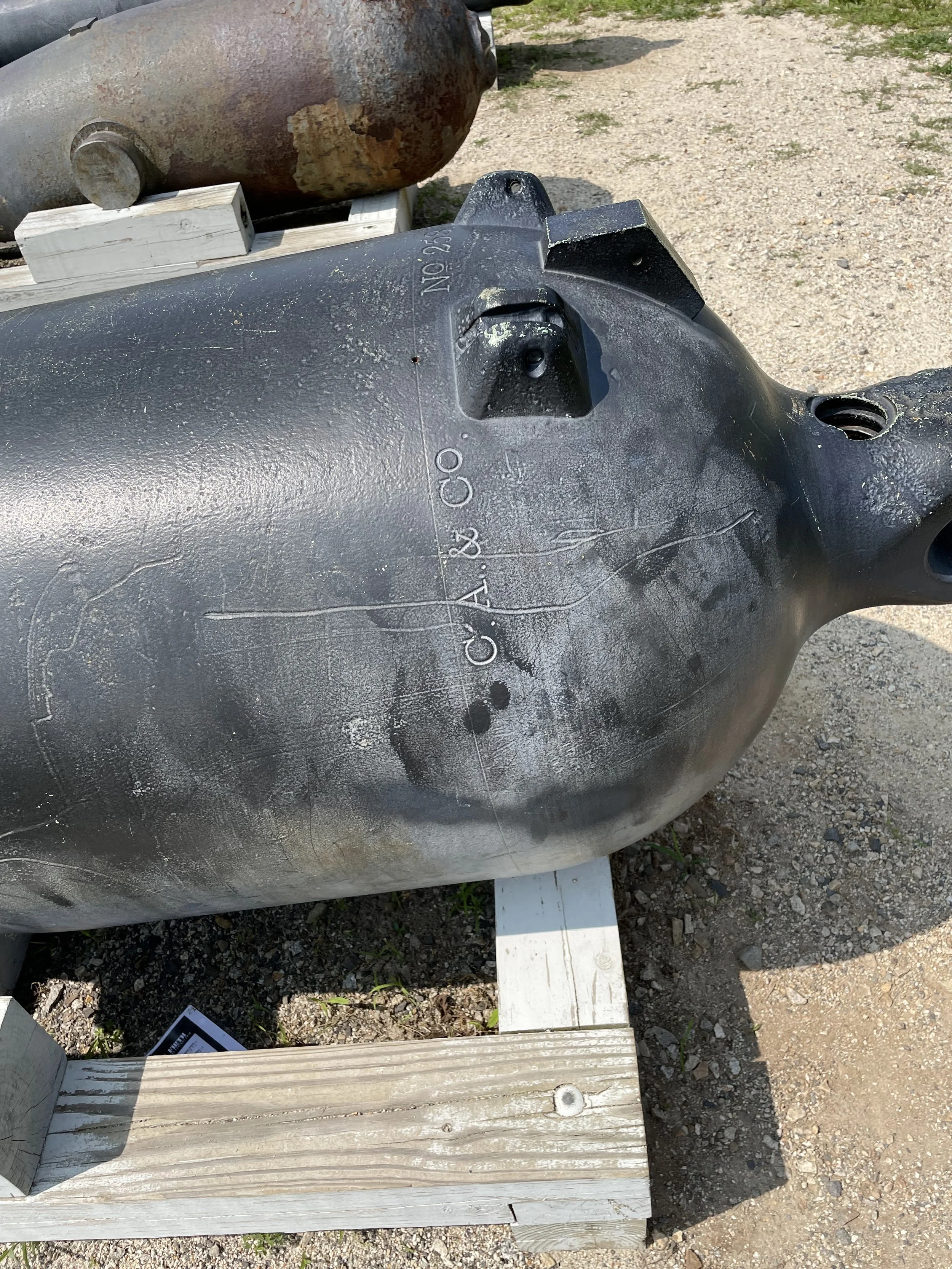
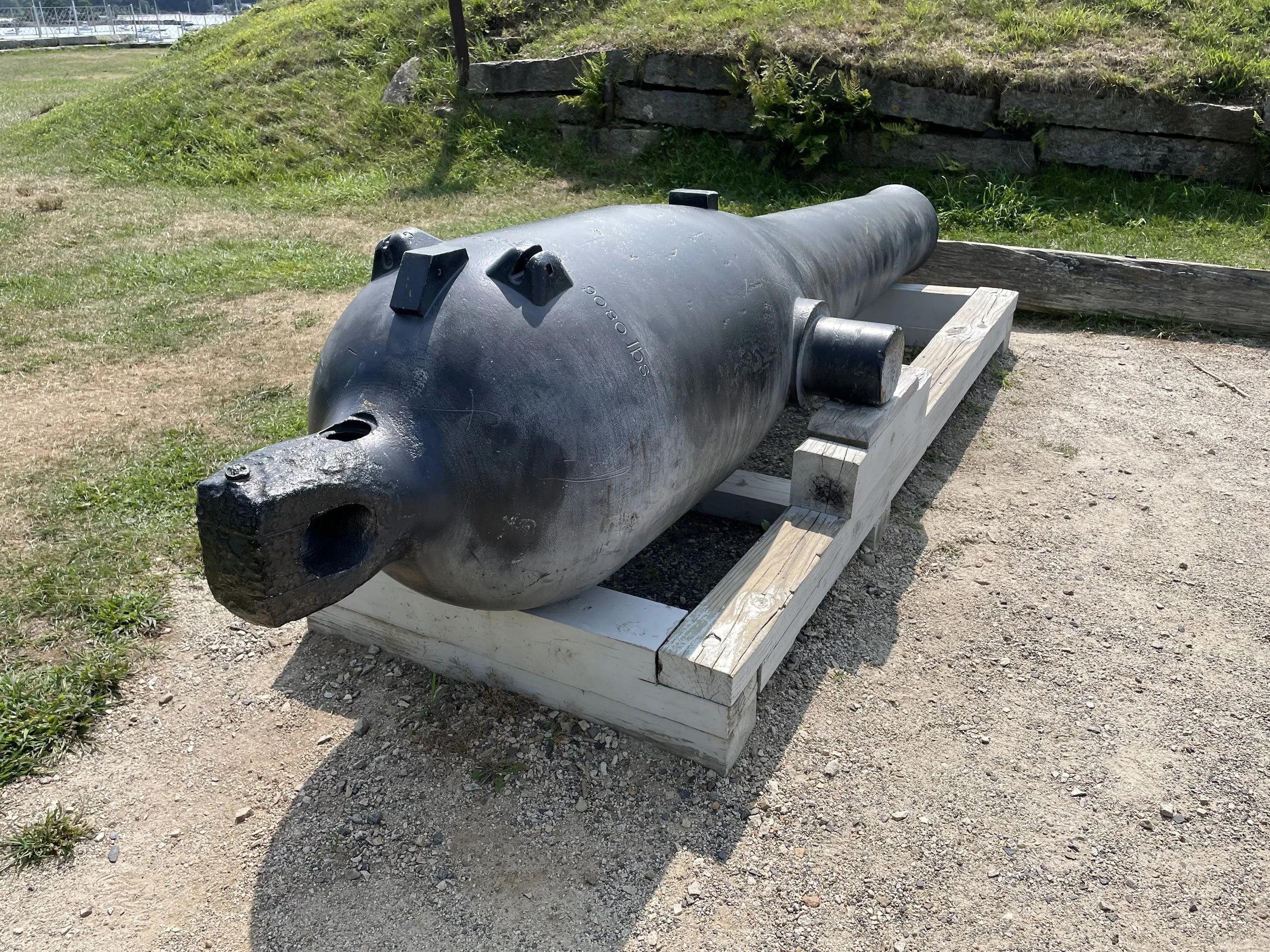
9-Inch Dahlgren Number 258 manufactured by Cyrus Alger and Company: Original weight is marked as 9,080 pounds. The year of manufacture, which I suspect was 1859, would have been stamped on the right trunnion but is no longer legible (at least by me). I do not know the Civil War service of this cannon, though most of the 9-Inch Dahlgrens manufactured in 1859 saw service upon the steam sloops such as USS Hartford, USS Richmond, USS Pensacola, USS Brooklyn, and USS Pawnee which were entering service around that time. More posts about 9-Inch Dahlgrens.
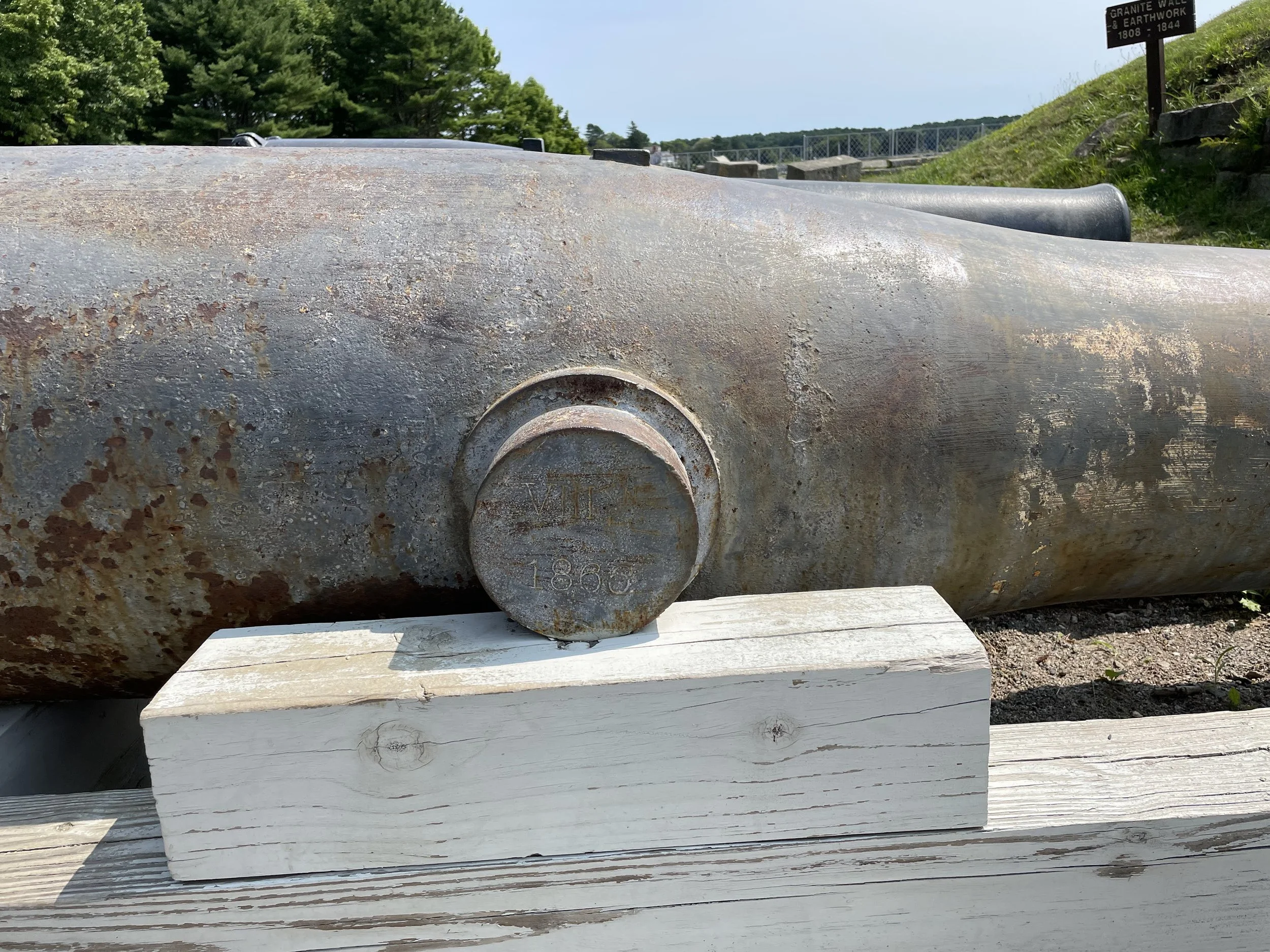
8-Inch US Navy Bureau of Ordnance Shell Gun of 6,500 Pounds. Based on the Inspector’s initials - WWQ - I suspect that this is another Seyfert, McManus, and Company produced gun. The date of manufacture, 1866, can clearly be seen on the right trunnion. The cannon had a iron or steel bar run through the chase to enable the cannon to be used as a bollard. The breech of the cannon likely spent many decades encased in concrete - leading to the corroding away of the cascabel and making the markings on the breech difficult to read. Though this type was developed in 1864 for ships not able to carry the larger 9-Inch (or 6.4-Inch Parrott Rifle), the manufacture date of 1866 may indicate a cannon that saw little, if any active service. More posts about BuOrd 8-Inch Shell Guns of 6,500 Pounds.
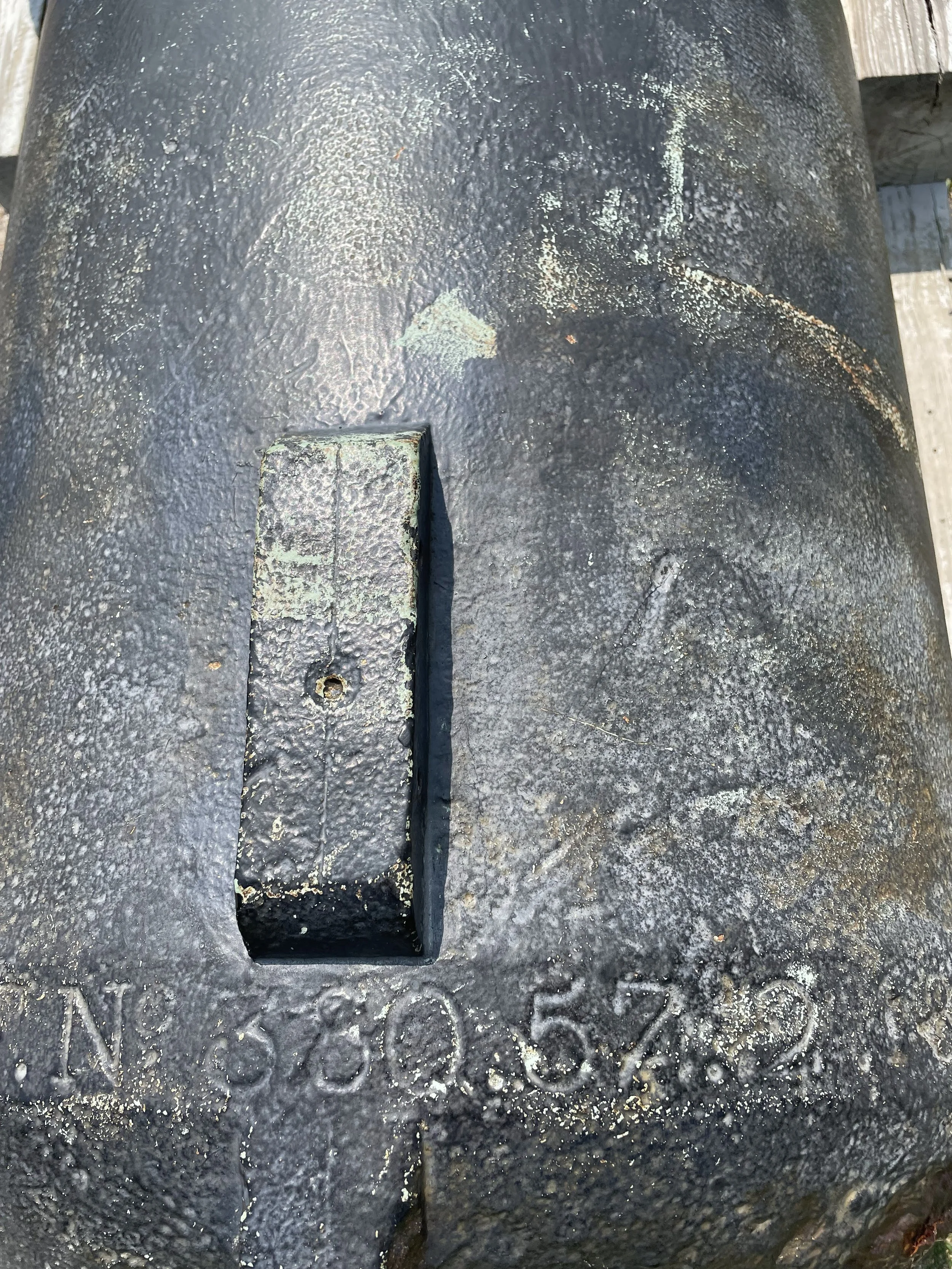
32-Pounder of 57 Hundredweight Number 380 manufactured by Tredegar Foundry in 1848. It is marked as weighing 57.2.18 (57x112+2x28+18 = 6,458 pounds). The ring cascabel is also significantly corroded - though not the the same extent as the 8-Inch. This type of cannon was developed to be part of a uniform battery of 32-Pounders aboard US Navy ships in the 1840s. The deficiencies of the type in accuracy, hitting power, and reliability spurred John Dahlgren to develop his 9-Inch shell gun. Relegated to secondary roles in the US Navy during the American Civil War - often arming converted merchant ships, the type was extensively used by the Confederacy in ships and forts for want of better cannon and was the frequent basis of “rifled and banded” conversions by the South. More posts about 32-Pounders of 57 Hundredweight.
As far as I know, this is the only site where these three types of US Navy cannon can be seen and compared side by side. In isolation, the 8-Inch of 6,500 pounds is an impressively large cannon. However, the much larger size of the 9-Inch (from which the design of the 8-Inch was derived) is noticeable. It is also interesting to note the differences between the 8-Inch, designed in 1864, and the 32-Pounder, designed in 1845. The two cannons are nearly identical in weight.
The blockhouse also displays a 12-Pounder carronade. I did not see any markings upon the carronade, but it would likely date from the early years of the 19th century or final years of the 18th century and could be of US or British manufacture.
Update (May 2026):
US Navy 32-Pounder of 57 Hundredweight Number 380 was cast at Tredegar Foundry in 1848. It was mounted aboard the frigate USS St. Lawrence - a ship which had been laid down in 1826 but only first commissioned in 1848. Number 380 was likely aboard from 1848 to 1863 - during which time St. Lawrence served on the European Station, Pacific Station, and Brazil Station. During the American Civil War, St. Lawrence captured the Confederate Privateer Petrel and played a small part in the Battle of Hampton Roads. She exchanged fire with CSS Virginia at range - her 32-Pound shot merely bouncing off the ironclad's casemate while a single round from Virginia did significant damage to St. Lawrence.
Number 380 seems to have been removed from St. Lawrence in 1863 when the ship was fitted out as an ordnance store ship at Portsmouth Navy Yard in Kittery, Maine. In 1867, Numbers 374 to 387 - all from St. Lawrence - were placed as posts at the Navy Yard. Sometime in recent years, Number 380 seems to have been removed from the dockyard and loaned by the Navy to Fort McClary near Kittery, Maine where it can be seen along with two other ex-bollards.
Service History from National Archives Record Group 74 Entries 111 and 112.
US Navy 9-Inch Dahlgren Number 258 served aboard USS Richmond during the American Civil War. Following the war it served aboard USS Sabine.
The three US Navy cannons at Fort McClary: (front to rear) a 9-Inch Dahlgren, an 8-Inch Shell Gun of 6,500 Pounds, and a 32-Pounder of 57cwt.
The 12-Pounder Carronade mounted on the second level of the 1844 Blockhouse
An interpretive sign at Fort McClary describing the history and development of the site.
A display in the blockhouse of historic photos of the US Army cannons which armed Fort McClary in the late 19th Century
View of Portsmouth Harbor from Fort McClary
Circa 1904 view of Fort McClary - Library of Congress Photo: https://www.loc.gov/item/2005689549/