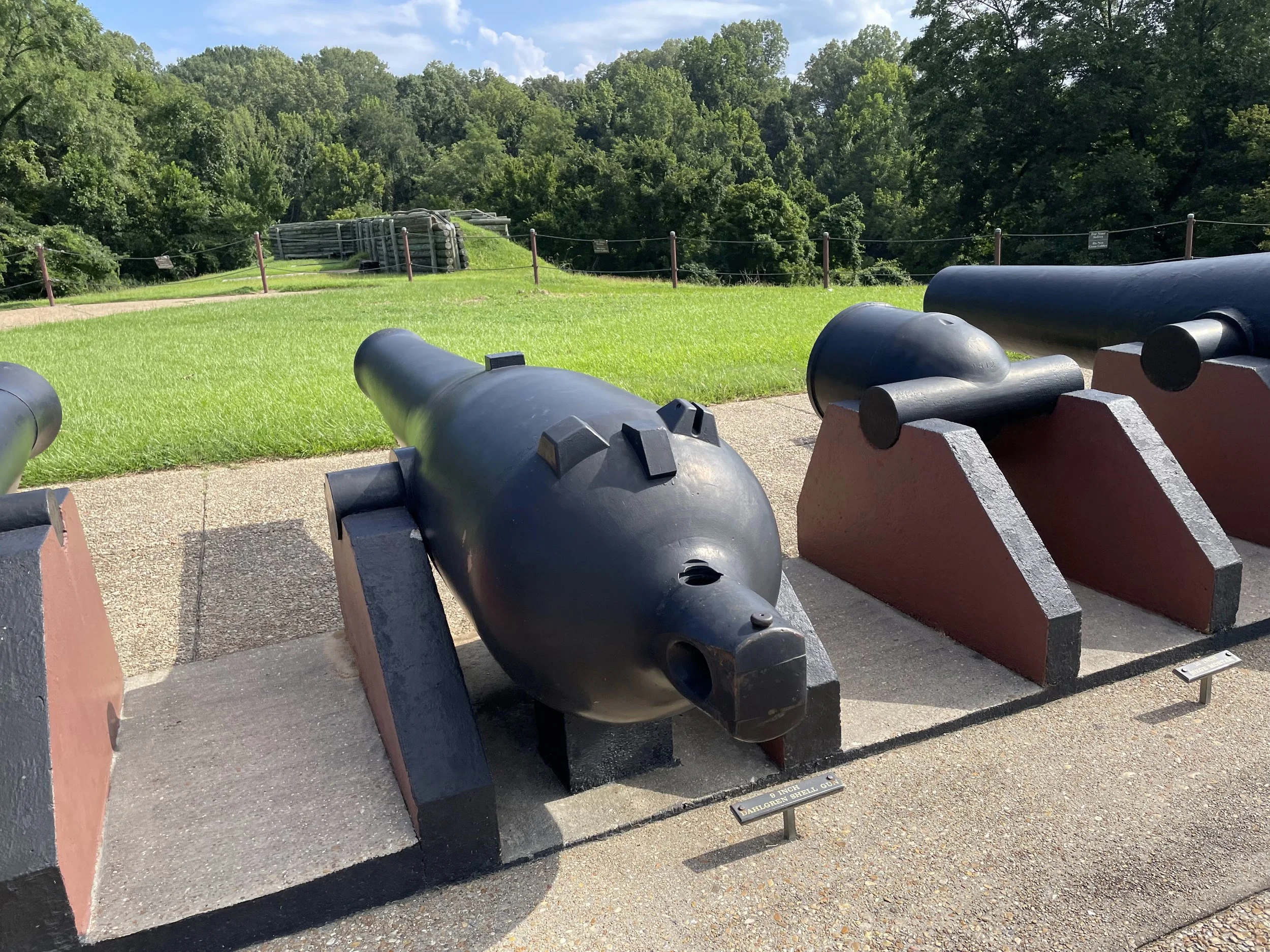
US Navy 9-Inch Dahlgren 703 at Vicksburg
US Navy 9-Inch Dahlgren Number 703 was cast at Fort Pitt Foundry in 1863. It is currently displayed at Vicksburg National Military Park, but in 1864 it was one of twenty 9-Inch Dahlgrens sent to the Navy Yard at Sackets Harbor, New York. It weighs 9,265 pounds.
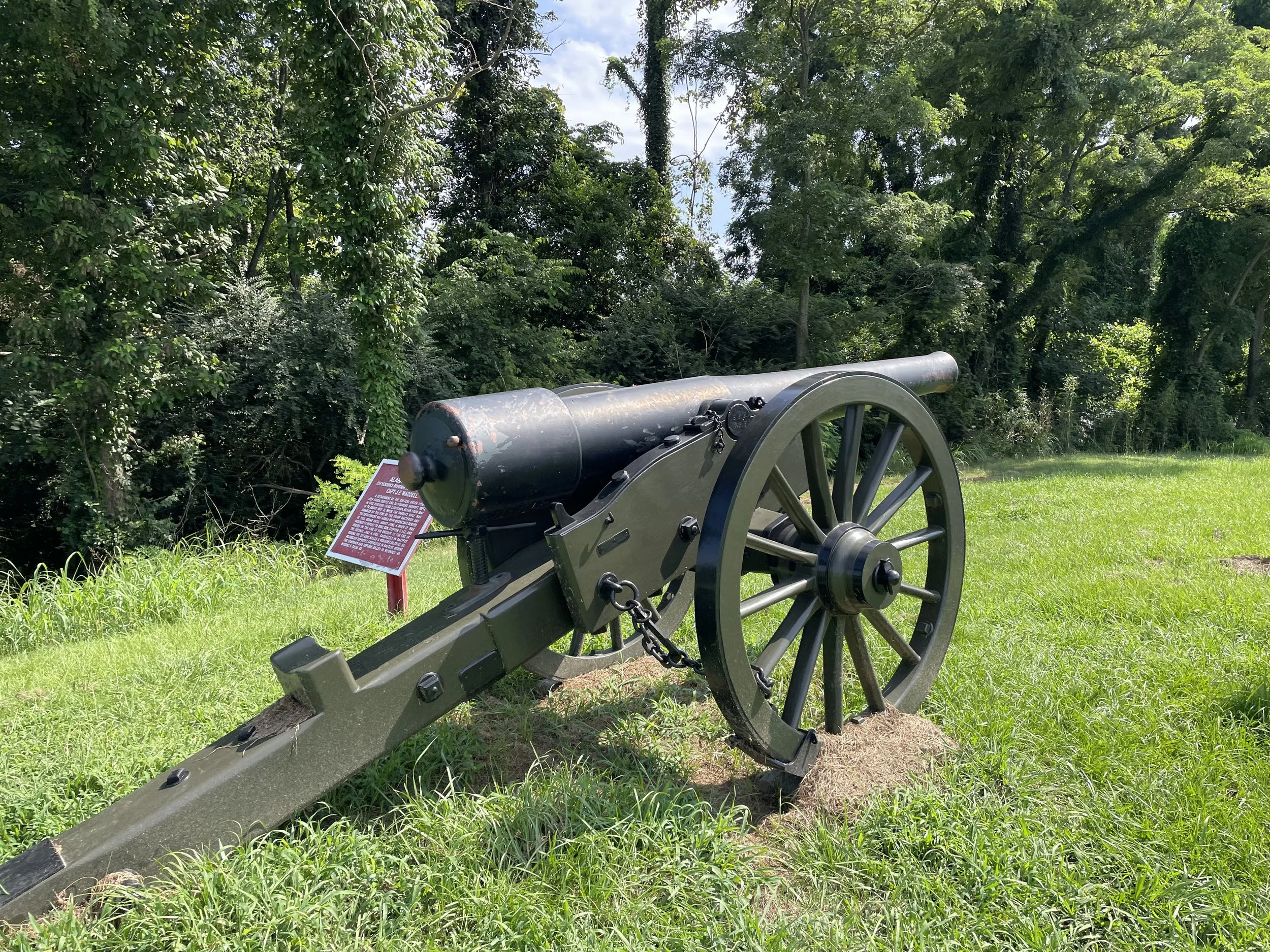
US Army 30-Pounder Parrott Rifle Number 29
US Army 30-Pounder (4.2-Inch) Parrott Rifle Number 29 was manufactured at West Point Foundry in 1861. It is displayed near the site of the Third Louisiana Redan at Vicksburg National Military Park.
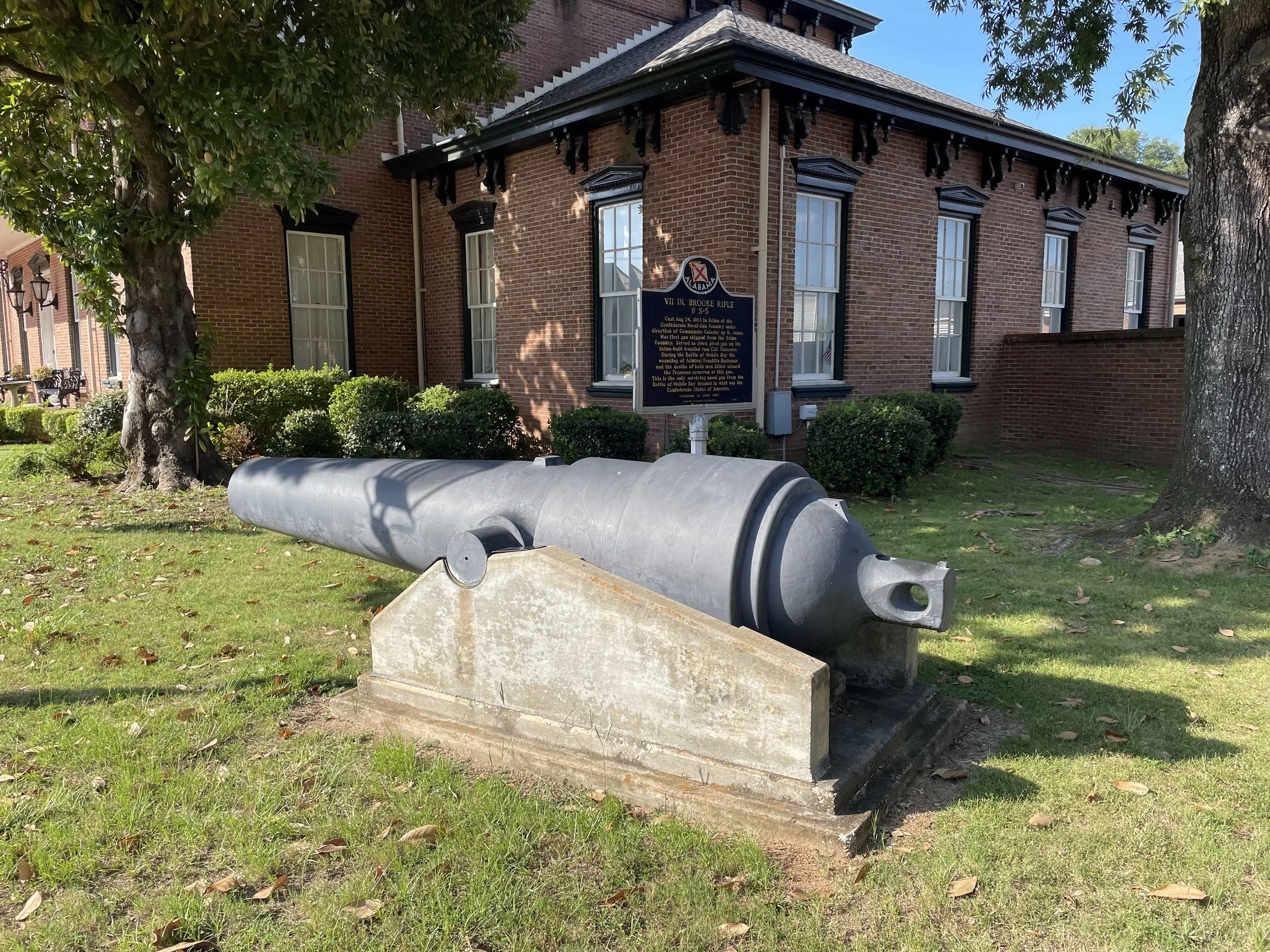
7-Inch Brooke Rifle, S-5, of CSS Tennessee in Selma, Alabama
One of CSS Tennessee’s 7-Inch Double Banded Brooke Rifles, S-5, is displayed at beside the City Hall of Selma, Alabama. This cannon was manufactured by the Selma Naval Gun Foundry in 1863. It was captured during the Battle of Mobile Bay on August 5th, 1864.
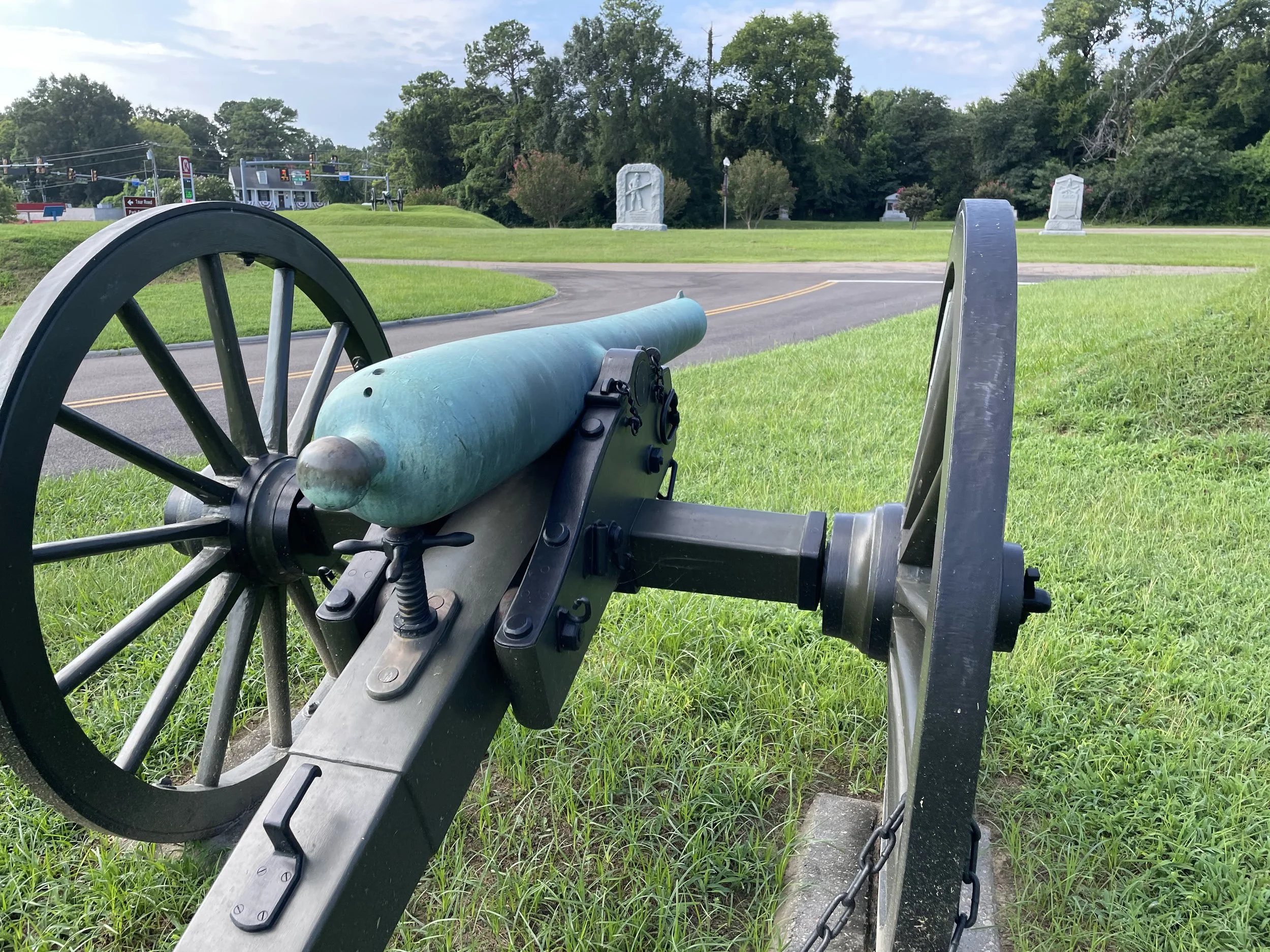
3.8-Inch James Rifle, Type Two, at Vicksburg
3.8-Inch James Rifle, Type 2, Number 20 cast by Ames in 1861. It is displayed at Vicksburg National Military Park near the Visitors Center. The James Rifle, named after its inventor Militia General and US Senator Charles Tillinghast James, is a Bronze 3.8-Inch Rifled Cannon. It was developed to fire a projectile also invented by James. It is also called a 14-Pounder James Rifle.
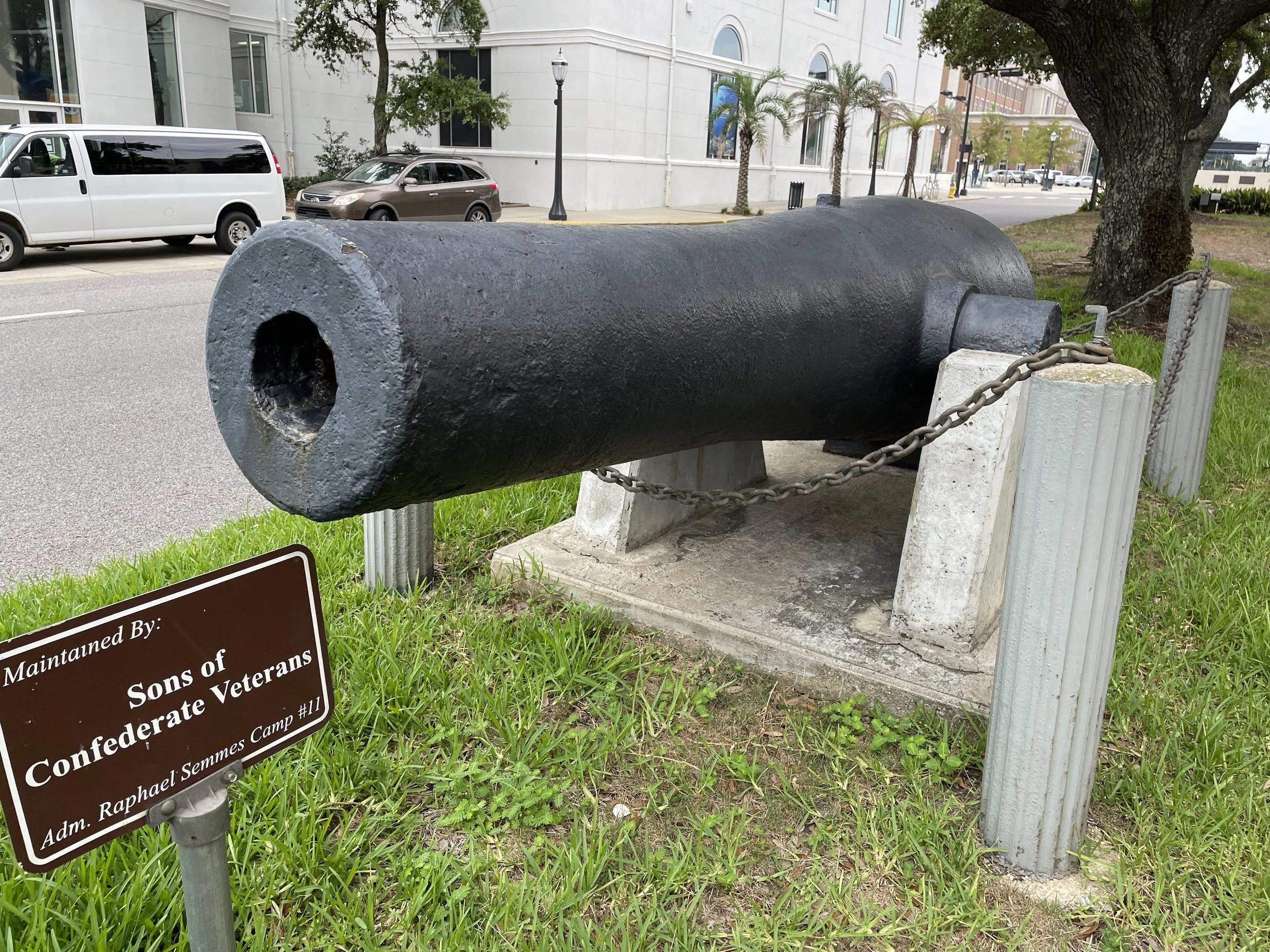
The 6.4-Inch “Columbiad Rifle” of Fort Powell in Mobile
A 6.4-Inch Rifle which in all respects besides its smaller, rifled bore resembles and was made from a 10-Inch Confederate Columbiad may be found in downtown Mobile, Alabama. The cannon was salvaged from the site of Fort Powell which guarded the Mississippi Sound entrance to Mobile Bay.

12-Pounder Boat Howitzer of USS Pittsburg at Vicksburg
US Navy 12-Pounder Dahlgren Boat Howitzer, Heavy, Number 96 is displayed in the museum beside USS Cairo at Vicksburg. As the sign attests, the boat howitzer served aboard USS Cairo’s sister ship USS Pittsburgh. The markings on the tube show a weight of 759 pounds with 65 pounds preponderance (the howitzer is breech-heavy by this amount when placed on its carriage). It was manufactured at the Washington Navy Yard in 1862, and it was inspected and approved for service by John A. Dahlgren himself.
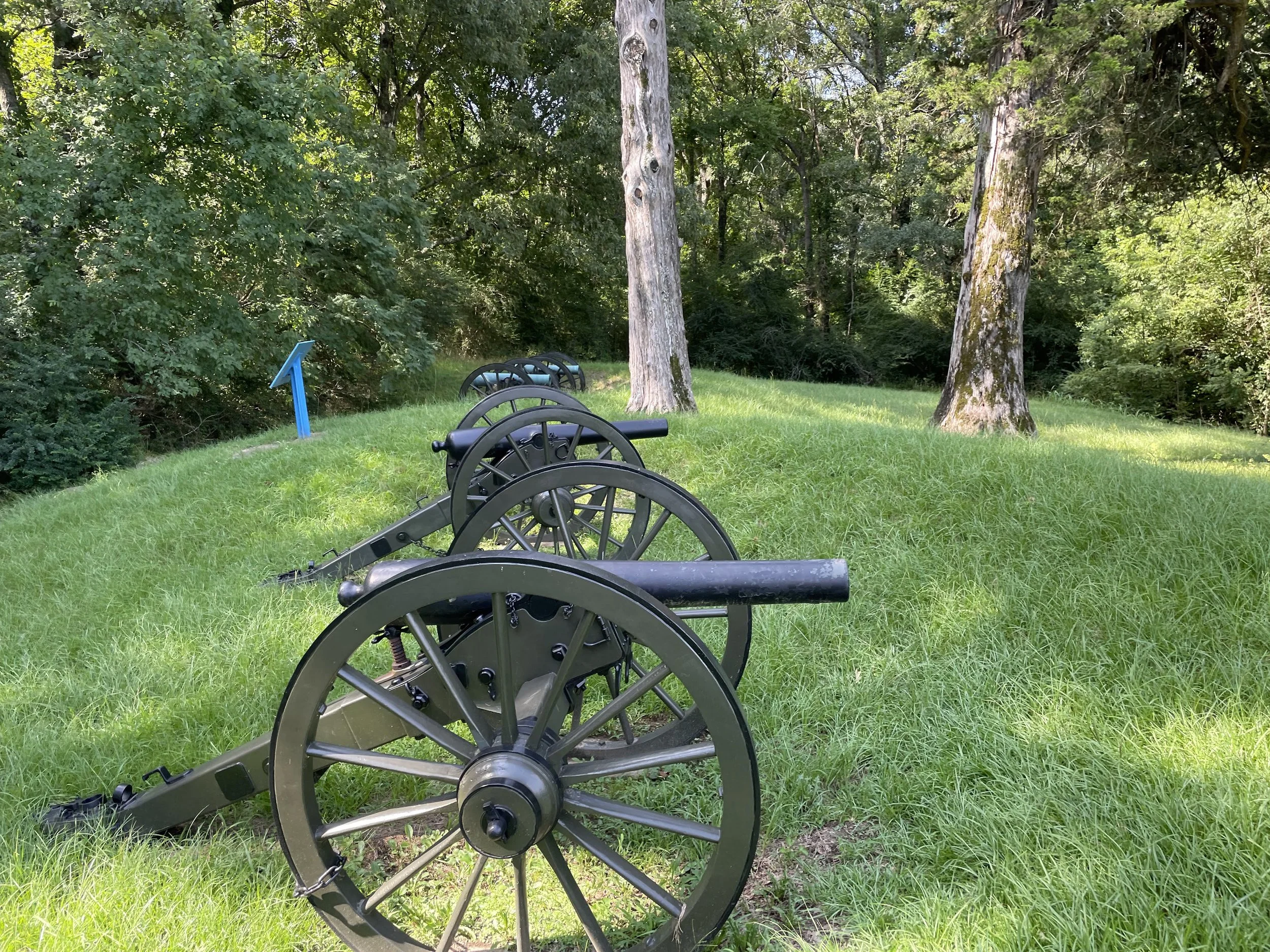
US Army 3-Inch Ordnance Rifles 108 and 336 at Vicksburg
Two US Army 3-Inch Ordnance Rifles are displayed at Vicksburg National Military Park along with two 12-Pounder Howitzers near a sign describing the service of Yost’s Independent Ohio Battery. According to the sign, two 3-Inch Rifles and two 12-Pounders which had been captured at the Battle of Champion’s Hill were turned over to Company F, 32nd Regiment Ohio Volunteer Infantry.
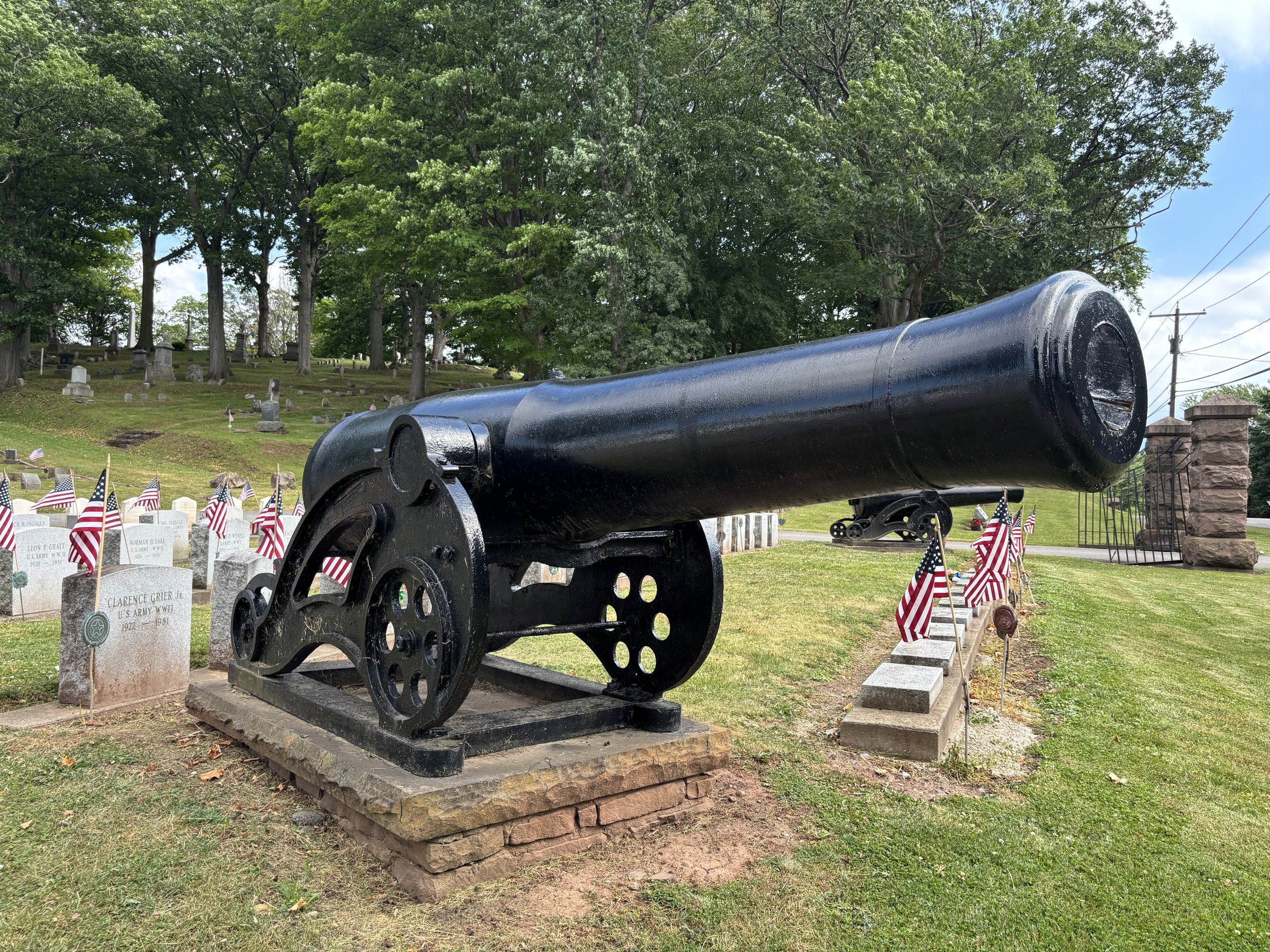
The 8-Inch Columbiads, Pattern 1844, of Medina, New York
Two US Army 8-Inch Columbiads, Pattern 1844, guard the veterans section of and flank the gates to a cemetery in Medina, New York. They are mounted on ornamental iron pedestals which were made to resemble stylized carriages. The two Columbiads, Numbers 83 and 86, were manufactured by the West Point Foundry in 1855.
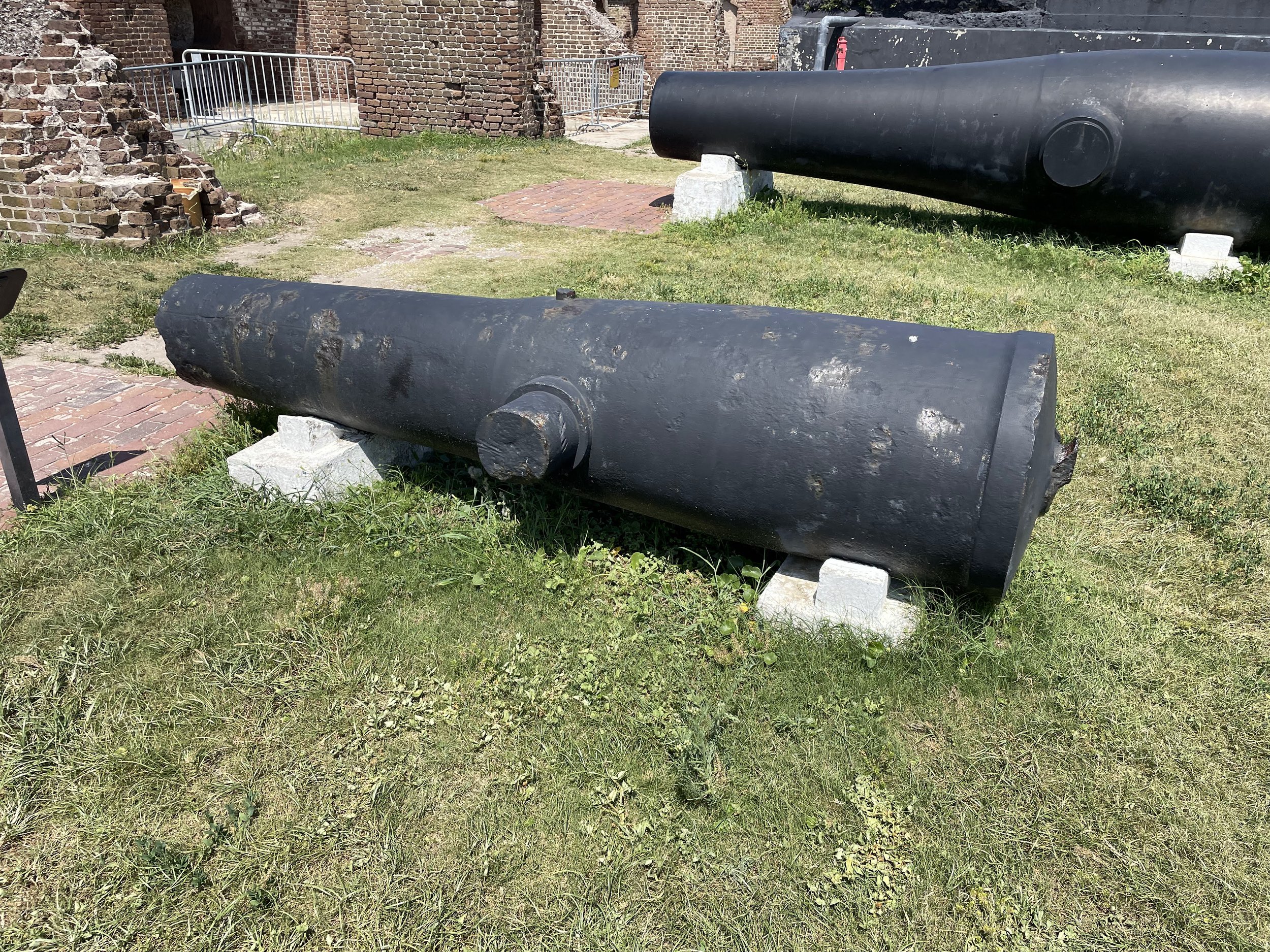
The 8-Inch Columbiad, Pattern 1844, of Fort Sumter
The US Army 8-Inch Columbiad, Pattern 1844, looks almost insignificant at Fort Sumter as it rests between two gargantuan 50,000 pound 15-Inch Rodmans which were brought to the fort in the 1870s. The smaller Columbiad is missing a portion of its muzzle, its right trunnion, and much of its cascabel. It's not mounted on a carriage like the cannons in the casemates. An interpretive sign notes that several of the type were present at the fort in 1861 and that this cannon probably has remained there since then.
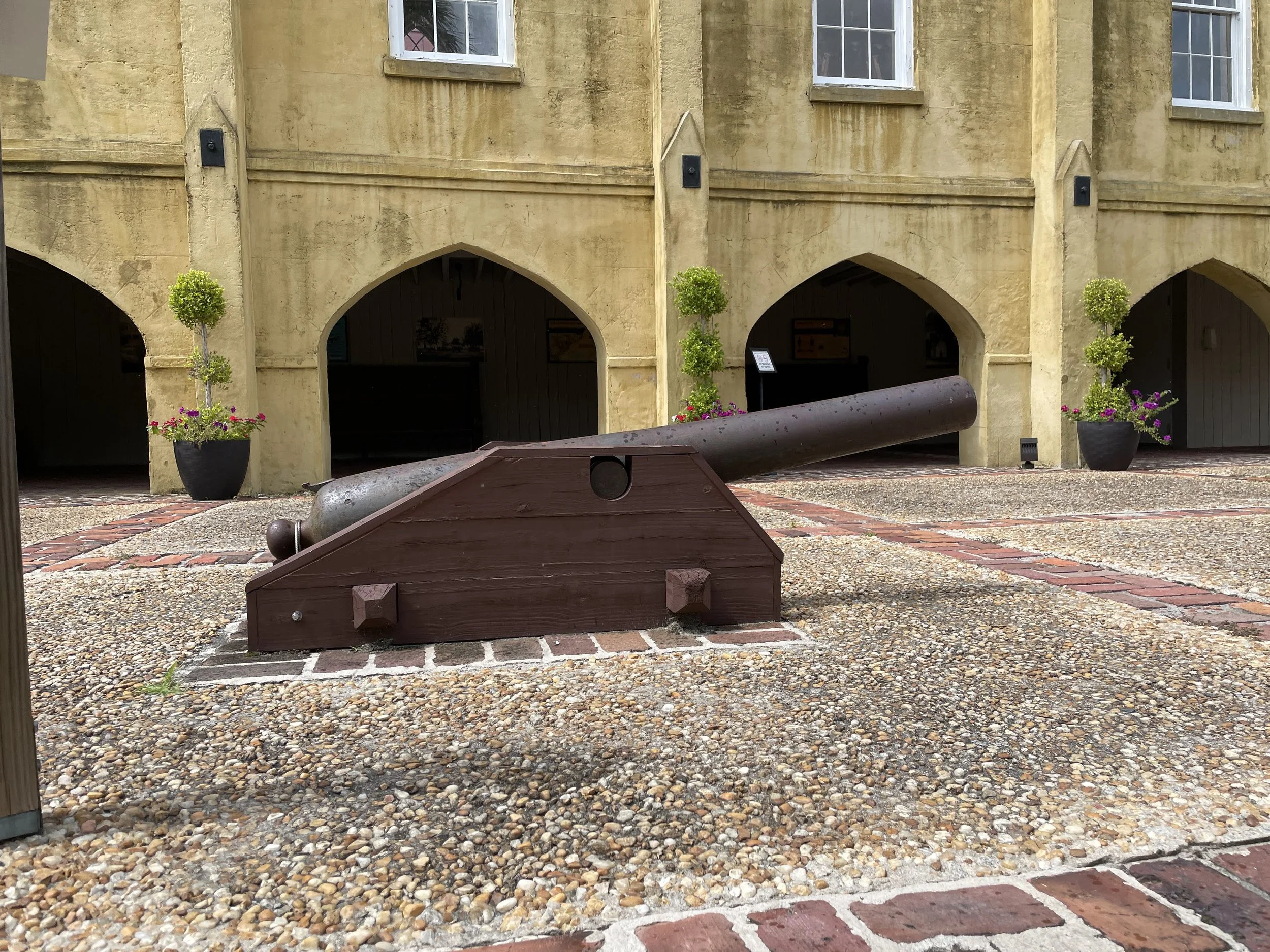
Blakely and Ordinance Rifle at the old Beaufort Arsenal
A US Army 3-Inch Ordnance Rifle (left) and a 3.5-Inch Blakely Rifle are displayed at the Old Beaufort Arsenal in Beaufort, South Carolina. The two cannons are:
3.5-Inch Blakely marked "Blakely's Patent, No. 50, Fawcett, Preston, & Co., Liverpool, Makers, 1862. Ripley categorized this Blakely as a “Type 4”.
US Army 3-Inch Ordnance Rifle Number 265 manufactured in 1862 at the Phoenix Iron Company.
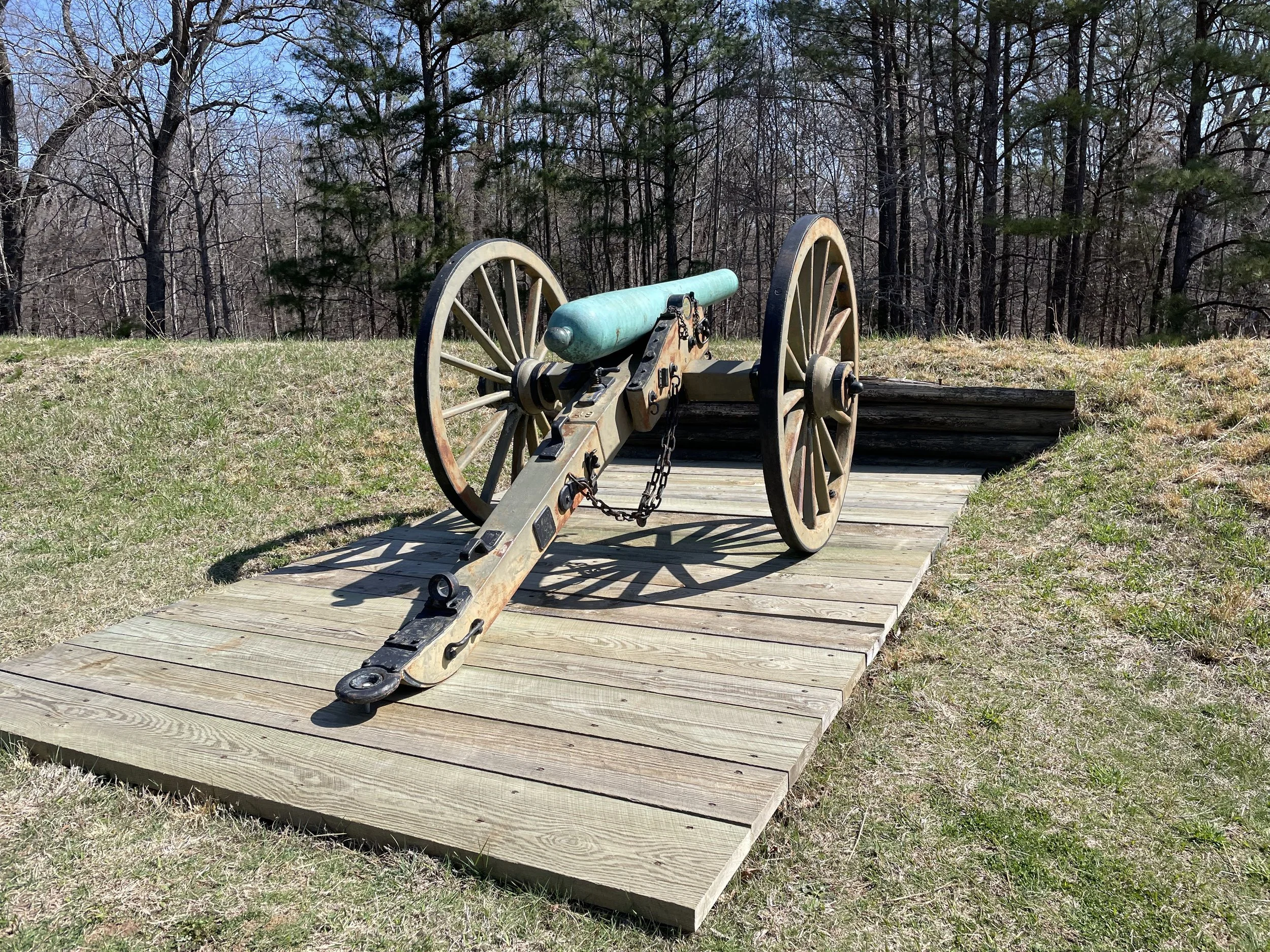
Brierfield Arsenal 6-Pounder at Petersburg
A 6-Pounder smoothbore manufactured by Brierfield Arsenal in Alabama (near Selma) in 1863 is displayed at Petersburg National Battlefield. This is the only surviving cannon produced by Brierfield. A large "C.S." is visible on top of the tube above the trunnions. The weight, 982 pounds, is stamped on the muzzle.
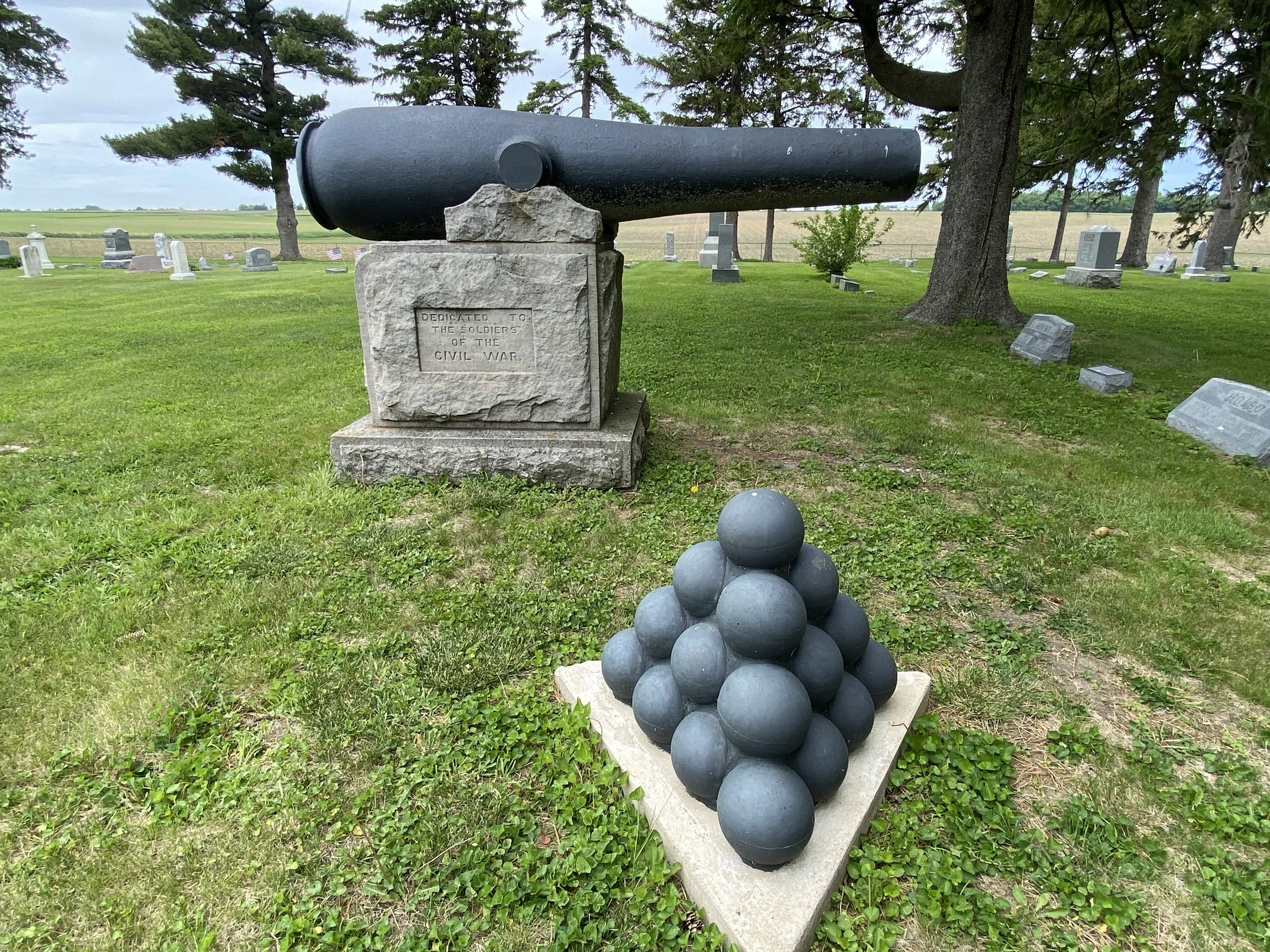
8-Inch Confederate Columbiad in Waterman, Illinois
An 8-Inch Confederate Columbiad is displayed in Johnson Grove Cemetery near Waterman, Illinois. It sits atop a pedestal bearing the inscriptions “Dedicated to the Soldiers of the Civil War” and “Erected 1905.”
The left trunnion bears the mark “1864” - probably for the date of acceptance into service. The Tredegar Foundry number on the muzzle - “1947” - actually corresponds to a casting date of October 27th, 1863 in the records of Tredegar Iron Works of Richmond, Virginia.
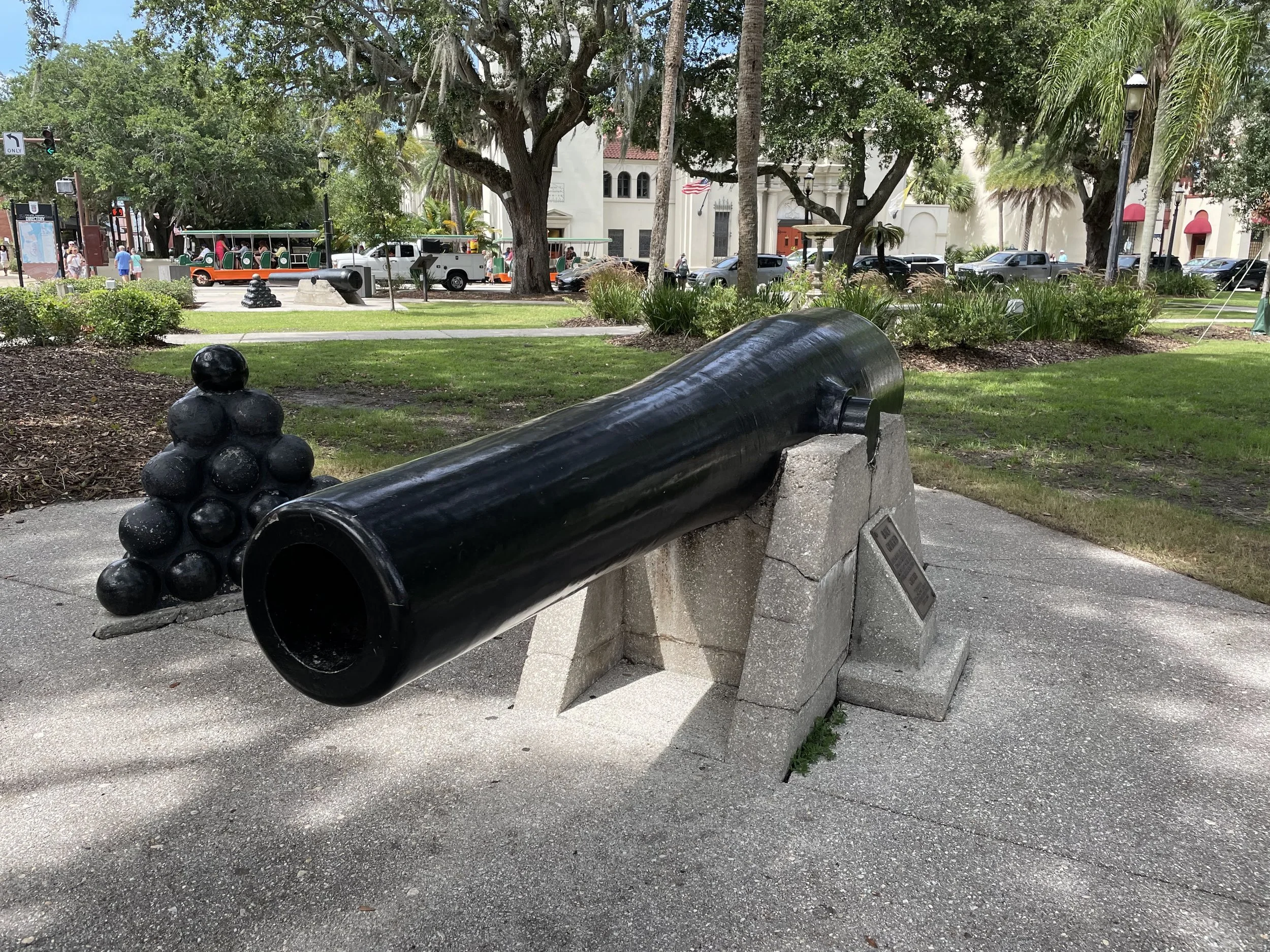
8-Inch Confederate Columbiads in St. Augustine, Florida
Two 8-Inch Confederate Columbiads cast by Bellona Foundry in 1861 are displayed in the Plaza de la Constitución in Saint Augustine, Florida. Bellona’s registry numbers “27” and “29” are stamped on the muzzle. Their weight as manufactured, 8,750 pounds, is stamped on the breech of each. The bronze plaques with each cannon claim that these cannons were present at Fort Marion (Castillo de San Marcos).

10-Inch Confederate Columbiad in Gettysburg, Pennsylvania
A 10-Inch Confederate Columbiad manufactured in 1863 by Tredegar is displayed in front of the Horse Soldier in Gettysburg, Pennsylvania. This cannon bears Tredegar’s registry number “1873” on its muzzle. This number corresponds to a 10-Inch Columbiad cast at Tredegar on July 30th, 1863.
Many thanks to friend-of-the-page and historian Tom Nank for taking these photos and sharing them with me.
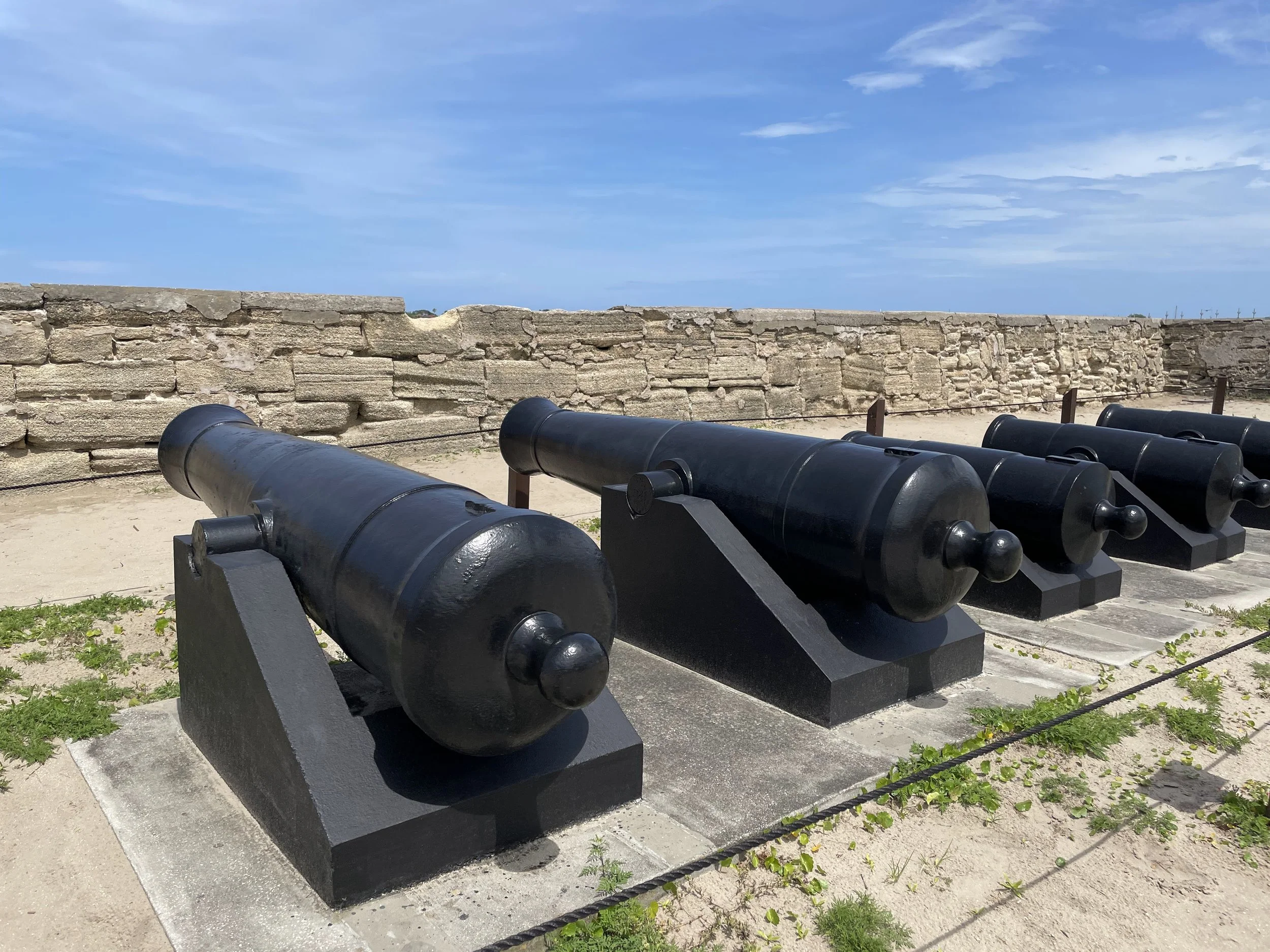
US Army 8-Inch Seacoast Howitzers, Pattern 1840, at Castillo de San Marcos
Two US Army 8-Inch Seacoast Howitzers, Pattern 1840, are the two largest cannons displayed among the 19th Century US cannons along the water battery at the Castillo de San Marcos National Monument. The two seacoast howitzers were made by Columbia Foundry in 1841.

US Navy 100-Pounder Parrott Rifles of Reynoldsville, Pennsylvania
Two US Navy 100-Pounder (6.4-Inch) Parrott Rifles are displayed at Veterans Memorial Park in Reynoldsville, Pennsylvania. The two cannons are displayed on iron display stands. One or perhaps both of these Parrotts may have been used in action by the US Navy against the ironclad ram CSS Albemarle during the Battle of Albemarle Sound on May 5th, 1864.

US Army 10-Inch Seacoast Mortars, Pattern 1840, in Binghamton, New York
Four US Army 10-Inch Mortars, Pattern 1840, which were cast at the West Point Foundry in 1861 are displayed around a beautiful monument to the “Heroic Sons” of Broome County, New York in the city of Binghamton. Many thanks to friend-of-the-page Rob James for these photos!

3.3-Inch Parrott Rifle in Kingstree, South Carolina
3.3-Inch Parrott Rifle displayed beside the Williamsburg County Courthouse in Kingstree, South Carolina. As Hazlett et al. note, this is one of three surviving 3.3-Inch Parrotts. (One of the others is at The Citadel in Charleston while the third is at Harpers Ferry.) Also according to Hazlett, these rifles externally conform to the size an shape of a US Army 10-Pounder Parrott.

US Army 10-Inch Seacoast Mortar, Pattern 1861 in St. Augustine, Florida
US Army 10-Inch Seacoast Mortar, Pattern 1861, displayed in St. Augustine, Florida. Manufactured by Cyrus Alger & Co. in 1862, this is one of only eight of the type made - of which two survive. It strongly resembles its 13-Inch “big brother” but weighs only 7,640 pounds verses around 17,000 pounds for the 13-inch. It is considerably larger than the 10-Inch Siege Mortar, Pattern 1861 which weighed slightly less than 2,000 pounds.

The Treadwell 32-Pounders at the Washington Navy Yard
Two experimental wrought-iron (possibly wrought-iron and steel) 32-Pounders designed by Daniel Treadwell and manufactured circa 1844 are displayed at the Washington Navy Yard. They cannons were light and could be very strong - though not every example's welds held up. For naval service, they were too light.