8-Inch Rifle Number 8 of Mattapoisett, Massachusetts
A US Army 8-Inch Muzzle Loading Rifle, Number 8, displayed in Mattapoisett, Massachusetts. Photo by Scott R. Barrow.
A US Army 8-Inch Muzzle Loading Rifle, Registry Number 8, is displayed on an original carriage in Mattapoisett, Massachusetts beside a Civil War monument in front of the library.
Many thanks to friend of the page Scott R. Barrow for taking and sharing these photos!
This cannon was originally cast as a 10-Inch Rodman smoothbore (No. 149) in 1866 by Seyfert, McManus, and Co. in Reading, Pennsylvania. In 1879 it was converted to an 8-Inch Muzzle Loading Rifle by the breech insertion method. Unlike earlier conversions of 10-Inch Rodmans (and all conversions of 11-Inch Dahlgrens) which inserted the sleeve via the muzzle, the original cast iron smoothbore gun was bored all the way through the breech. Most of the tube was bored out to 13.5-inches diameter, but the area around the breech was bored out to a larger diameter. Then a rifled sleeve was inserted. The larger diameter around the breech allowed the rifled sleeve to be reinforced at the breech. Olmstead et al. states this series of conversions used a steel rather than wrought iron rifled sleeve. The sleeve was threaded into the original cast iron tube by a threaded ring at the muzzle and a threaded plug at the breech which was wrenched into place by means of the rectangular knob still present on the breech. The conversion added about 1,000 pounds to the gun.
Plate from the 1891 edition of John C. Tidball’s “Manual of Heavy Artillery Service” showing the Type 3 and Type 4 carriage designed for the 8-Inch MLR. The 8-inch diameter hydraulic cylinder can be seen in this illustration.
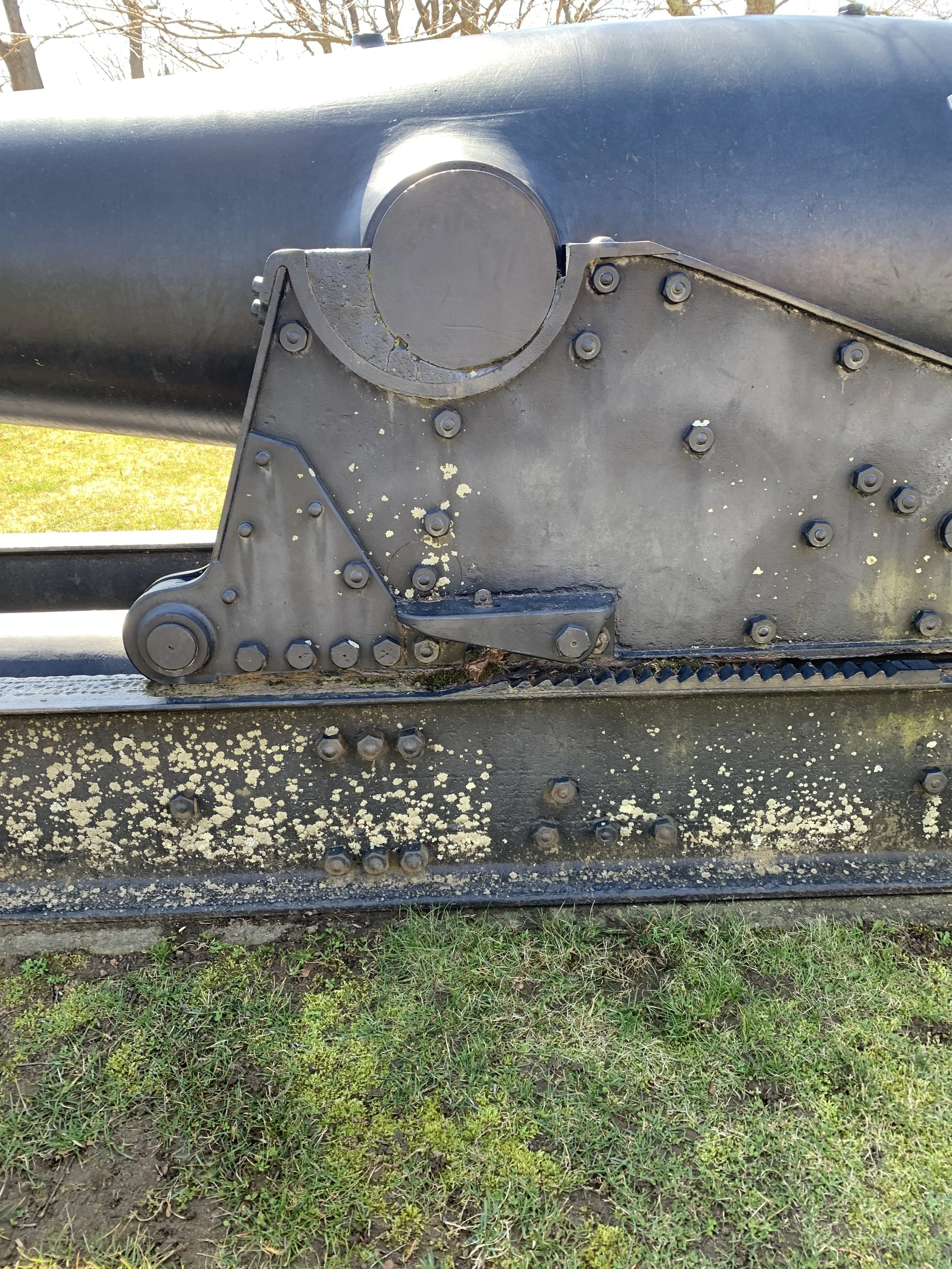
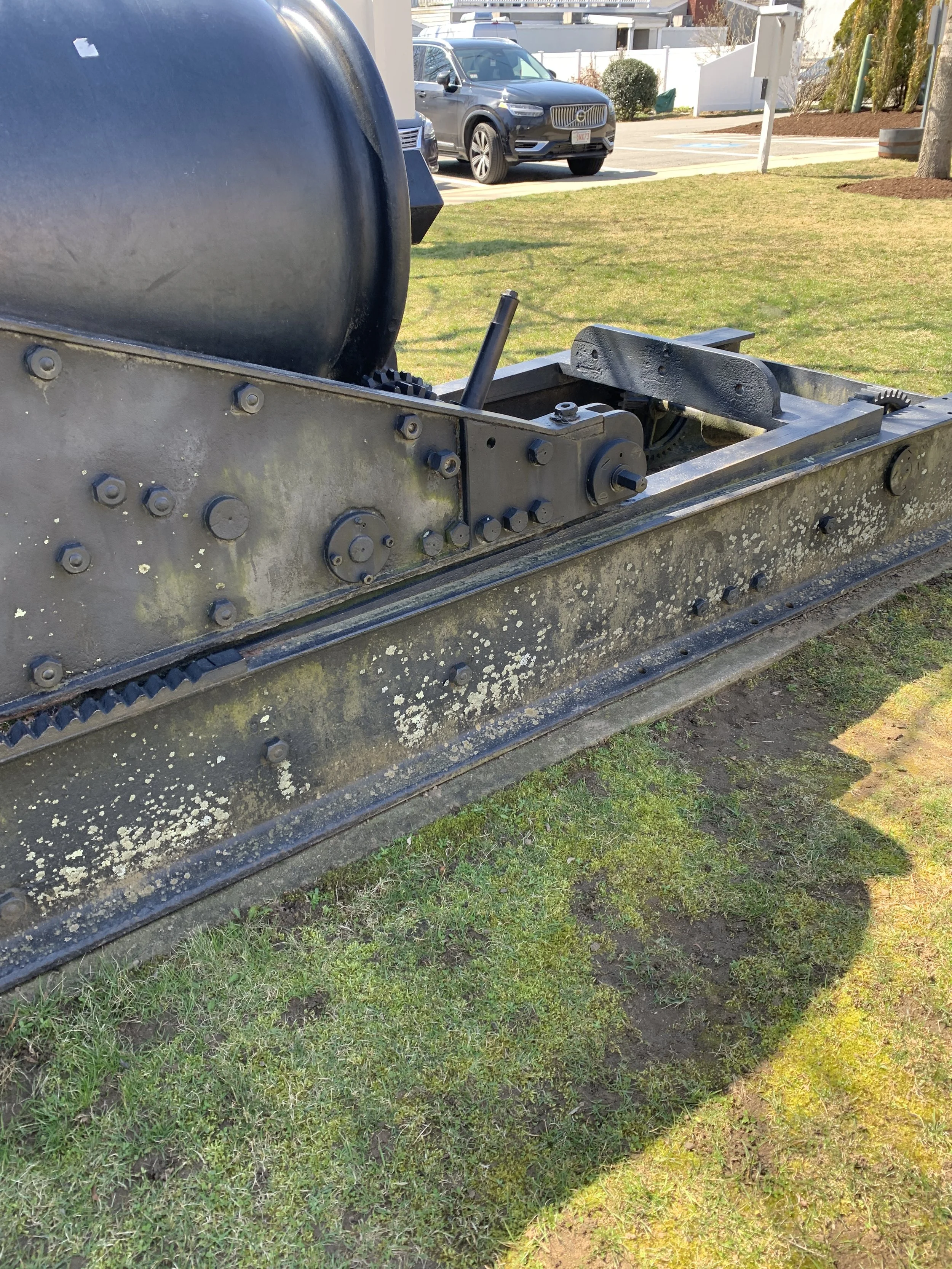
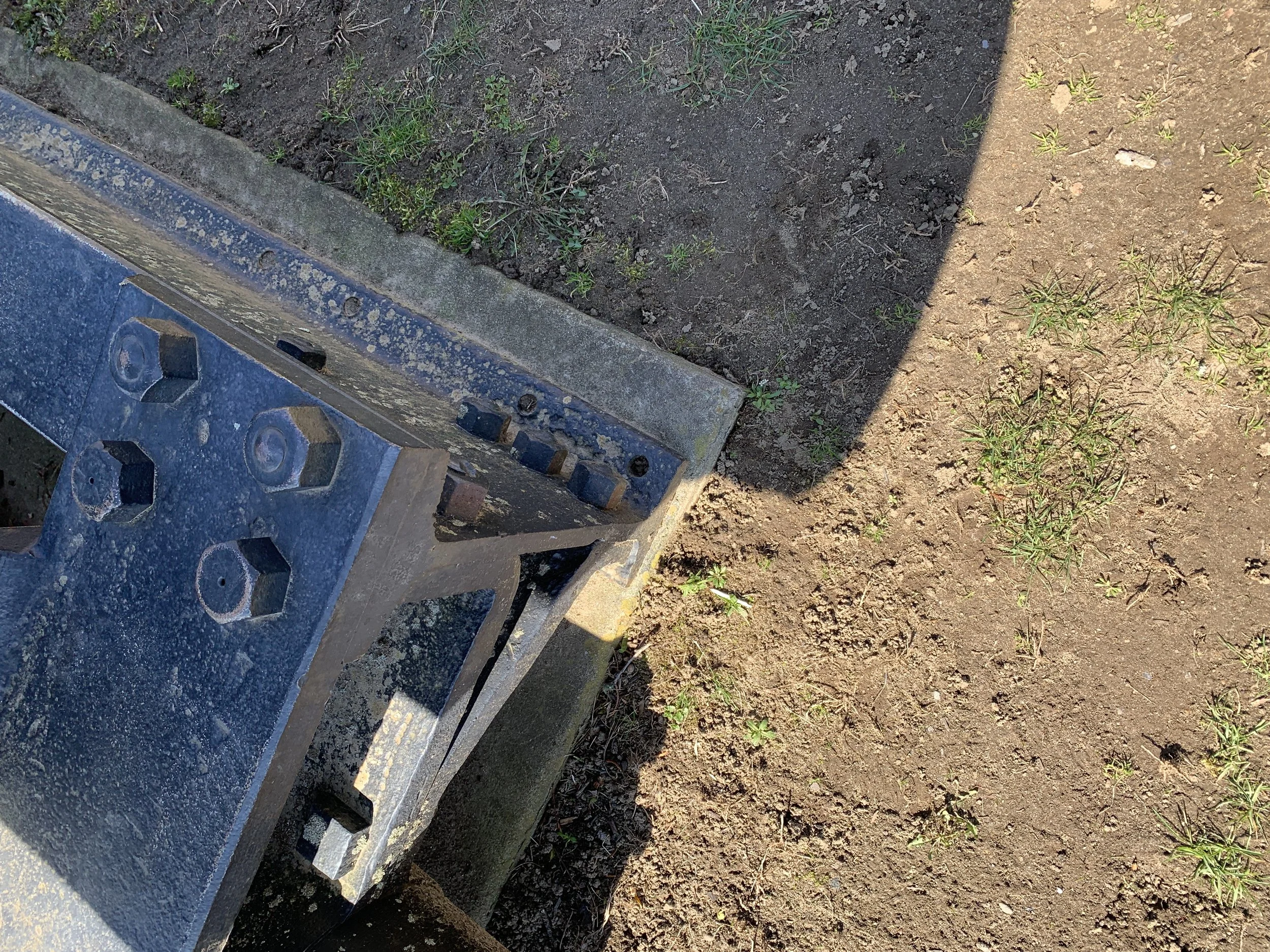
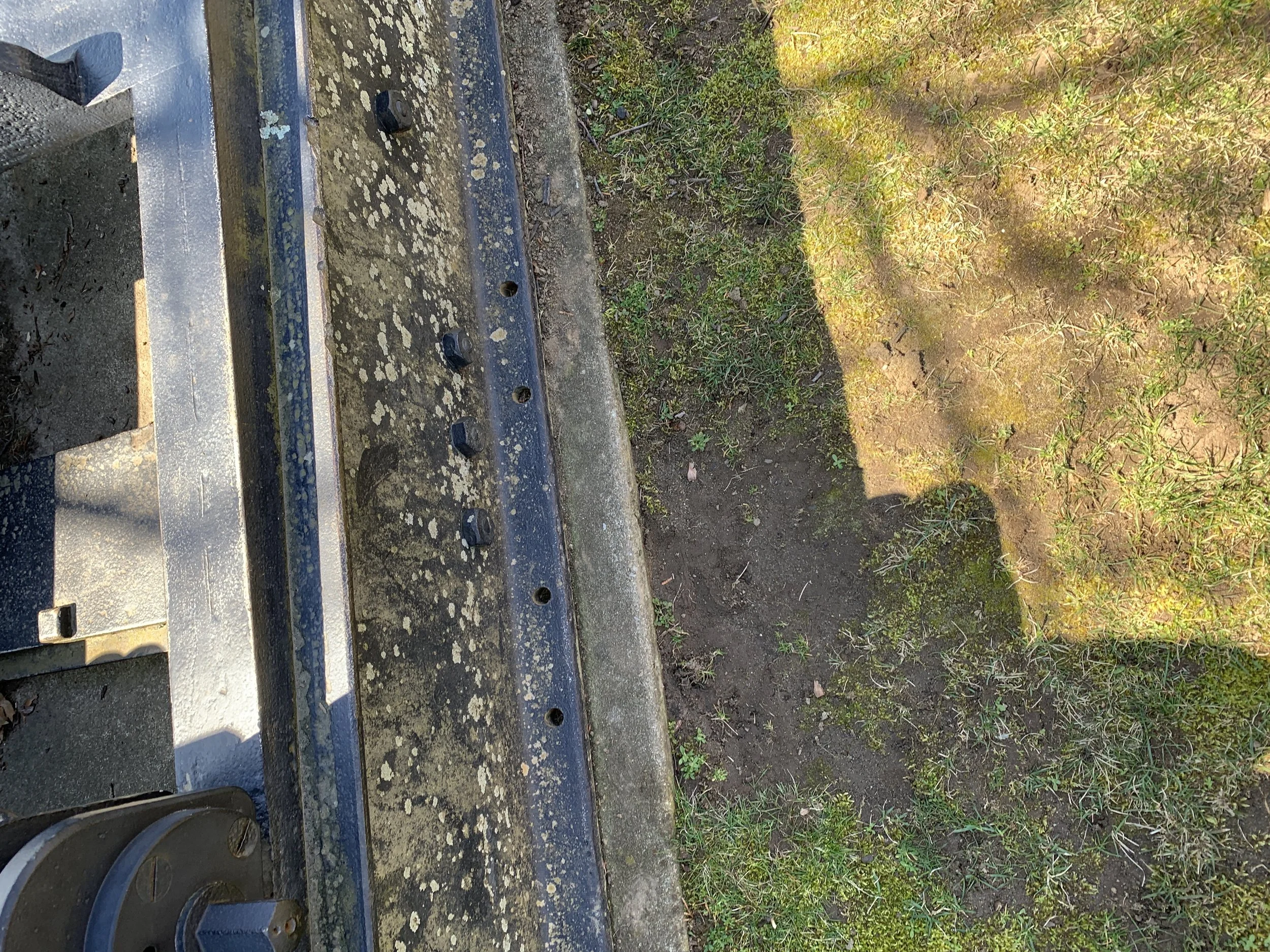
Rather than the 8-Inch Rifle is the original carriage on which it sits. As can be seen in the plate from John C. Tidball’s “Manual of Heavy Artillery Service”, this evolution of earlier Rodman carriages had a hydraulic recoil cylinder in the chassis under the tube. Elevation was controlled by means of gearing rather than the earlier socket and post system of smoothbore Rodmans. (The knob at the breech precluded the use of the socket and post.) The carriage in Mattapoisett is missing its rear wheels, front pintle mount, and various handles, but otherwise looks complete.
The muzzle face shows the Registry Number 8 and weight of 16,145 pounds. The though the conversion was done at South Boston Foundry, the inner rifled sleeve is marked “W.P.F.” (West Point Foundry). The forward end of the hydraulic recoil cylinder can be seen.
The rectangular knob used to wrench the breech insert sleeve into place is seen amid the sockets of the old cast iron tube. The knob precluded use of the old Rodman socket and post elevation system. Elements of the gearing used for elevation can be seen in the photo.
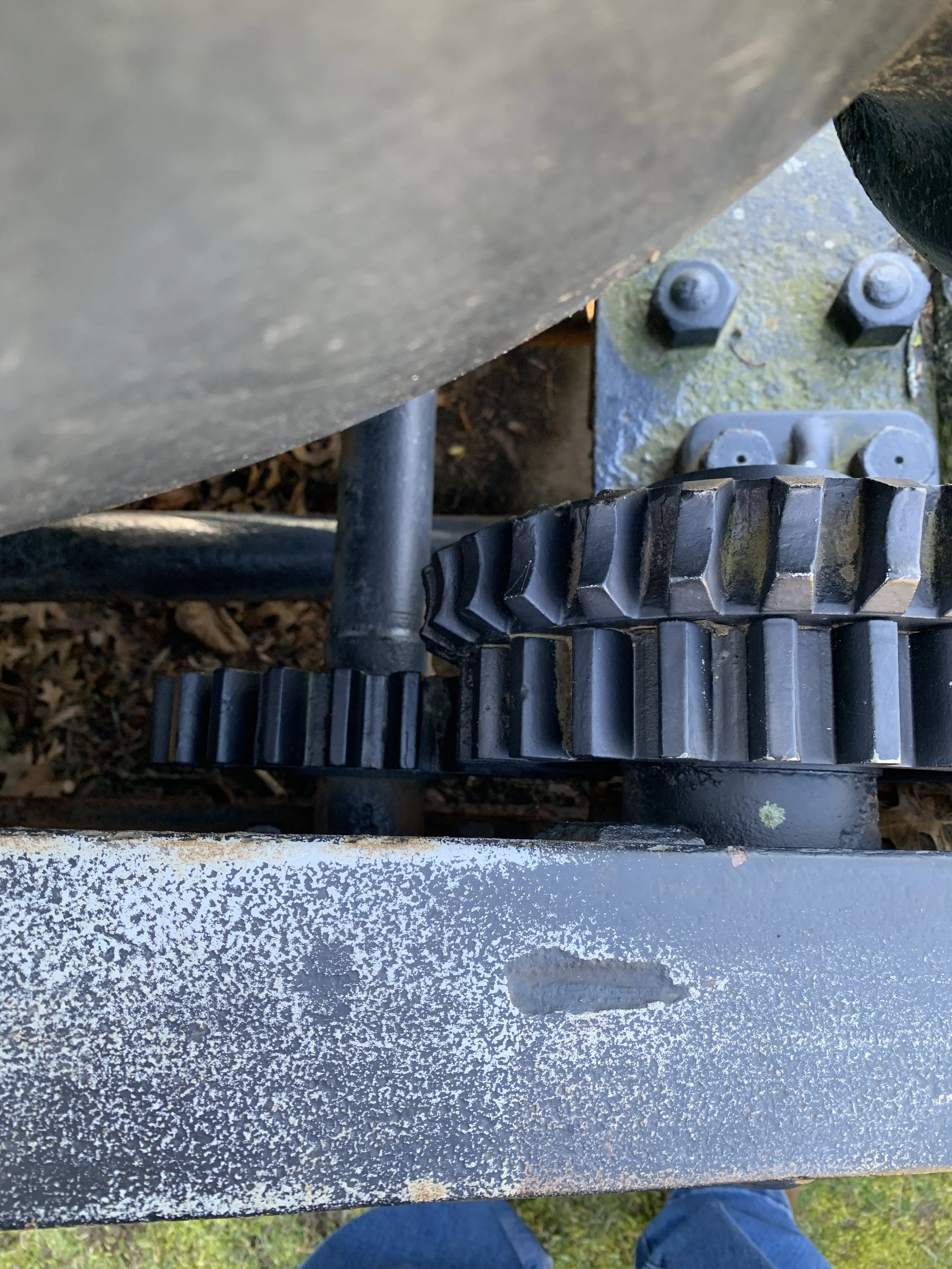
The gearing system on the lower chassis used to run out the upper carriage can be seen in this photo.
The hydraulic recoil cylinder is shown beneath the carriage.
Range Table for the 8-Inch MLR in TIdball’s “Manual of Heavy Artillery Service”
The range table shows from Tidball shows that the 8-Inch Rifle was designed to fire a 180 pound shot with a 35 pound powder charge. This was a massive increase from the 10-Inch Rodman which fired a 128 pound round shot with a smaller powder charge. (In the 1891 edition of Tidball, the charge for the 10-inch smoothbore is only 15 pounds. However, I have seen larger charges quoted in other sources.)
Scott Barrow very graciously returned to take additional photographs of this Rodman to show details of the carriage: