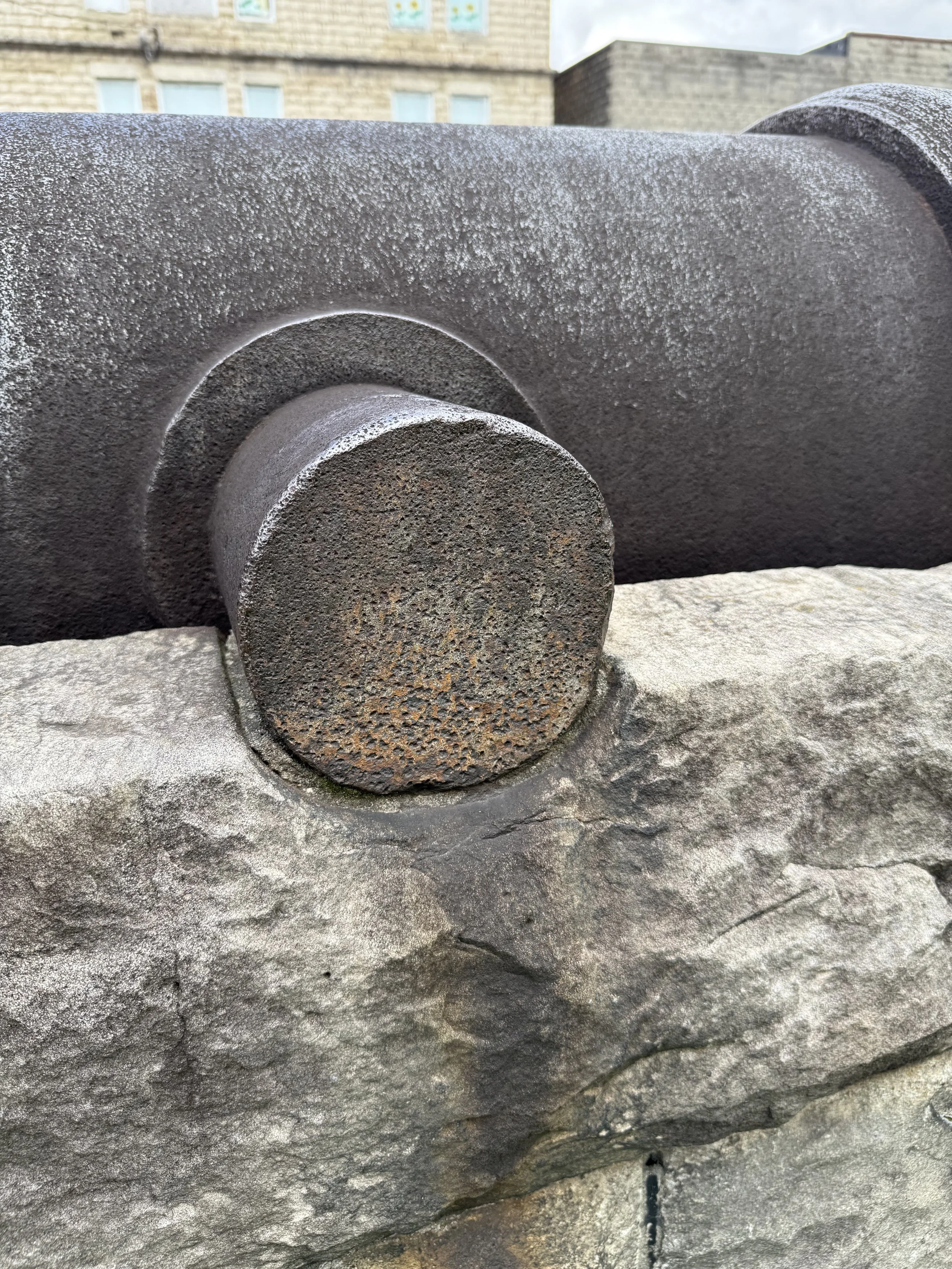
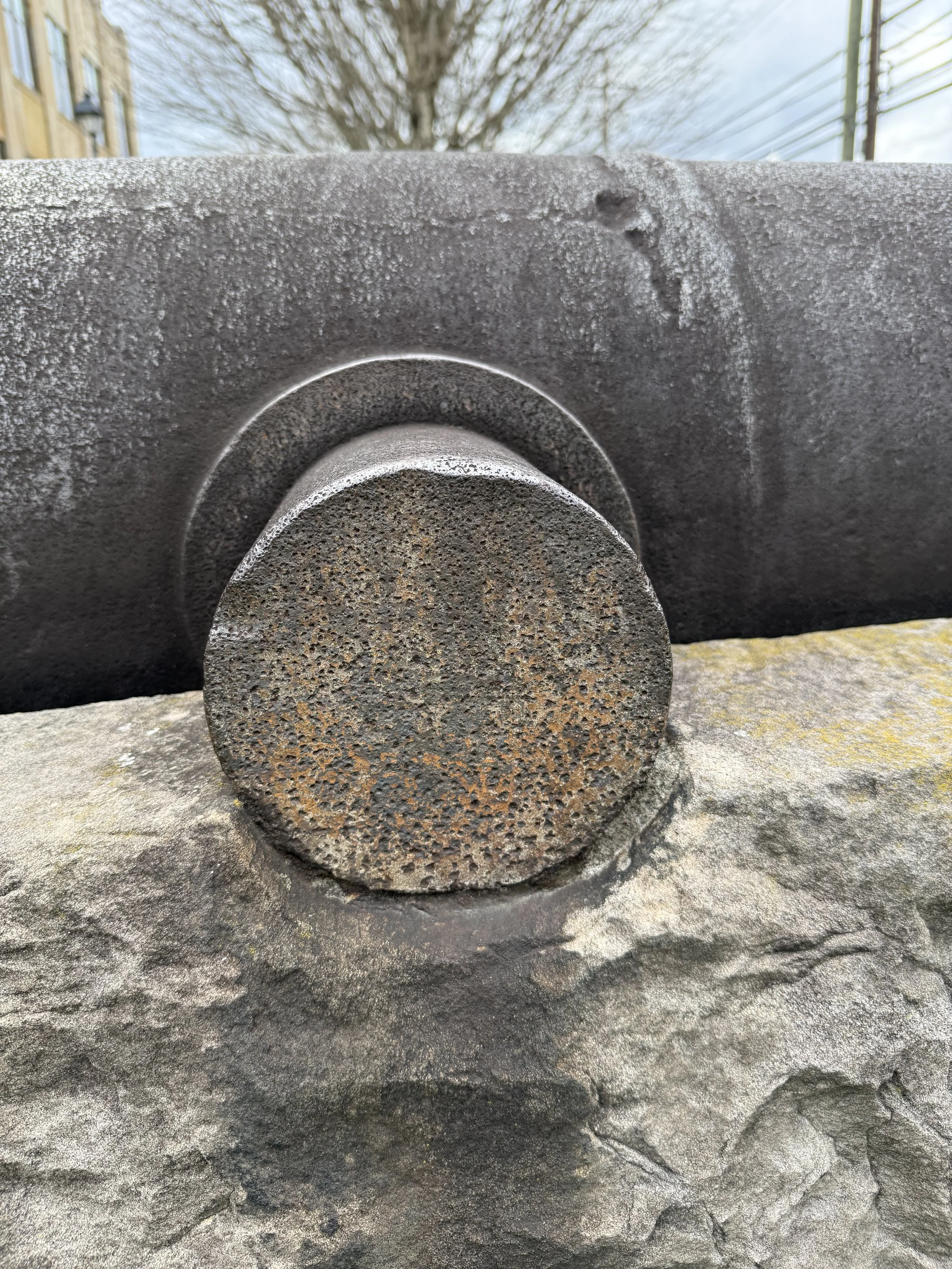
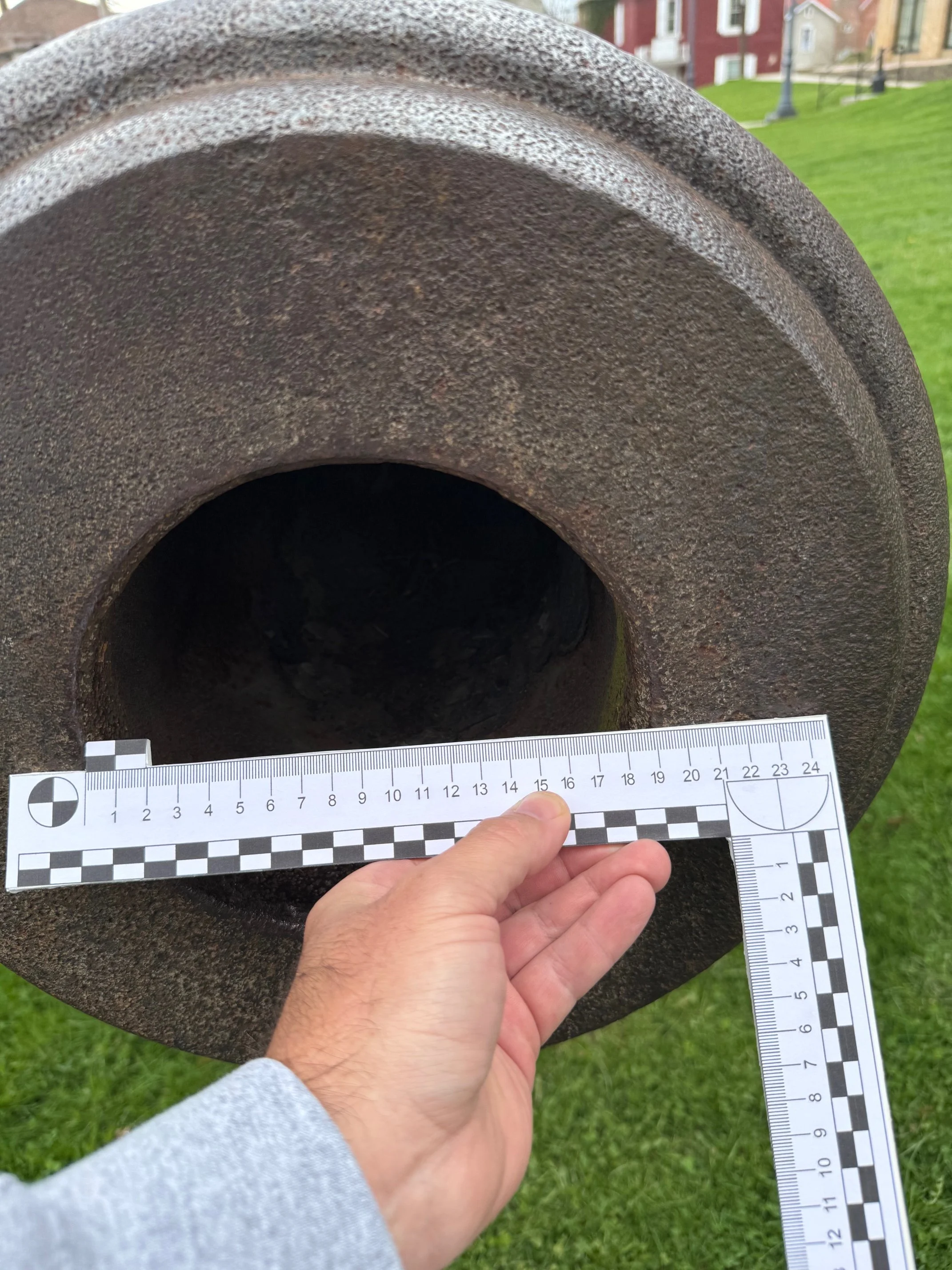
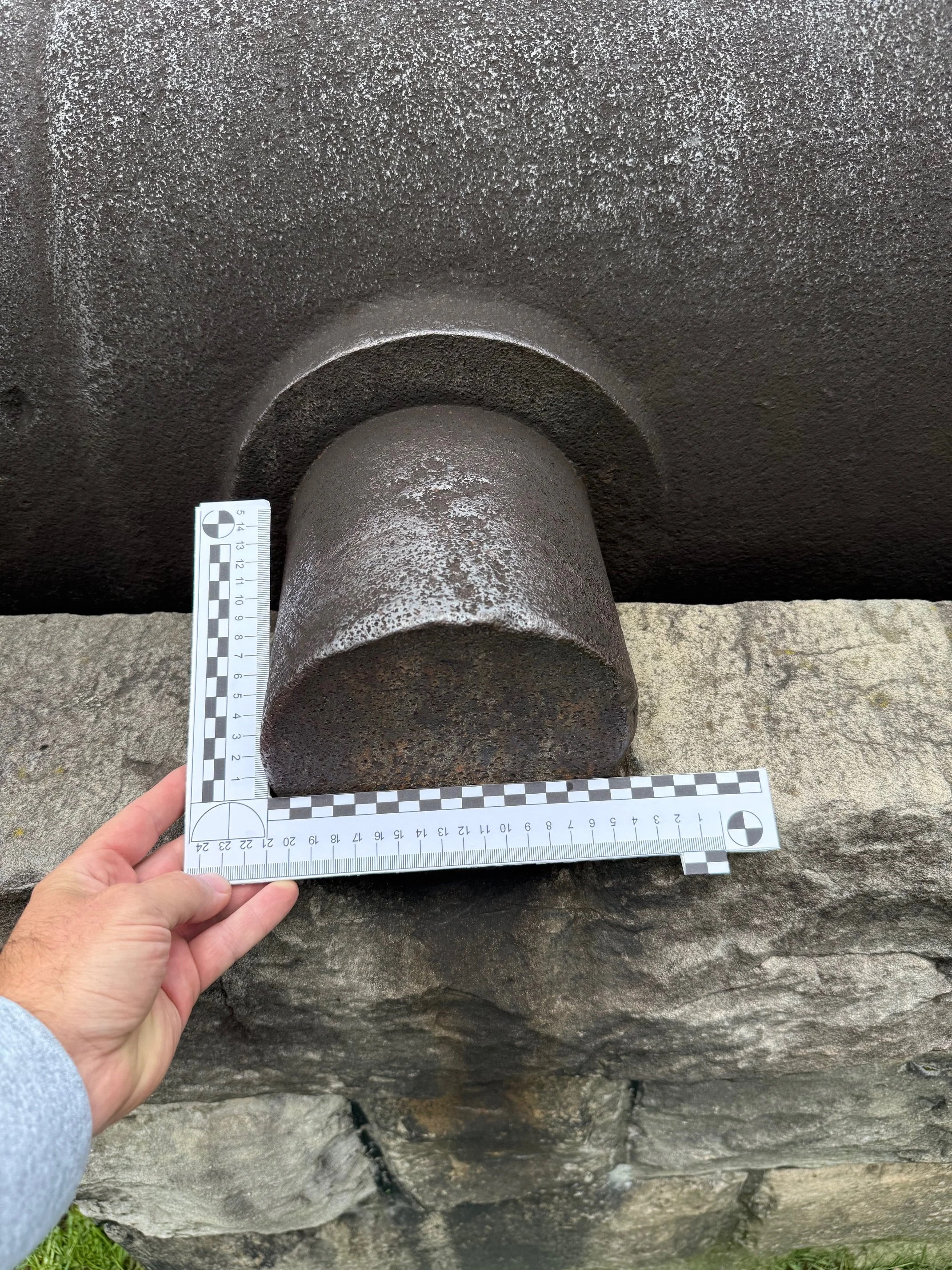
Confederate 42-Pounder in Kingwood, West Virginia
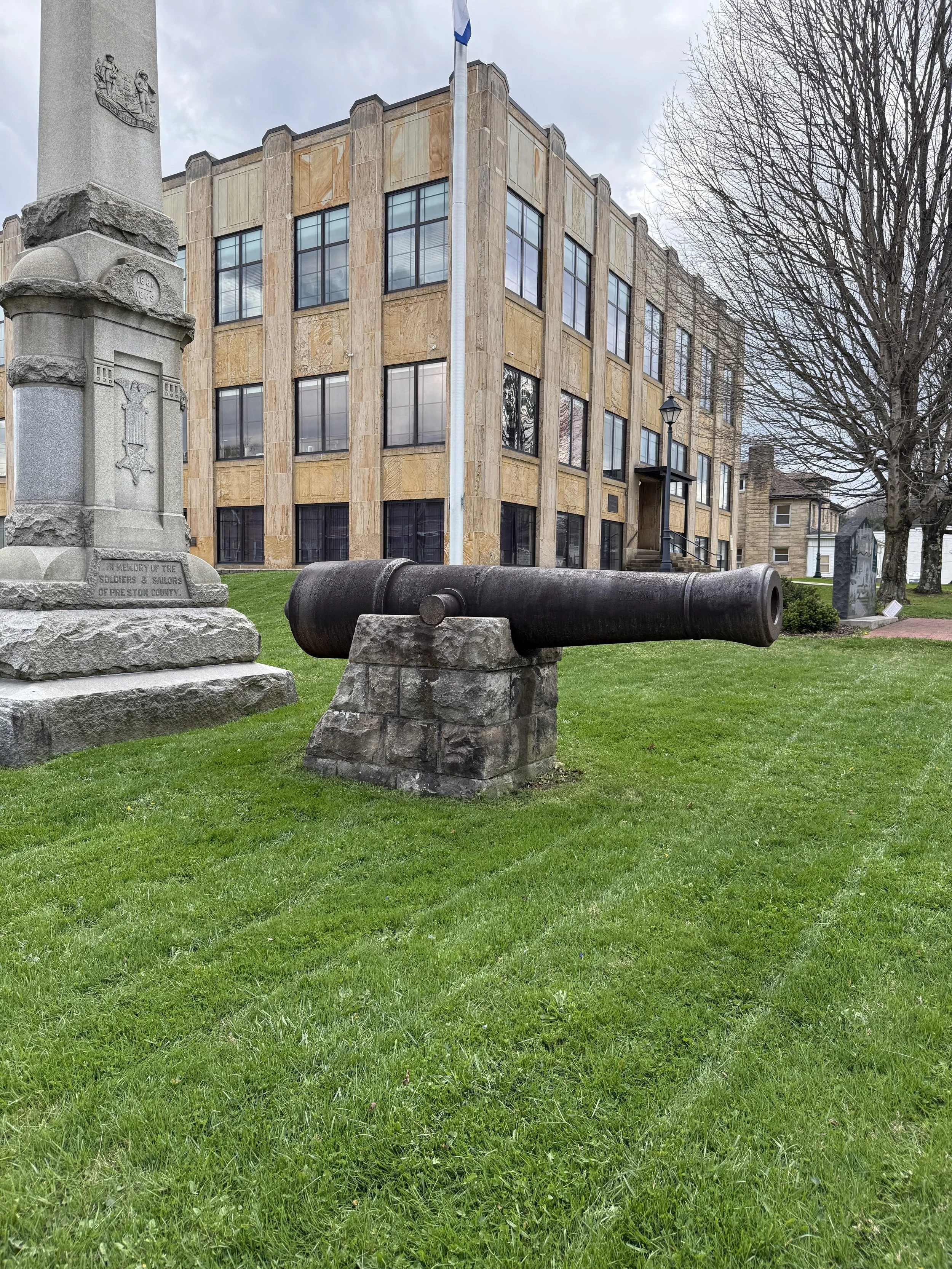
A Confederate 42-Pounder is displayed in Kingwood, West Virginia - Photo by Seth Lemley
Many thanks to Seth Lemley for taking and sharing this wonderful photo set!
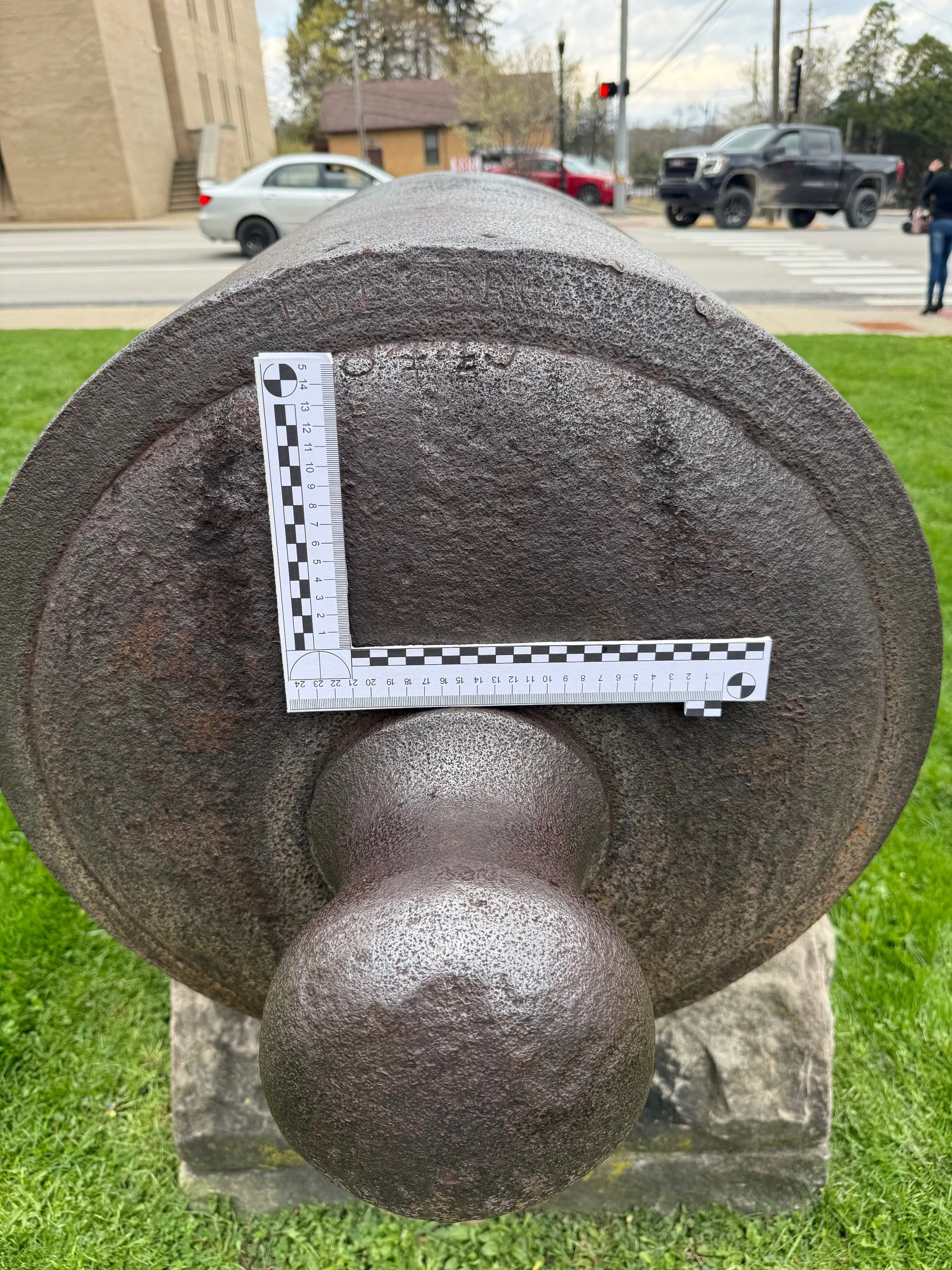
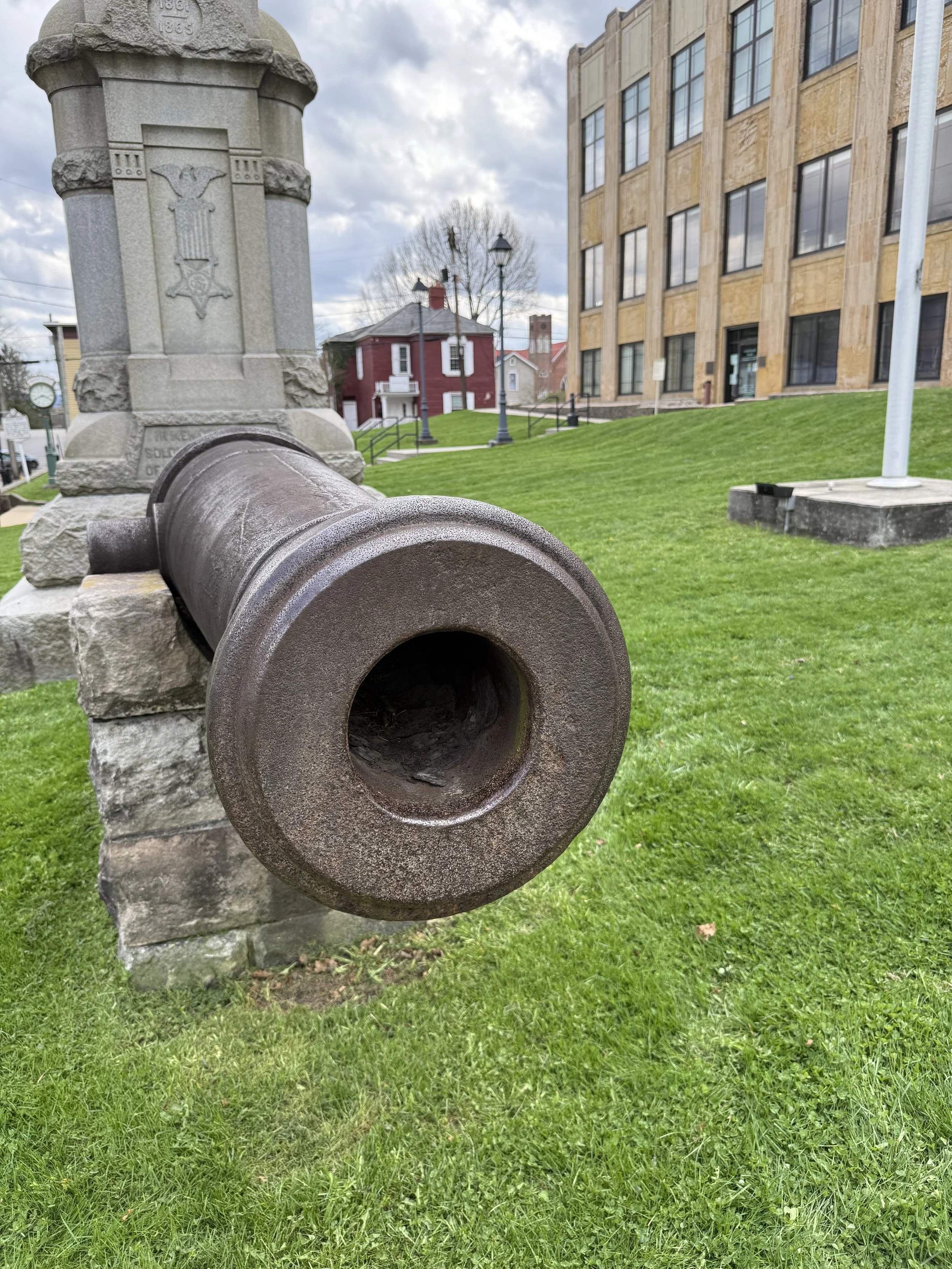
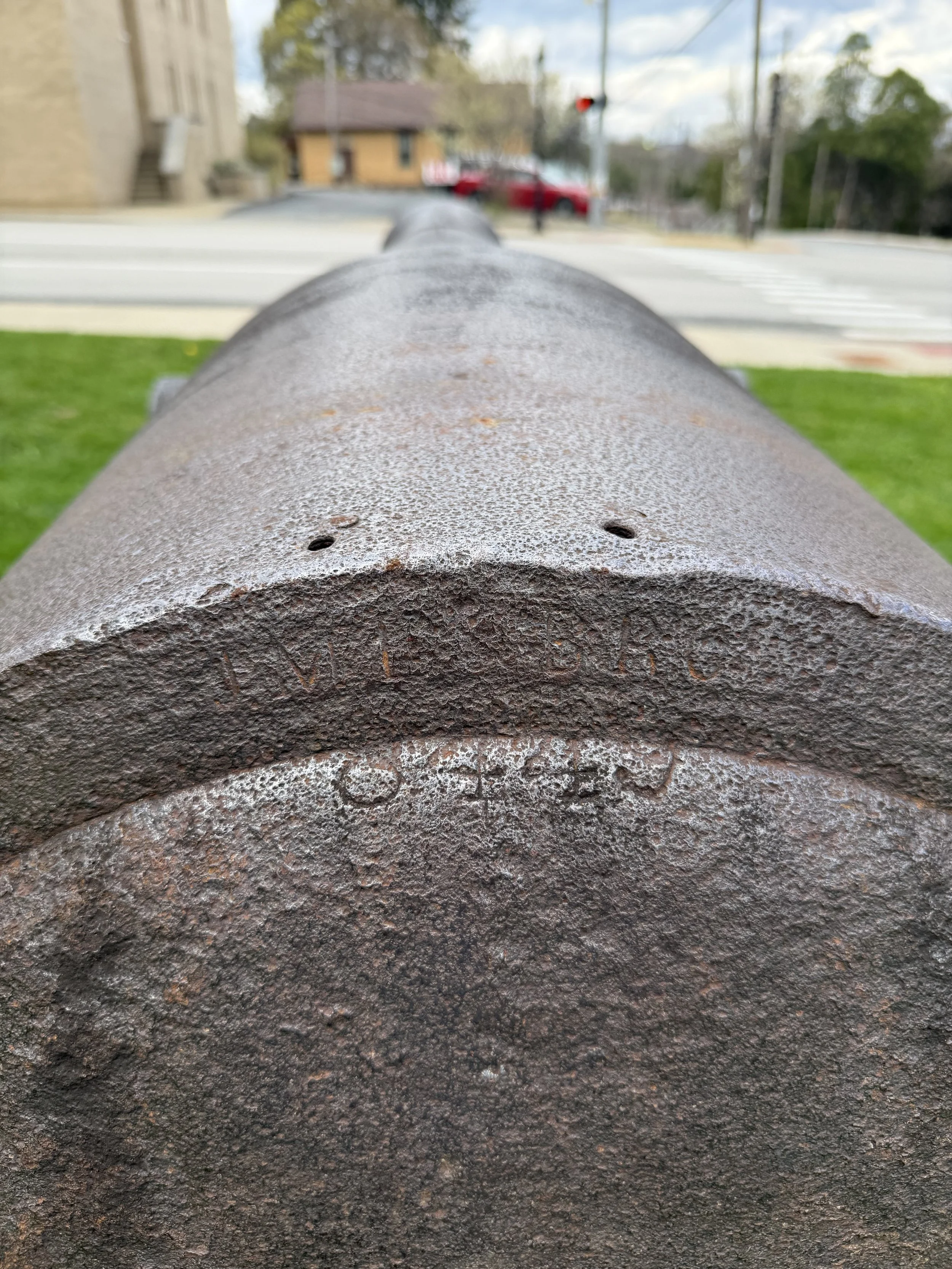
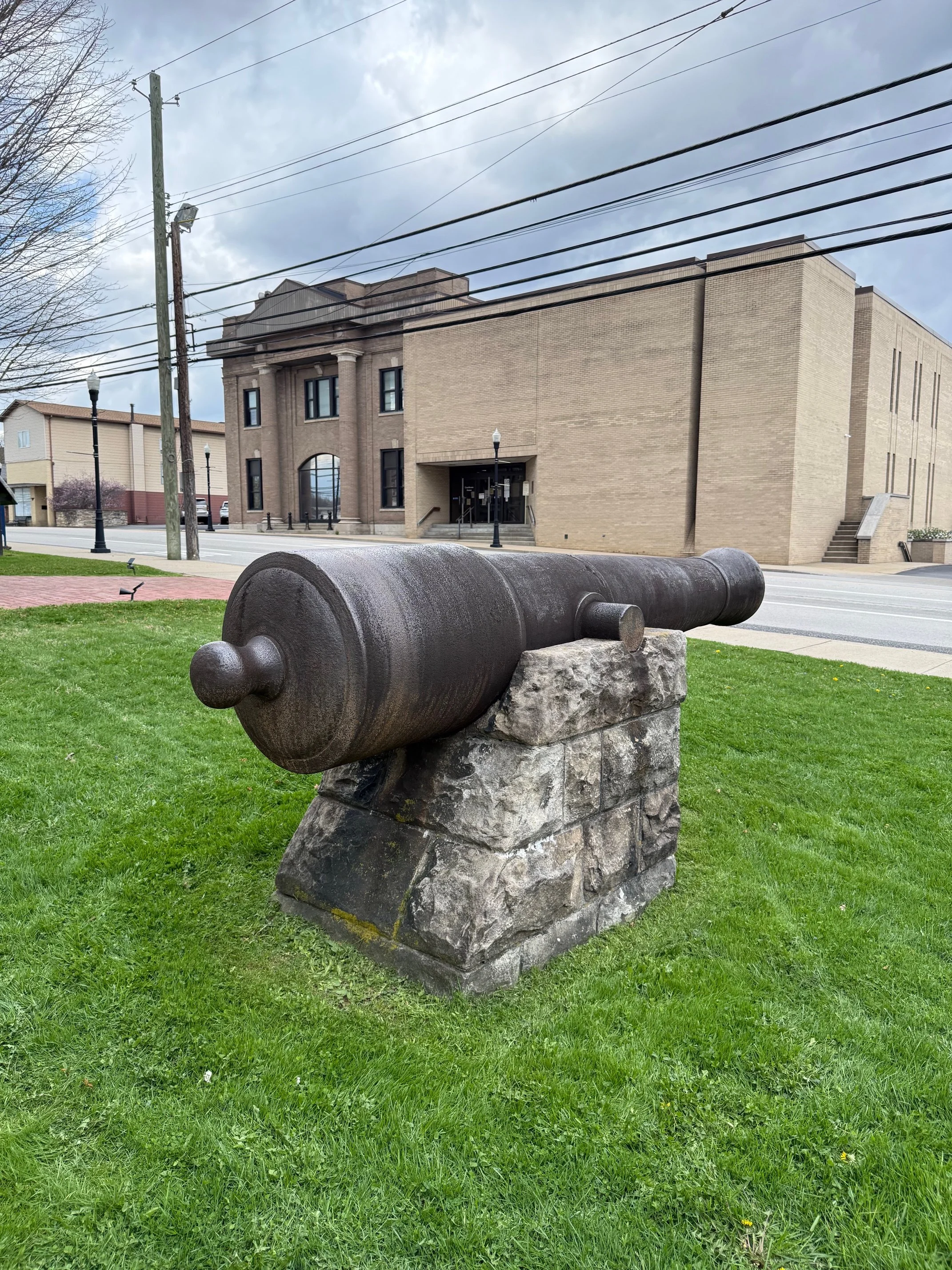
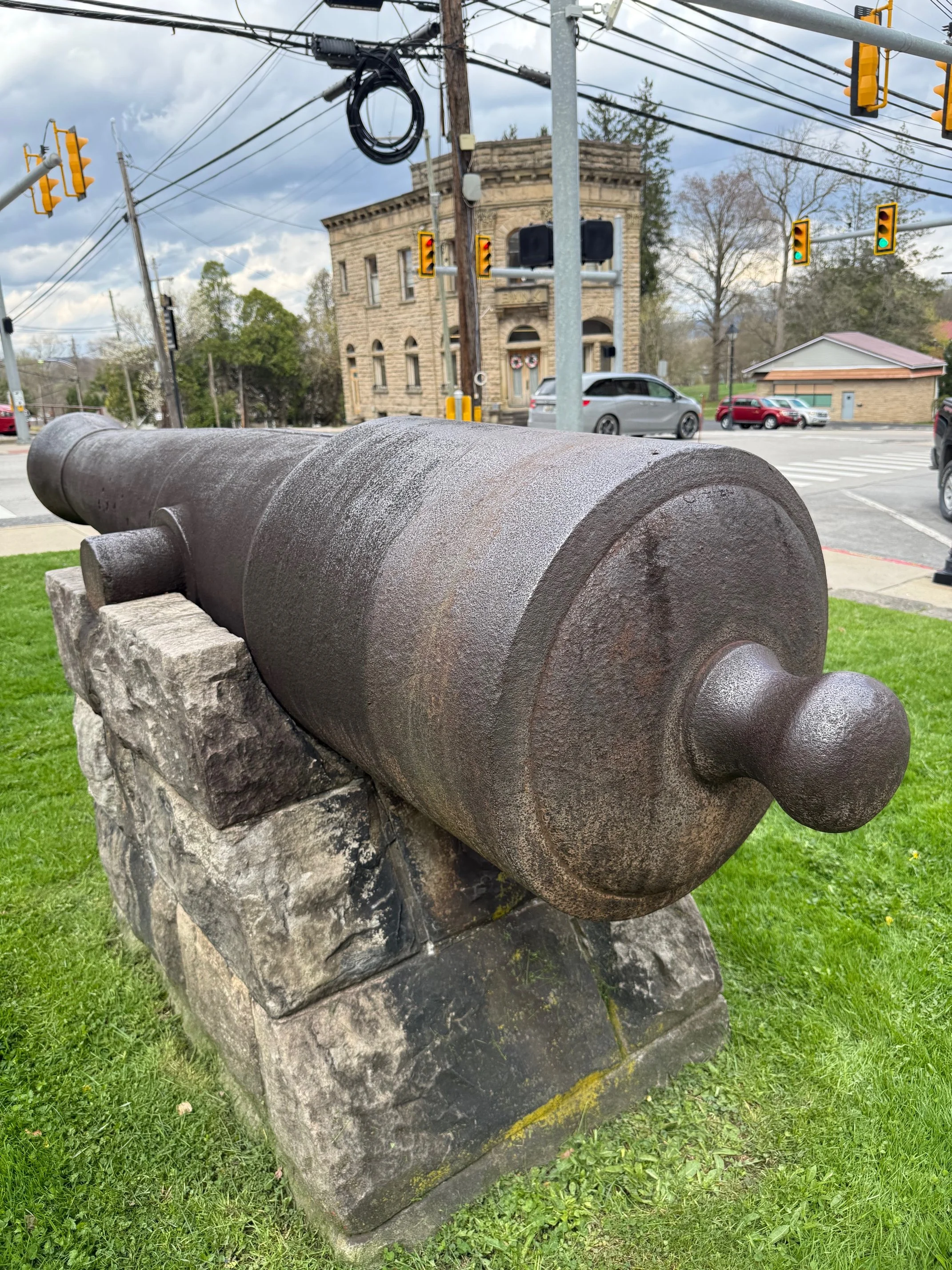
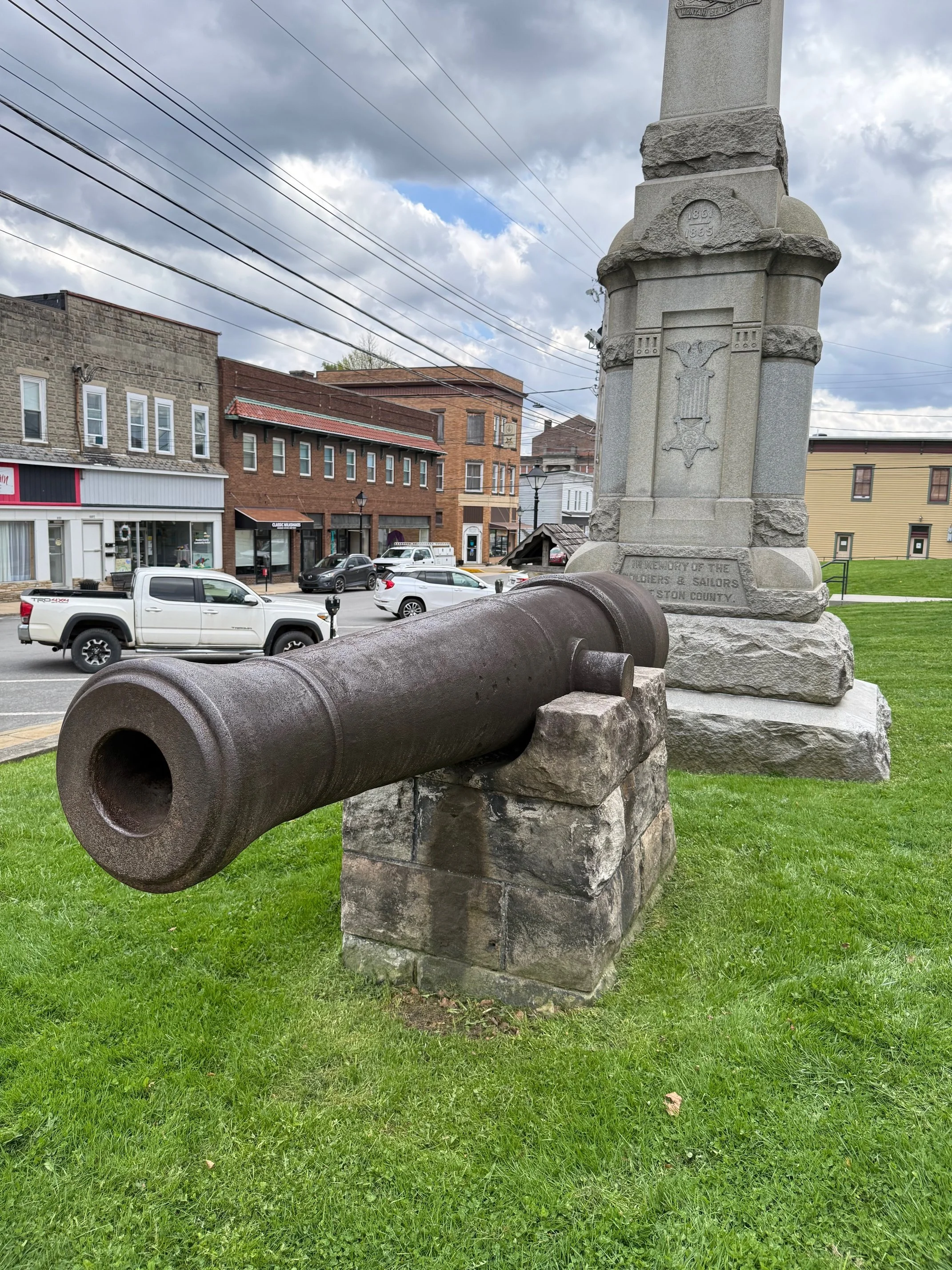
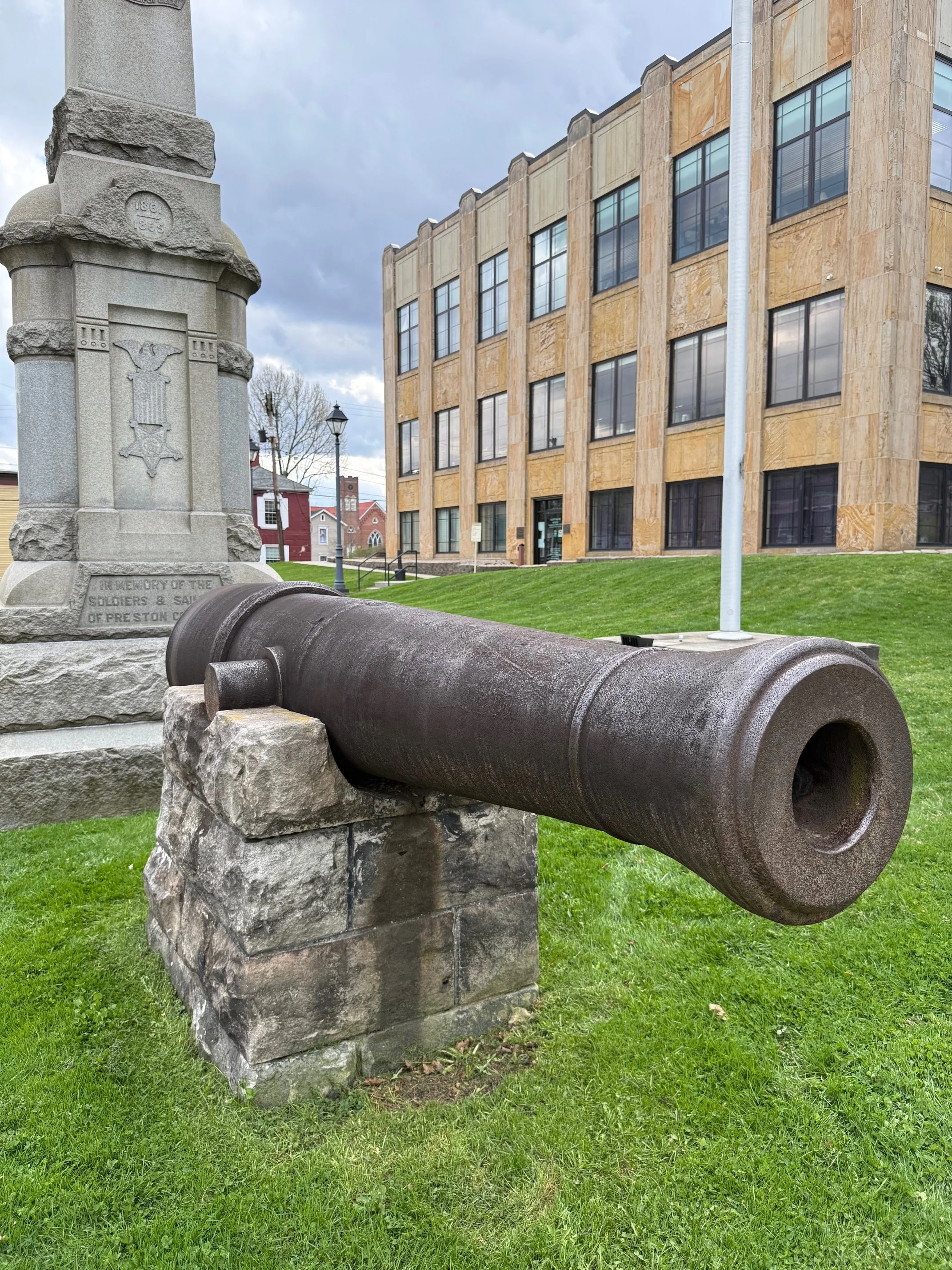
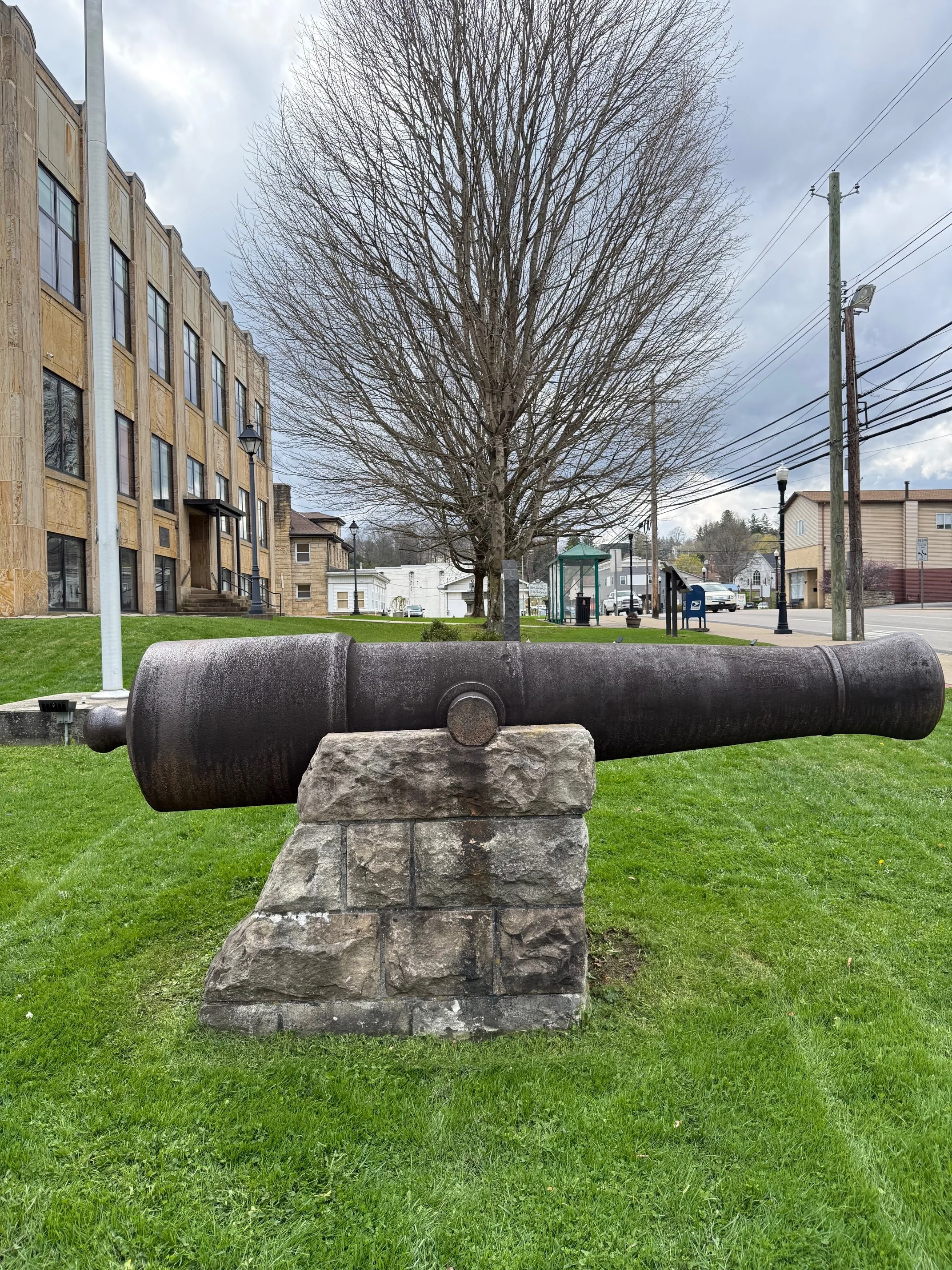
A Confederate Army 42-Pounder Seacoast Gun which was manufactured by Tredegar Iron Works of Richmond in 1861 is displayed in Kingwood, West Virginia. The 42-Pounder was banded but not rifled by the shop of J.M. Eason and Brothers in Charleston, South Carolina during the American Civil War - it remains a smoothbore. (Eason’s shop banded and rifled other smoothbores for Confederate service - notably a 10-Inch Columbiad now at Fort Moultrie.)
The 42-Pounder, though made in 1861, follows the US Army 42-Pounder, Pattern of 1845. Tredegar produced 110 42-Pounders of this type from 1855 to 1859 for the US Army. Mike Ryan wrote that Tredegar only cast two 42-Pounders following the beginning of the Civil War - this being one of them. The weight of the piece before banding, 8,445 pounds is marked on the breech, is very similar to an 8-Inch Columbiad, and the 8-Inch replaced the 42-Pounder for seacoast defense in this weight class for newly ordered ordnance during the war in both South and North. (See 8-Inch Confederate Columbiad and 8-Inch Rodman.)
The original weight of the piece, 8,445 pounds, is stamped on the breech. The firm that banded the rifle, J.M. Eason and Brothers, is stamped on the rear of the wrought iron reinforcing band.
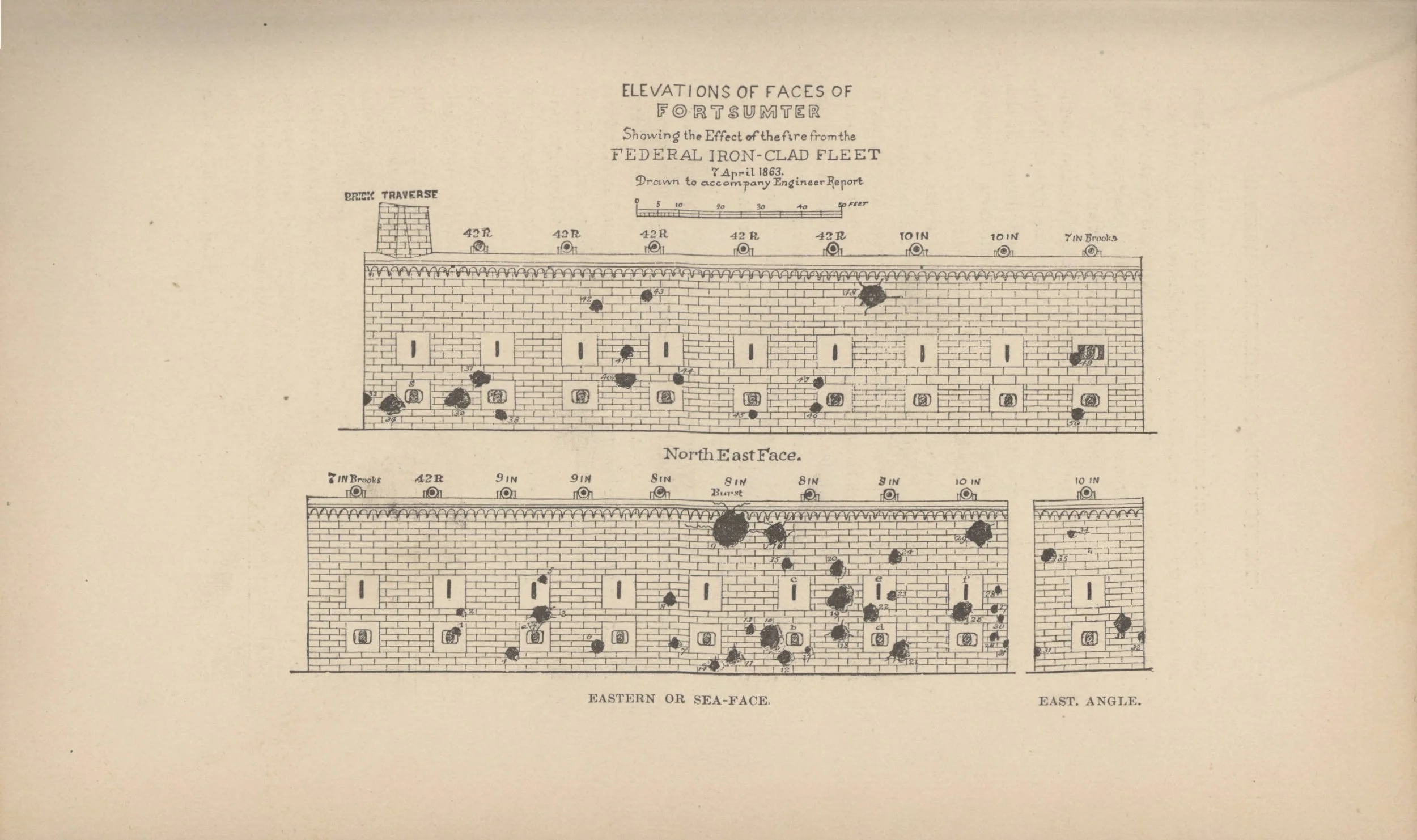
Illustration of Fort Sumter following the action with the US Navy of April 7th, 1863 showing both the damage sustained and the armament of the engaged faces of the fort. Note the six 42-Pounder rifles - the most numerous single type mounted on the engaged faces of the barbette. From Johnson’s “Defense of Charleston Harbor”.
The 42-Pounder proved to be a popular candidate for rifling by both sides during the early war. For instance, during the April 7th, 1863 “Attack of the Ironclads” upon Charleston, six 42-Pounder rifles were mounted on the engaged faces of the barbette tier - the most numerous single type of Sumter’s engaged guns.
With a 7-inch bore, once rifled, a 42-Pounder was capable of throwing a projectile roughly double the weight of the original round ball. Some Federal reports refer to the rifled 42-Pounders used in the reduction of Fort Pulaski as “84-Pounders” for this reason. Rifling improved both the accuracy and the potential hitting power of the piece. However, rifling smoothbores considerably increased the strain on the piece when fired both due roughly doubling the weight of the projectile and due expanding cup or other means by which projectiles engaged the rifling also blocked the expanding gases from passing by the shot as would happen when firing a smoothbore. Because of this added strain, these converted smoothbores often received a wrought-iron band to reinforce their breech. Unbanded rifles were thought more likely to burst.
The question, therefore, is why was this 42-Pounder banded and not rifled? The type could be safely used as a smoothbore unbanded. If I may speculate, perhaps:
this 42-Pounder was intended to be rifled by Eason, but the work could not be completed for some reason
this 42-Pounder was banded but some flaw was found that meant that it was not a good candidate for rifling
this 42-Pounder was intentionally banded to be able to fire higher propellant charges with a 42-pound shot. Some experiments during the war investigated whether a “high velocity” smoothbore might be better at penetrating armor than a larger caliber, slower velocity gun.
According to Mike Ryan’s excellent paper “The Historic Guns of Forts Sumter and Moultrie”, the 42-Pounder now in Kingwood was uncovered by a storm just outside the walls of Fort Sumter in 1911. Ryan believes that it was likely dumped outside the walls during the construction of Battery Huger. In 1912, it was donated to the Kingwood chapter of the Grand Army of the Republic and placed by a G.A.R. monument in front of the Preston County Courthouse.
While it’s wartime service cannot be definitively established, the Tredegar manufacture, banding by J.M. Eason, and presence at Fort Sumter suggests that it served in the Charleston area and eventually at Fort Sumter. Three other Fort Sumter related 42-Pounders survive. Two, one of them banded and rifled, are displayed at the fort. Another banded rifle is displayed in Richmond.
Photos of the Kingwood, West Virginia Confederate 42-Pounder - Photos by Seth Lemley