The 100-Pounder Parrott Rifles of Fort Mill, South Carolina
Two US Army 100-Pounder Parrott Rifles are displayed in Fort Mill, South Carolina
Two US Army 100-Pounder (or 6.4-Inch) Parrott Rifles are displayed in Fort Mill, South Carolina. The two Parrotts are:
US Army 100-Pounder Parrott Number 23 cast at West Point Foundry in 1862. Weight as manufactured: 9,797 pounds.
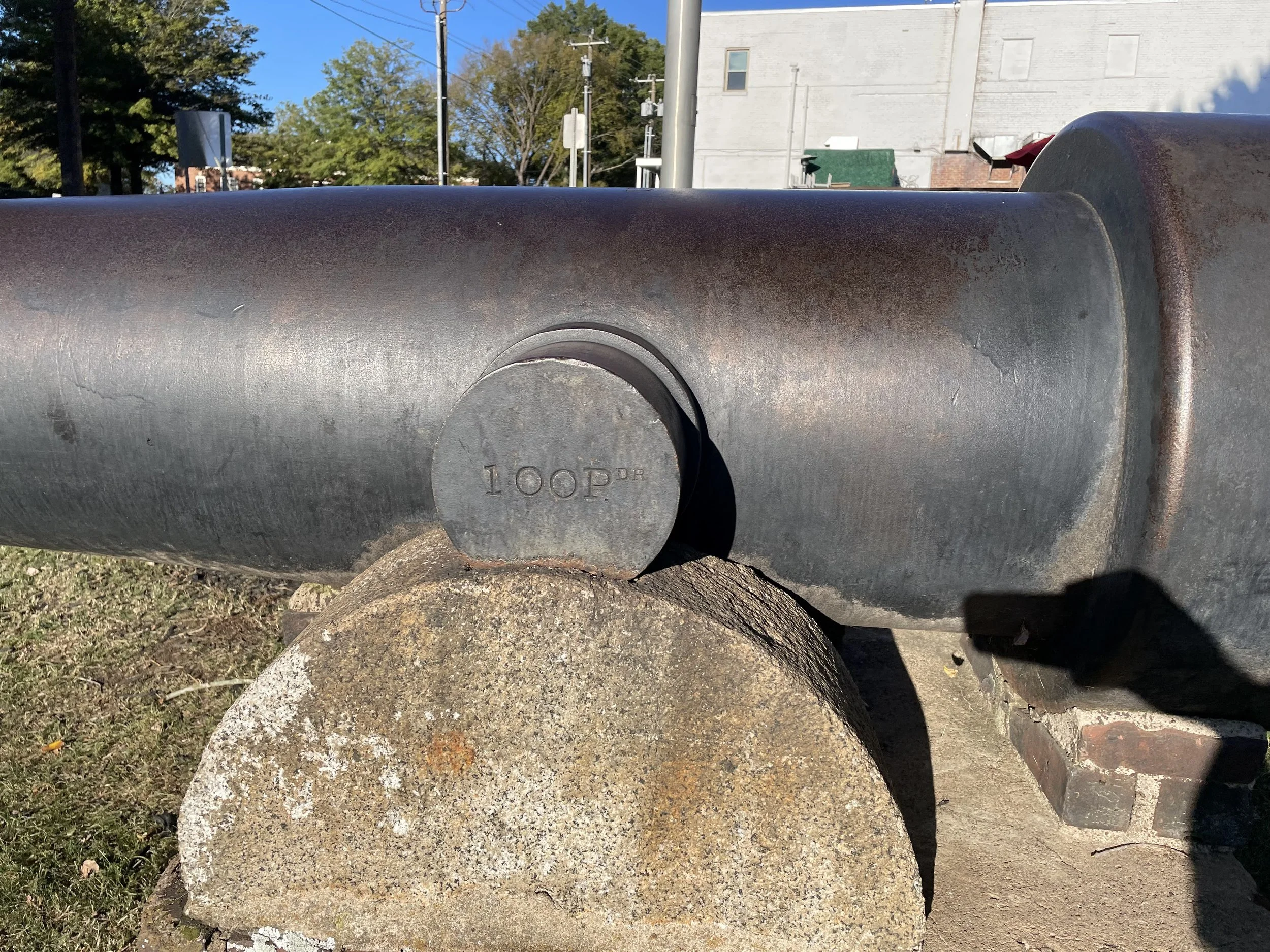
US Army 100-Pounder Parrott Number 192 cast at West Point Foundry in 1864. Weight as manufactured: 9,717 pounds.
Though both Parrotts were manufactured during the Civil War for the United States Army, it is not possible to say what, if any, active service these particular Parrotts saw. While some examples of the type were used to equip seacoast fortifications in the North far, far from the front line, others were emplaced in the defenses around Washington, D.C. Still others saw use in the Siege of Yorktown. Famously, dozens were used by the US Army to bombard Fort Sumter from Morris Island - where many burst in action. (See Below).
The 100-Pounder Parrotts in Fort Mill
100-Pounder Parrotts Number 23 and 192 arrived in Fort Mill, South Carolina in 1901-1902. According to an article on the website of the Fort Mill History Museum, the cannons when rolled off of the railroad flatcar burst a water pipe used to refill steam locomotives. The cannons ended up buried in the mud, and initial efforts to extract the guns were unsuccessful. The eventual solution involved a mule team, ropes, and pulleys.
Since 1973, the two cannons have been fired every year on the Fourth of July. The initial, unofficial, firing took place after a conversation at the American Legion hall. Subsequent firings have been approved by the Town of Fort Mill. Interviews on social media with the official “cannoneer’ describe a pound of powder being placed in the barrel and fired by means of an electric lines run from the muzzle.
Video of the cannons firing can be seen here: https://youtu.be/93VgGrPtP74?si=swqw-VFLhELXh7P9&t=1932
An interview with the cannoneer can be seen here: https://www.instagram.com/reel/C8-c1q2t7Yn/?hl=en
US Army 100-Pounder Parrott Number 192 being fired on July 4th, 2025. Photo by the Town of Fort Mill. Photos here: https://fortmillsc.gov/564/53rd-Annual-Firing-of-the-Cannons
US Army 100-Pounder Parrott Rifle mounted at Fort Putnam on Morris Island. Library of Congress Photo: https://www.loc.gov/item/2018666881/
Photos of US Army 100-Pounder Parrott Number 23


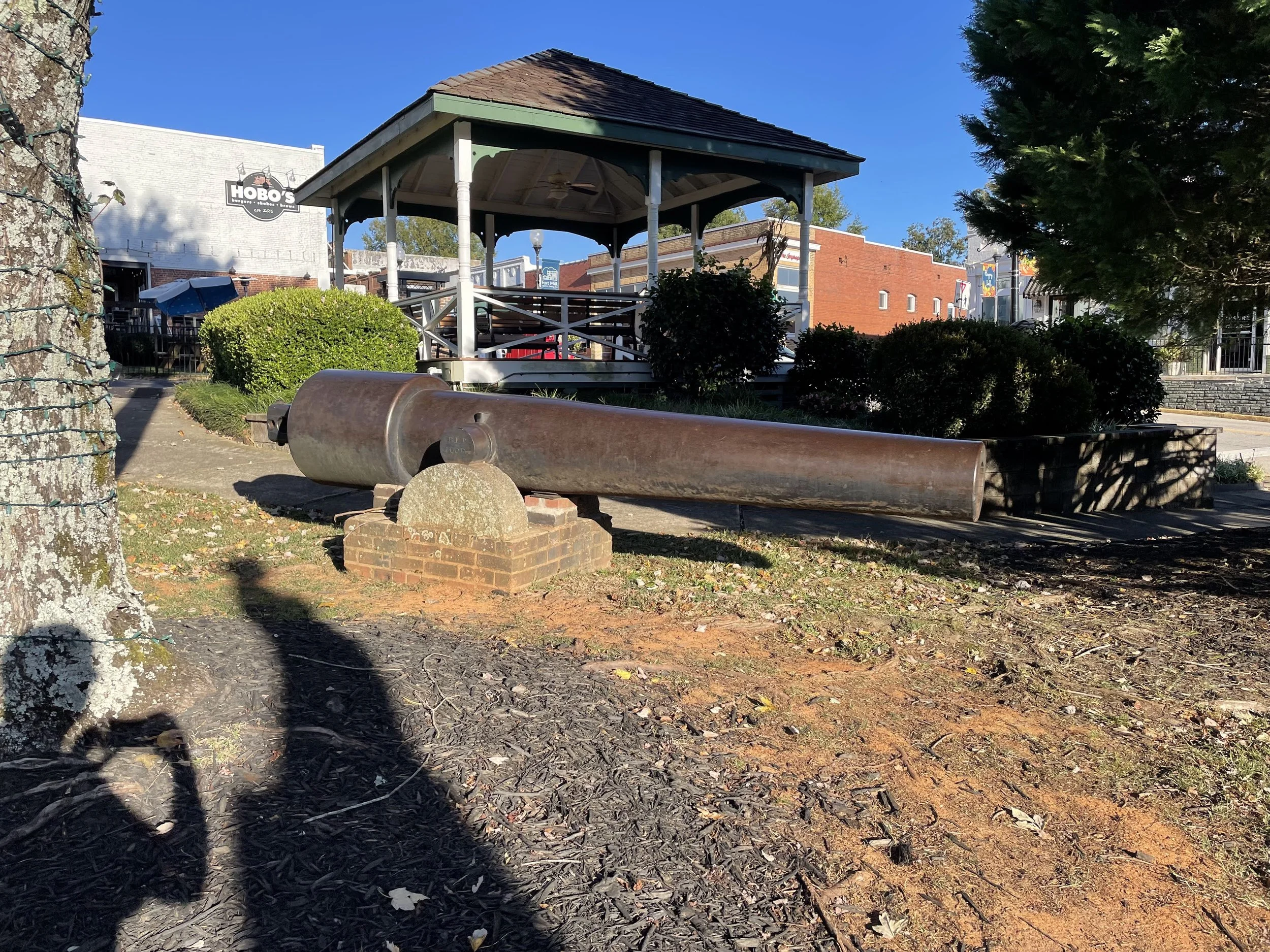


Photos of US Army 100-Pounder Parrott Number 192




US Army 6.4-Inch Parrott Rifles mounted at Fort Sumter since 1873 - some of which may have also seen service during the American Civil War to fire on Fort Sumter. See more photos of the Parrott Rifles at Forts Sumter and Moultrie.
Parrott Rifles on Morris Island which fired on Fort Sumter and Charleston and its defenses: Though these two cannons are displayed beside Confederate Monuments, they were produced for the US Army, and they may have been used against Confederate forces. Mike Ryan’s excellent paper “The Historic Guns of Forts Sumter and Moultrie” lists all of the Parrott Rifles which burst in action. Ryan notes that 6.4-Inch Parrott Rifles number 18, 19, 21, and 23 burst on Morris Island (page 60). Obviously there is some mistake in those records as number 23 is very intact at Fort Mill. Another Parrott must have been the one to burst. The presence of proceeding Parrott Rifles in the registry on Morris Island does not mean that Number 23 was on Morris Island, but it is possible that Number 23 was on Morris Island and used in the bombardment of Fort Sumter and other Confederate defenses.
Ryan notes that the eleven 6.4-Inch Parrott Rifles currently at Fort Sumter were shipped there from the Augusta Arsenal in 1873 It would seem possible that the two Parrotts in Greenville came from the same source. As far as the wartime service of the two Parrotts in Greenville, as Ryan notes of the US Army of the Civil War rarely included serial numbers in reports (pg. 58). I would say of the 100-Pounder Parrott Number 23 what Ryan says of Fort Sumter’s Parrotts: it is very possible that the Parrott Number 23 was “in use somewhere along the south Atlantic - perhaps even on Morris Island during the bombardment of Fort Sumter. Due to a lack of adequate records, though, their use during the Civil War may never be known” (pg. 58)
The Parrott Rifle - an Overview: The Parrott Rifle is a cast-iron cannon which is reinforced at the breech by a band made of wrought iron. The cannon was rifled to improve accuracy. The Parrott Rifle was designed by former US Army Officer Robert Parker Parrott, and all Parrott Rifles were manufactured at the West Point Foundry. Parrott Rifles were manufactured in a variety of calibers: 2.9-Inch (later 3-Inch), 3.67-Inch, 4.2-Inch, 5.3-Inch, 6.4-Inch, 8-Inch, and 10-Inch throwing projectiles from 10 pounds to 300 pounds. As a heavy cannon, the 6.4-Inch Parrott Rifle was generally only used in fixed positions.
A rifled cannon is able to fire an elongated projectile. Whereas a 6.4-Inch smoothbore fired a 32-pound cannonball, the 6.4-Inch Parrott Rifle would fire a projectile weighing 80 to 100 pounds (hence the designation “100-Pounder”).
The Parrott Rifle has a reputation for uneven reliability in service. Rifled cannon were a new and developing technology, but in an investigation of burst cannons conducted by US Navy Ordinance Officers in 1865, it was thought that the cause of many burst Parrotts was actually shells which prematurely detonated in the barrel upon firing. It was also thought that some of the burst Parrotts on Morris Island might have been due to sand entering the barrel and preventing the easy passage of projectiles. Some Parrott Rifles burst early - famously the “Swamp Angel” an 8-Inch Parrott which fired from Morris Island at the City of Charleston burst on its 36th round. On the other hand, 6.4-Inch Number 52 mentioned above burst on its 1,590th round - a fairly impressive performance for an early heavy rifle. Ryan notes about these bursts: “During the bombardments of Fort Sumter from Morris Island there were never more than 22 heavy guns mounted at any one time, yet a remarkable total of 50 Parrotts burst during the siege. Fortunately these accidents caused relatively few casualties, but the time, expense, and effort of replacing these guns were considerable” (Ryan pg. 59)
Sources for this page include:
Olmstead, Edwin, Stark, Wayne E., Tucker, Spencer C. The Big Guns: Civil War Siege, Seacoast, and Naval Cannon. Museum Restoration Service, 1997.
Ripley, Warren, Artillery and Ammunition of the Civil War (4th Edition). The Battery Press, 1984.
Ryan, Mike. “The Historic Guns of Forts Sumter and Moultrie”. National Park Service Article. http://npshistory.com/publications/fosu/guns.pdf