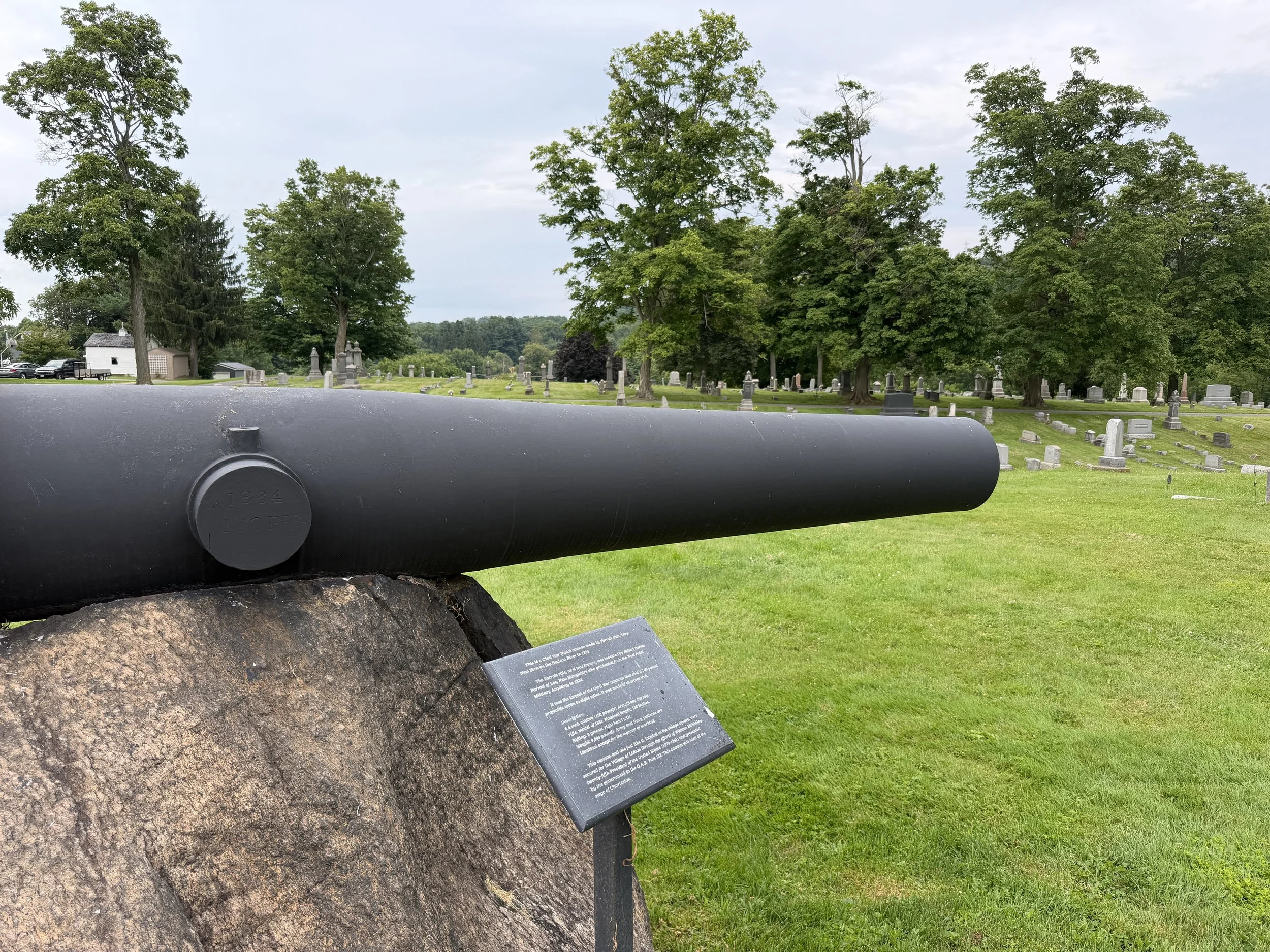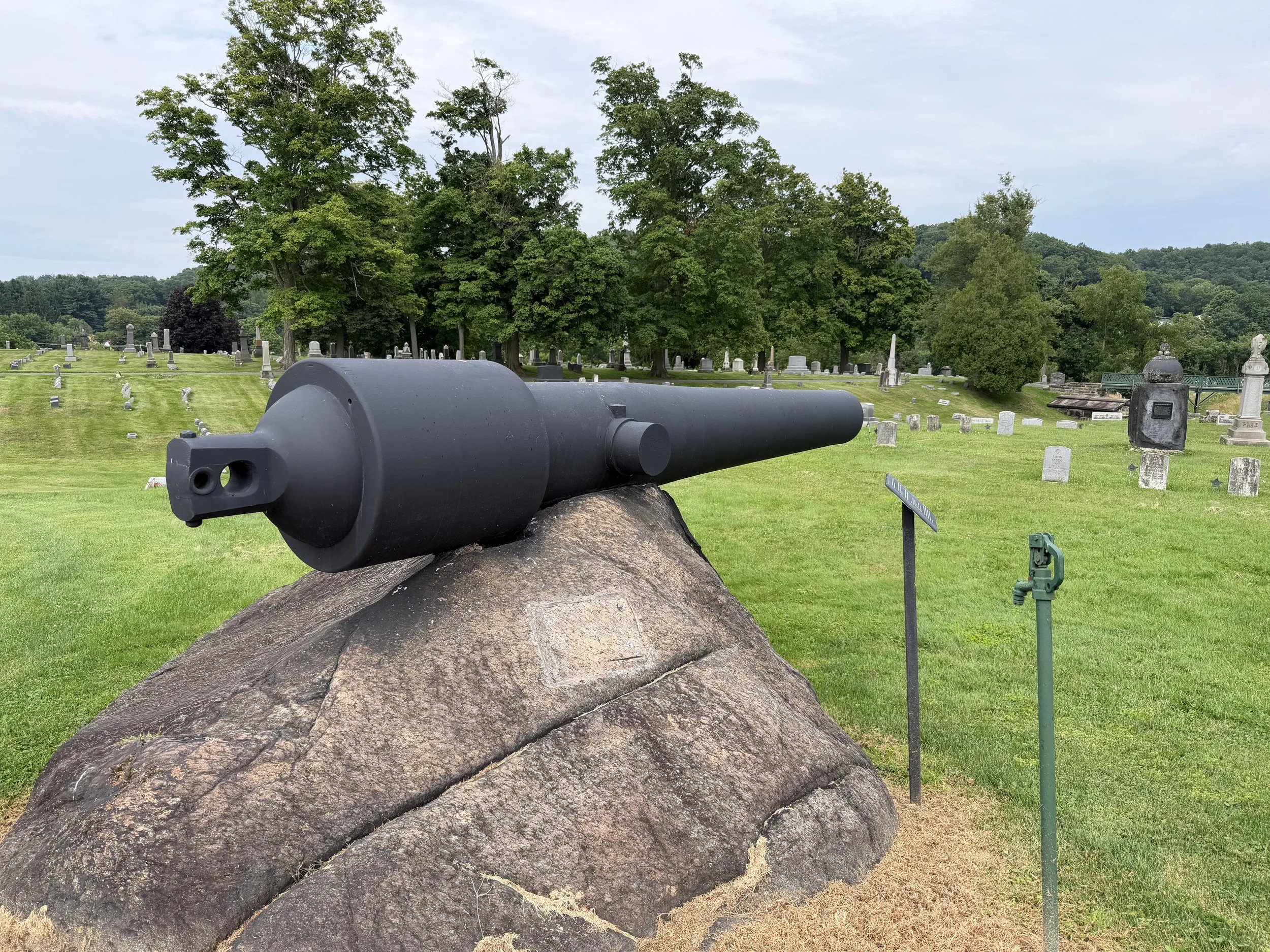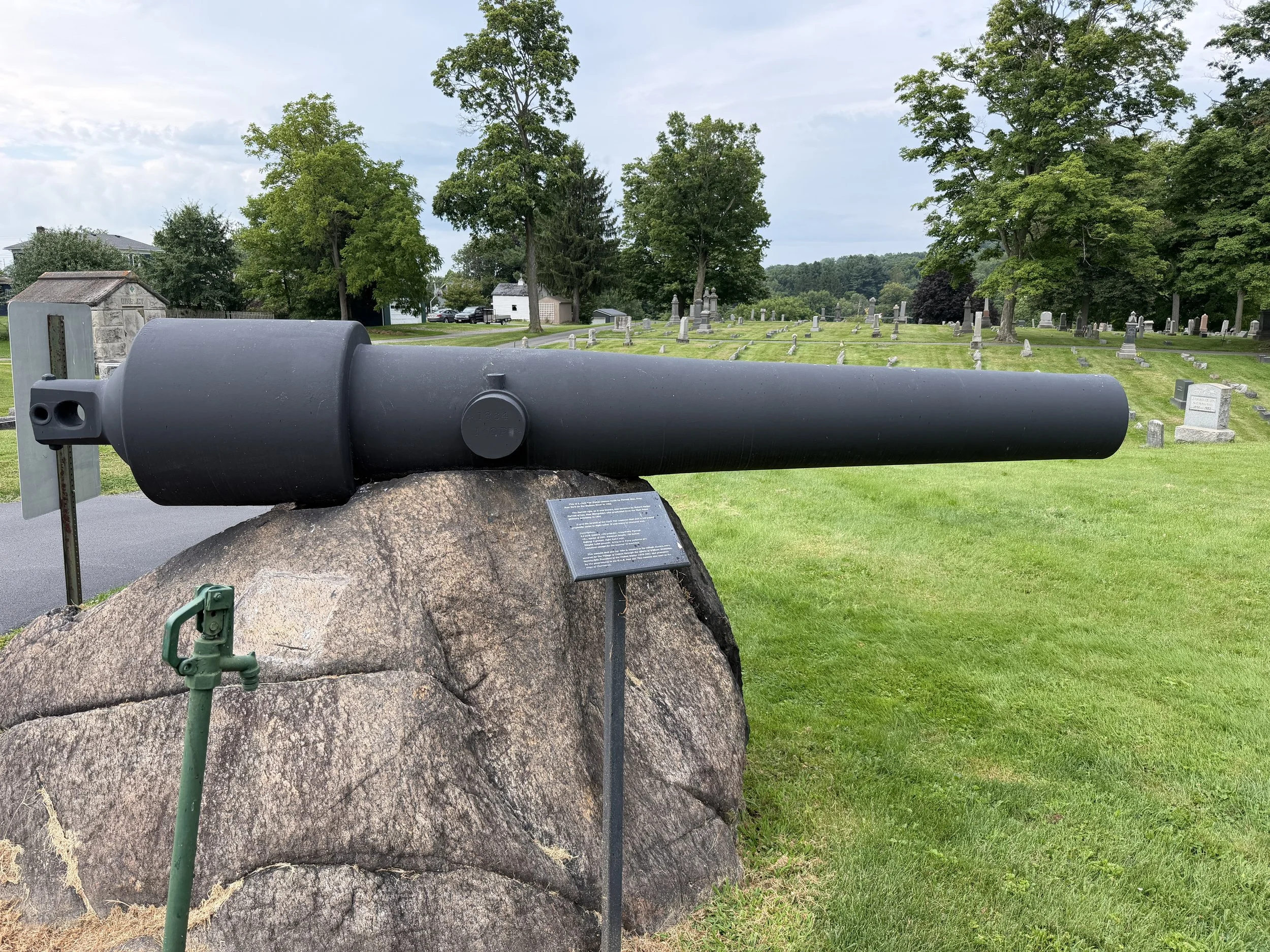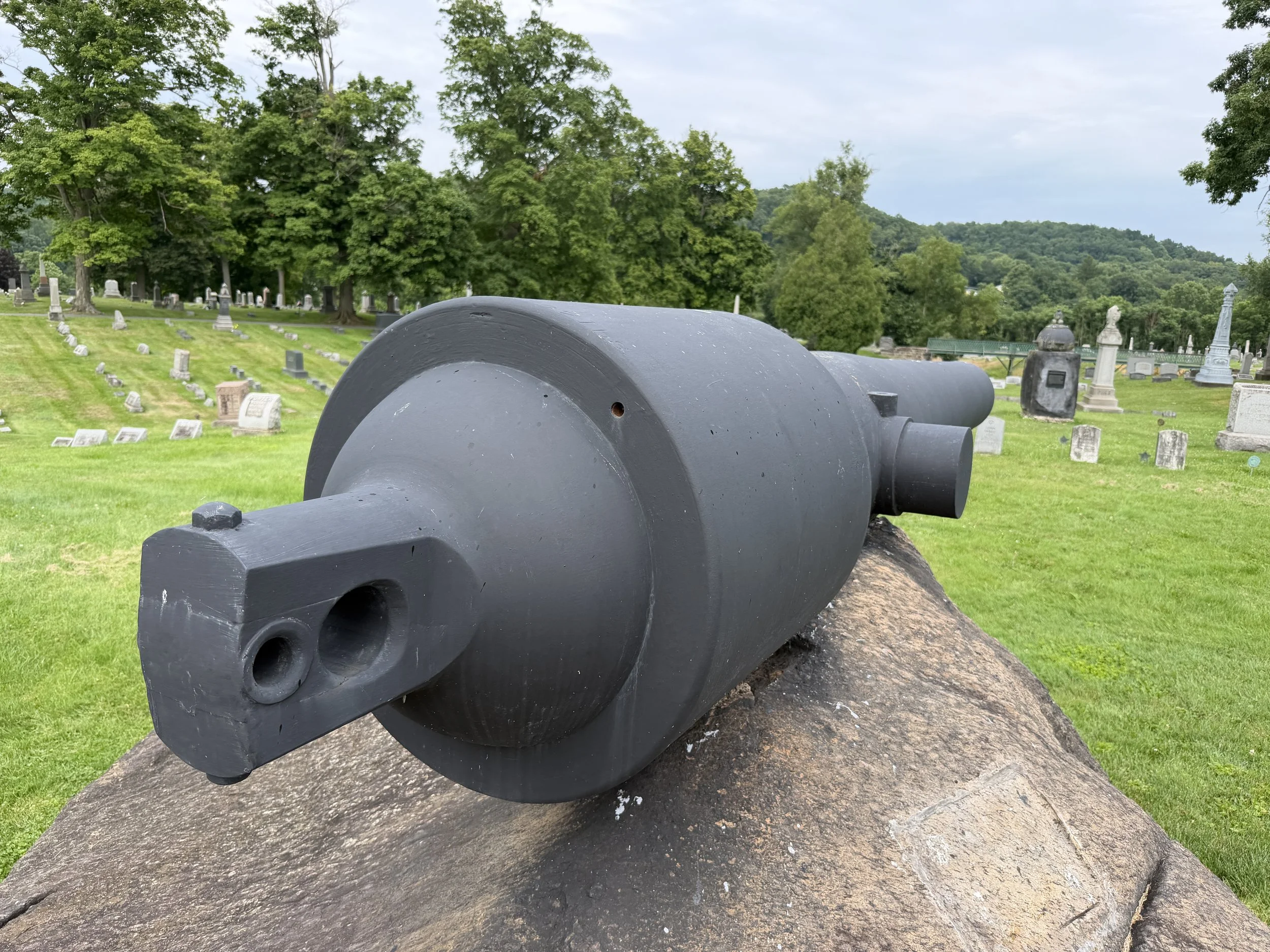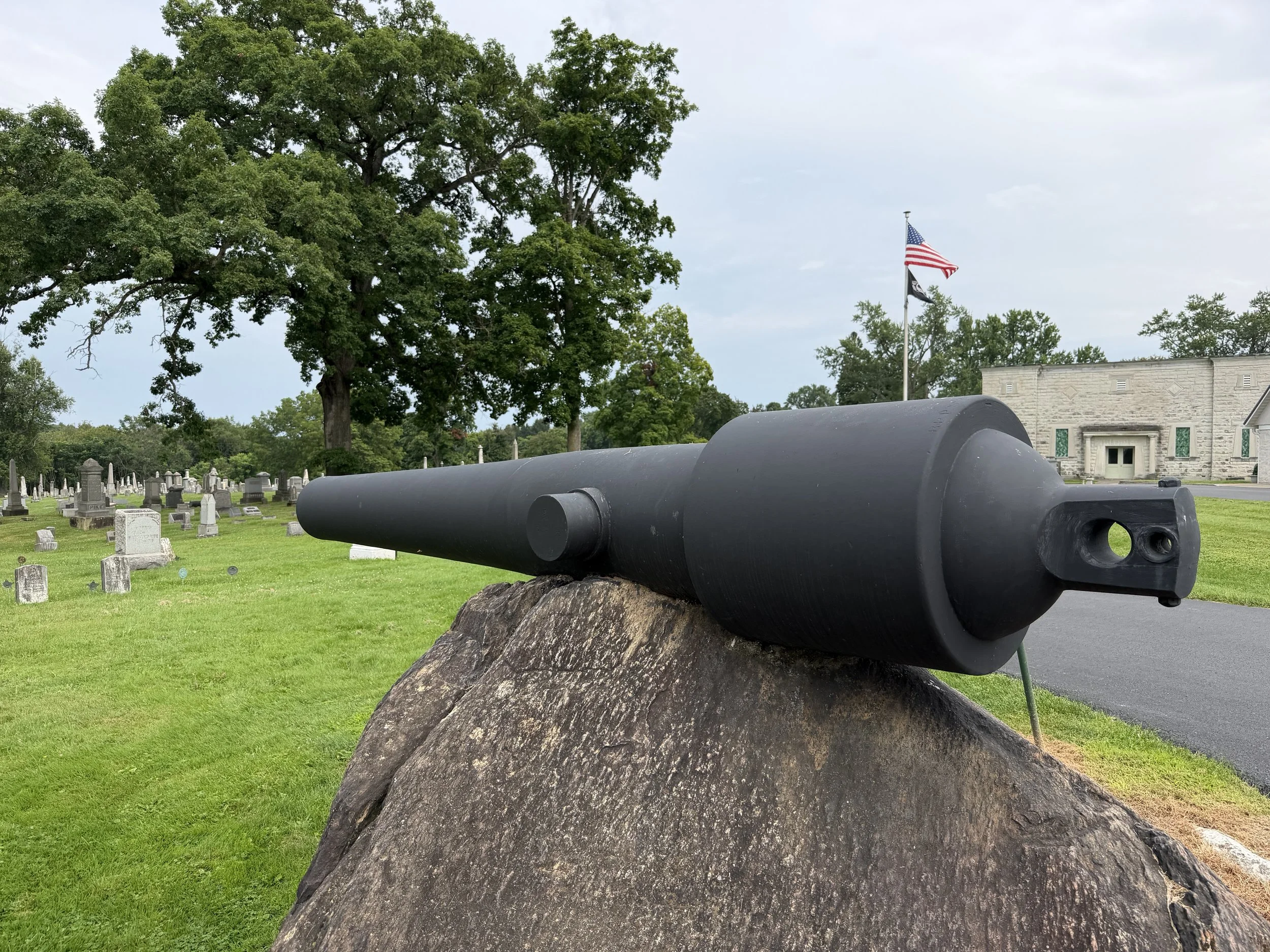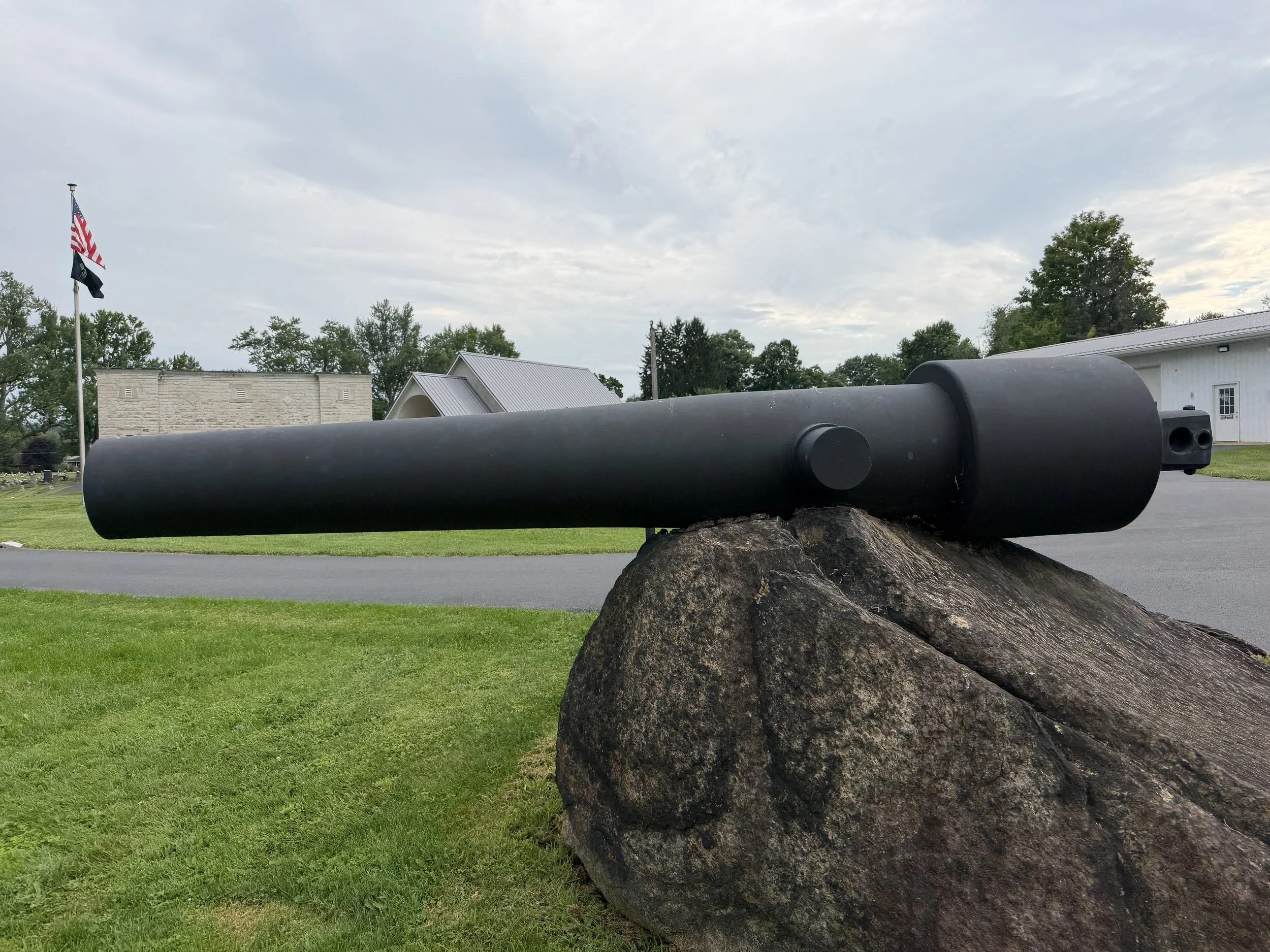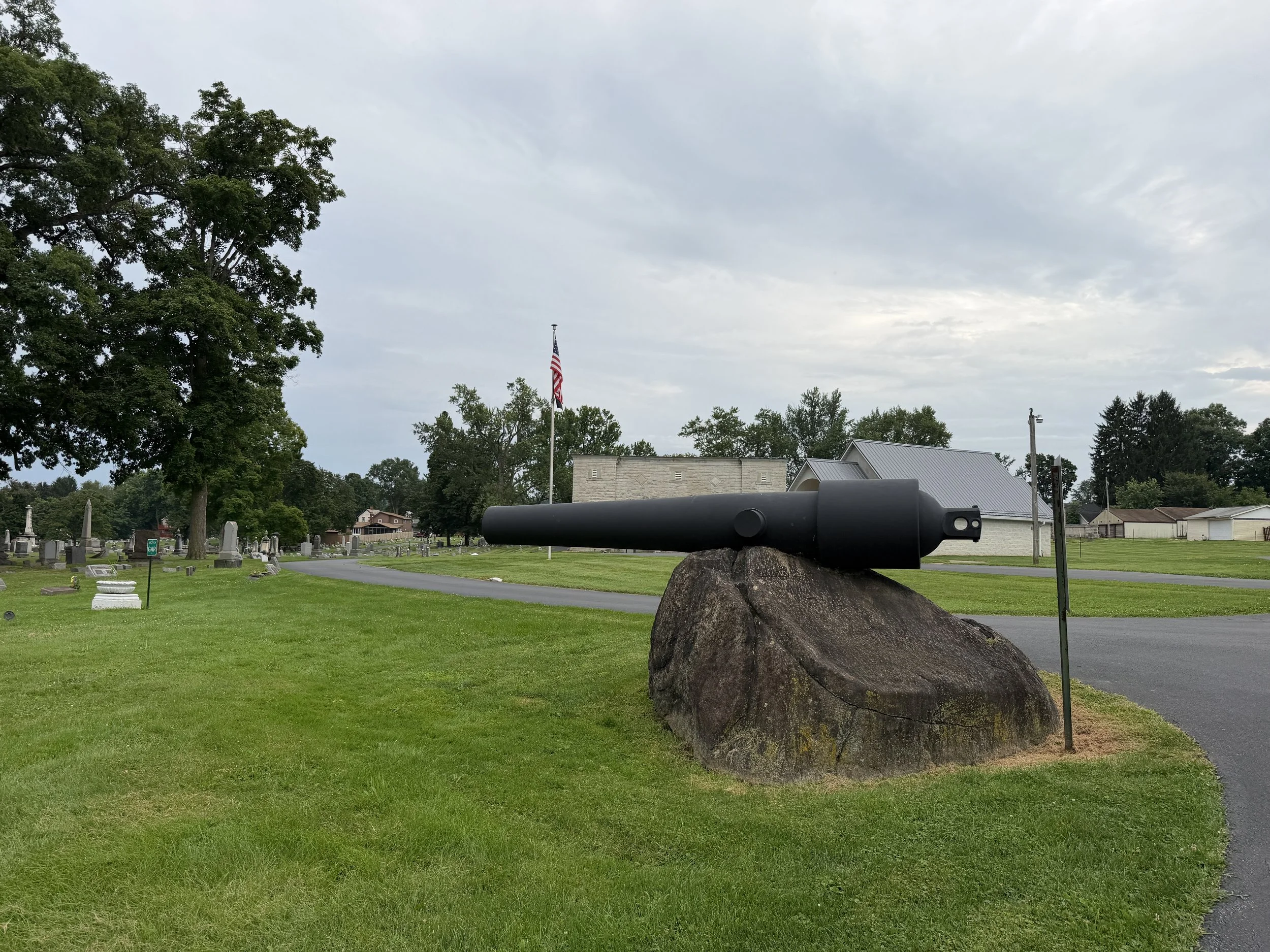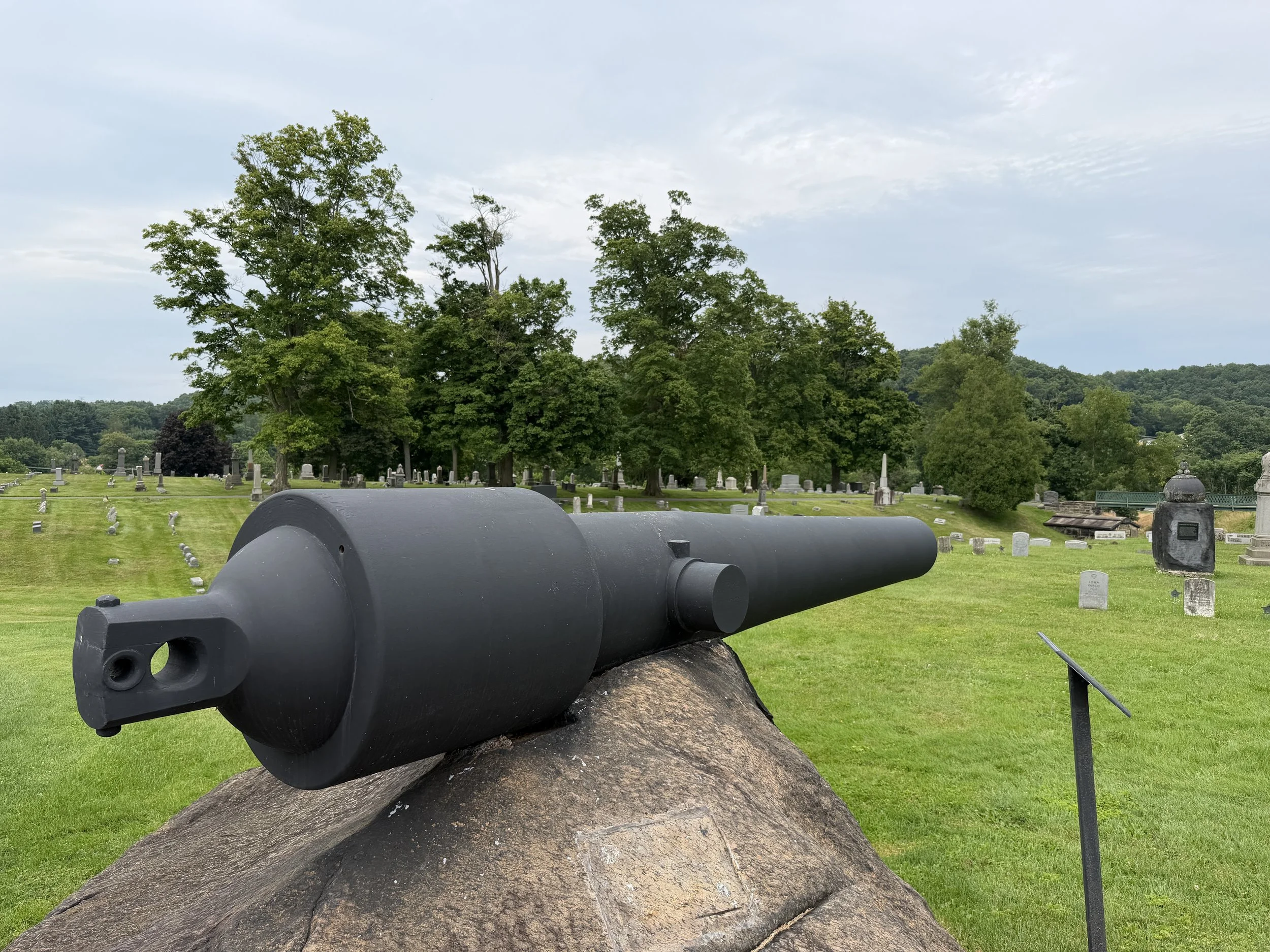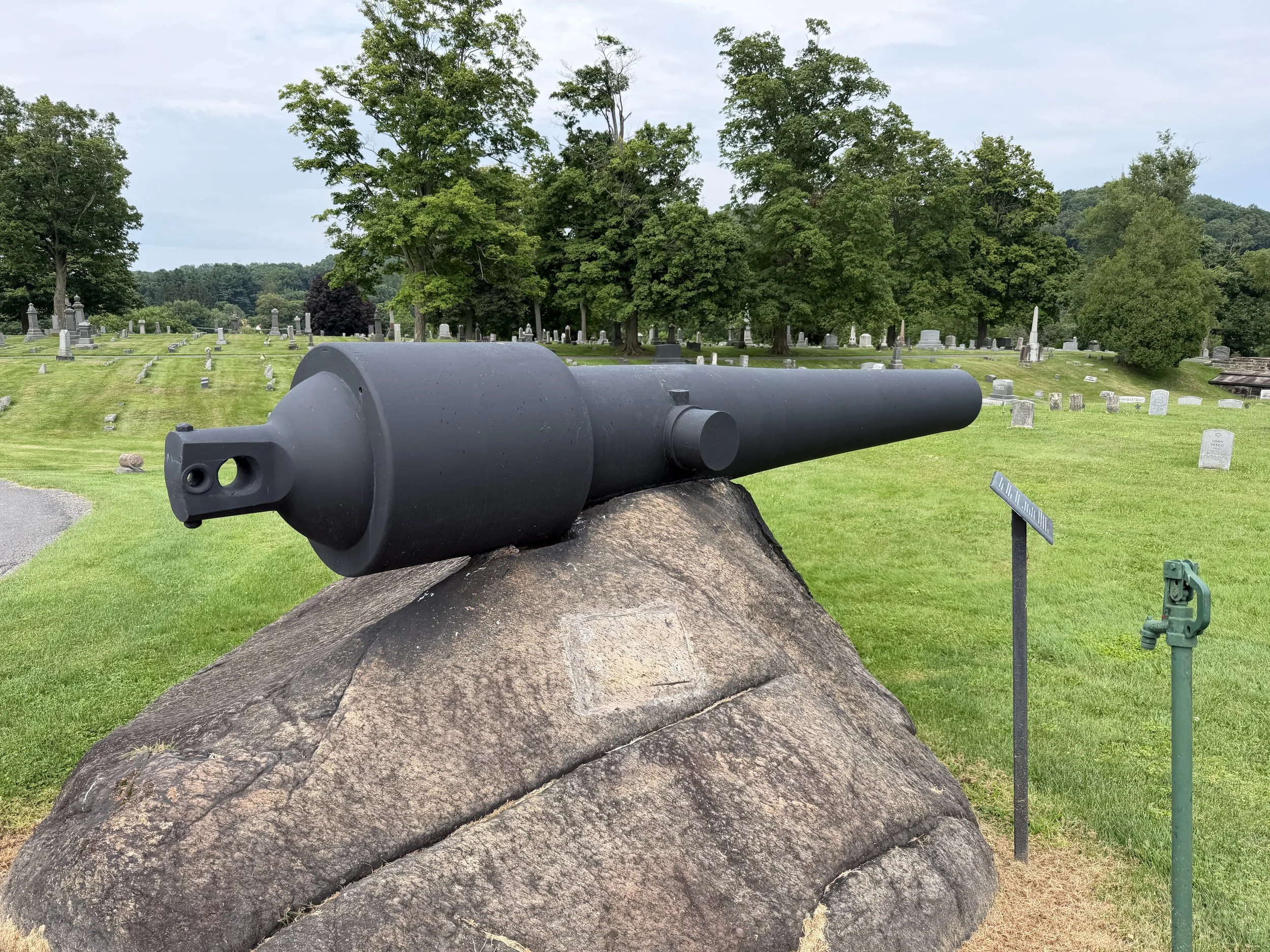
US Navy 100-Pounder Parrott Rifle Number 301 is displayed at Lisbon Cemetery in Lisbon, Ohio
US Navy 100-Pounder Parrott Rifle Number 301 is displayed in Lisbon Cemetery in Lisbon, Ohio. Number 301 was manufactured at West Point Foundry in 1864. As manufactured it weighed 9,767 pounds. It is marked “Water Core” on the muzzle face - indicating that it was one of the 100-Pounders whose cast iron barrel was cast using Rodman’s hollow-casting, water cooled technique.
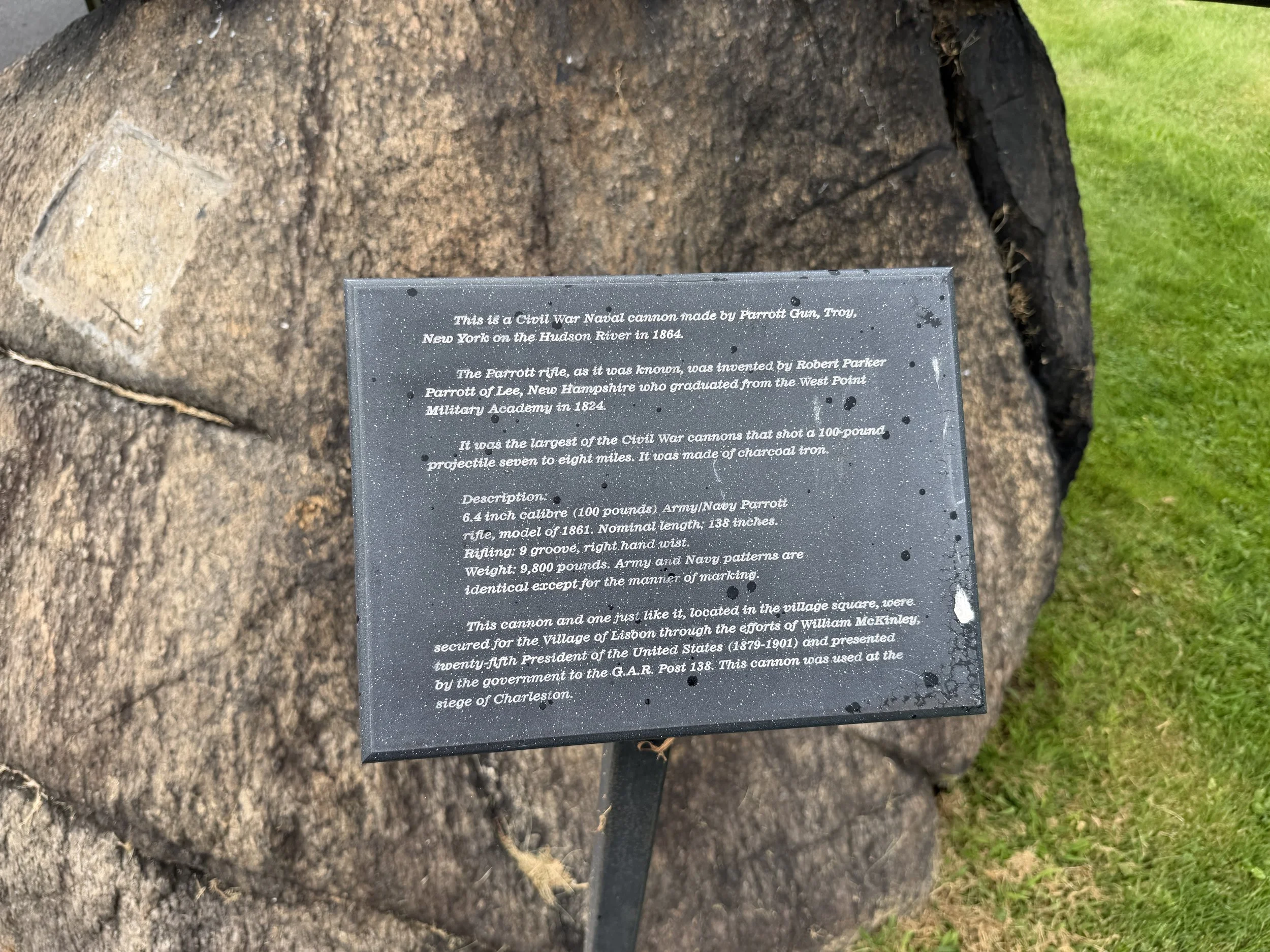
The small interpretive sign beside the 100-Pounder states that it was brought to Lisbon through the efforts of William McKinley, 25th President of the United States. McKinley’s mother was from Lisbon.
Bureau of Ordnance records indicate that it served upon USS Madawaska, though it was removed by 1869. It does not seem to have seen further service before being loaned to the Starr Post, Number 138, Grand Army of the Republic in 1897. There is another 100-Pounder, Number 324, which also served on Madawaska in downtown Lisbon.
USS Madawaska was one of the Wampanoag-class cruisers ordered during the American Civil War. Designed for speed almost above all else, these wooden hulled vessels were intended to be potent commerce destroyers able to inflict the kind of damage on a major maritime power that raiders such as CSS Alabama were then inflicting on the US merchant fleet. The ships of the class were fitted with machinery by different designers. Madawaska was fitted with a vibrating lever engine designed by John Ericsson with steam supplied by eight boilers. According to Bennett, while the machinery was supposed to drive Madawaska at 15 knots, she only managed 13 knots on trials under steam alone (Bennett 332-356). A brief note in the Army and Navy Journal for November 17th, 1866 states that “The Madawaska sailed from the Brooklyn Navy-yard on a Government trial trip on the 9th inst., and returned on; the 14th. The greatest speed attained was 15 knots, the average speed 13 1-2 knots.”
In 1869, Madawaska, which would be renamed USS Tennessee, was taken in hand and converted into a spar decked frigate. Her Ericsson engines were removed. She was given a much heavier battery, and she emerged as a “9-knot frigate.” (See Canney Frigates, Sloops, and Gunboats. pp. 136-141, 147-151).
USS Madawaska in her original configuration. Naval History and Heritage Command illustration NH 46919
US Navy 100-Pounder Parrott Rifle Number 301 is displayed at Lisbon Cemetery in Lisbon, Ohio
The 100-Pounder Parrott Rifle is a 6.4-Inch cast iron rifle with a wrought iron reinforcing band on the breech. As the name suggests, it was designed to fire a 100 pound projectile - usually either an explosive shell against most targets, but it could also use a solid iron bolt against armored targets. Both the US Army and US Navy used 100-Pounder Parrotts during and after the American Civil War. The two types are identical save for the markings - Navy Parrotts have their weight and registry number on top of the breech band while Army Parrotts have those markings on the muzzle face. The Navy employed the Parrott both as a broadside gun as well as a pivot gun on lighter ships. Its weight was similar to the 9-Inch Dahlgren, and 100-Pounders and 9-Inch Dahlgrens were often employed alongside each other as the strengths of the two types complemented each other. The 100-Pounder had excellent range and accuracy for the American Civil War. Its reputation was significantly marred by reliability issues - five bursting in the December 24th, 1864 bombardment of Fort Fisher. Post war studies suggested that the fault was actually with the ammunition. The type remained in active service through the 1870s.
“Water Core” on the muzzle face indicates that this 100-Pounder was cast hollow according to Rodman’s methods.
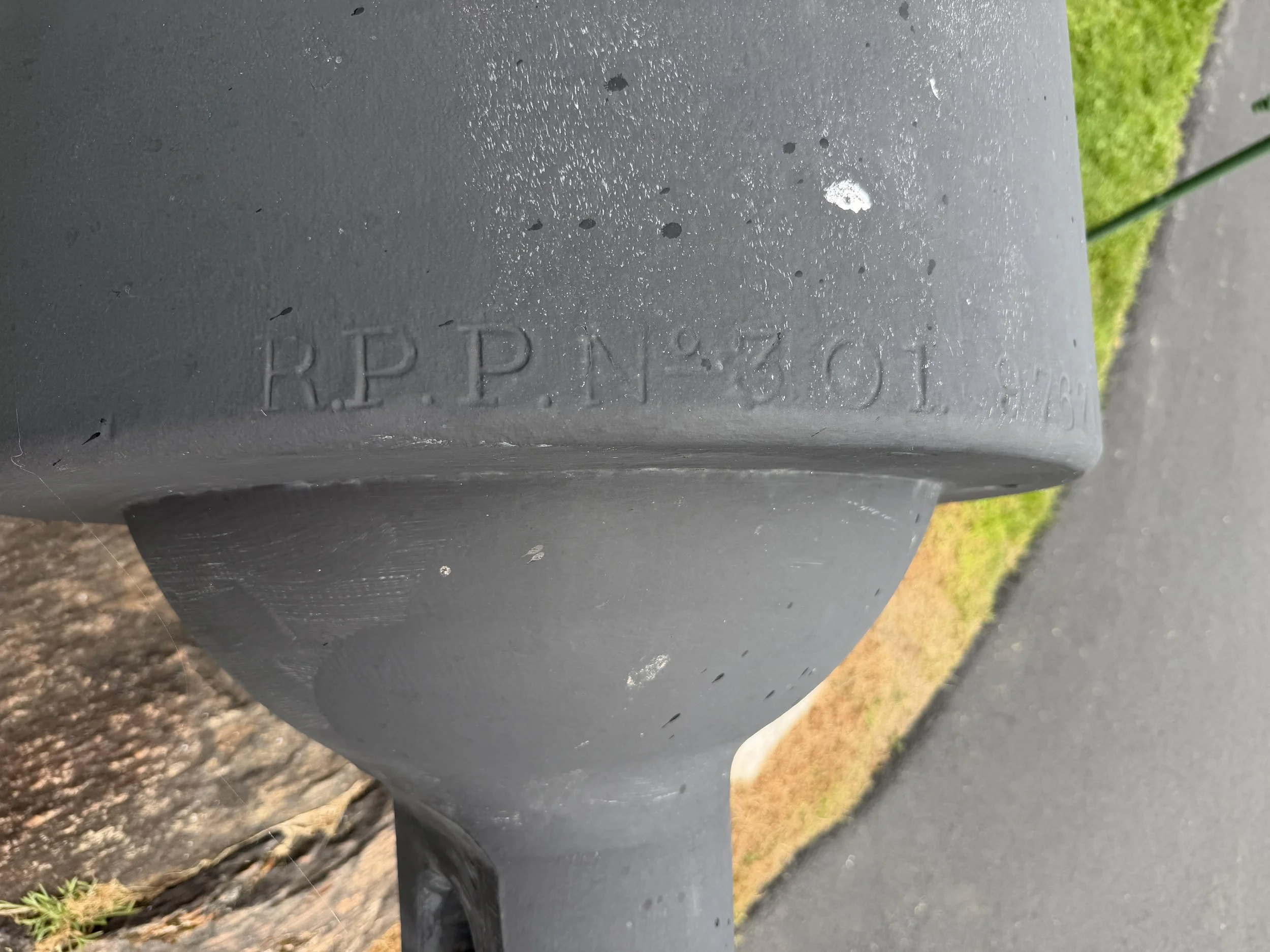
The Registry Number, 301, and Weight, 9,767 pounds, are marked on the barrel band. R.P.P. stands for “Robert Parker Parrott”, the designer of the type.