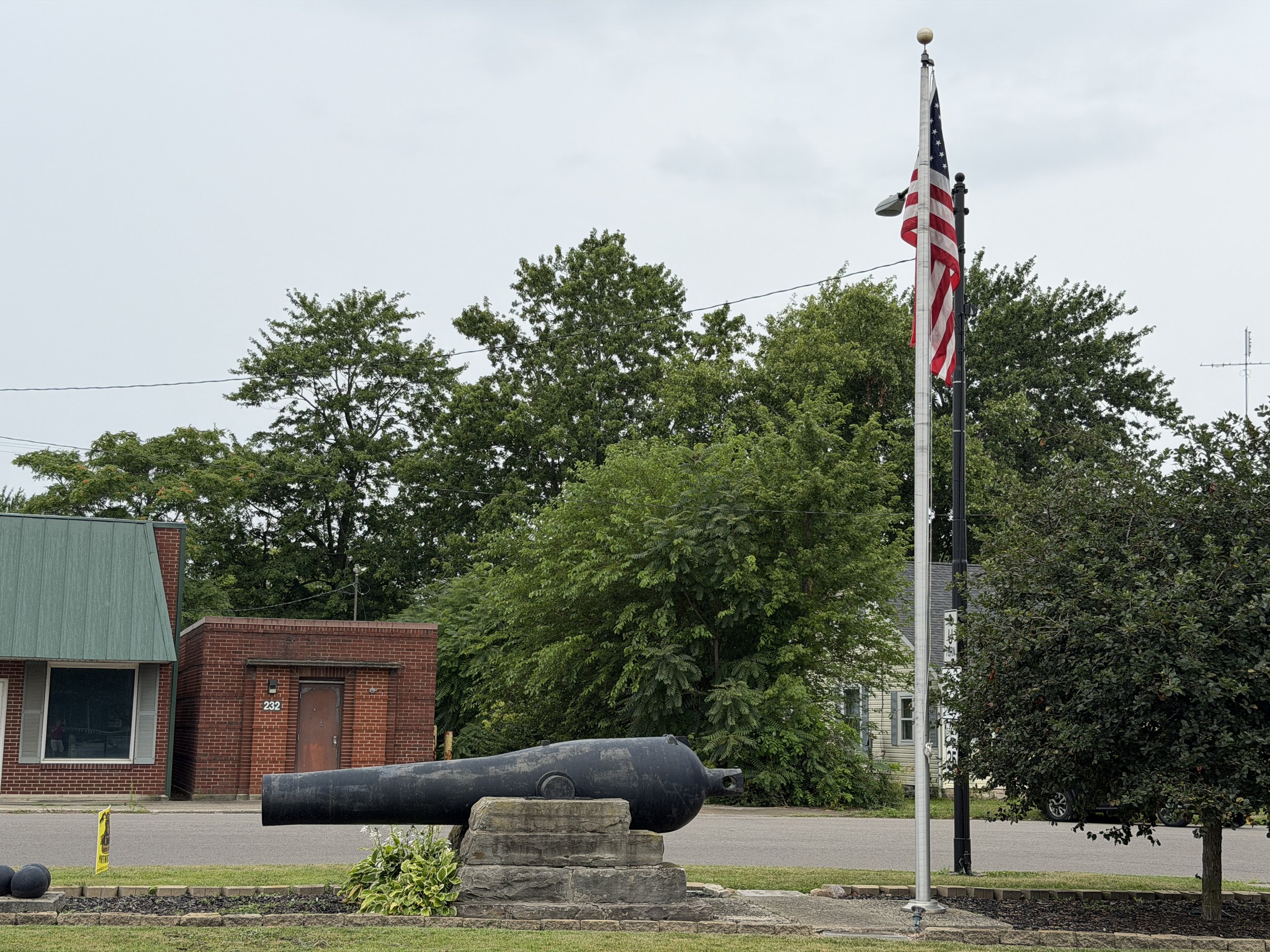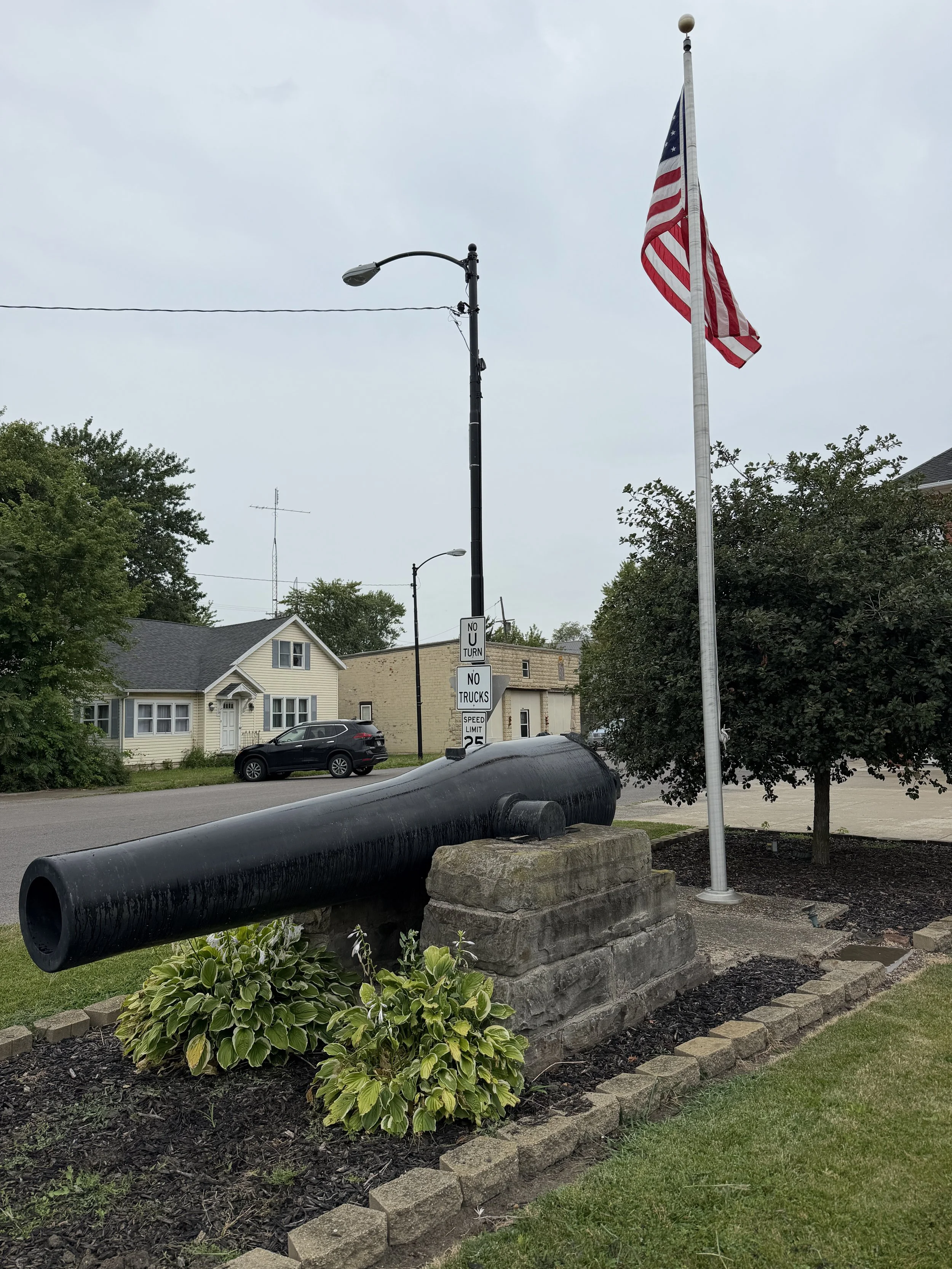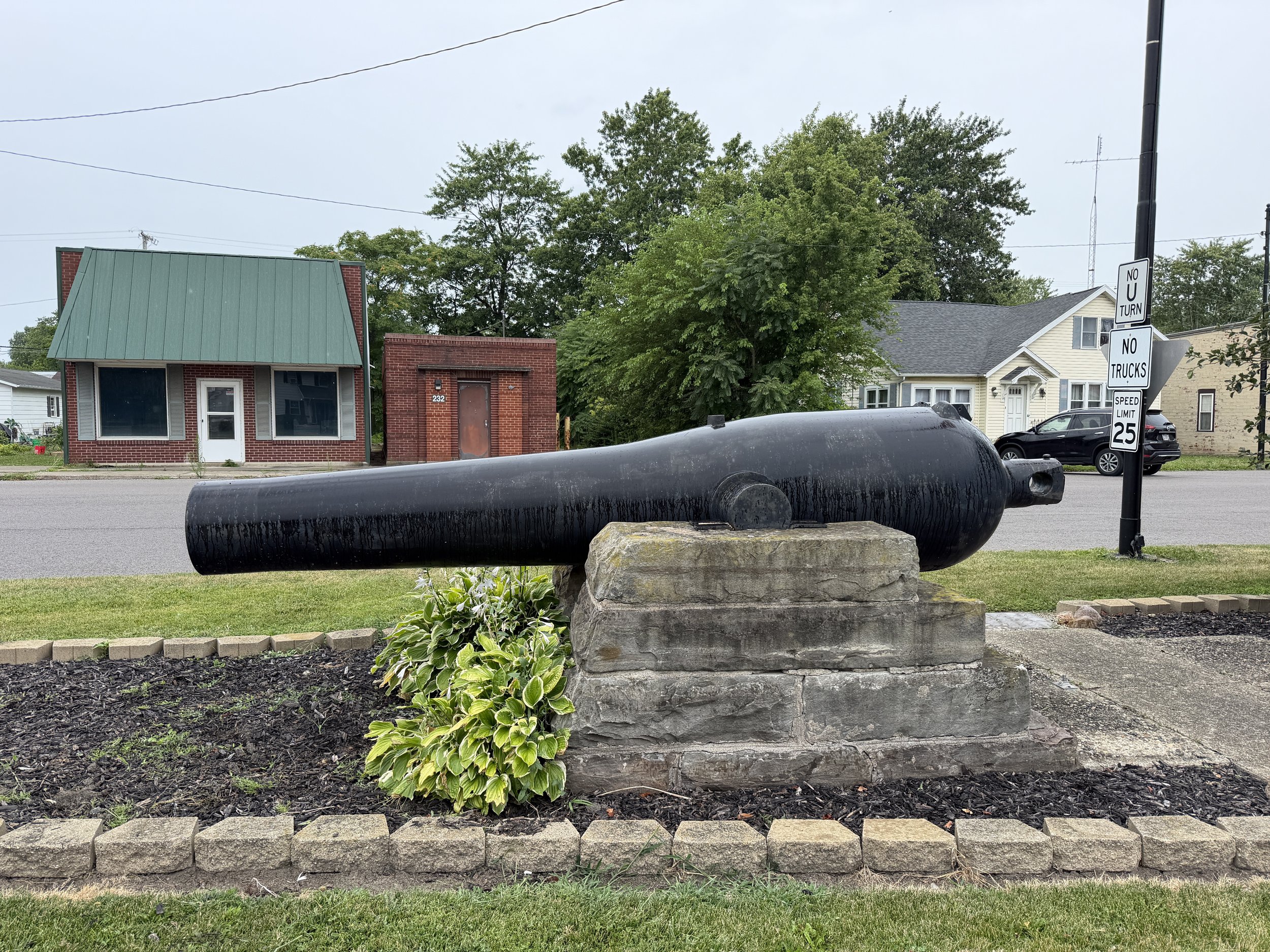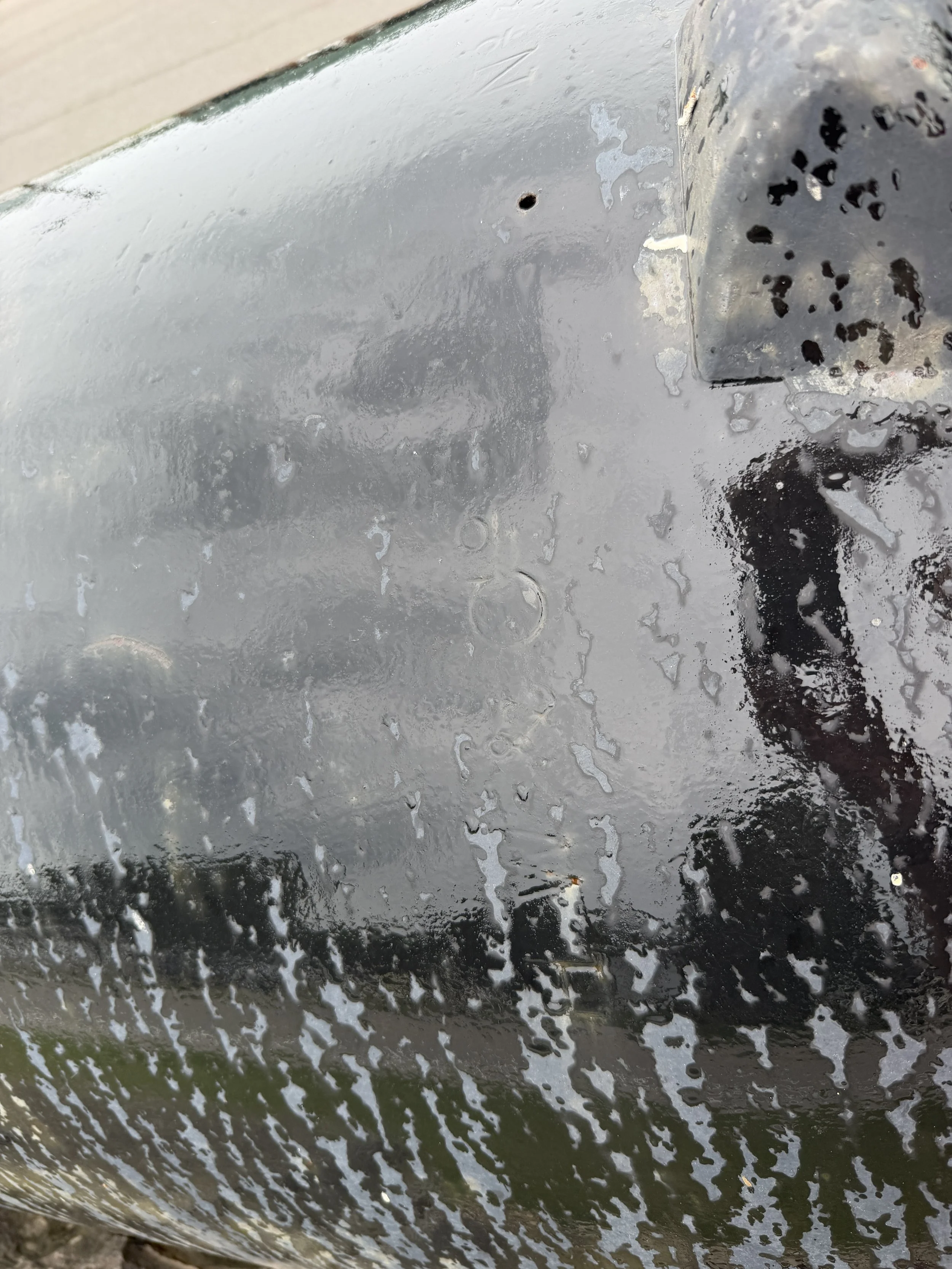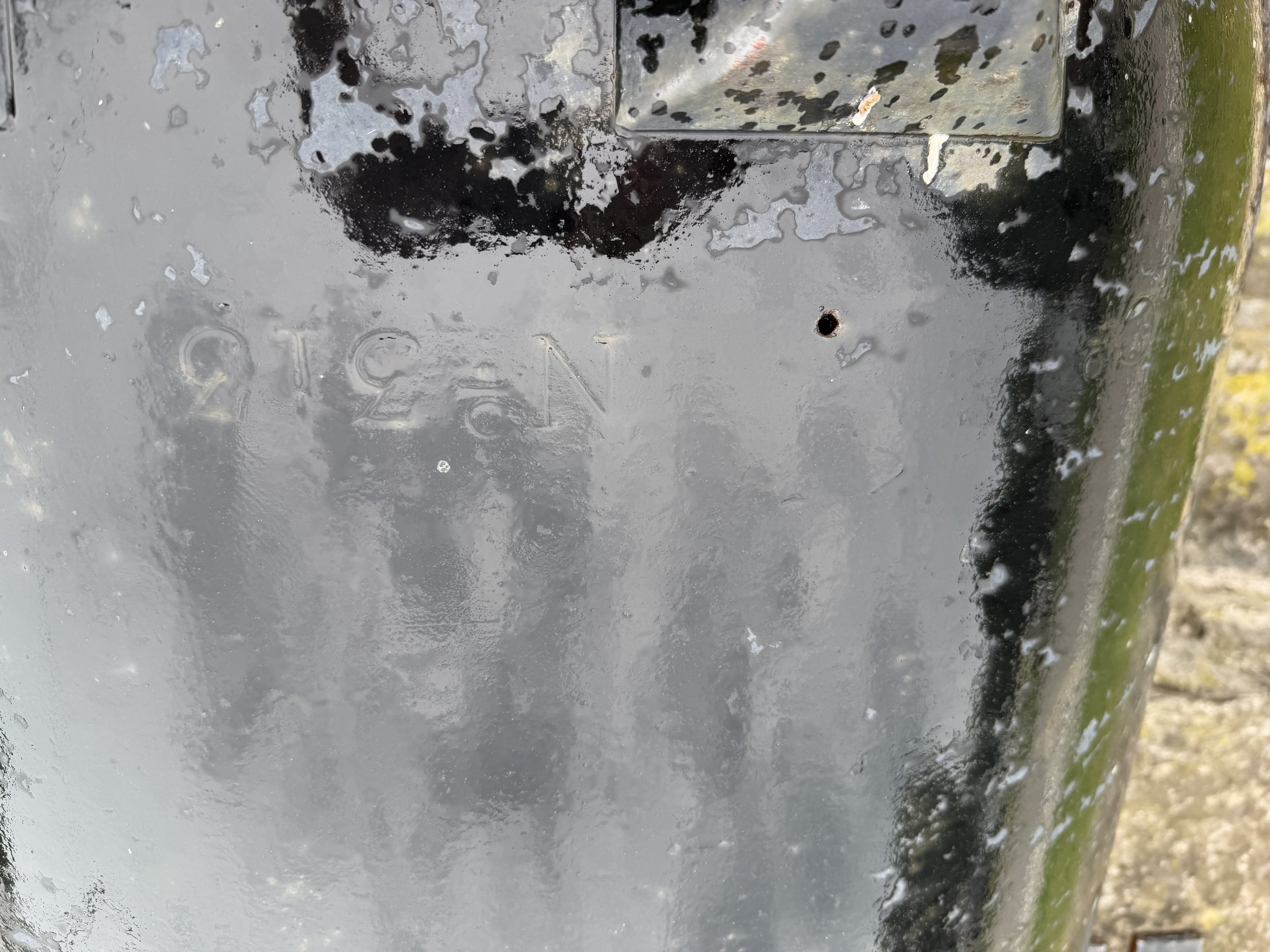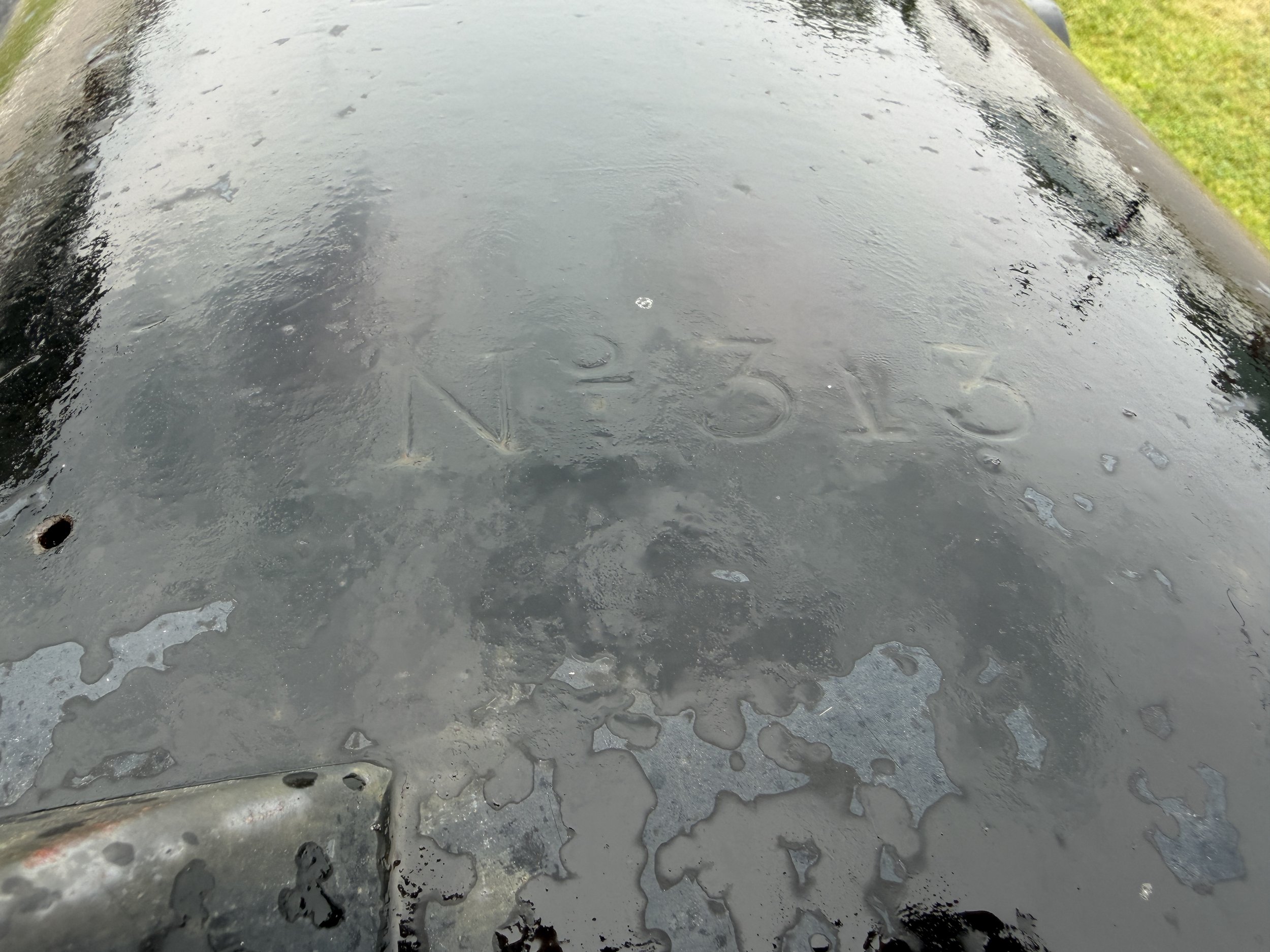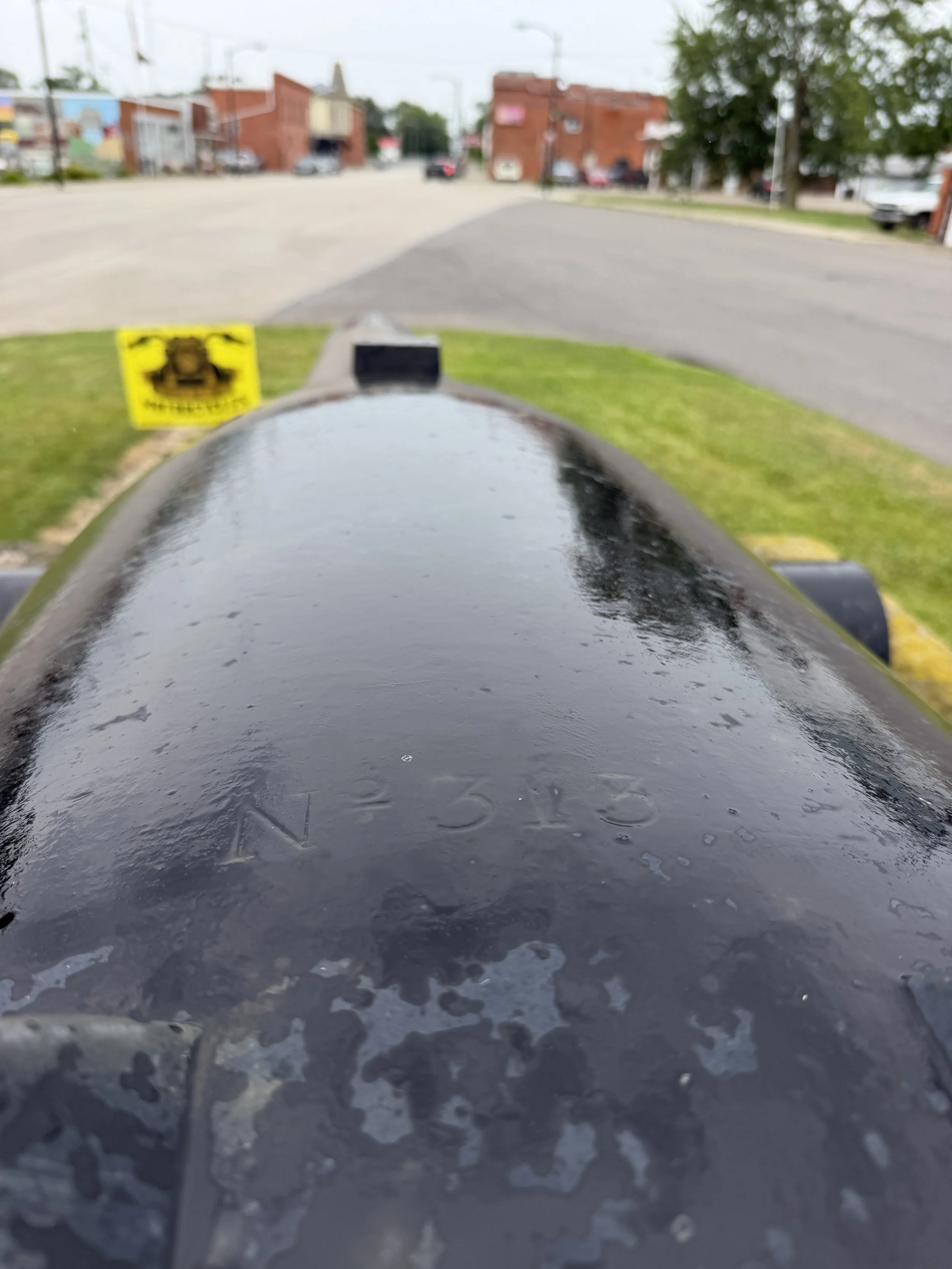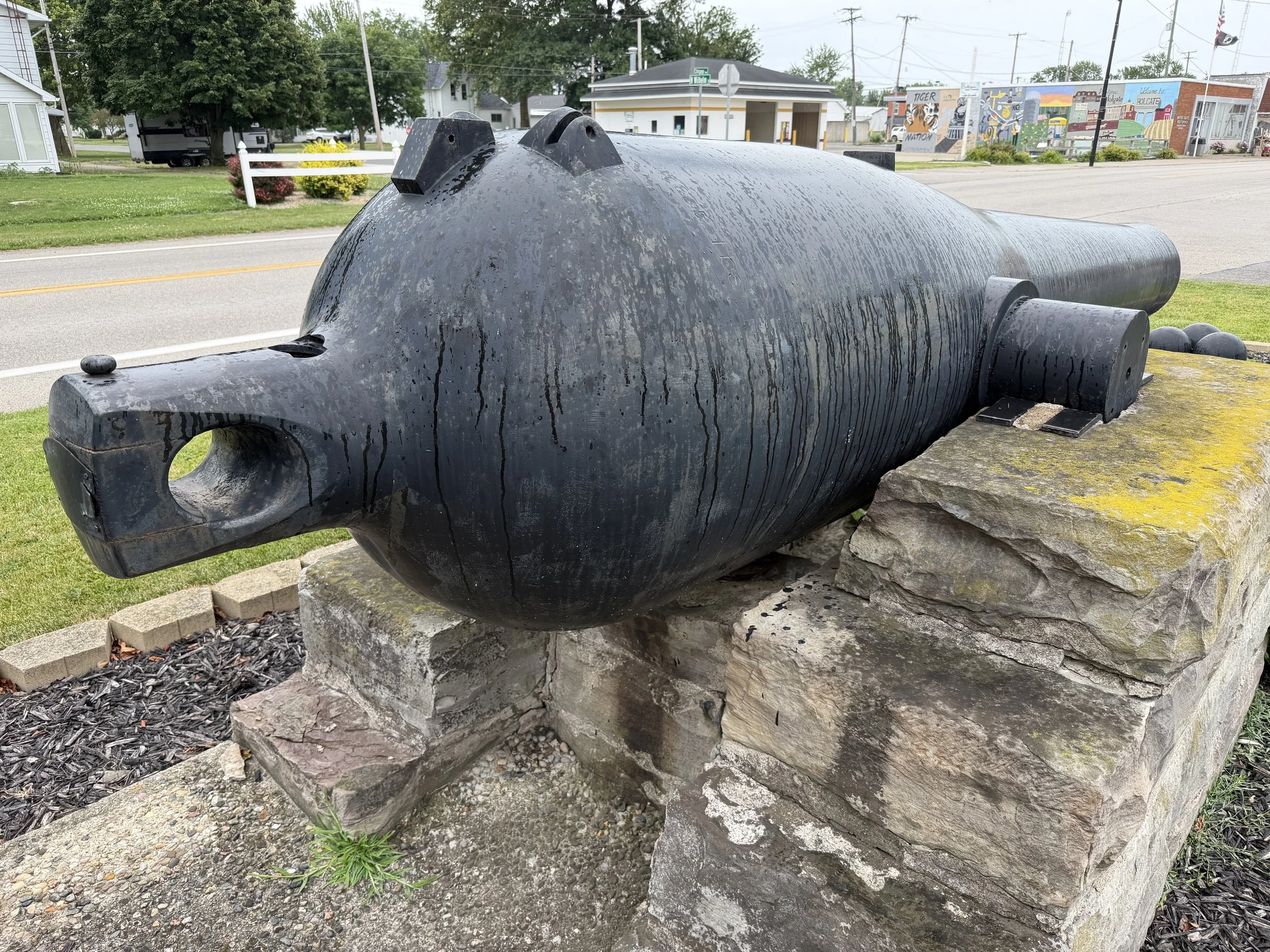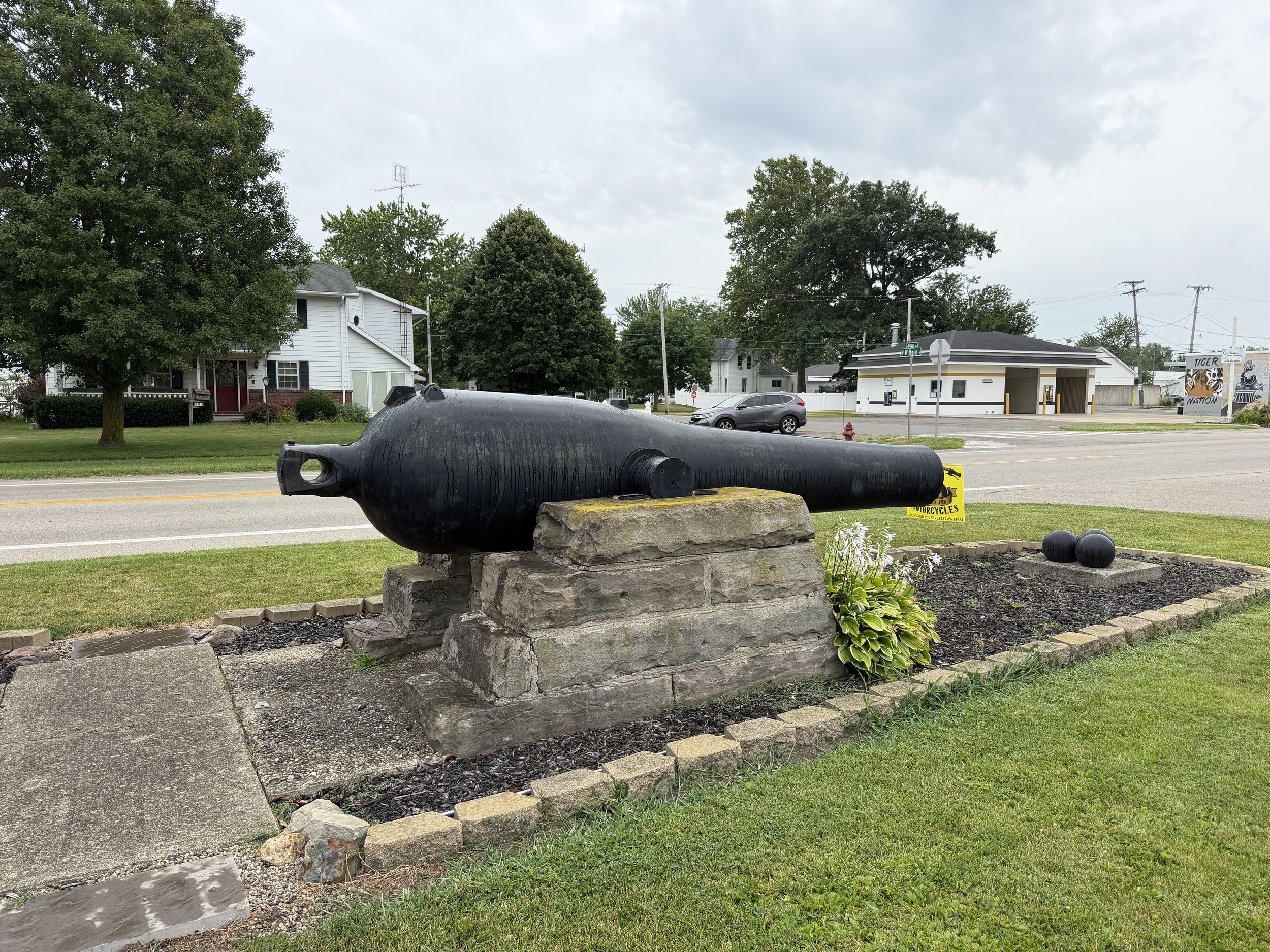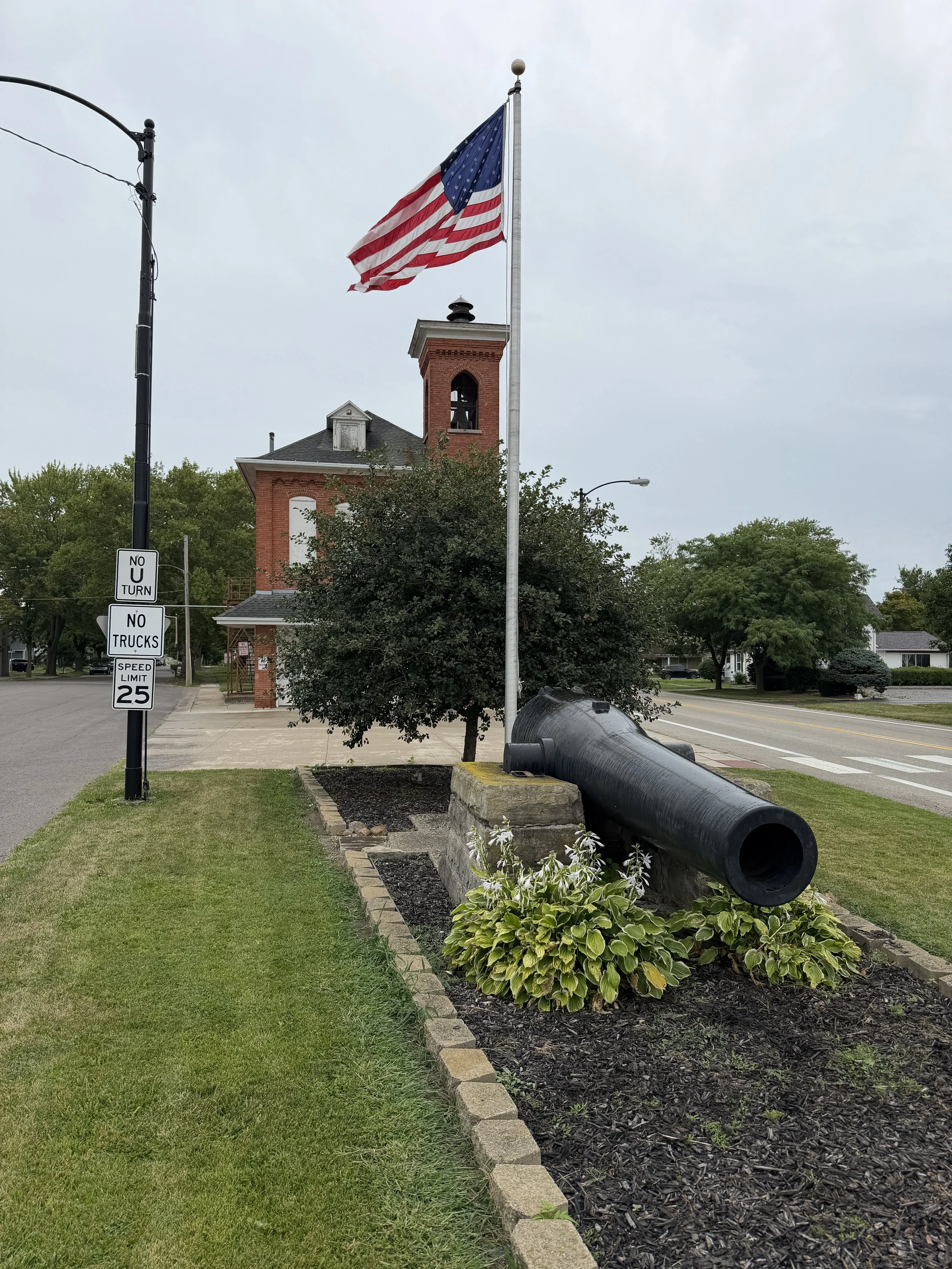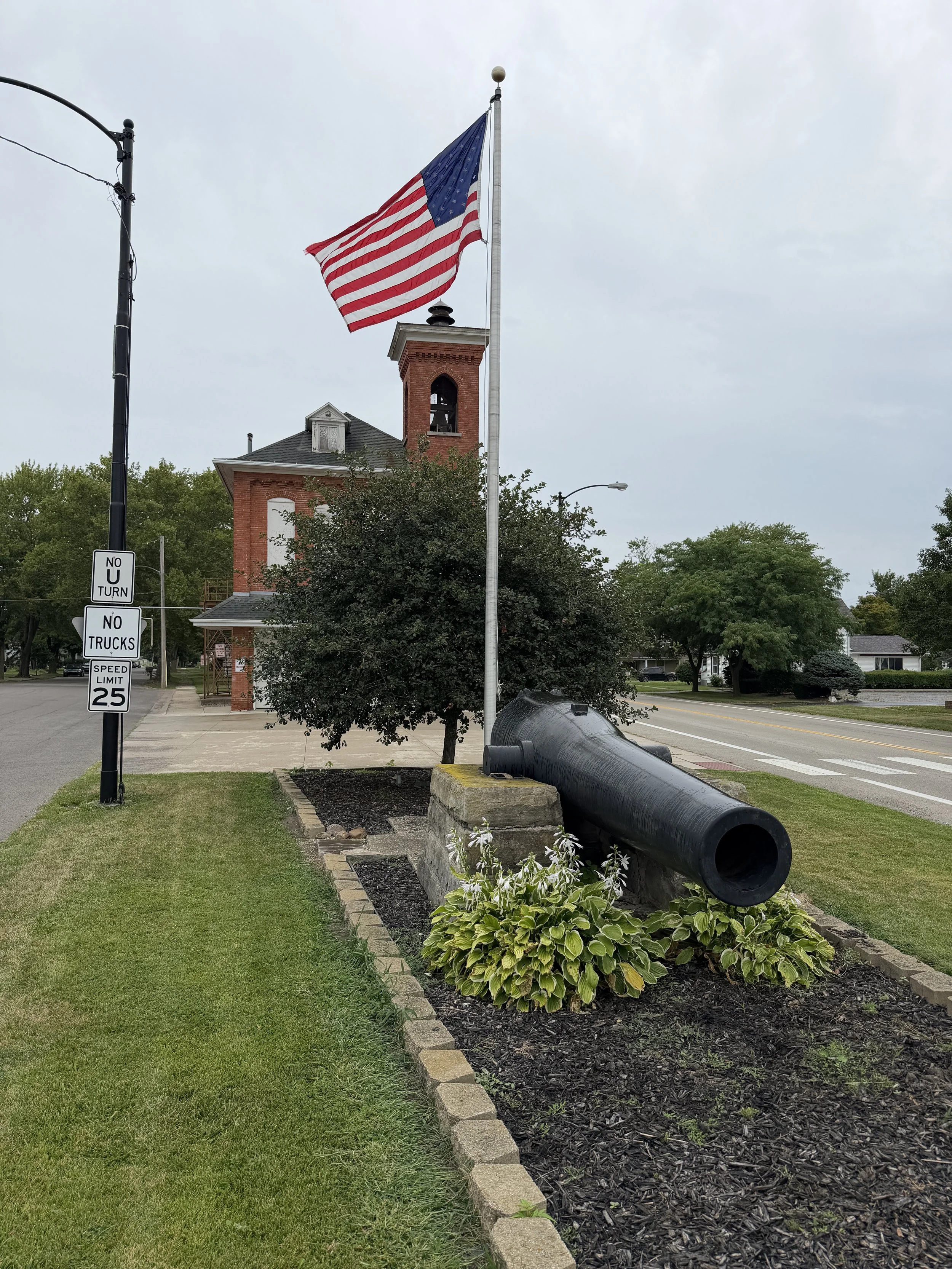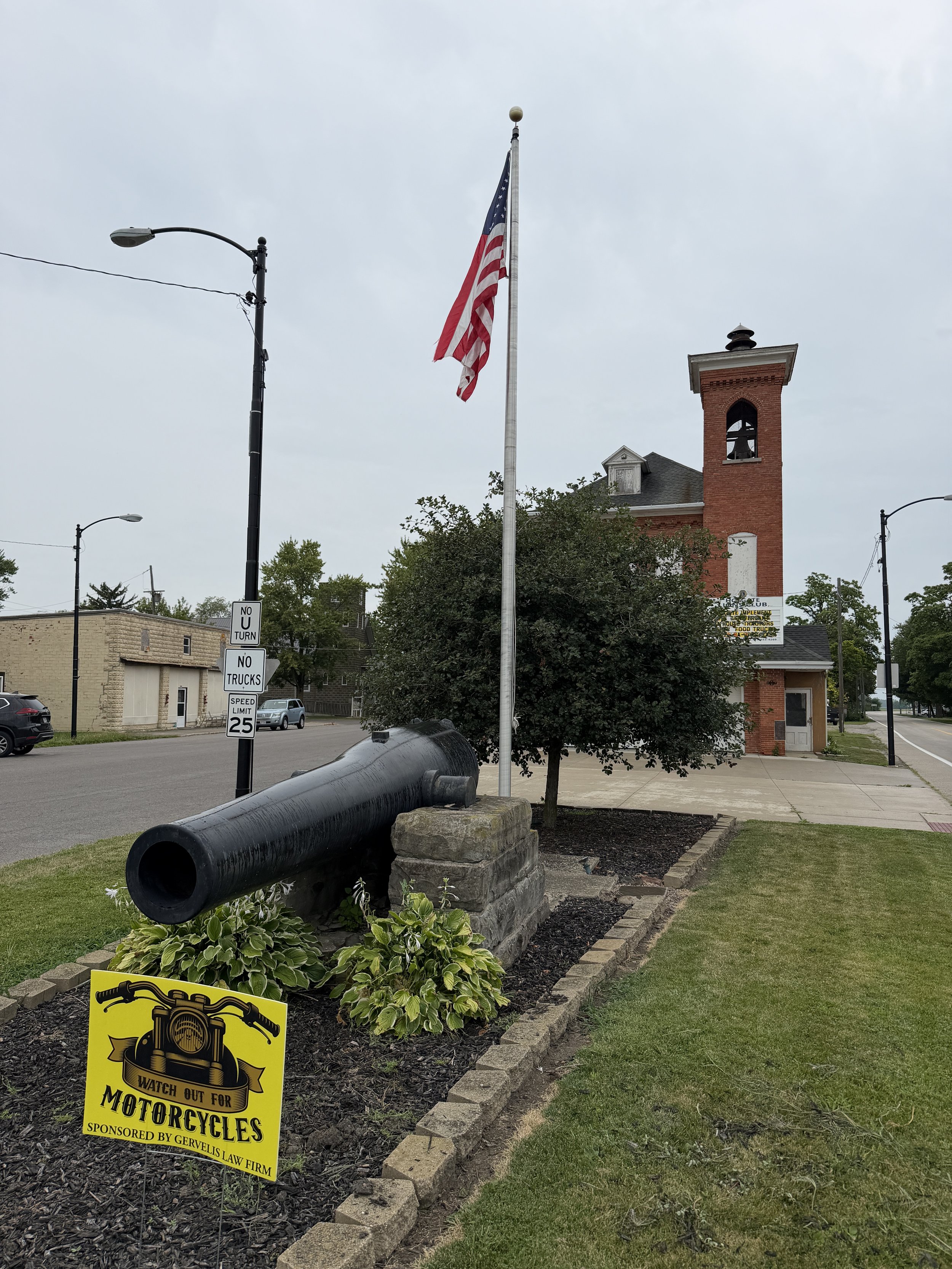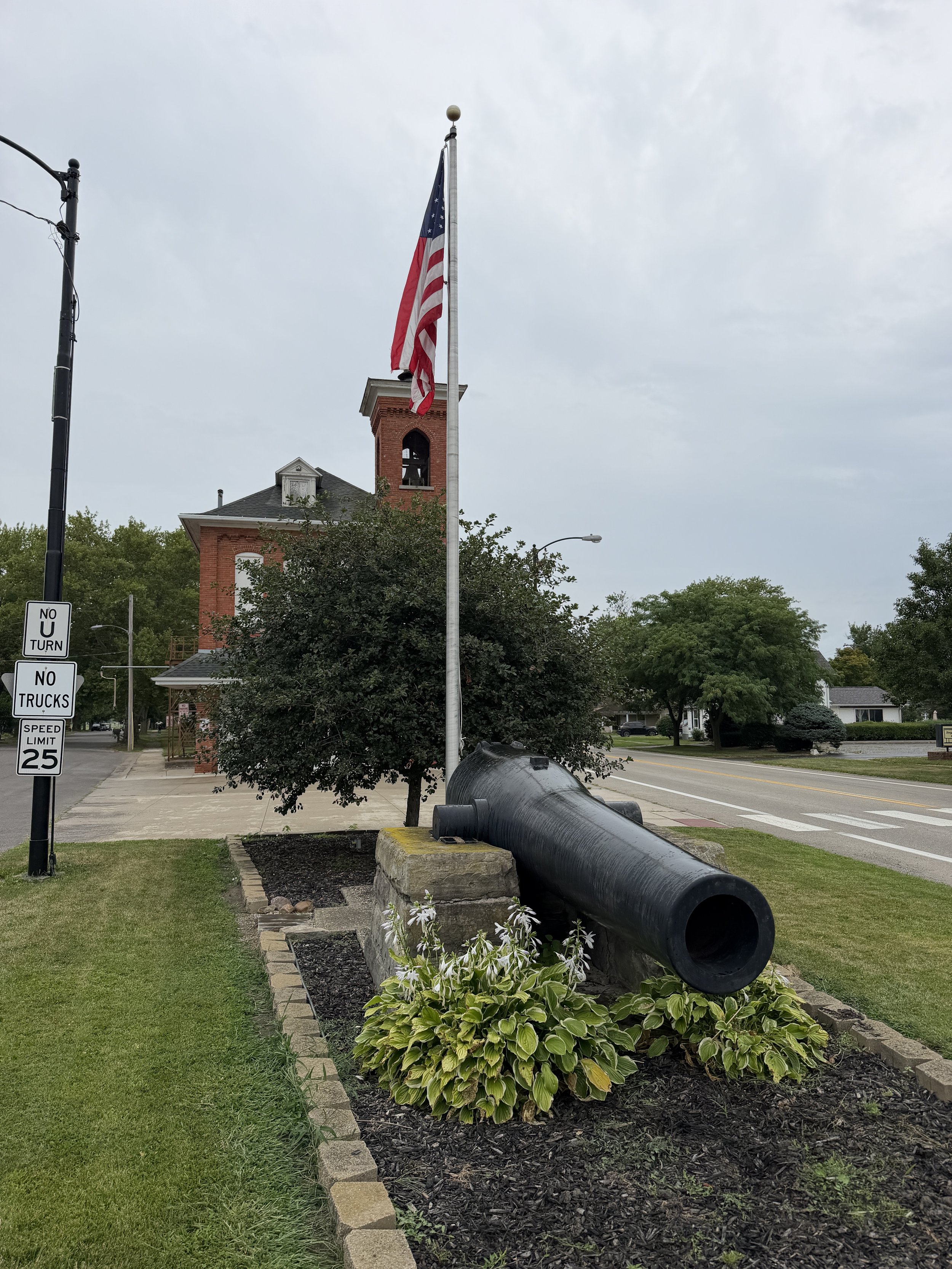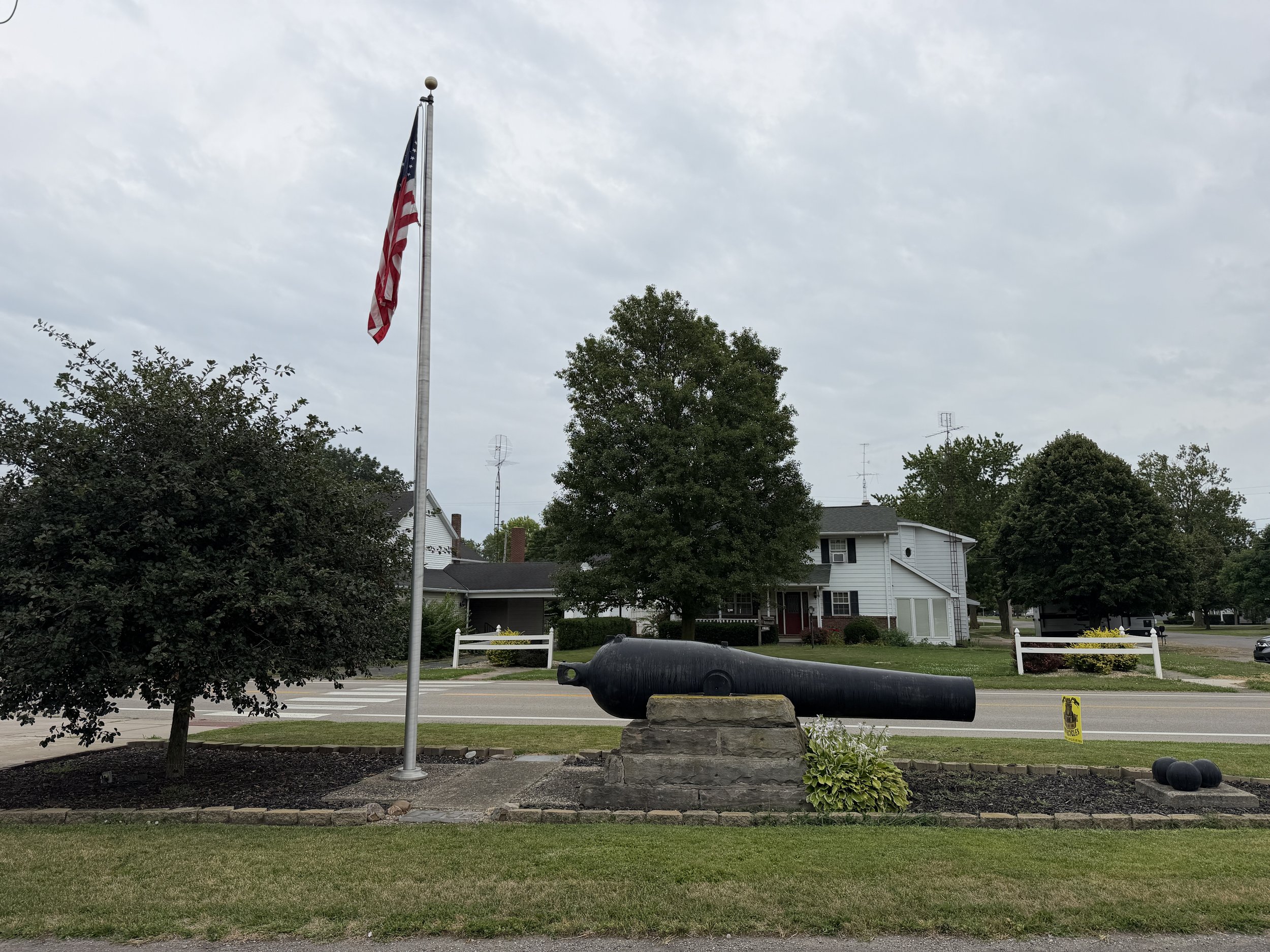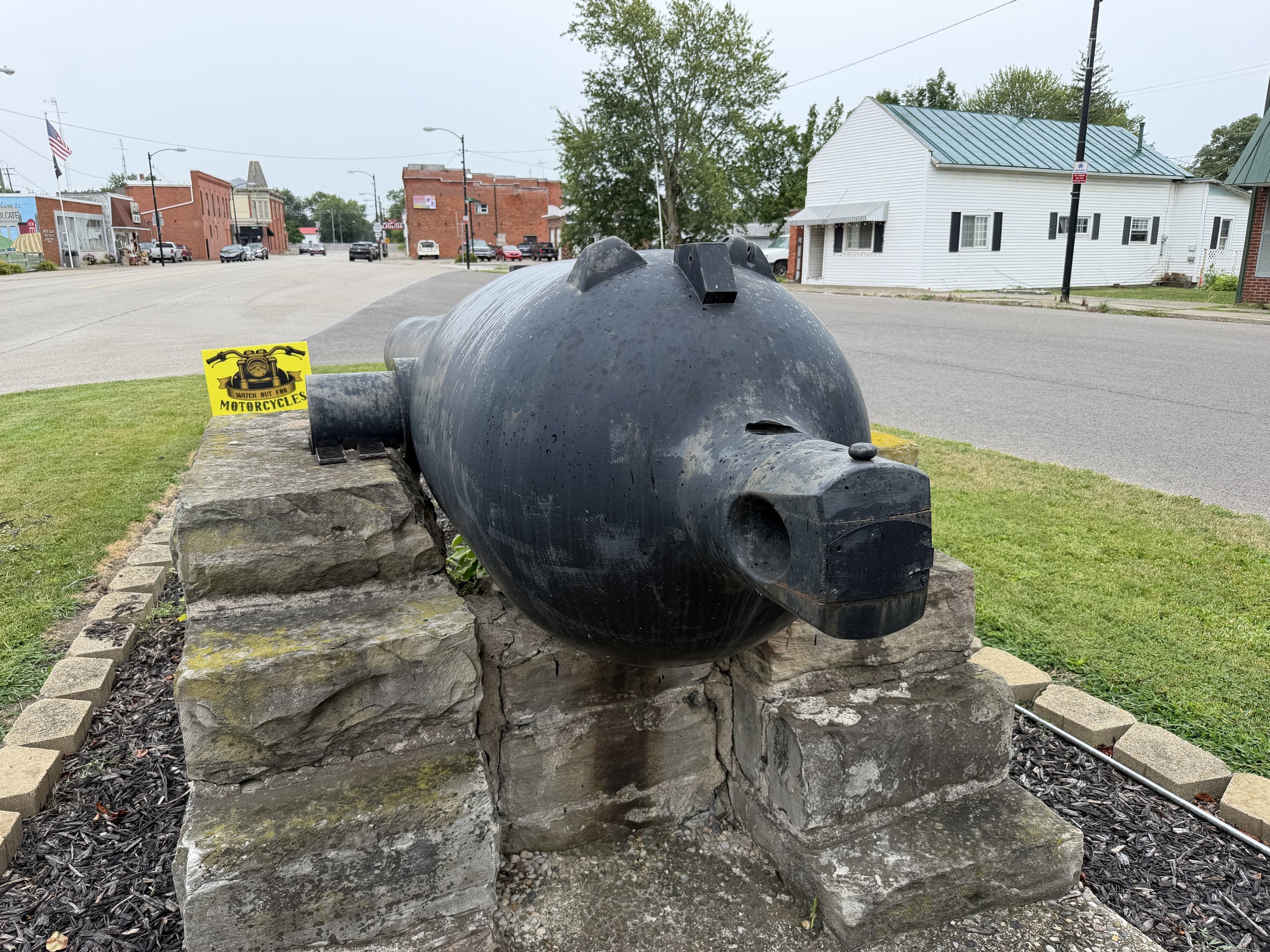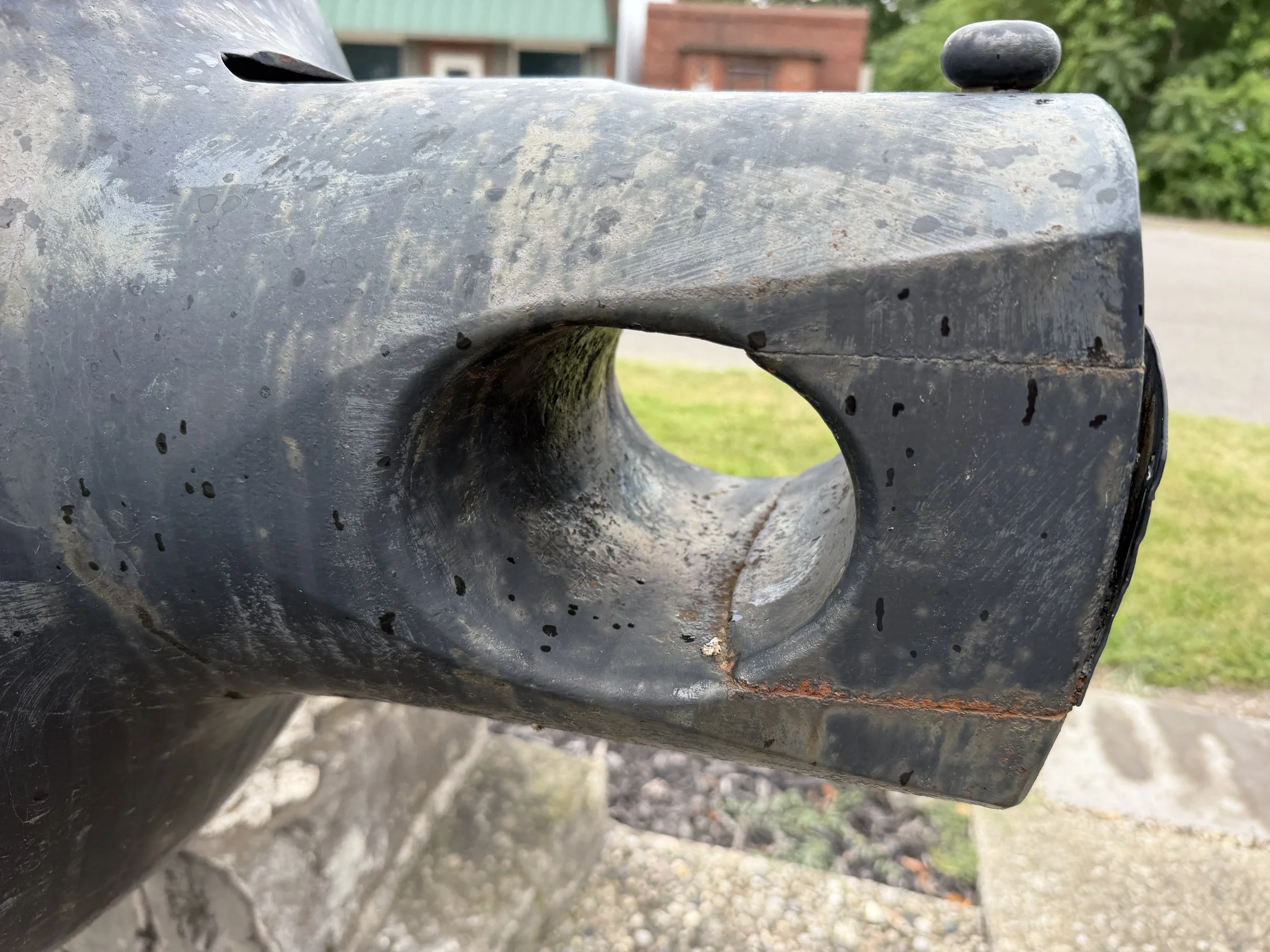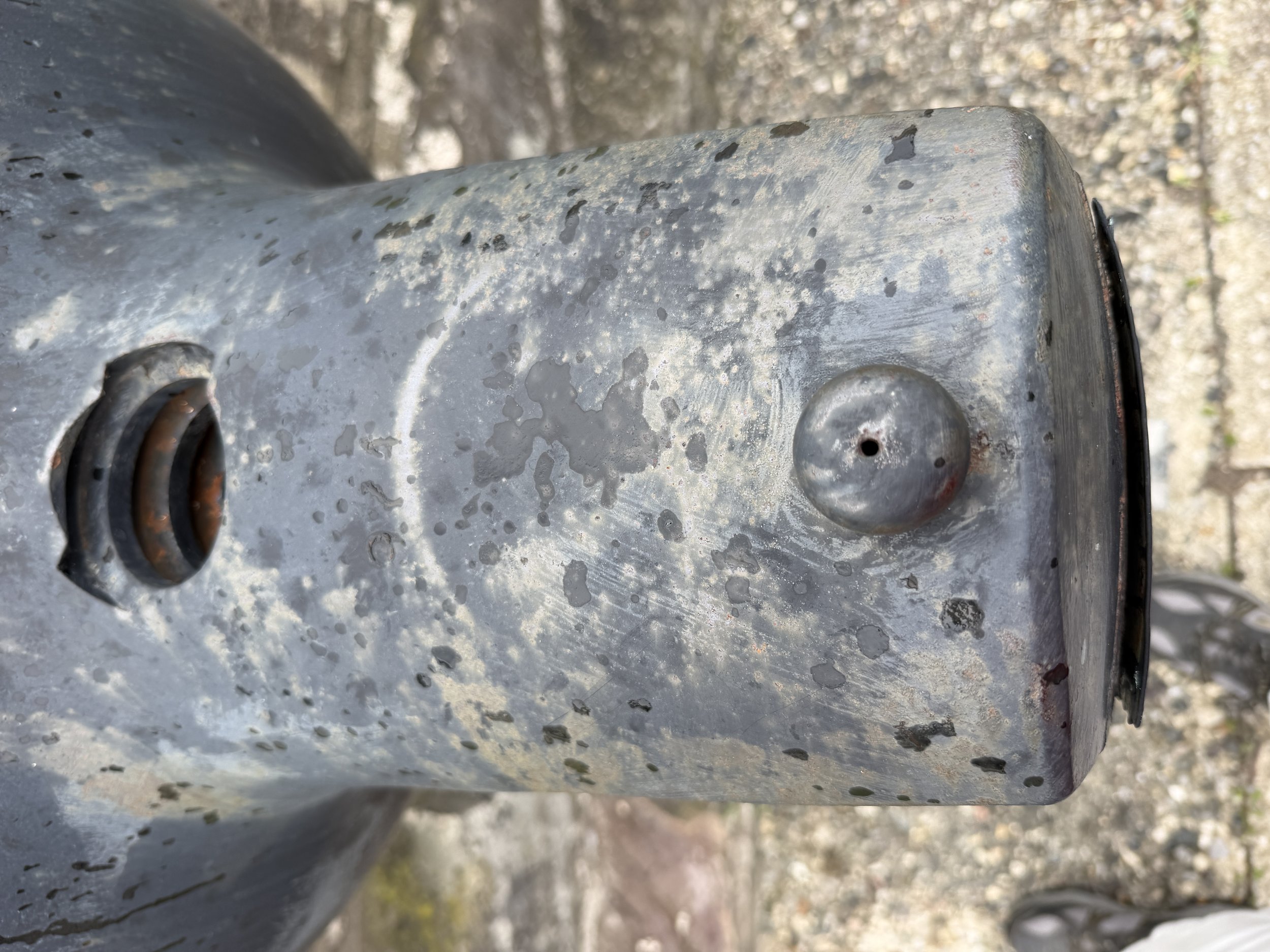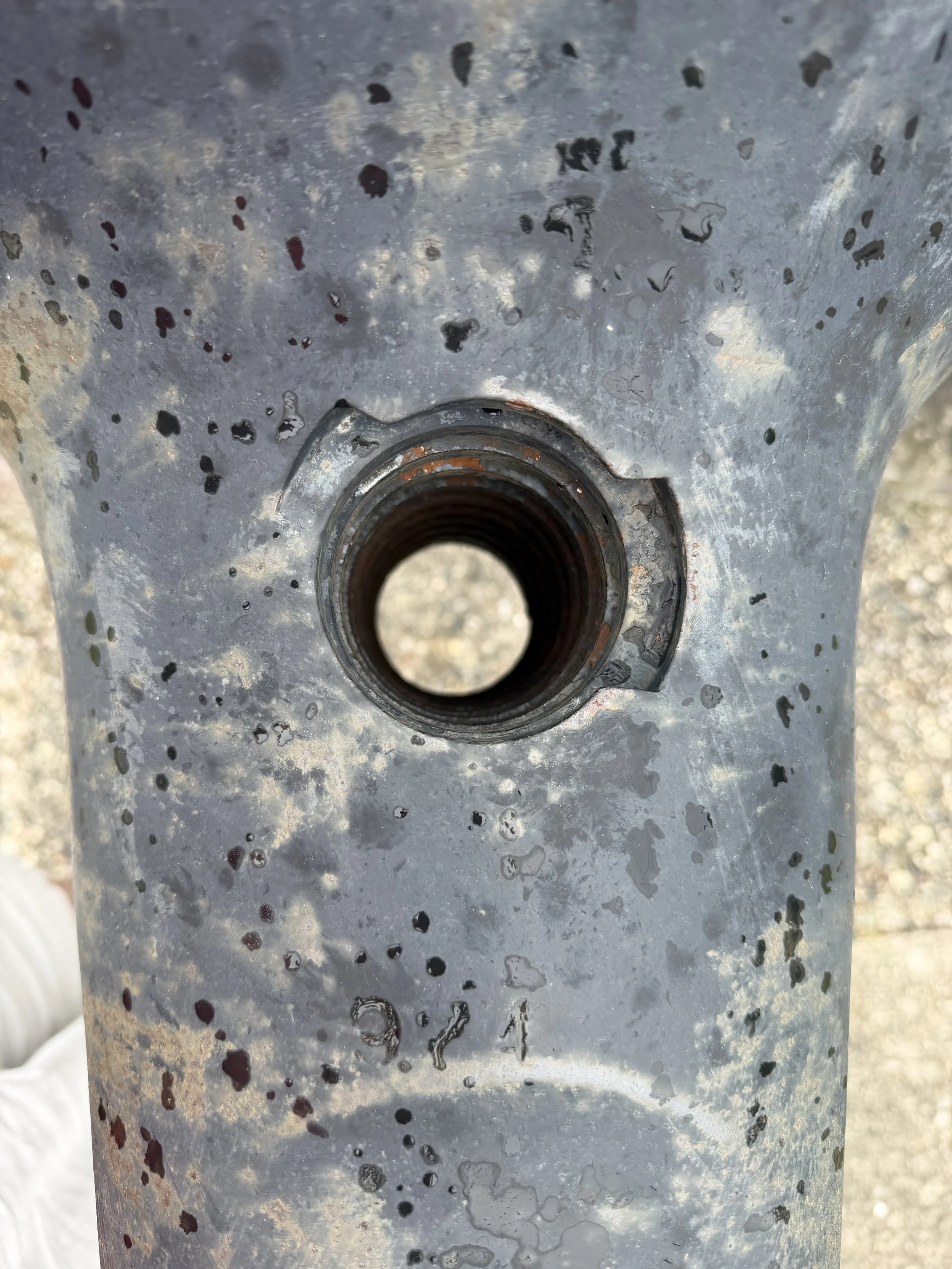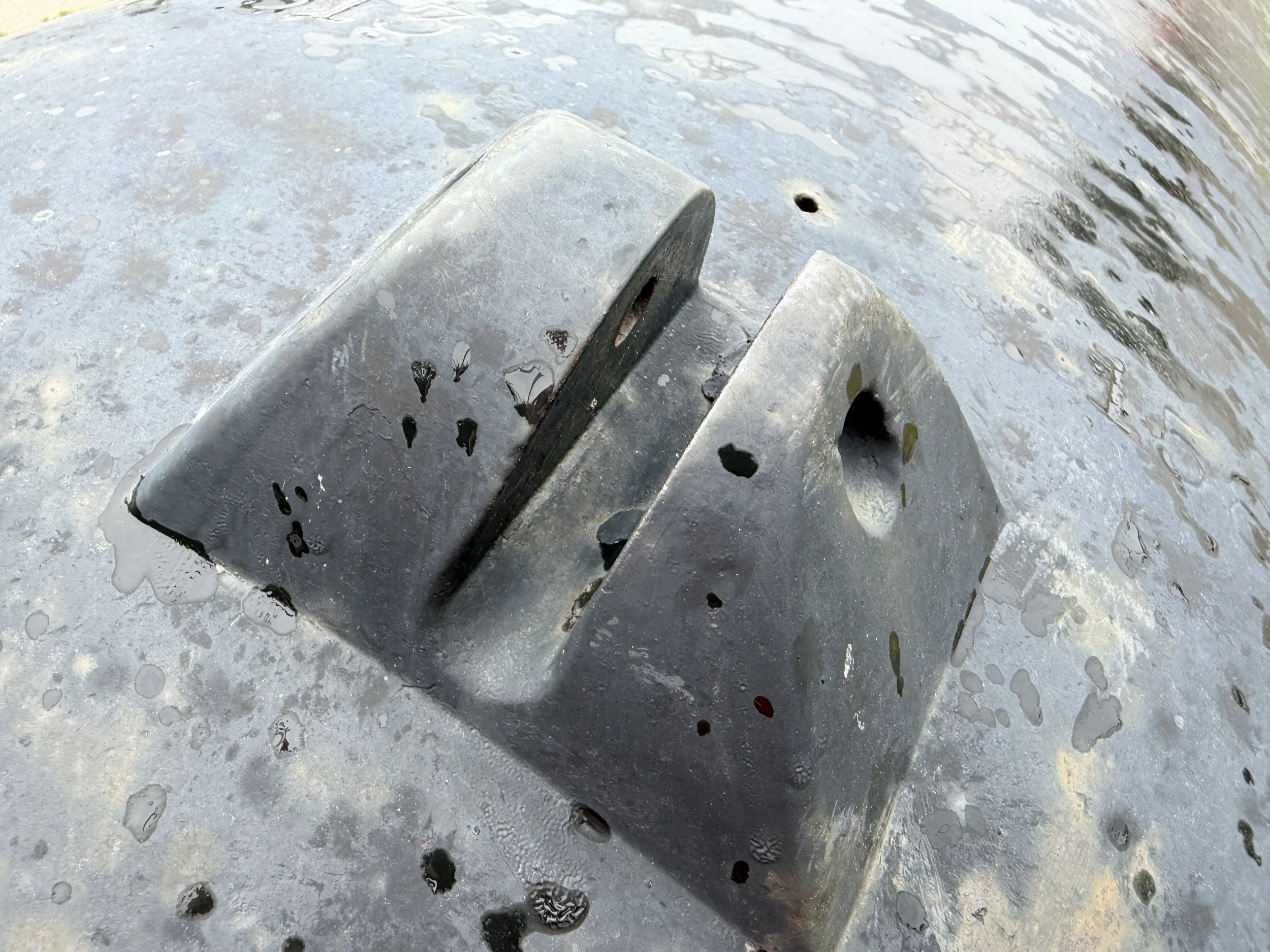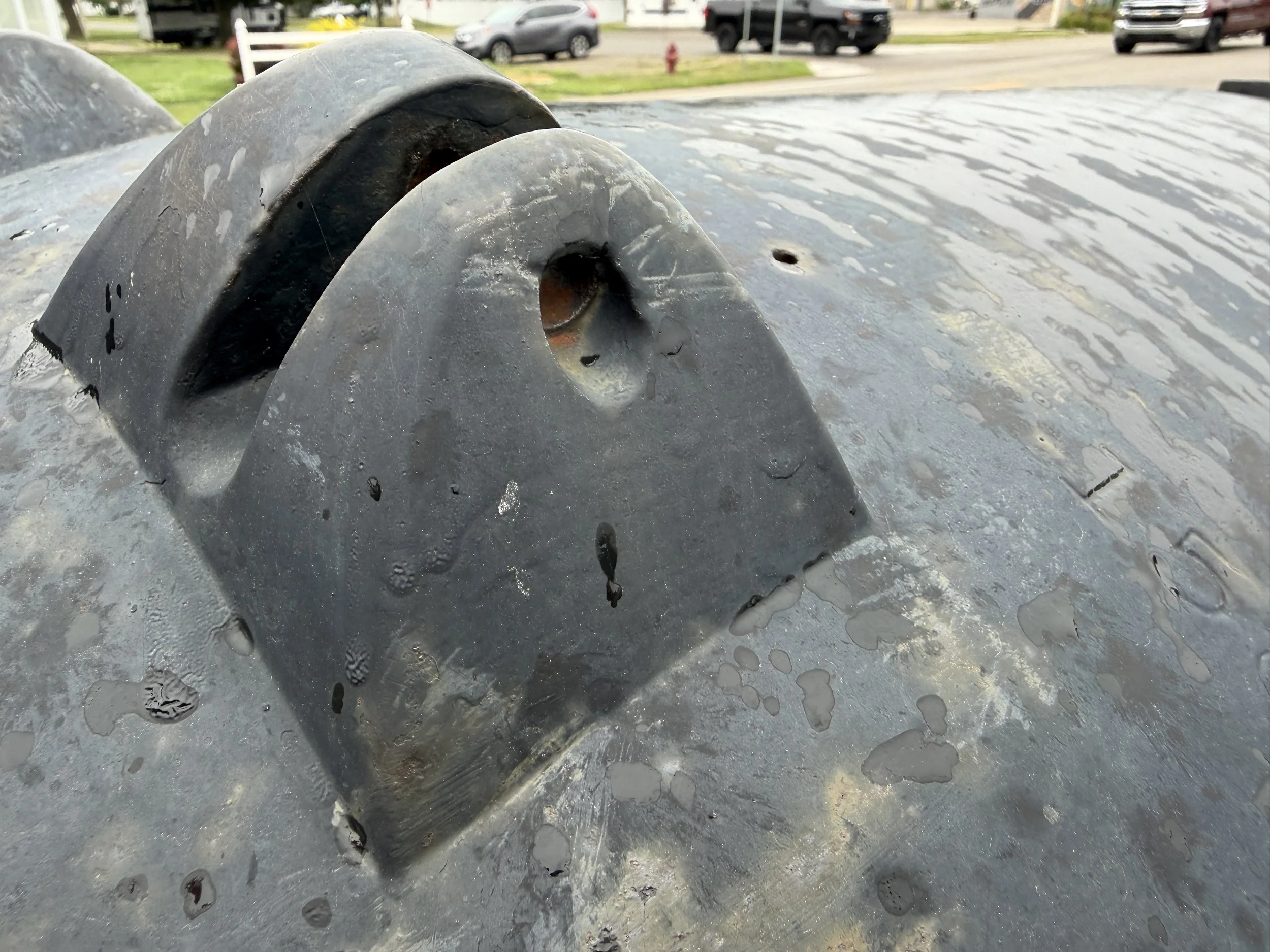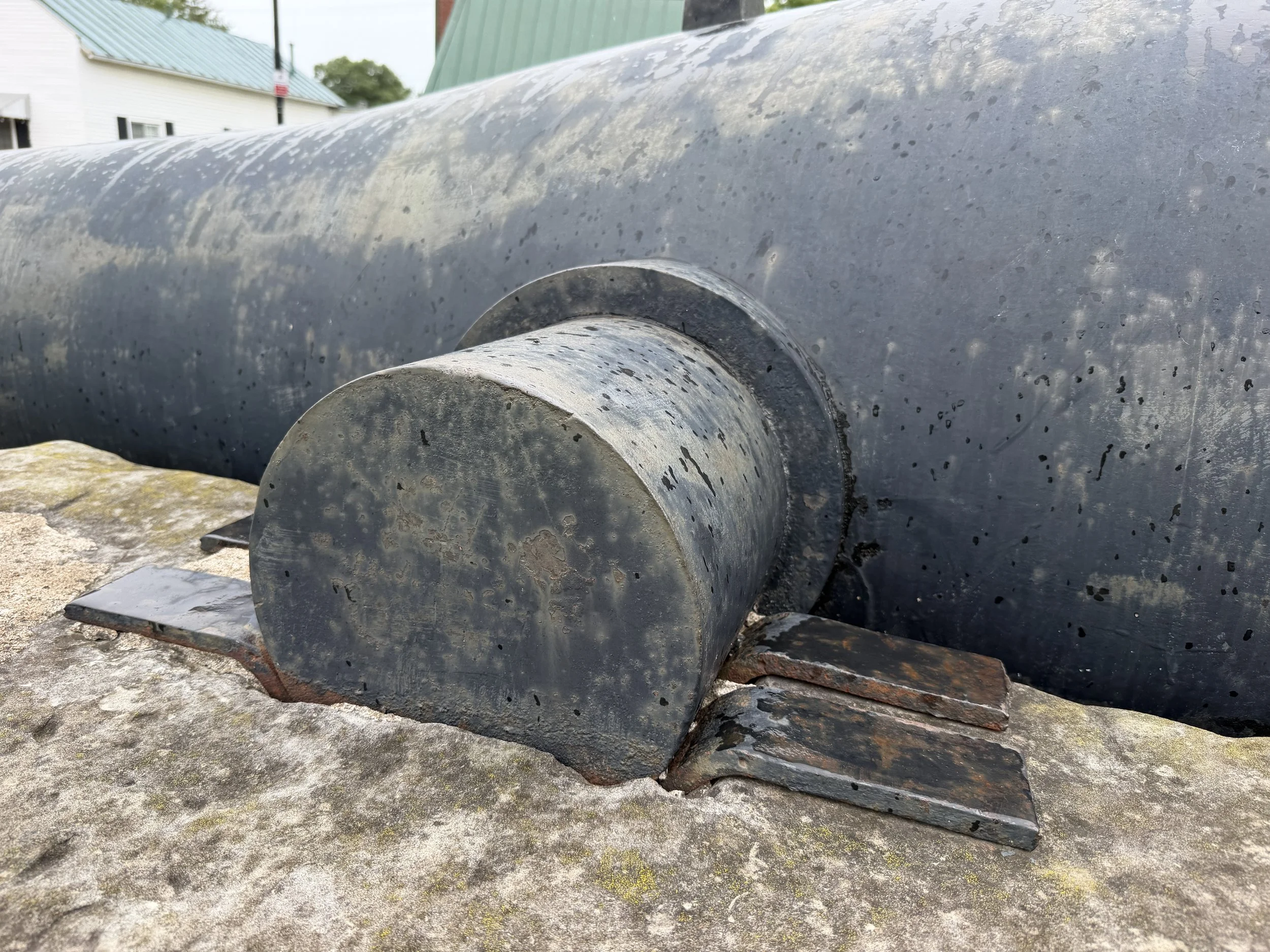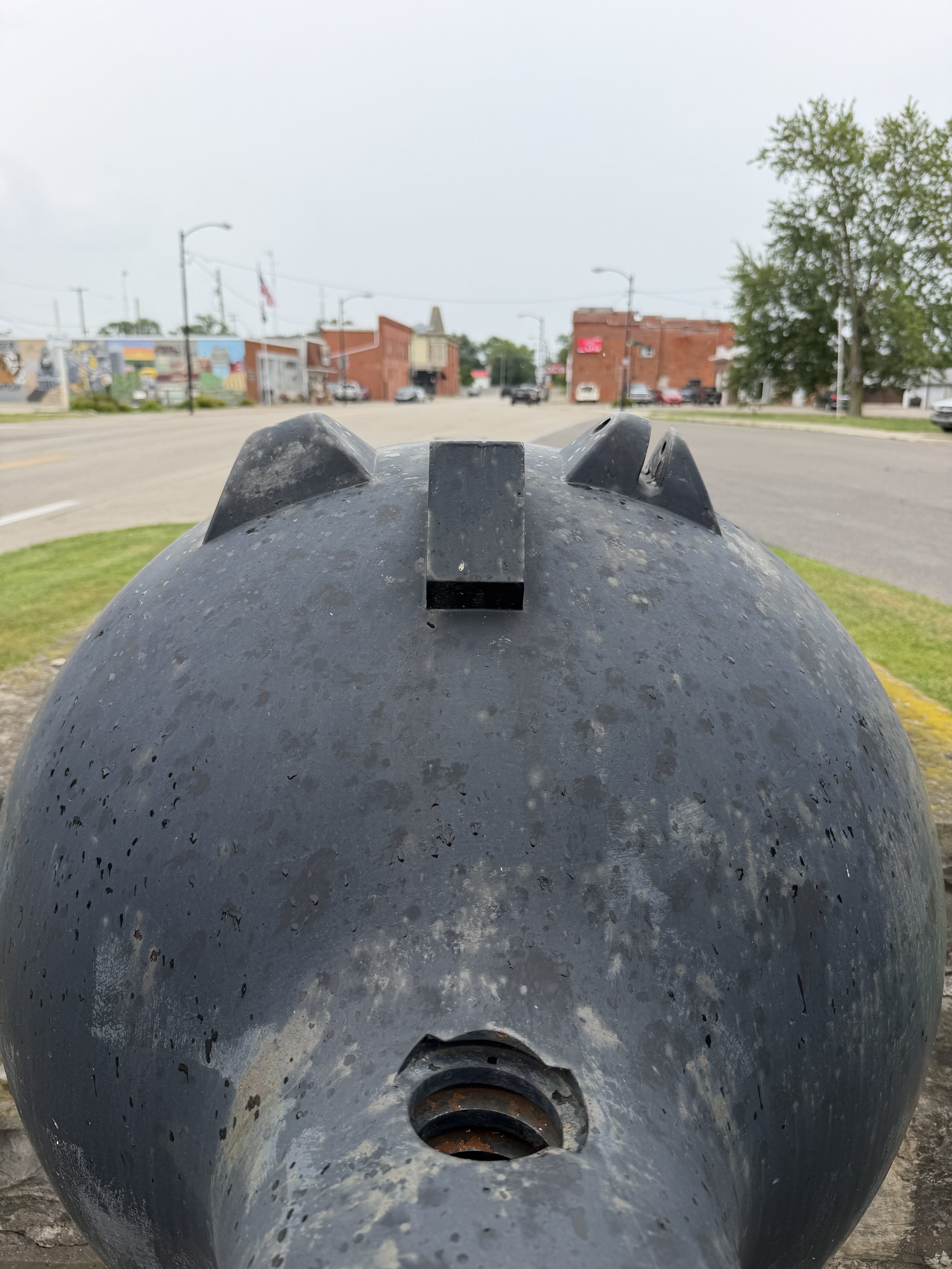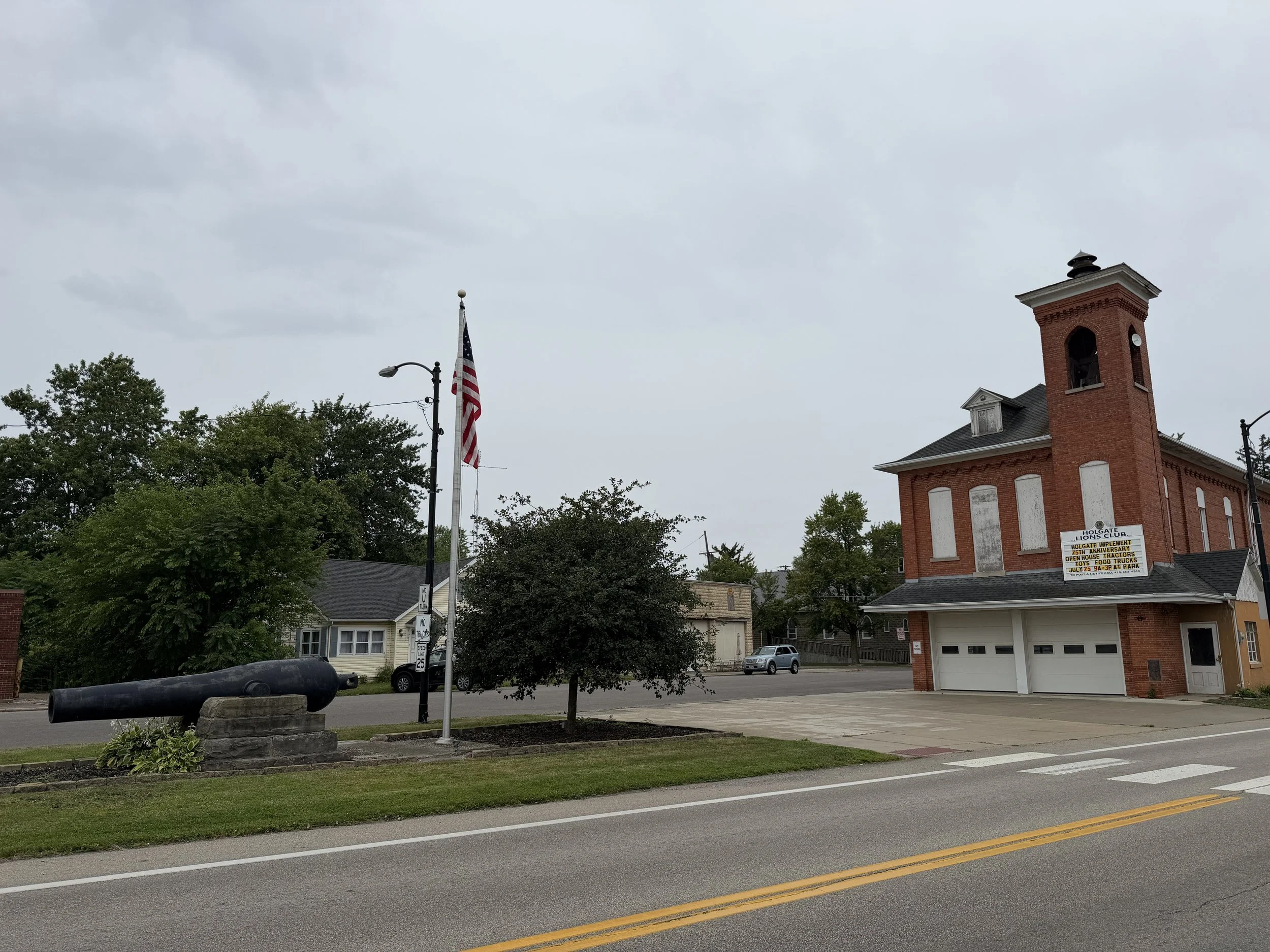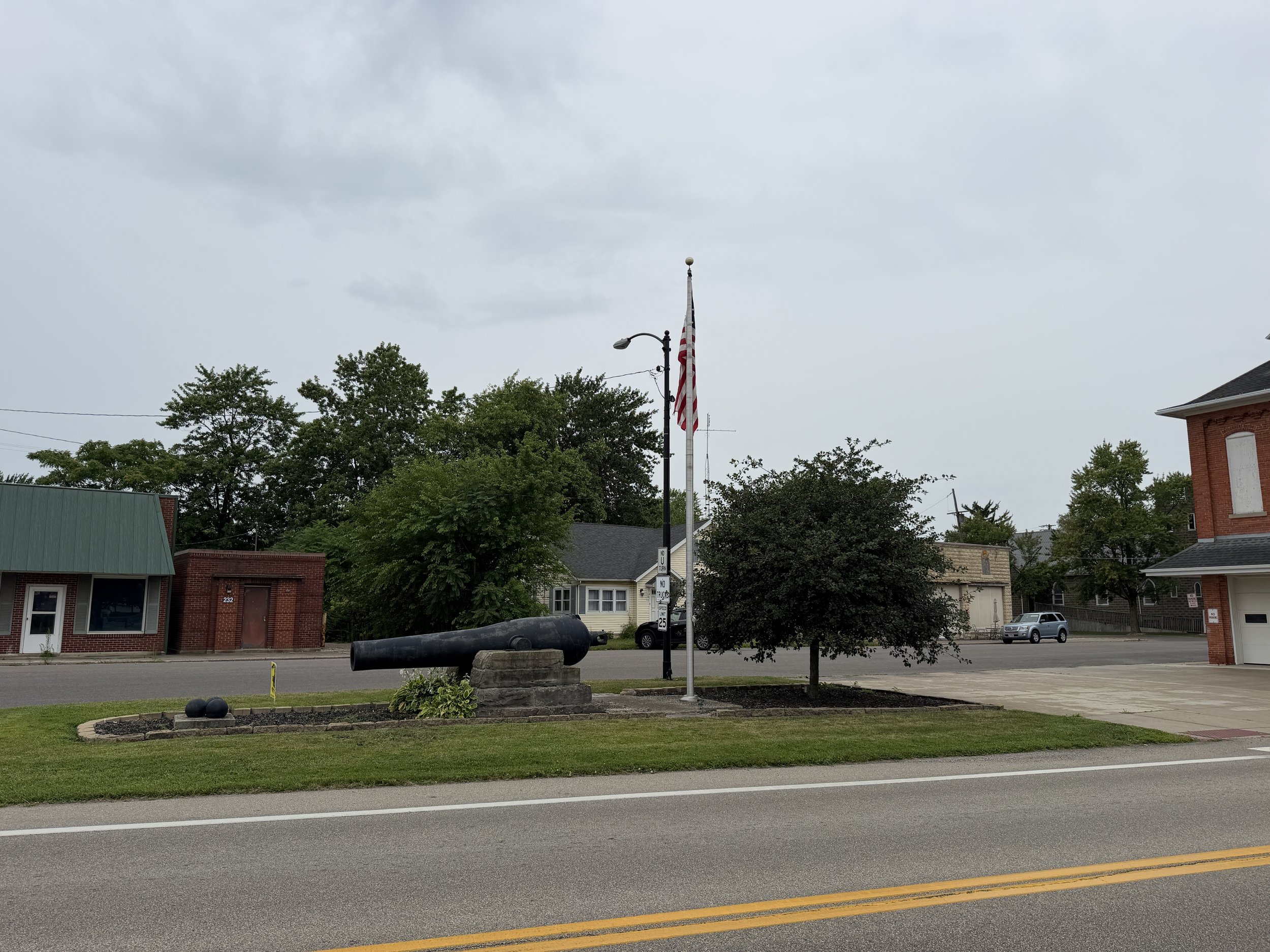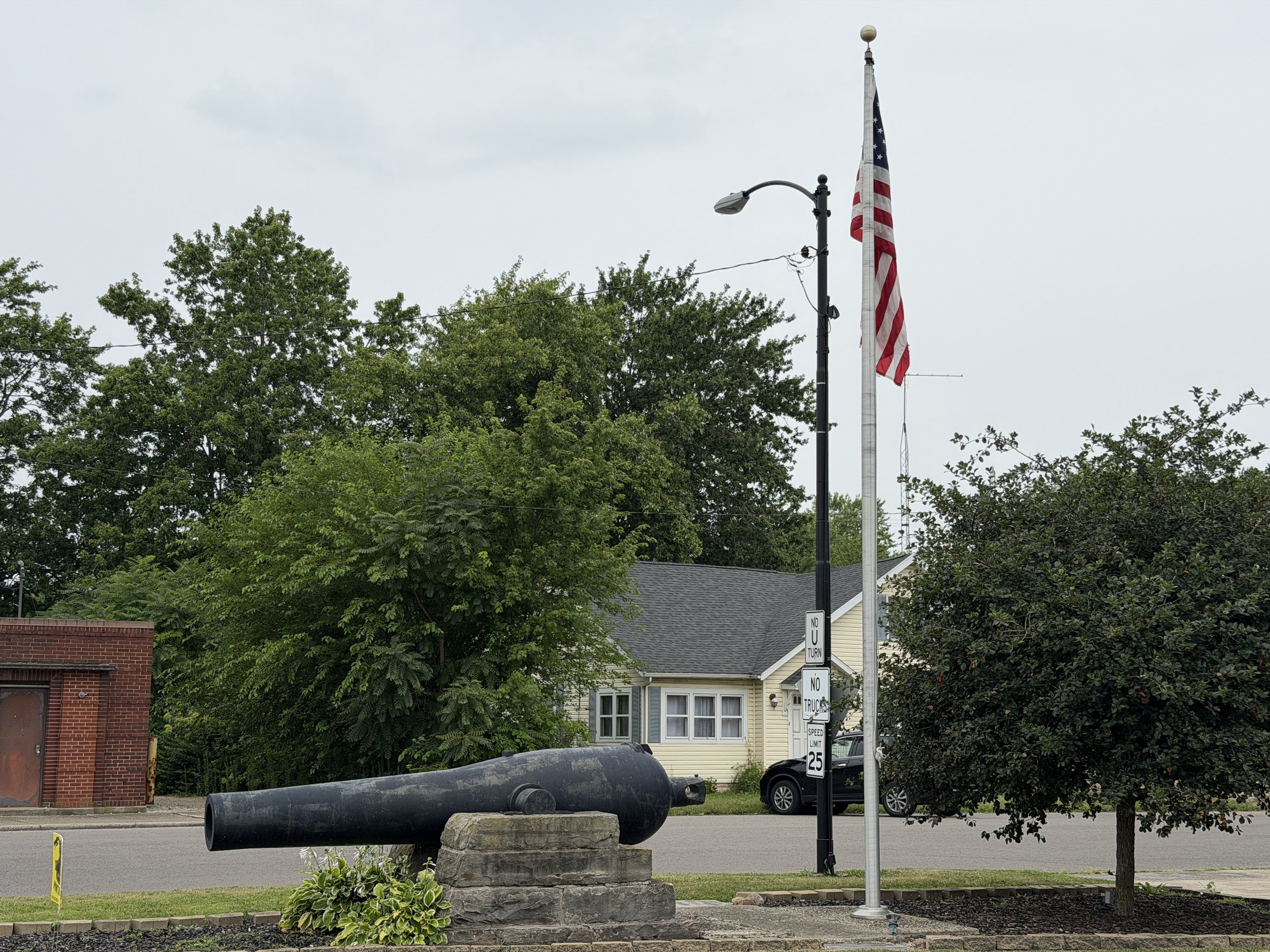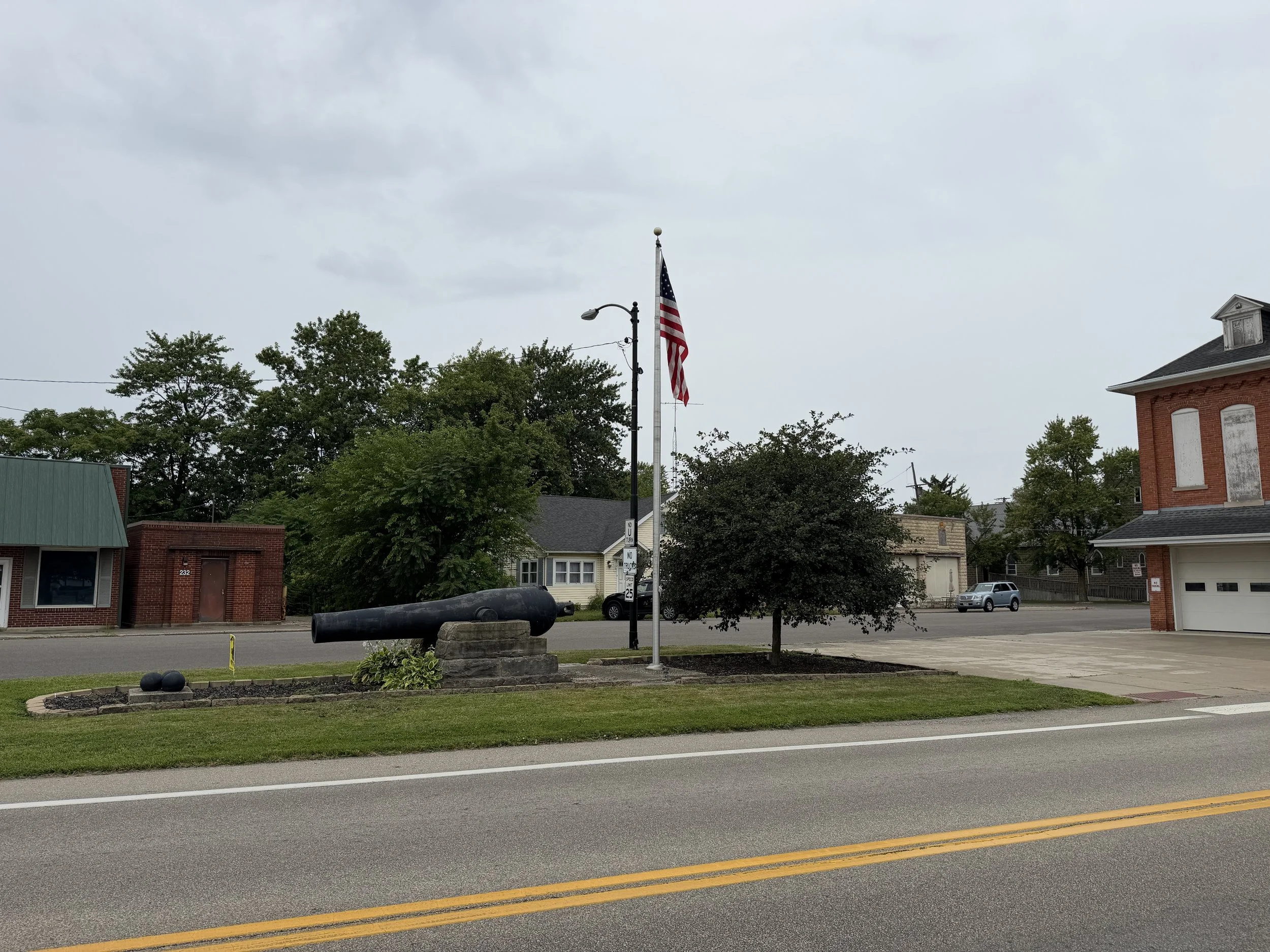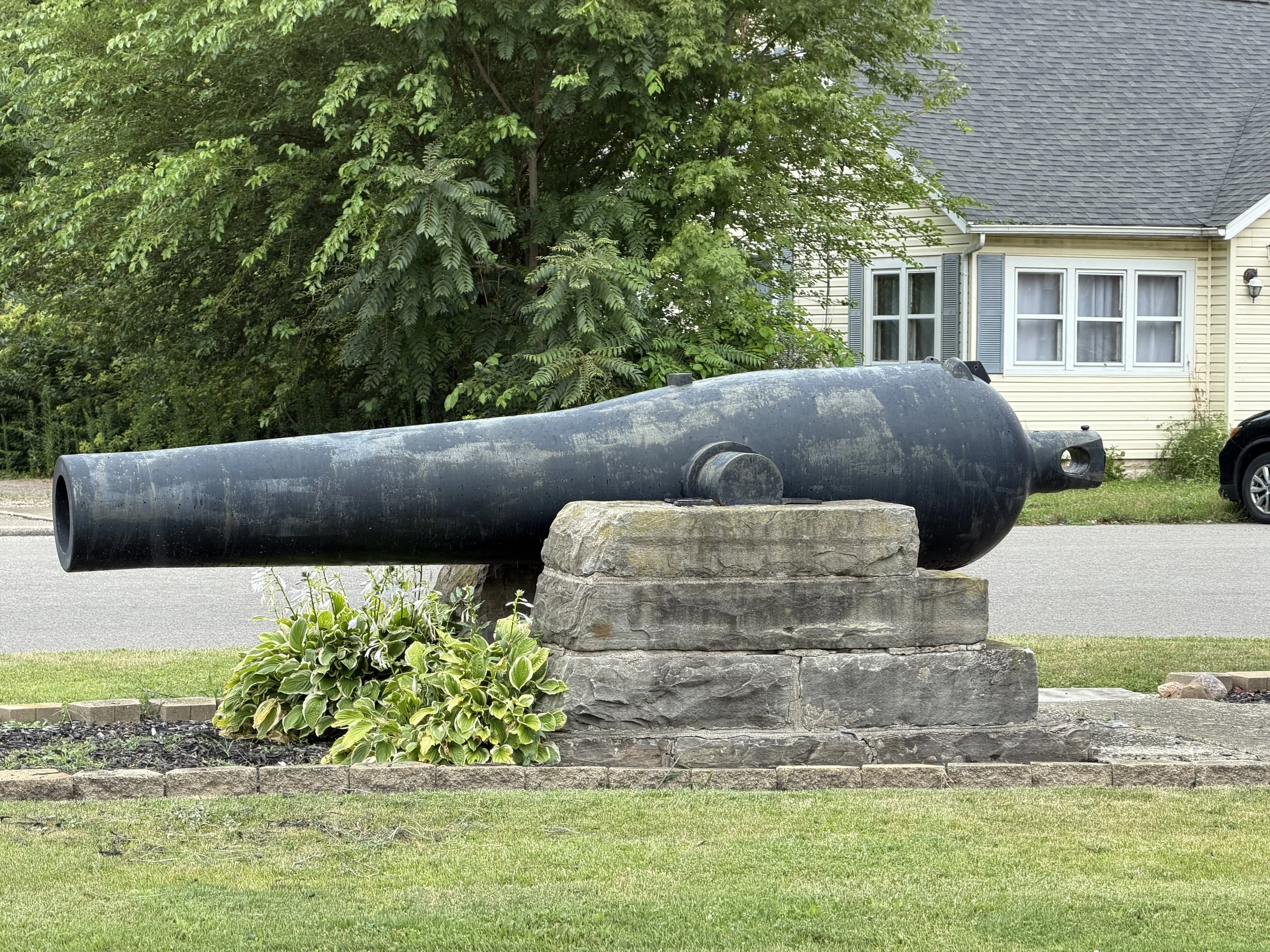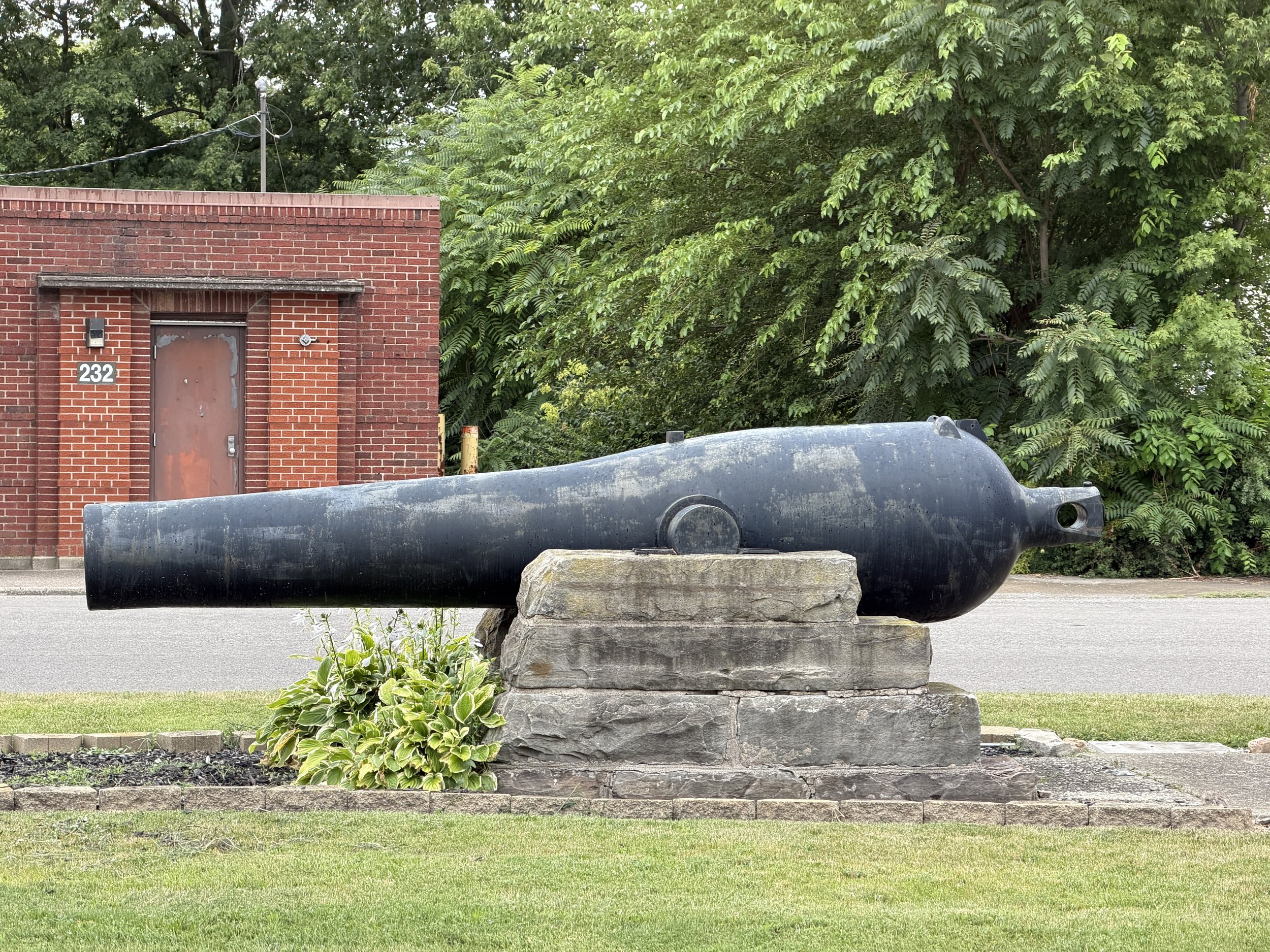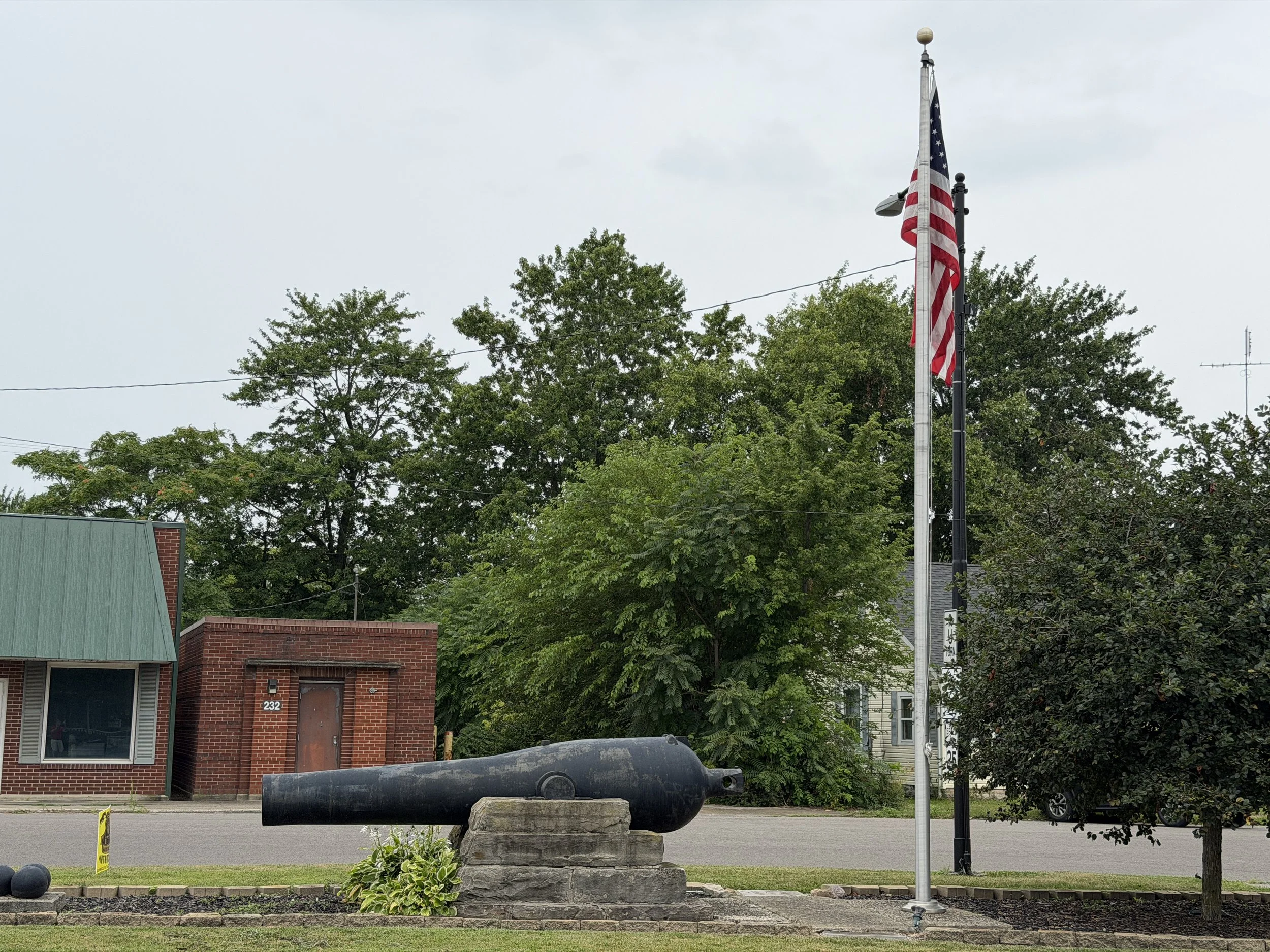
US Navy 11-Inch Dahlgren Number 313 of USS Seneca in Holgate, Ohio
Note: I have previously posted about this Dahlgren using photos by another photographer.
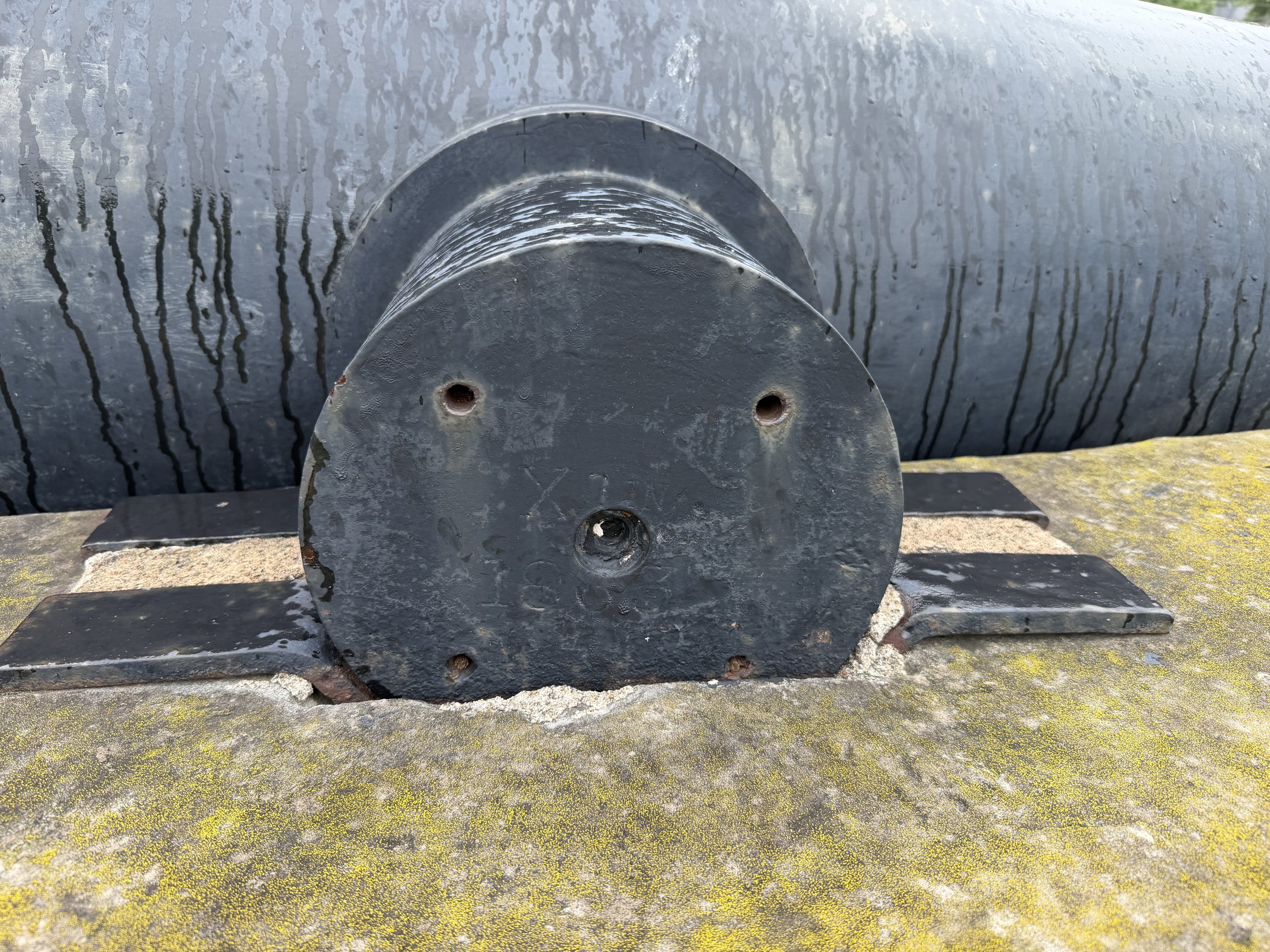
A US Navy 11-Inch Dahlgren, Registry Number 313, is displayed in Holgate, Ohio. This Dahlgren was manufactured by Hinkley, Williams, and Company (formerly the Boston Locomotive Works) in 1863. The 11-Inch Dahlgren was the only type produced by HW&Co - which produced 100 examples, four of which are known to survive. Unlike Dahlgrens produced earlier in the war by other manufacturers, the HW&Co Dahlgrens have very minimal (if any) muzzle swell.
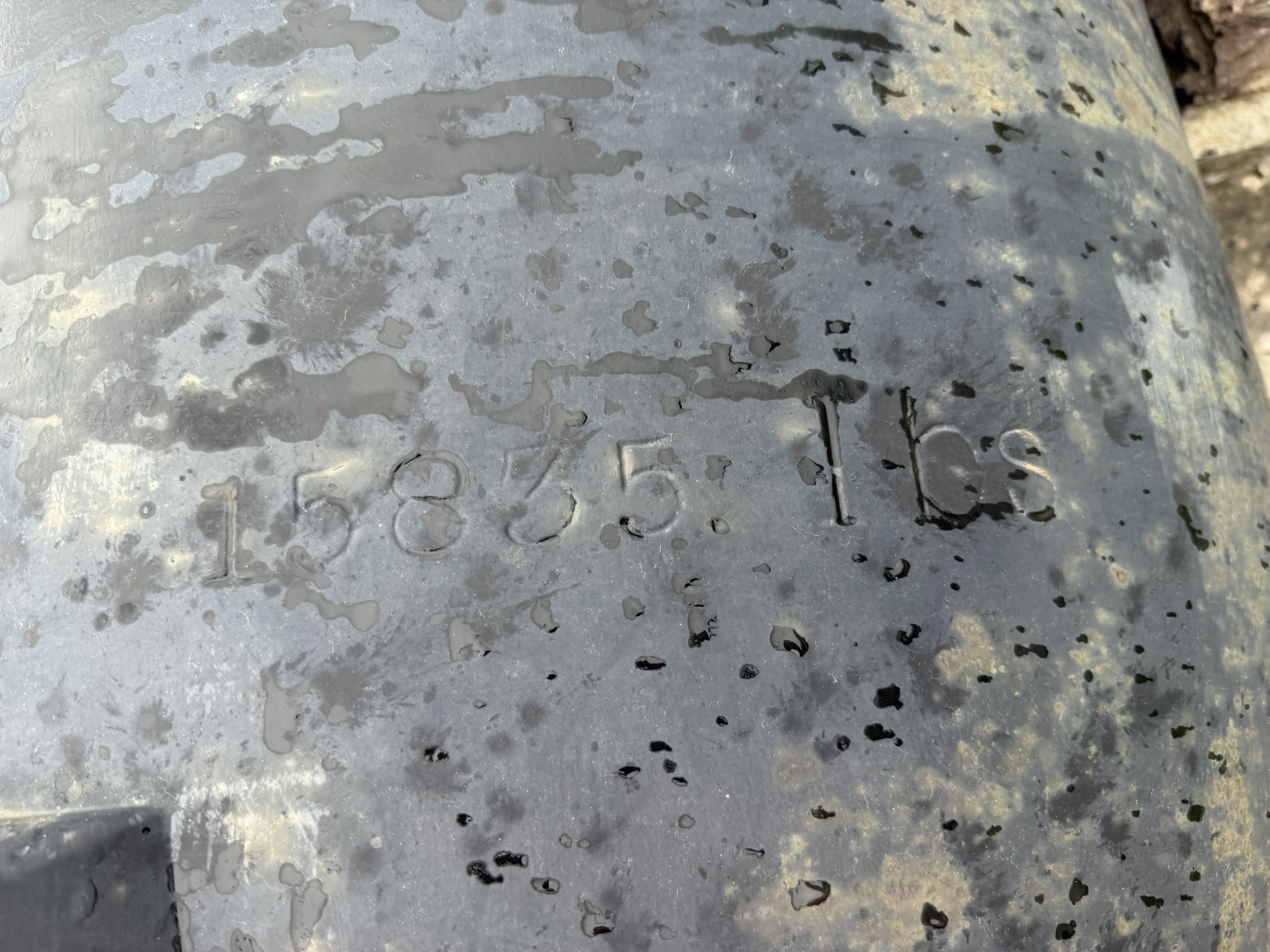
This Dahlgren weighed 15,835 pounds as manufactured. It was cast in 1863. The 11-Inch Dahlgren saw widespread use in the US Navy during the American Civil War. Famously, two were mounted in the turret of USS Monitor. Many were carried as heavy pivot guns upon the wooden ships of the fleet. Designed initially to fire a 135-pound explosive shell propelled by a 15-pound powder charge, with the advent of ironclads, it was found in experiments conducted after the Battle of Hampton Roads that the 11-Inch Dahlgren was capable of firing a 168-pound solid shot with a 30-pound propellant charge.
Seneca at the time of the Battle of Port Royal
Bureau of Ordnance Records show that Number 313 was carried aboard USS Seneca. USS Seneca was one of the “90 Day Gunboats” (or Unidilla Class) which had been ordered to quickly expand the size of the United States Navy in 1861. Twenty-three of this type were completed in 1861-1862. USS Seneca was commissioned October 14th, 1861. The class typically carried a single 11-Inch Dahlgren as their main armament and as well as three or four much smaller cannons.
The 11-Inch Dahlgren was mounted on a pivot carriage which would have allowed it to “pivot” to fire on either side of the ship as necessary.
USS Seneca in 1861 carried 11-Inch Dahlgren Number 35, but after almost three years of service Number 35 had been fired 650 times. When Seneca underwent a months long repair at the New York Navy Yard from January to October, 1864, her original 11-inch Dahlgren was landed and Number 313 was placed aboard.
Number 313 would be fired 430 times aboard USS Seneca by March of 1865 - primarily during the bombardments of Fort Fisher.
US Navy 11-Inch Dahlgren Number 313 of USS Seneca in Holgate, Ohio
The 11-Inch Dahlgren of USS Unadilla. The deck scene upon Seneca would have been very similar.
The Battles of Fort Fisher
USS Seneca, after her recommissioning in 1864, joined the North Atlantic Blockading Squadron. On December 24th and 25th, she took part in the First Battle of Fort Fisher. Around forty ships of the United States Navy under the command of Rear Admiral David Dixon Porter - including some of its largest steam frigates and most powerful ironclads subjected Fort Fisher to two days of bombardment, firing over 10,000 shells at the earthwork fortification. USS Seneca fired one hundred twenty two 11-Inch shells (each weighing 135 pounds and packed with gunpowder) and one hundred forty shells from her 20-Pounder Parrott Rifle.
Although the Navy had all but silenced the fort with the tremendous bombardment, US Army Major General Benjamin Butler hesitated then withdrew the soldiers who had been landed to capture the fort. With the army withdrawing, the fleet returned to Hampton Roads in Virginia.
USS Seneca’s captain, Lieutenant Commander Montgomery Sicard, expressed frustration in his official report of the battle that the army had withdrawn the attack when the Confederates in the fort had been so thoroughly suppressed by the bombardments.
The frustration was widespread. Upon the fleet’s return, General Butler was relieved and Major General Alfred Terry placed in command of the ground forces in what would become the Second Battle of Fort Fisher. On January 14th, 1865, USS Seneca began a renewed bombardment of Fort Fisher which would involve firing two hundred twenty shells from it’s 11-Inch Dahlgren and thirty shells from its 20-Pounder Rifle. On January 15th, Lieutenant Commander Sicard personally led a detachment of two other officers and twenty-six sailors from USS Seneca in the column of Sailors and Marines which landed to attack Fort Fisher’s land face. On January 15th, the Soldiers, Sailors, and Marines of the United States successfully stormed and captured Fort Fisher.
Upon Lieutenant Commander Sicard’s recommendation, one of the members of his landing party would receive the Medal of Honor:
"The President of the United States of America, in the name of Congress, takes pleasure in presenting the Medal of Honor to Chief Boatswain's Mate Othniel Tripp, United States Navy, for extraordinary heroism in action while serving on board the U.S.S. Seneca in the assault on Fort Fisher, North Carolina, 15 January 1865. Despite severe enemy fire which halted an attempt by his assaulting party to enter the stockade, Chief Boatswain's Mate Tripp boldly charged through the gap in the stockade although the center of the line, being totally unprotected, fell back along the open beach and left too few in the ranks to attempt an offensive operation."
The victory at Fort Fisher contributed significantly to ending the American Civil War. Wilmington had been the last open seaport through which the Confederacy could receive vital supplies through the blockade. With Fort Fisher’s capture, Wilmington was closed as a port and would be captured the next month. The end of the war was nearly at hand.
USS Seneca and her crew (and the 11-Inch Dahlgren now preserved in Holgate) contributed significantly to that victory.