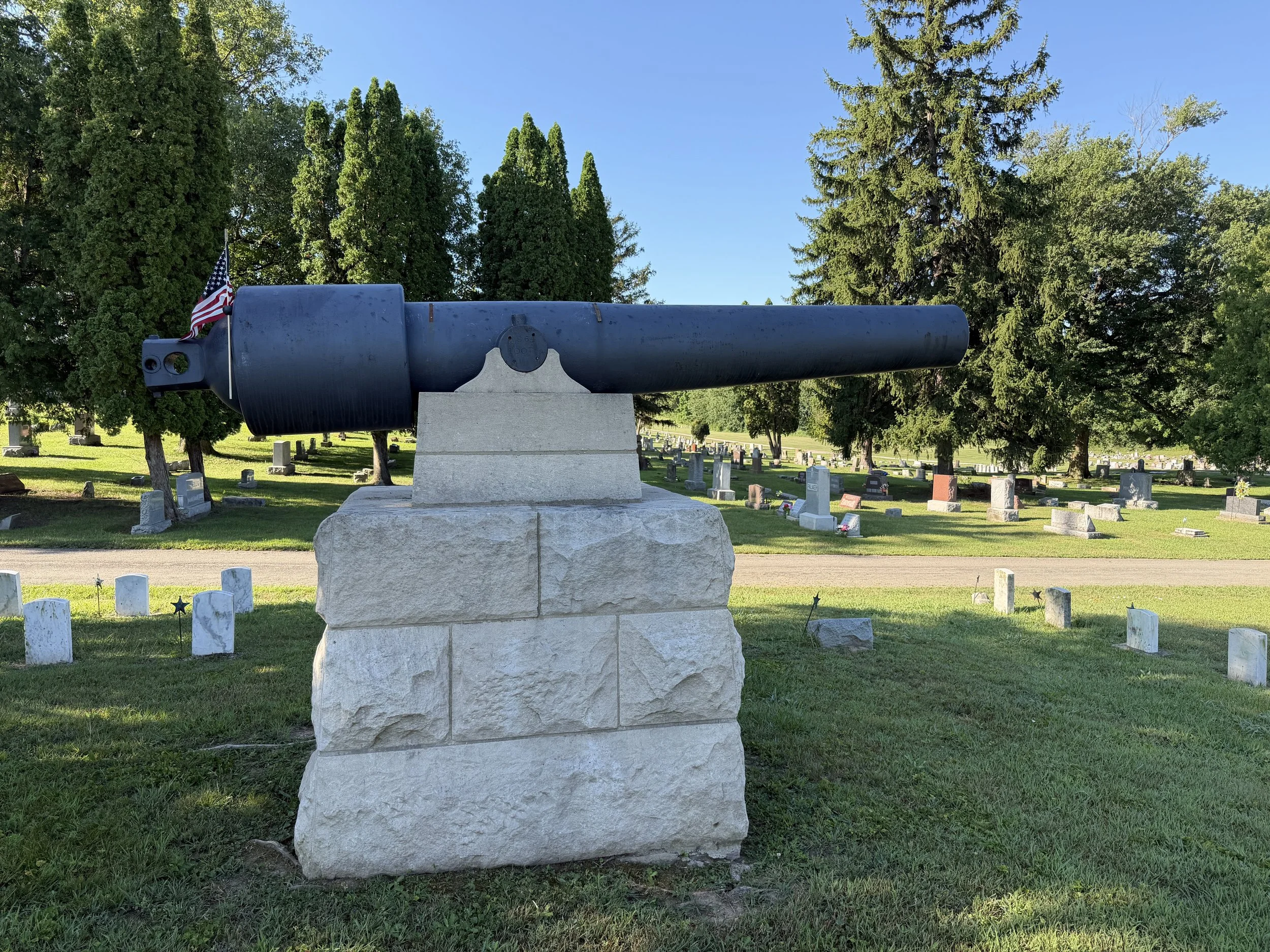
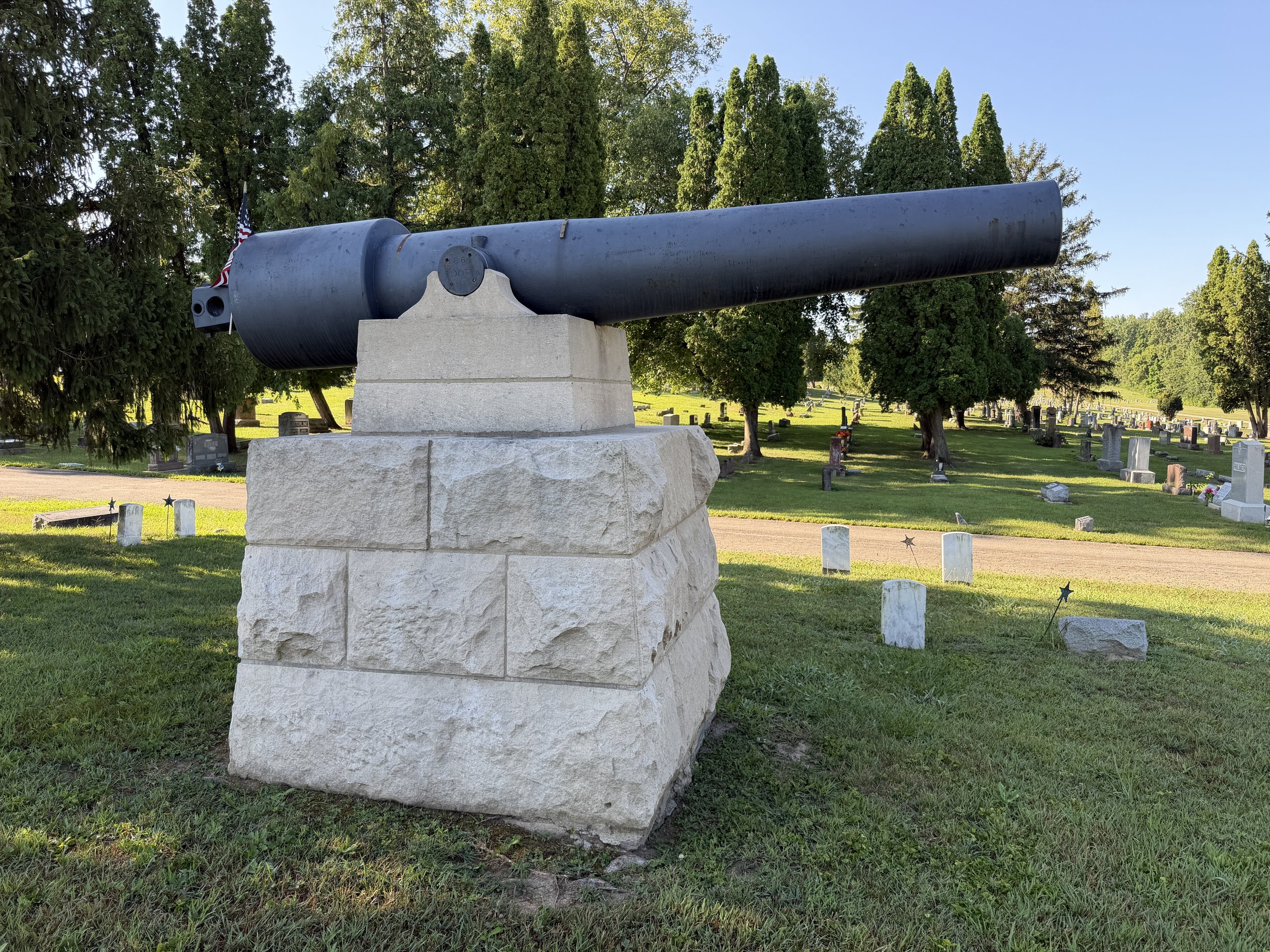
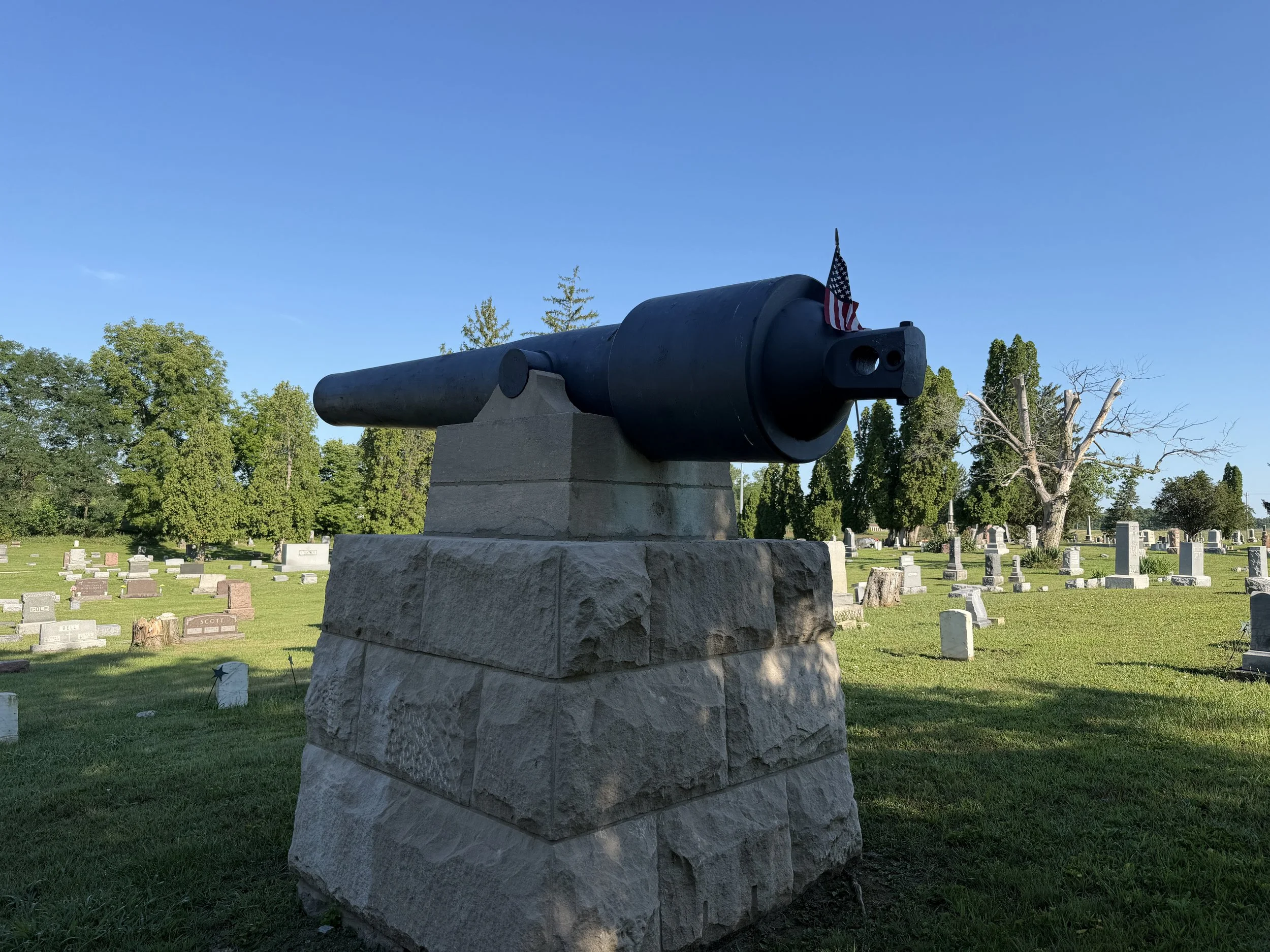
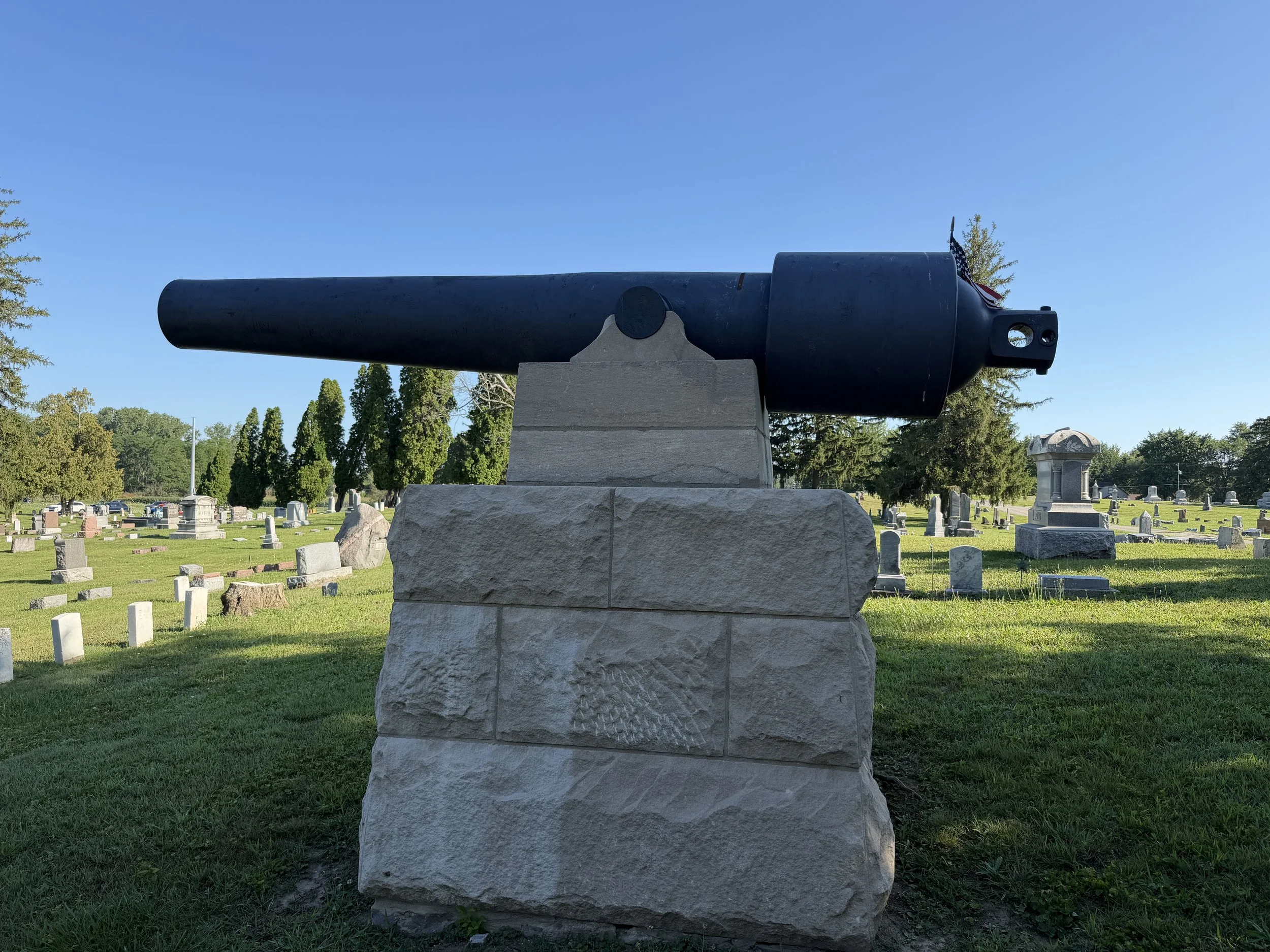
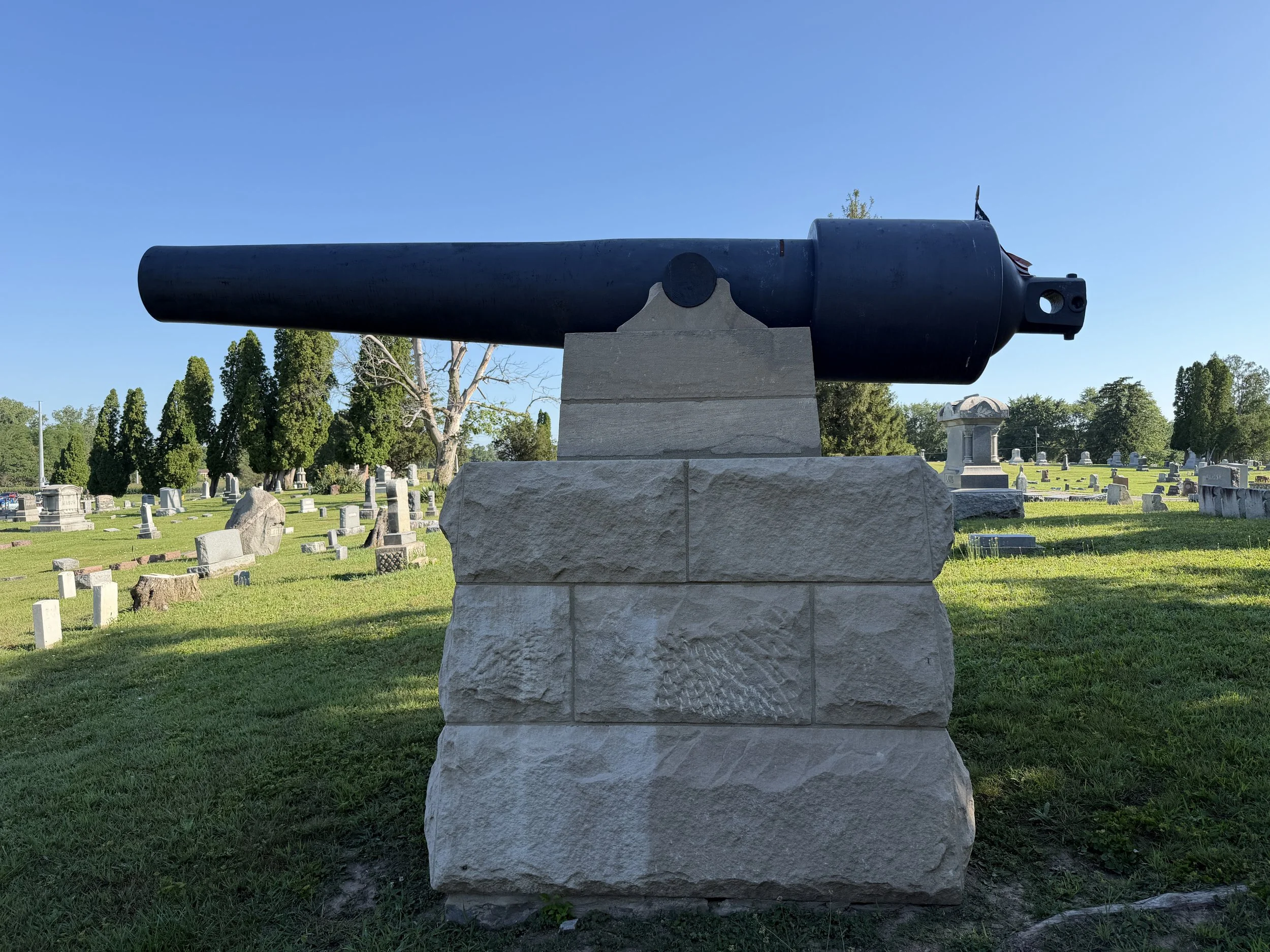
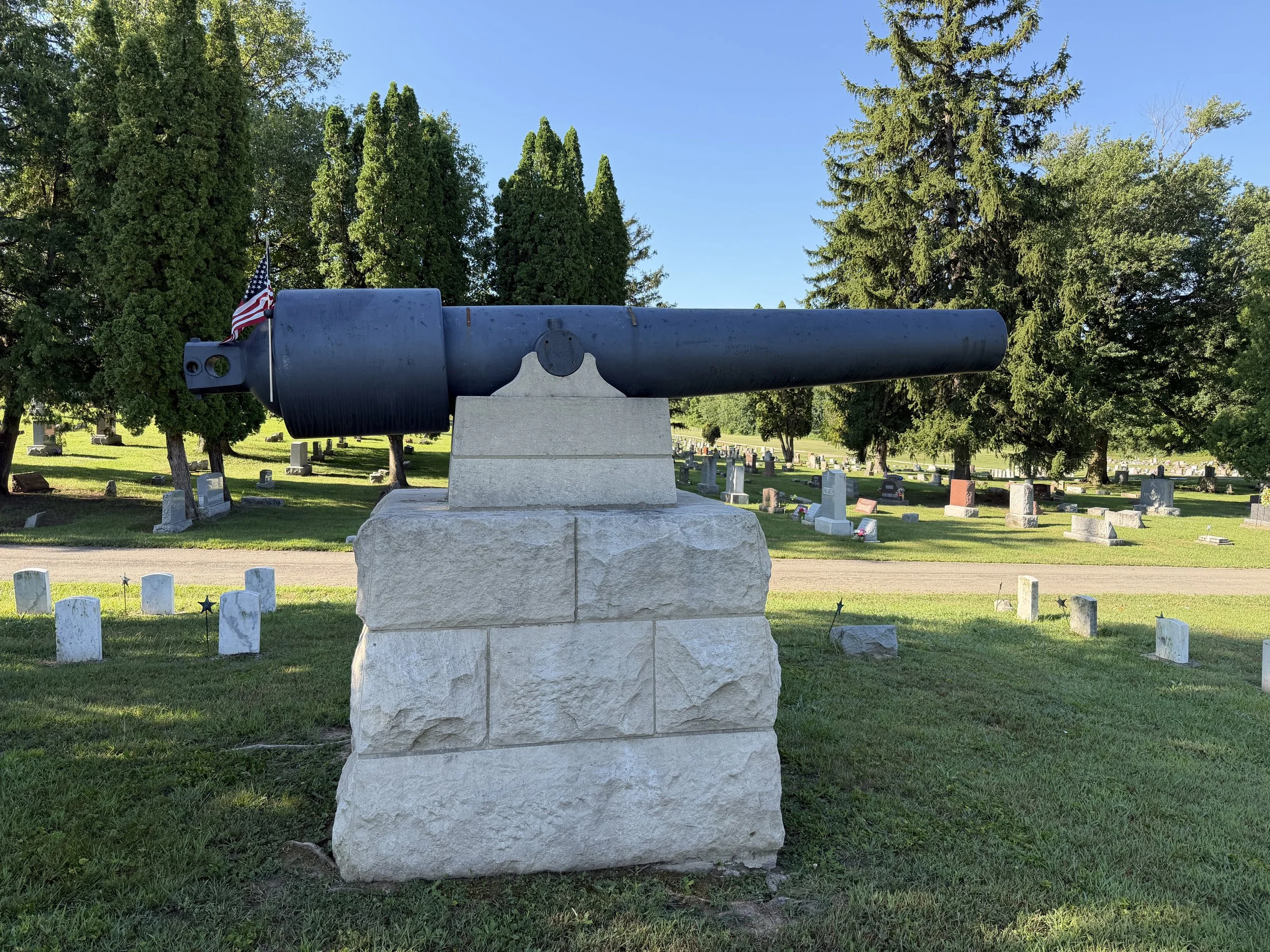
US Navy 100-Pounder Parrott Rifle of USS Mendota in Hartford City, Indiana
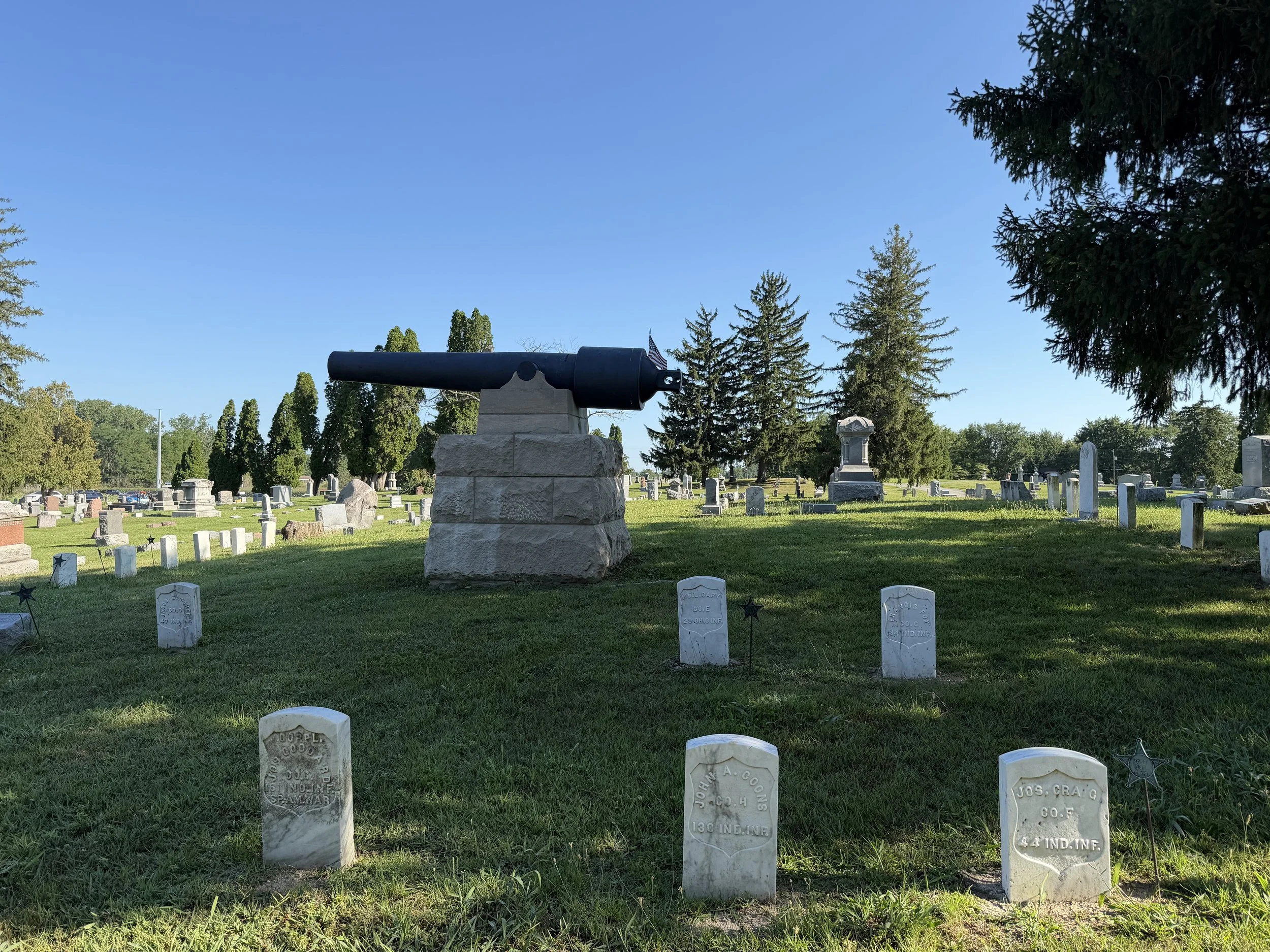
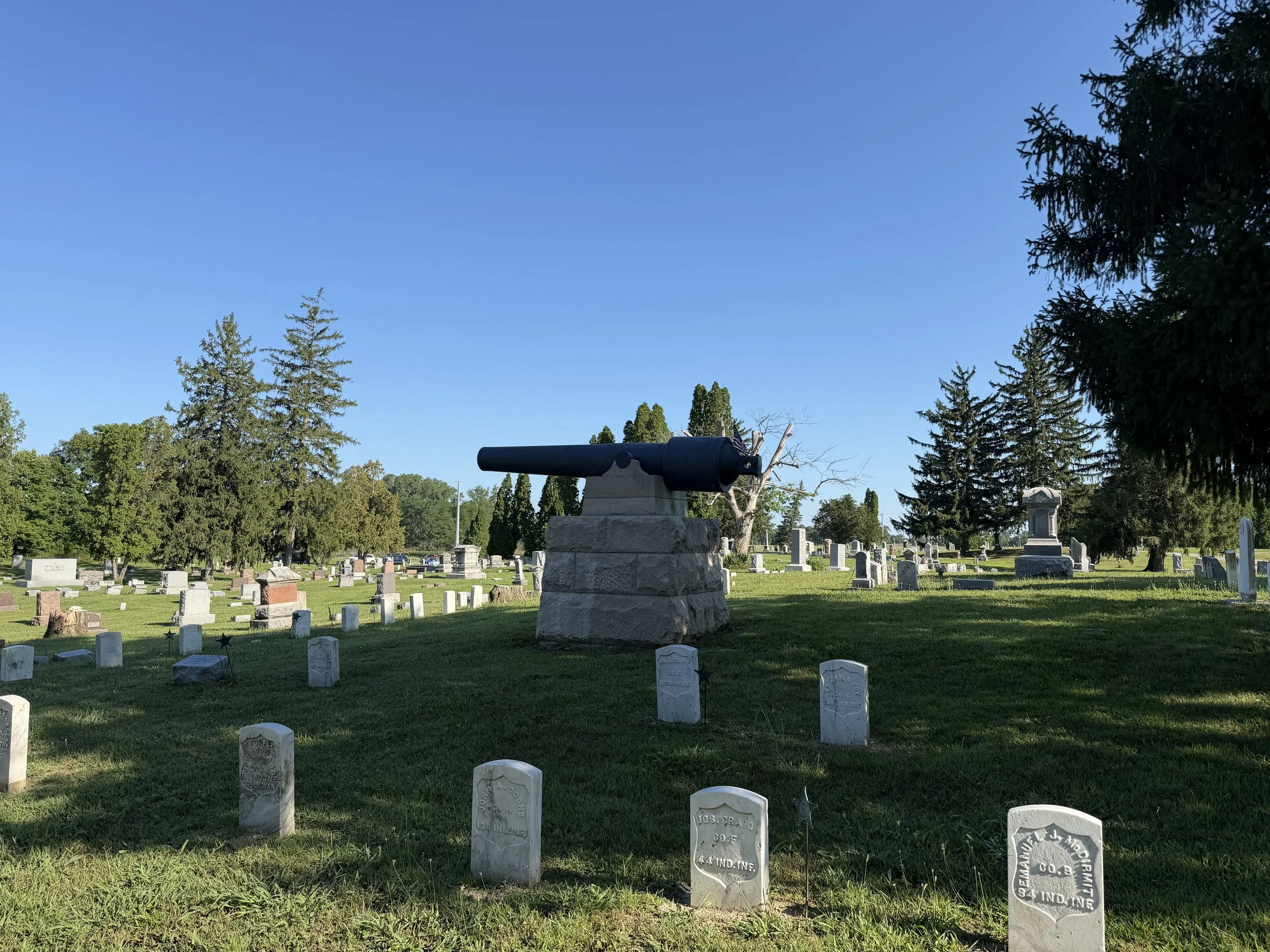
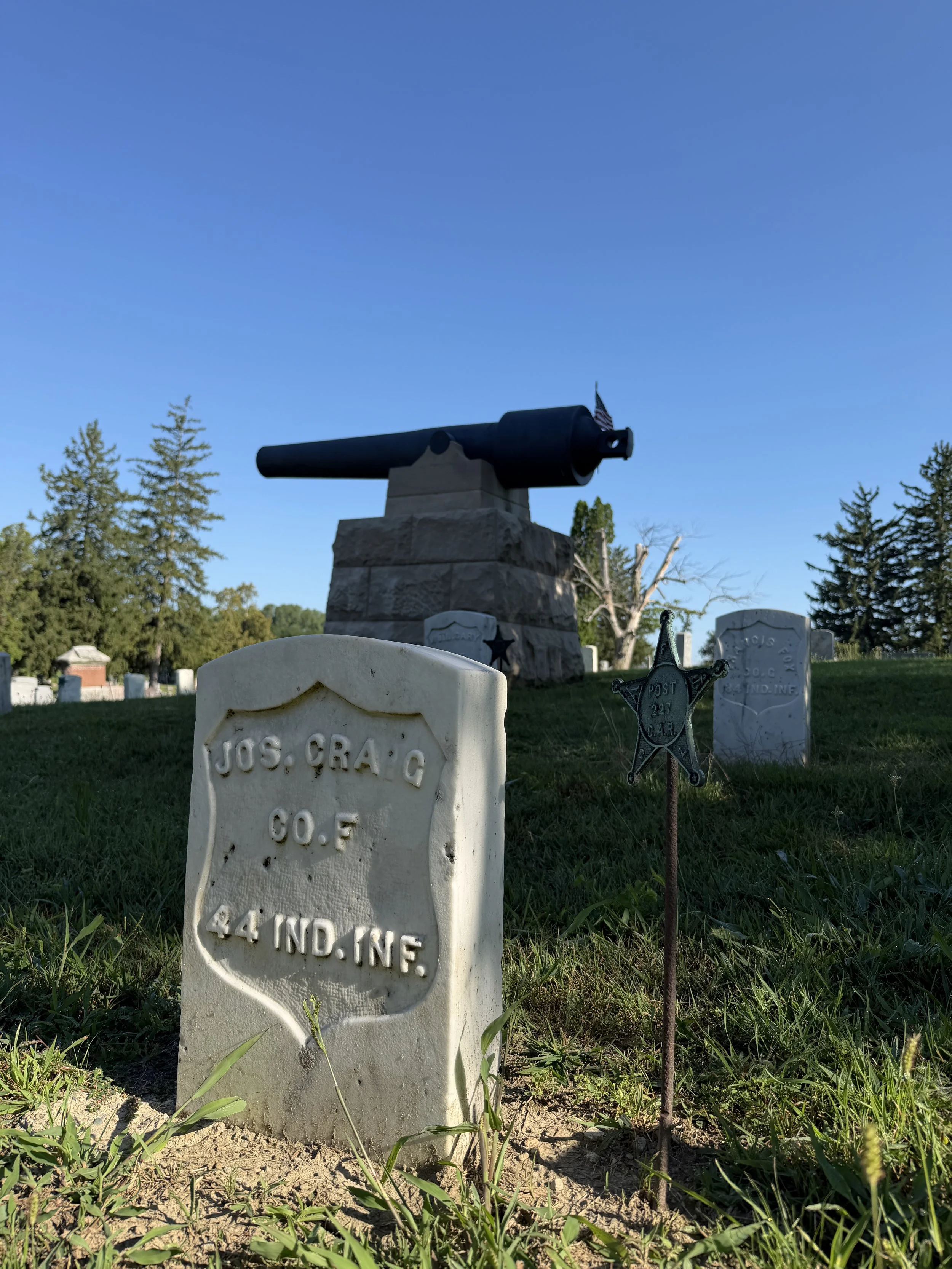
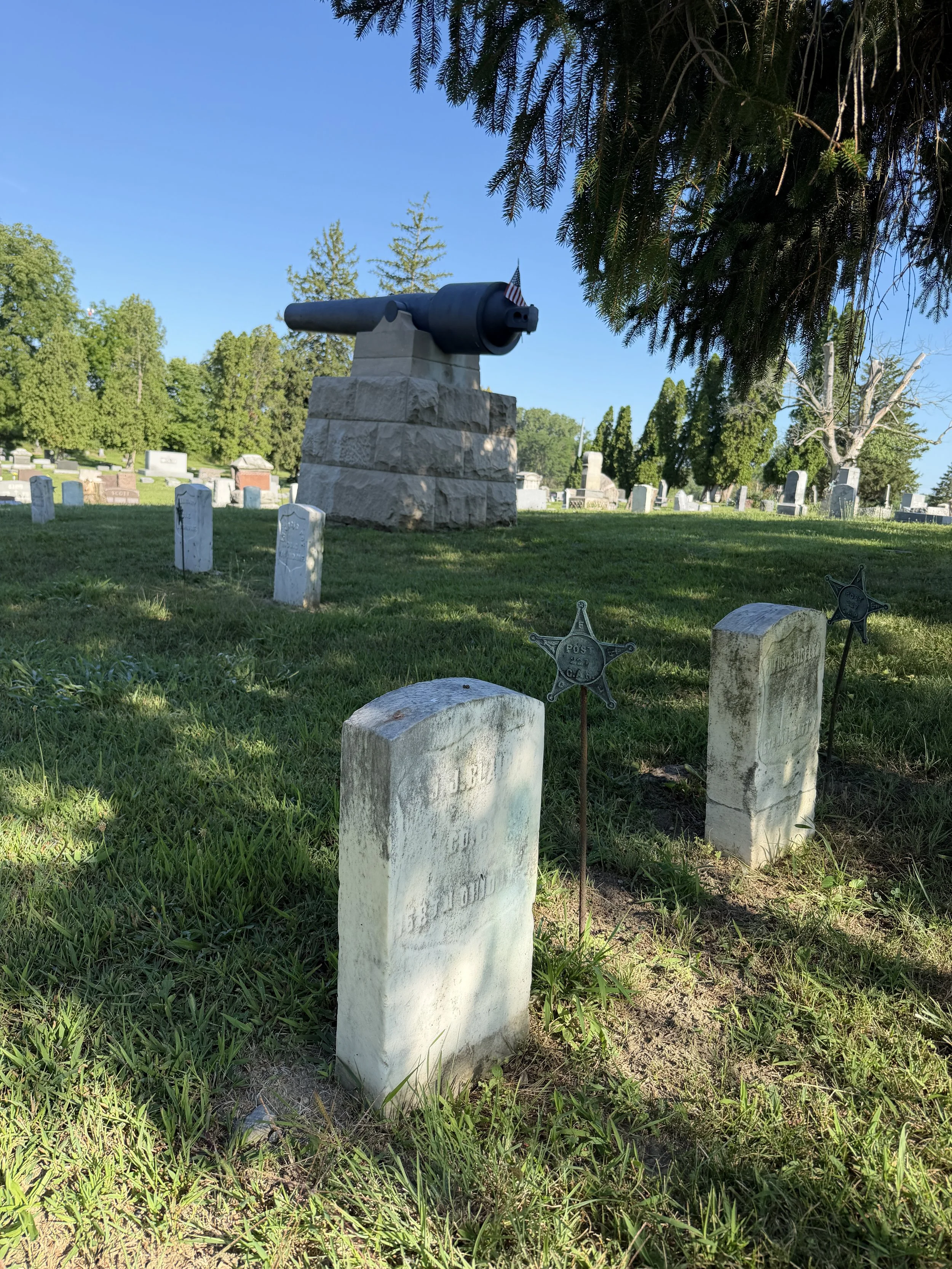
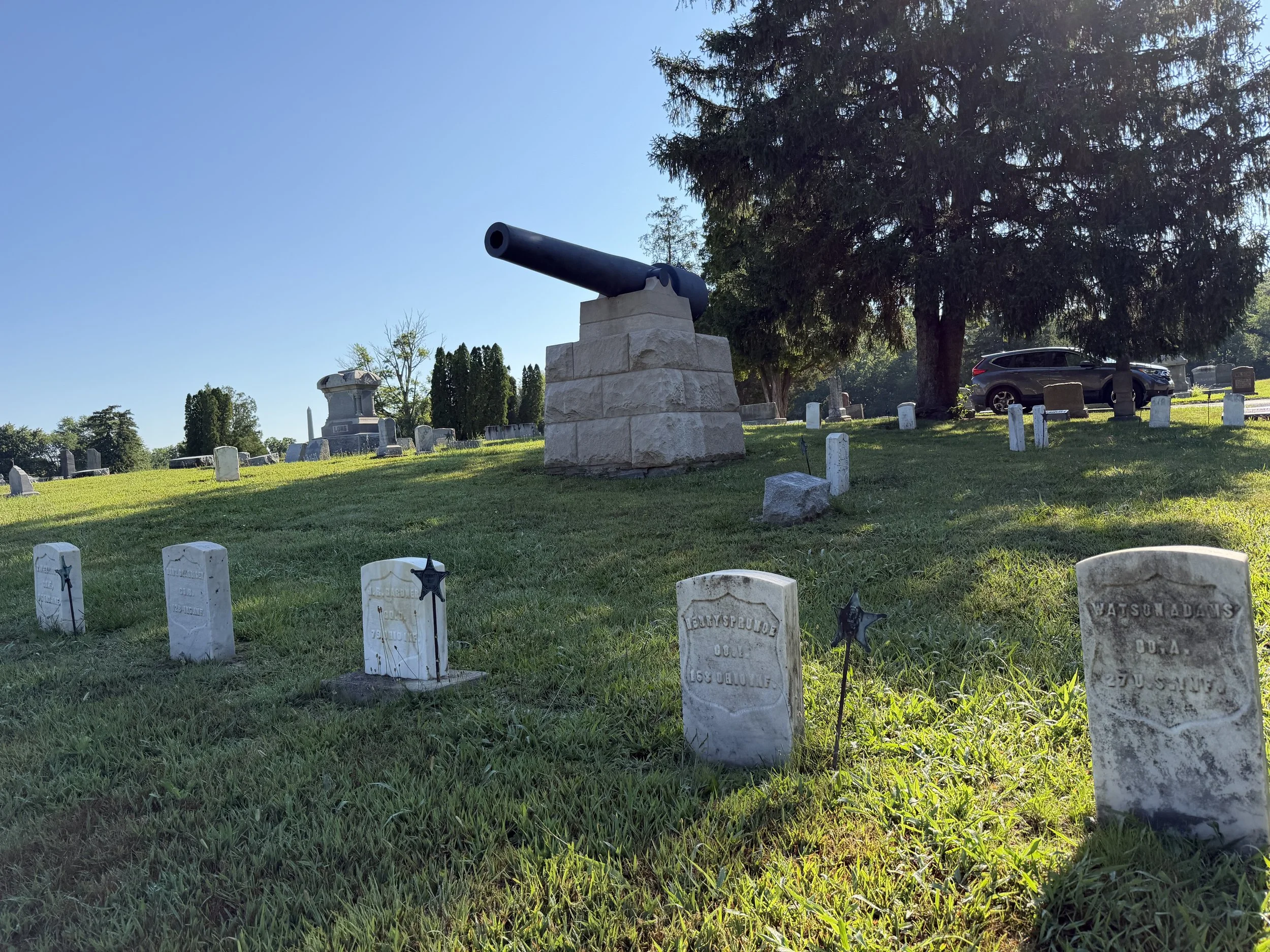
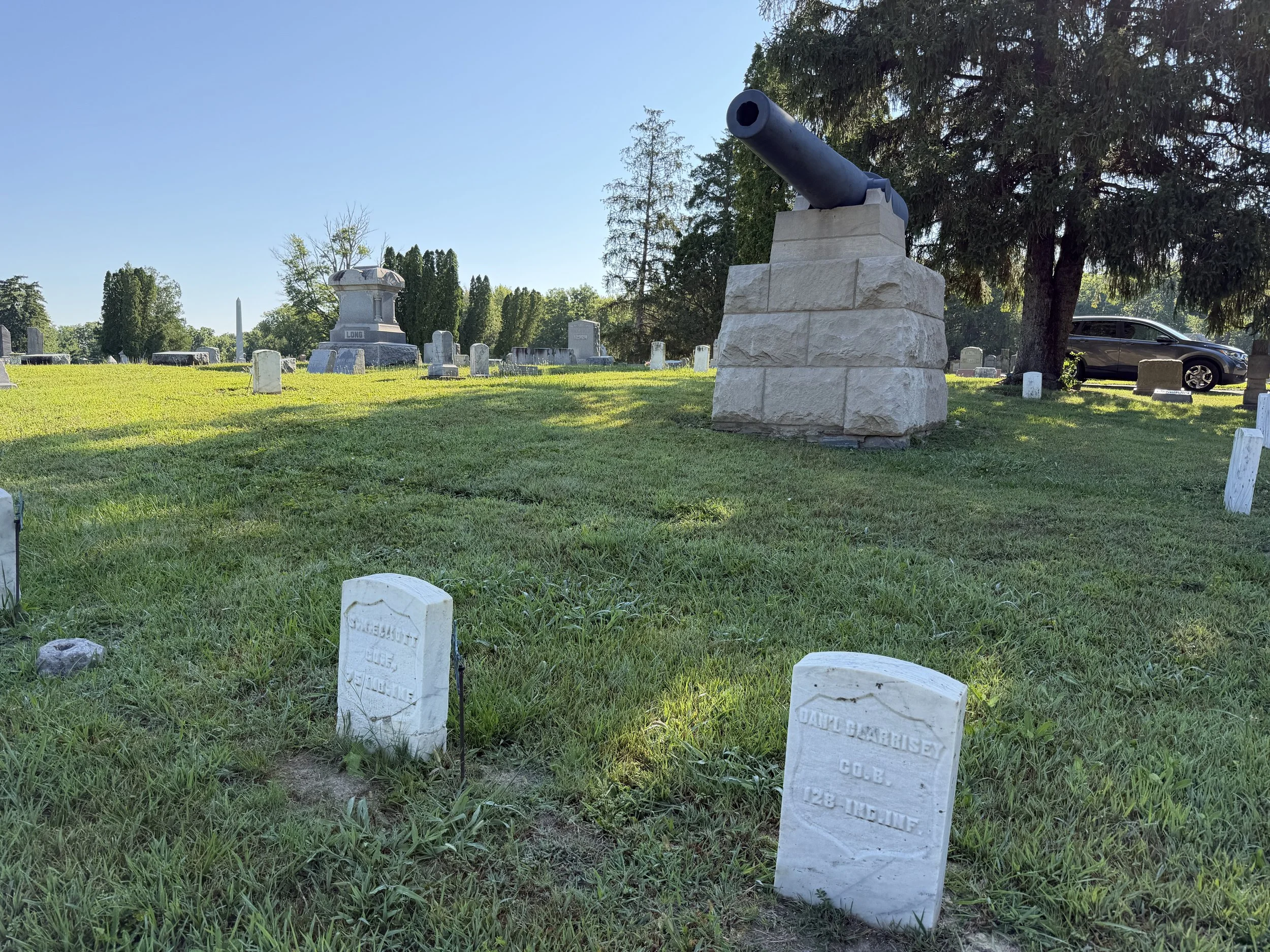
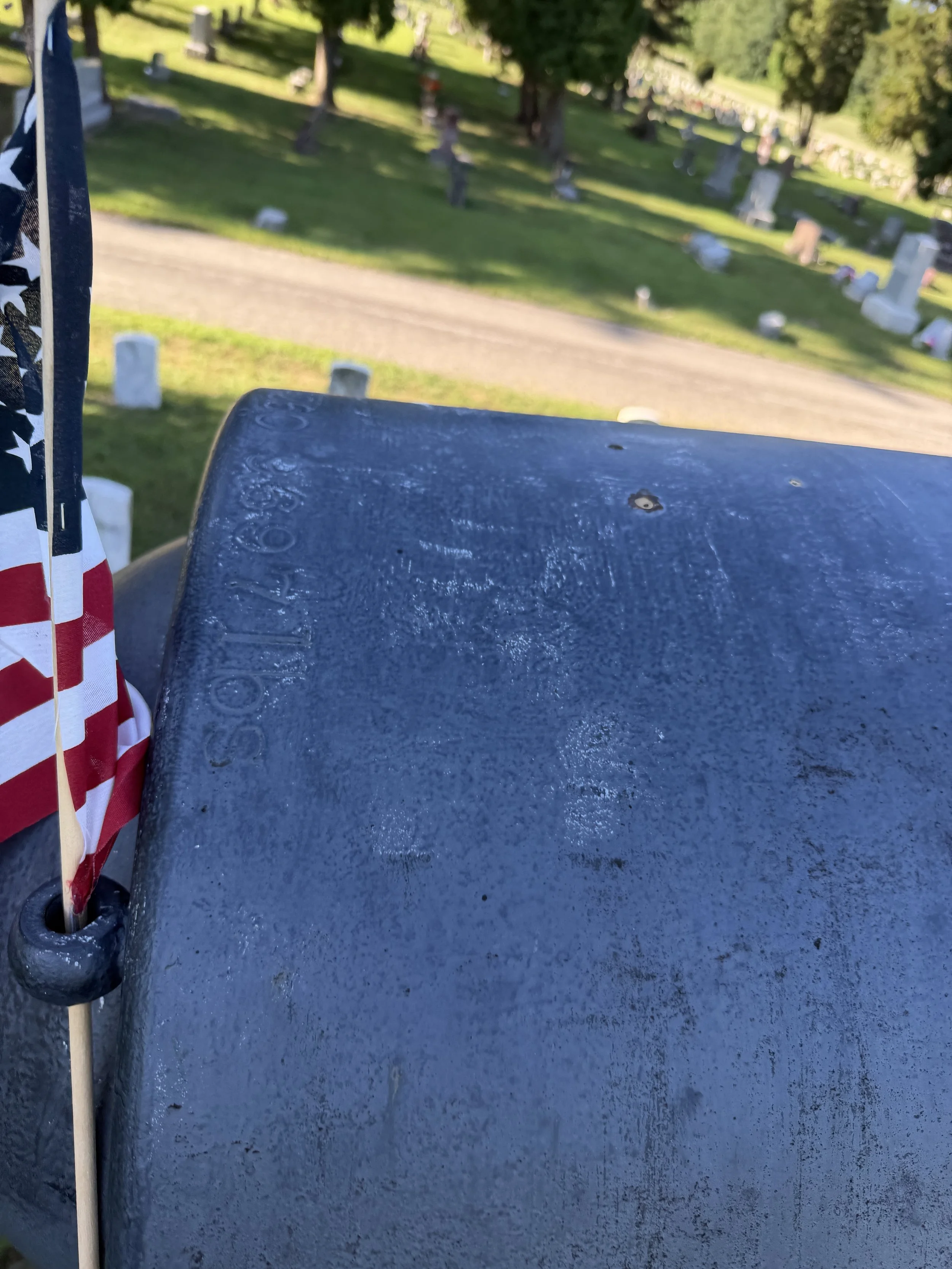
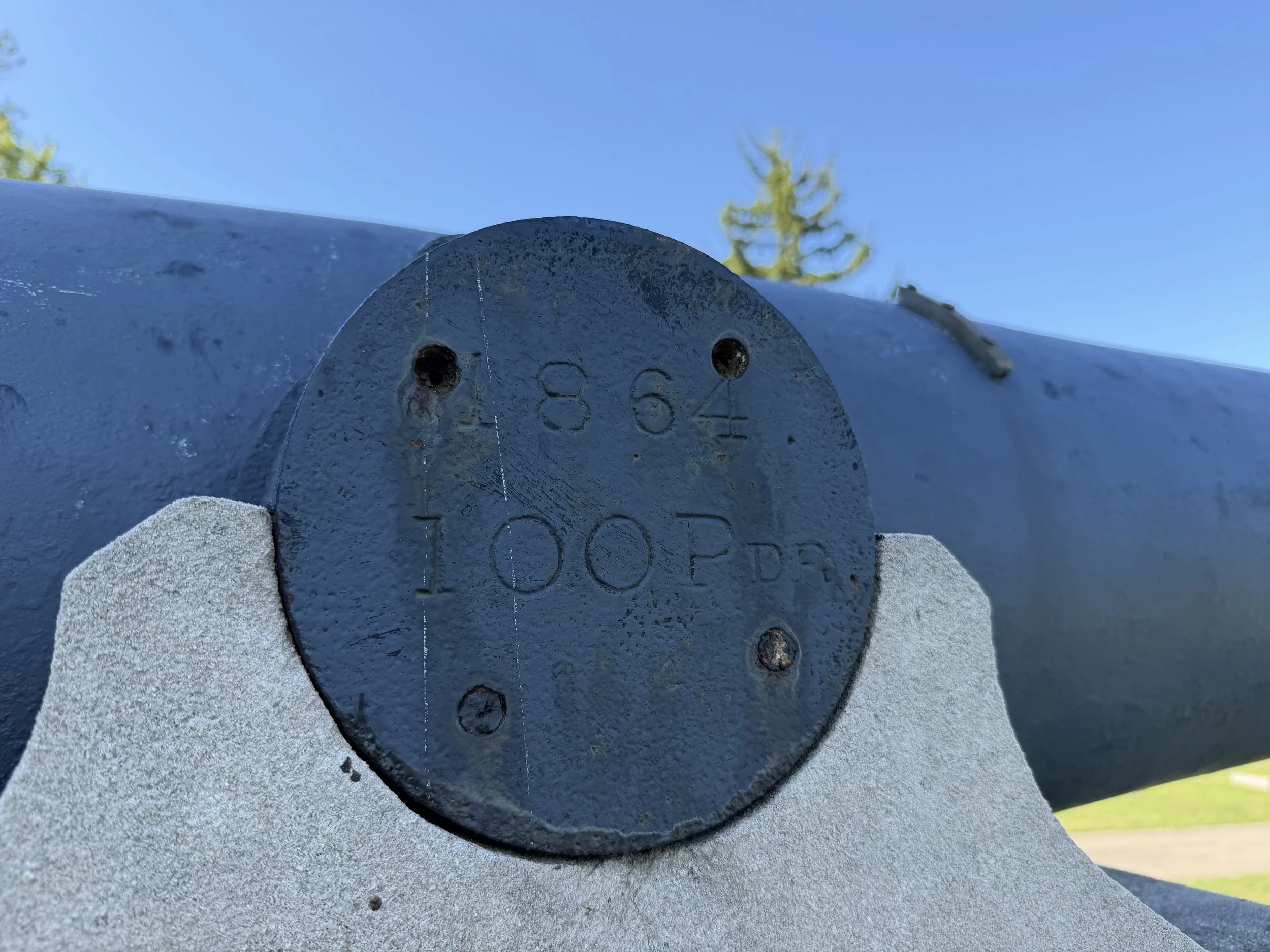
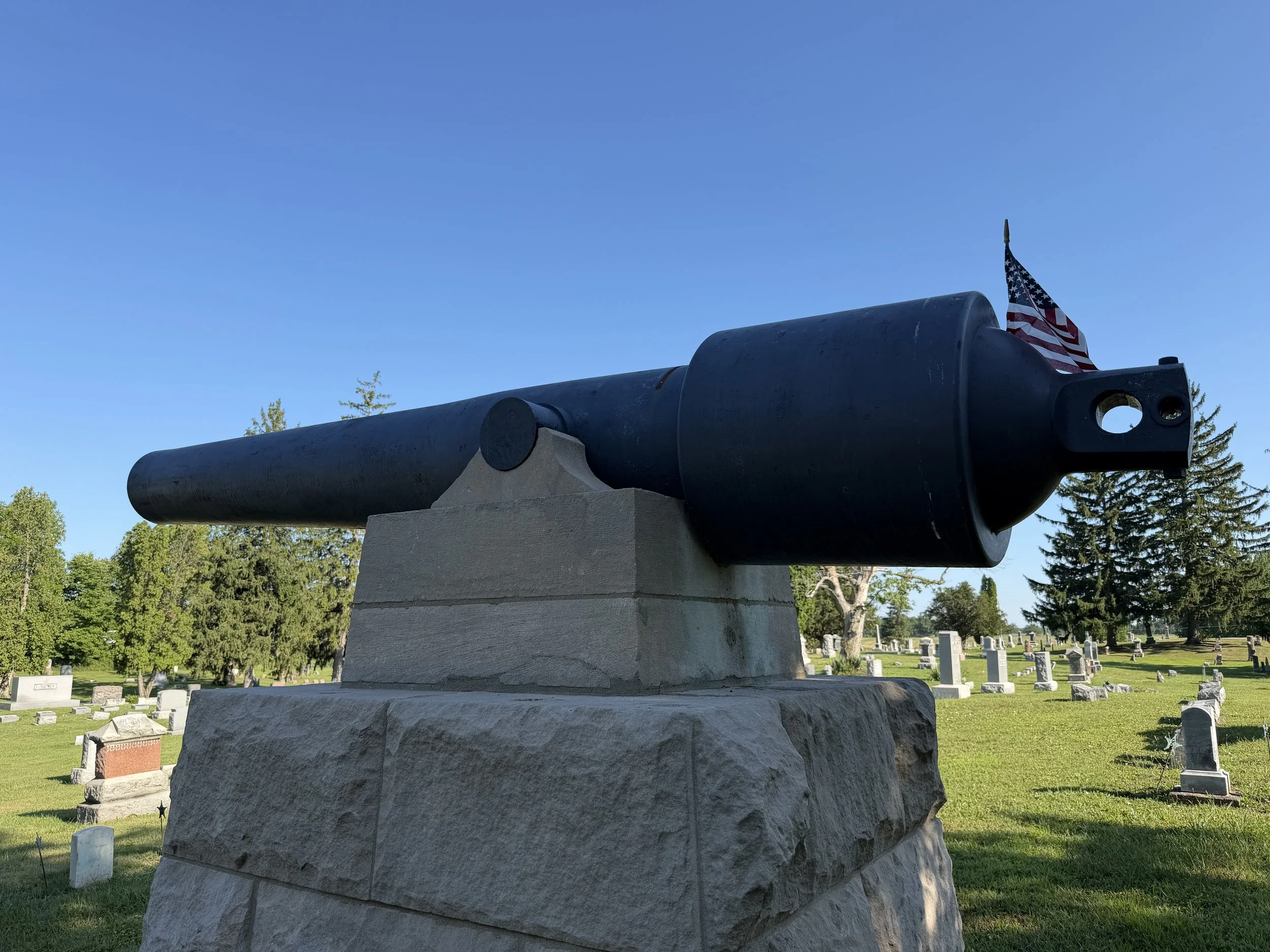
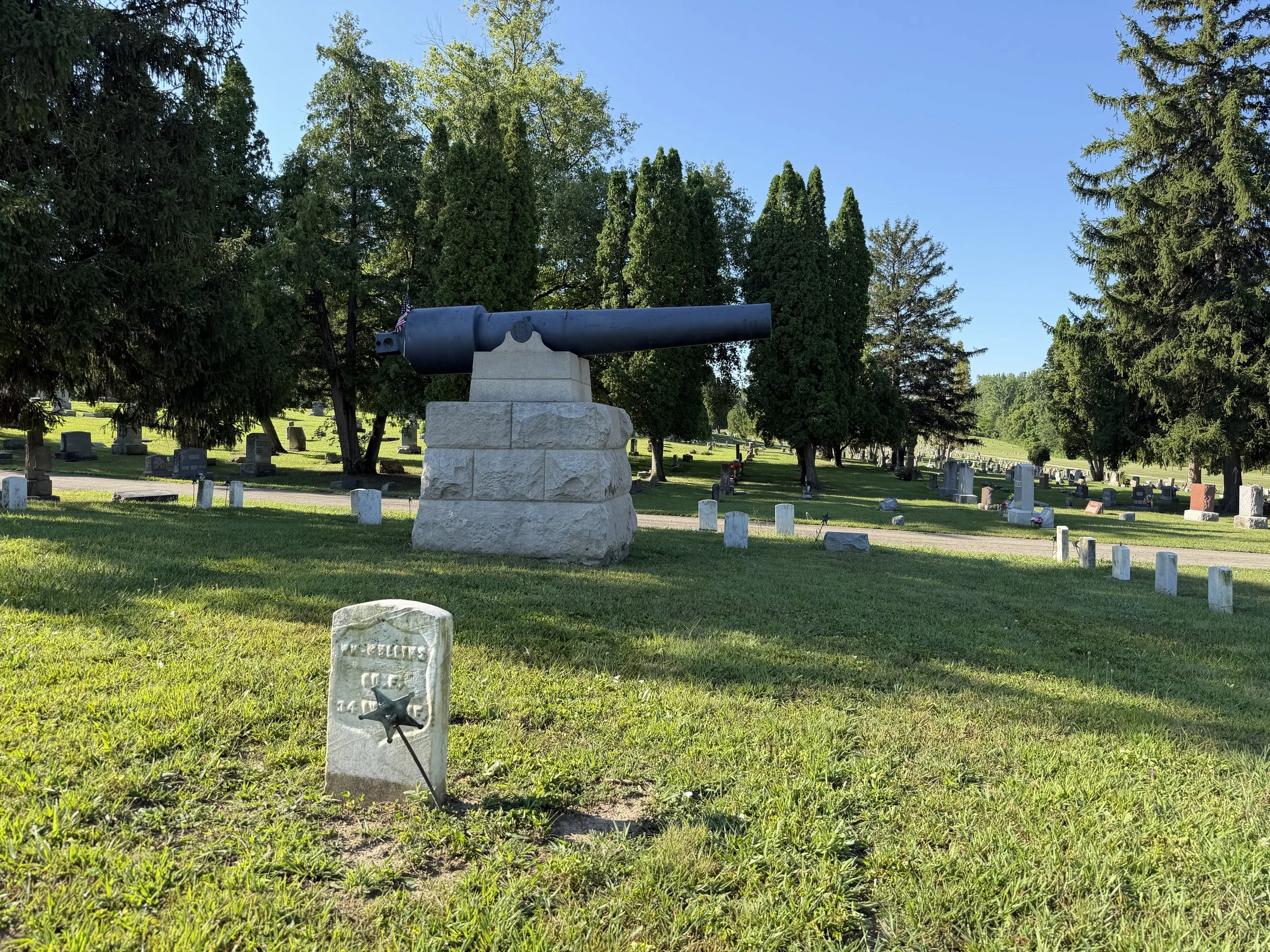
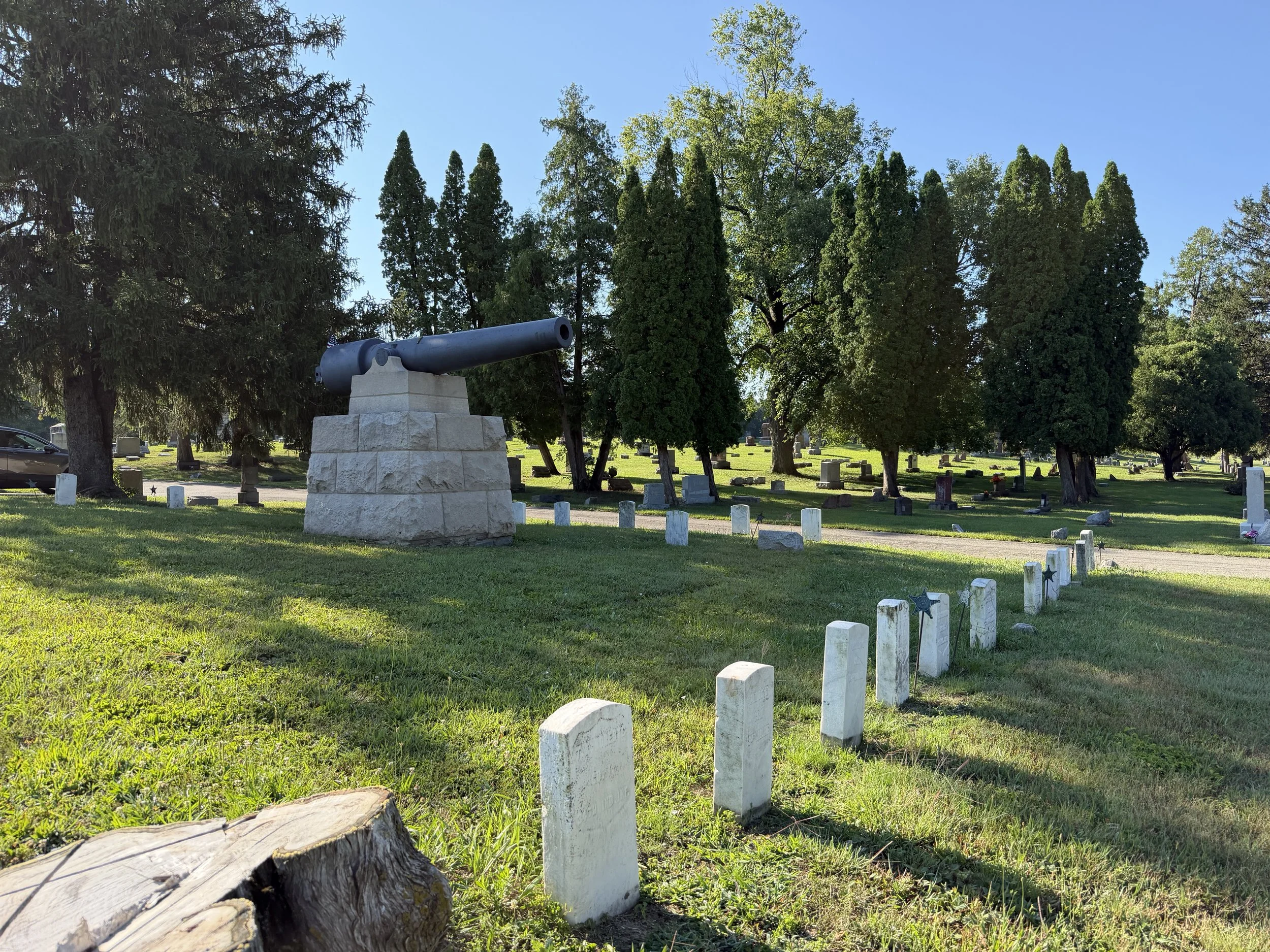
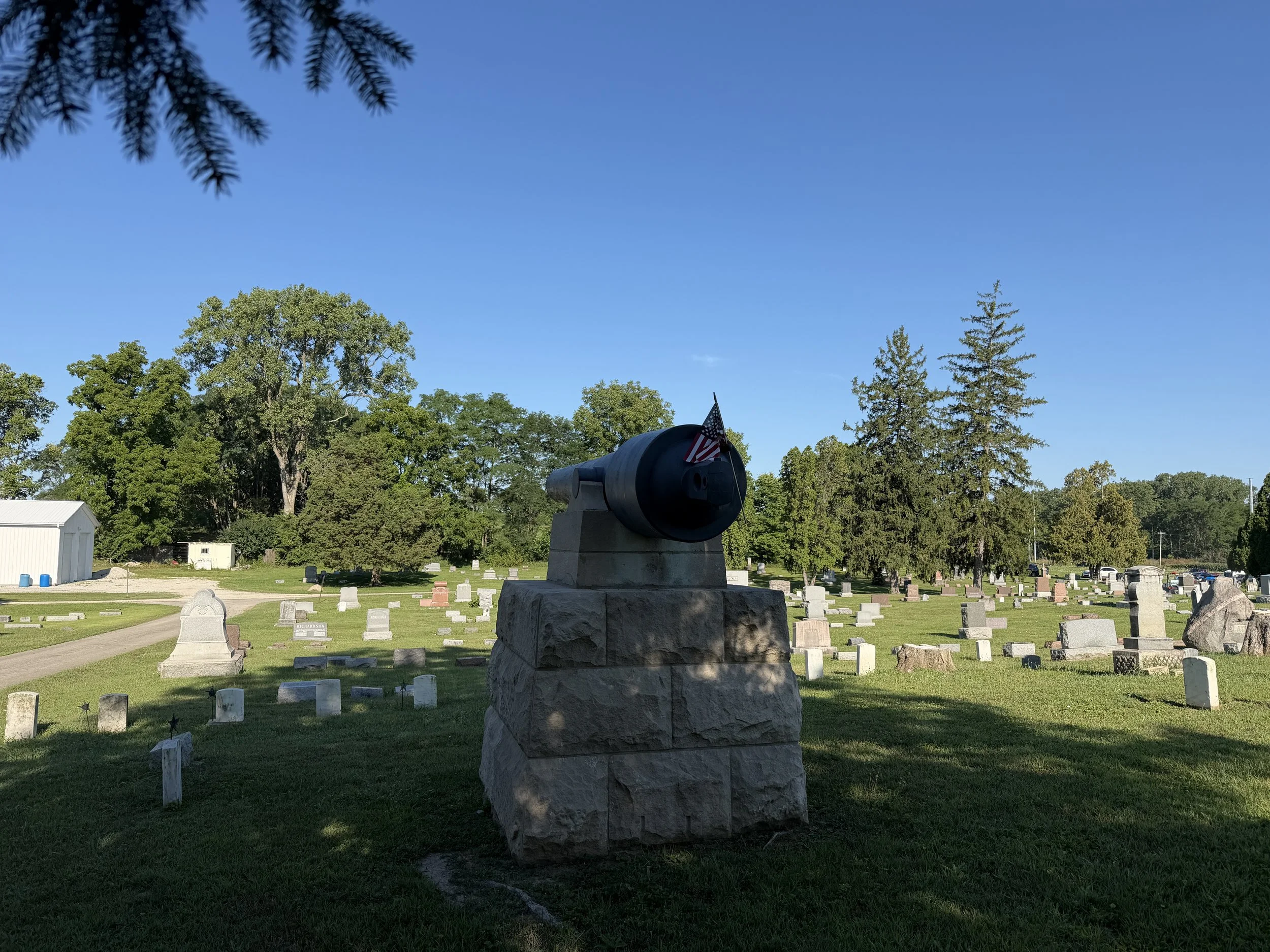
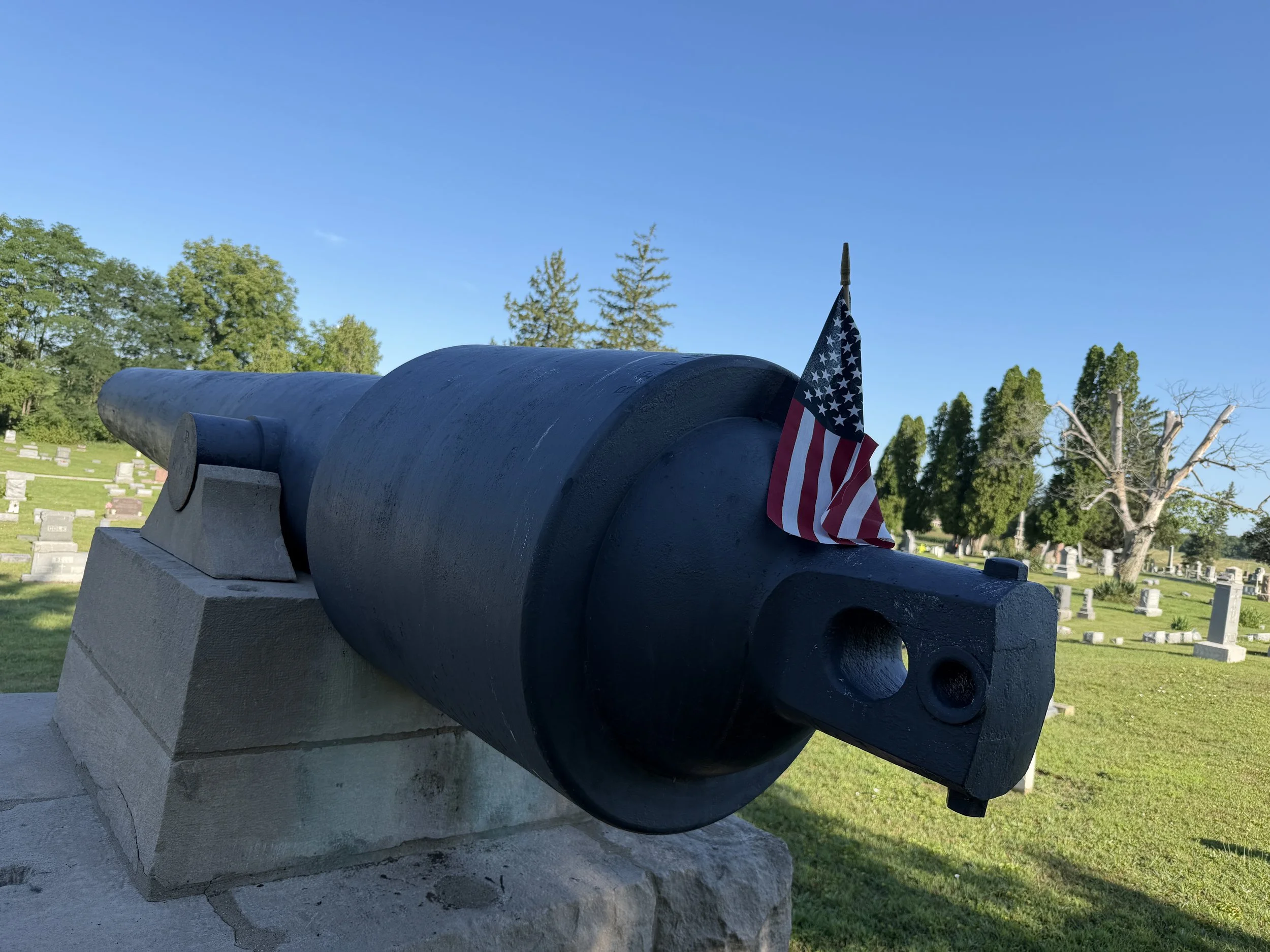
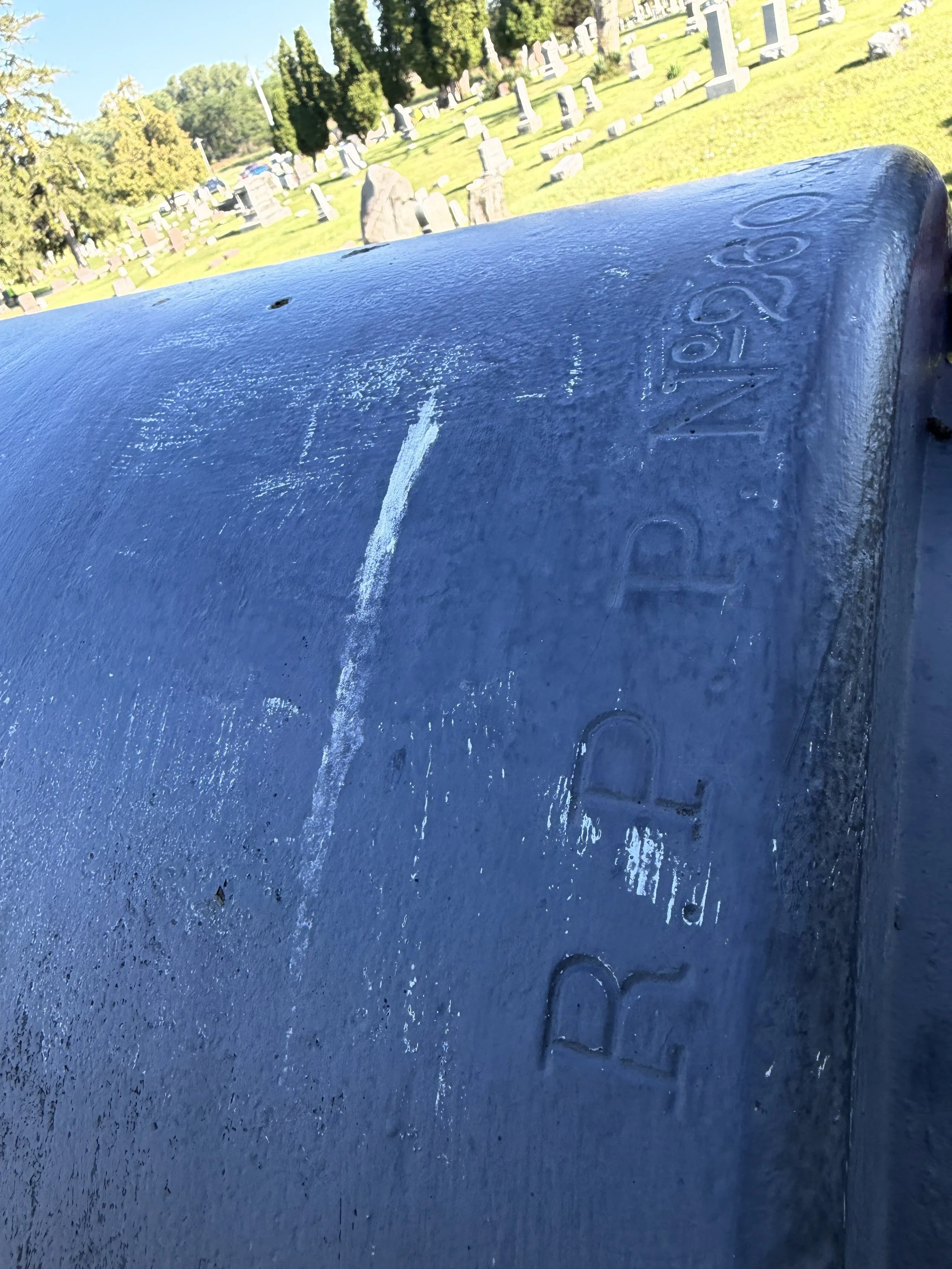
US Navy 100-Pounder Parrott Rifle Number 260 which was carried aboard USS Mendota is displayed at Hartford City, Indiana.
US Navy 100-Pounder Parrott Rifle Number 260 which was carried aboard USS Mendota is displayed at Hartford City, Indiana. It was manufactured at the West Point Foundry in 1864. As manufactured it weighed 9,697 pounds. It is displayed in a cemetery on the east side of town in a section of graves of veterans of the Civil War.
Bureau of Ordnance Records show that it was carried aboard the Sassacus-class gunboat USS Mendota which served on the James River in 1864-1865. USS Mendota is one of the better photographed ships of the American Civil War with several photos taken both on board the ship and from shore of the ship as a whole. (Although a couple of photos frequently labeled as Mendota were actually taken aboard USS Miami.)
Sassacus-class gunboats were typically armed with two 100-Pounder Parrott rifles: one mounted on each end as a pivot gun able to fire on either broadside (though not directly ahead or astern). The ships also generally carried four 9-Inch Dahlgrens on broadside mountings: two per side. A small number of boat howitzers were also carried - wartime photos often show them mounted on top of the paddle boxes where.
On several occasions, Mendota used her battery to bombard Confederate positions. On July 29th, 1864, Captain Melancton Smith of USS Onodaga reported, “SIR: I have the honor to report that the Mendota and Agawam were engaged all day on the 28th shelling the enemy across Four Mile Creek, where they had been very busy throwing up works and maneuvering large bodies of men, supposed to be nearly all of Longstreet and Hill's corps.
The enemy made a demonstration on General Foster's front and the Agawam opened fire, but with what effect it has not been ascertained. Commander Nichols, of the Mendota, reports that he fired at intervals of seventeen minutes and that General Hancock informed him that his shelling was very effective and of great assistance to his operations. He had the misfortune, however, to disable his after 100-pounder pivot, the rifles being the only guns that would reach the position occupied by the enemy. The gun was fractured from the forward edge of the reinforce band on the breech to a point forward of the center of the trunnion, but from. the report of Commander Nichols, forwarded this day to the Bureau of Ordnance, the gun was properly served and every ordnance requirement complied with.” (Official Records - Navies 1.10.319.)
This action shows both the advantage of the Parrott Rifle - its range and accuracy compared to the 9-inch Dahlgrens it frequently served alongside - and its great flaw: unreliability. In this instance, the fracture seems to have occurred without causing casualties.
USS Mendota on the James River
Crewmembers of Mendota pose around one of her 100-Pounder Parrott Rifles.
Crew drill at one of the 100-Pounder Parrott Rifles aboard USS Mendota
100-Pounder Parrott Rifle aboard USS Mendota: note the adjustable rear sight at the breech and the blade sight mounted over the trunnion.
Blackford County Courthouse in Hartford City, Indiana