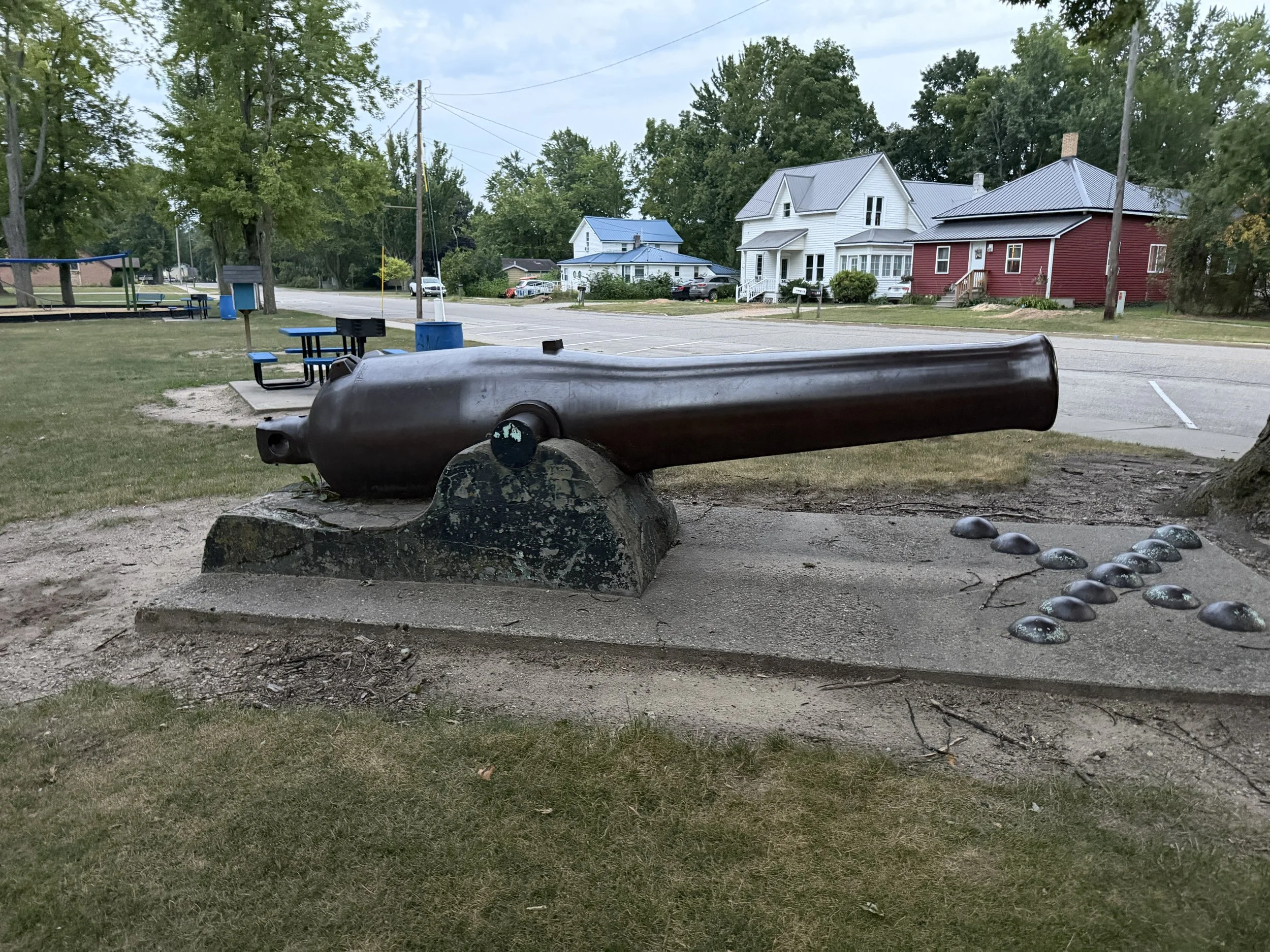
US Navy 9-Inch Dahlgren in Coleman, Michigan
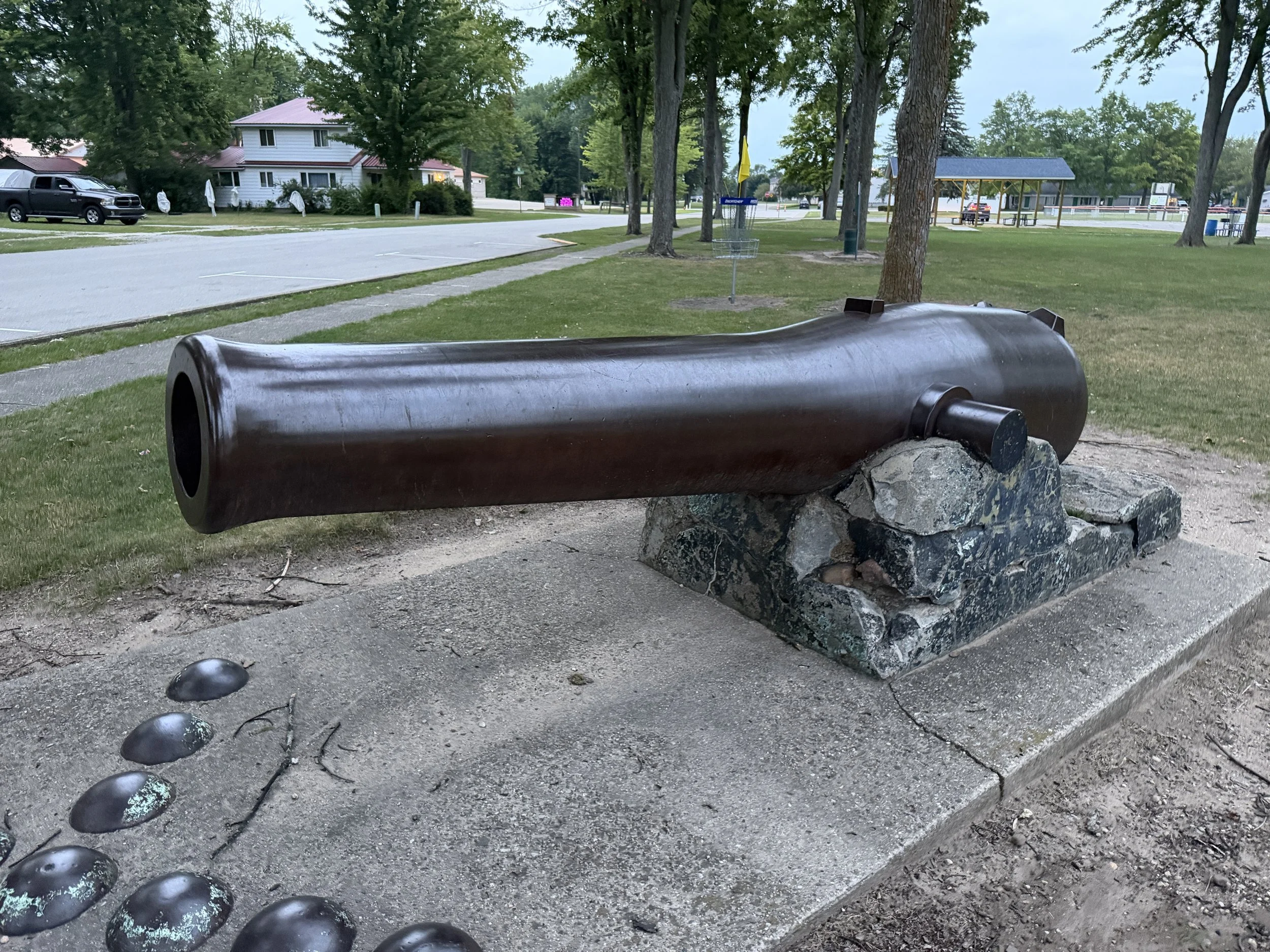
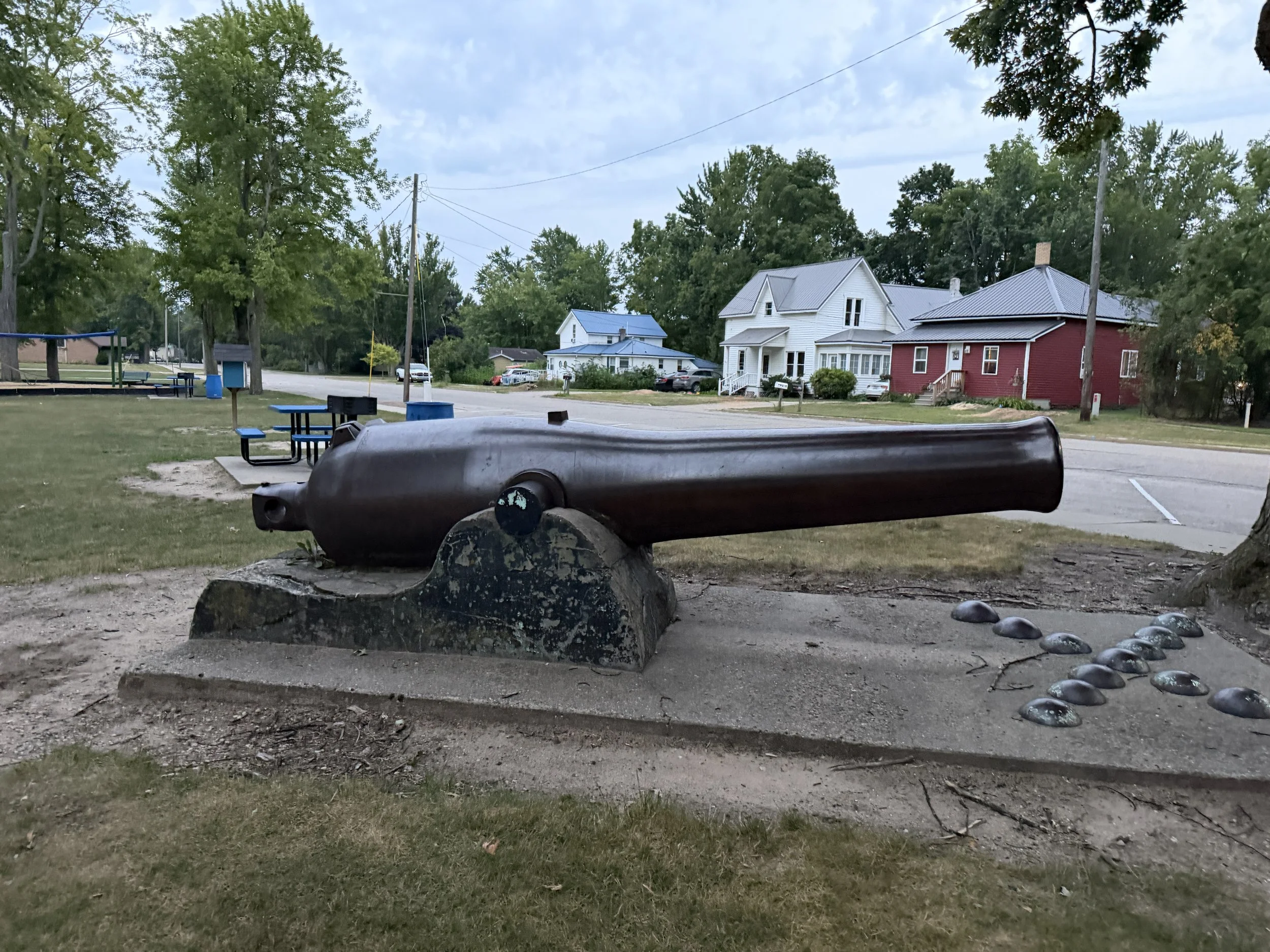
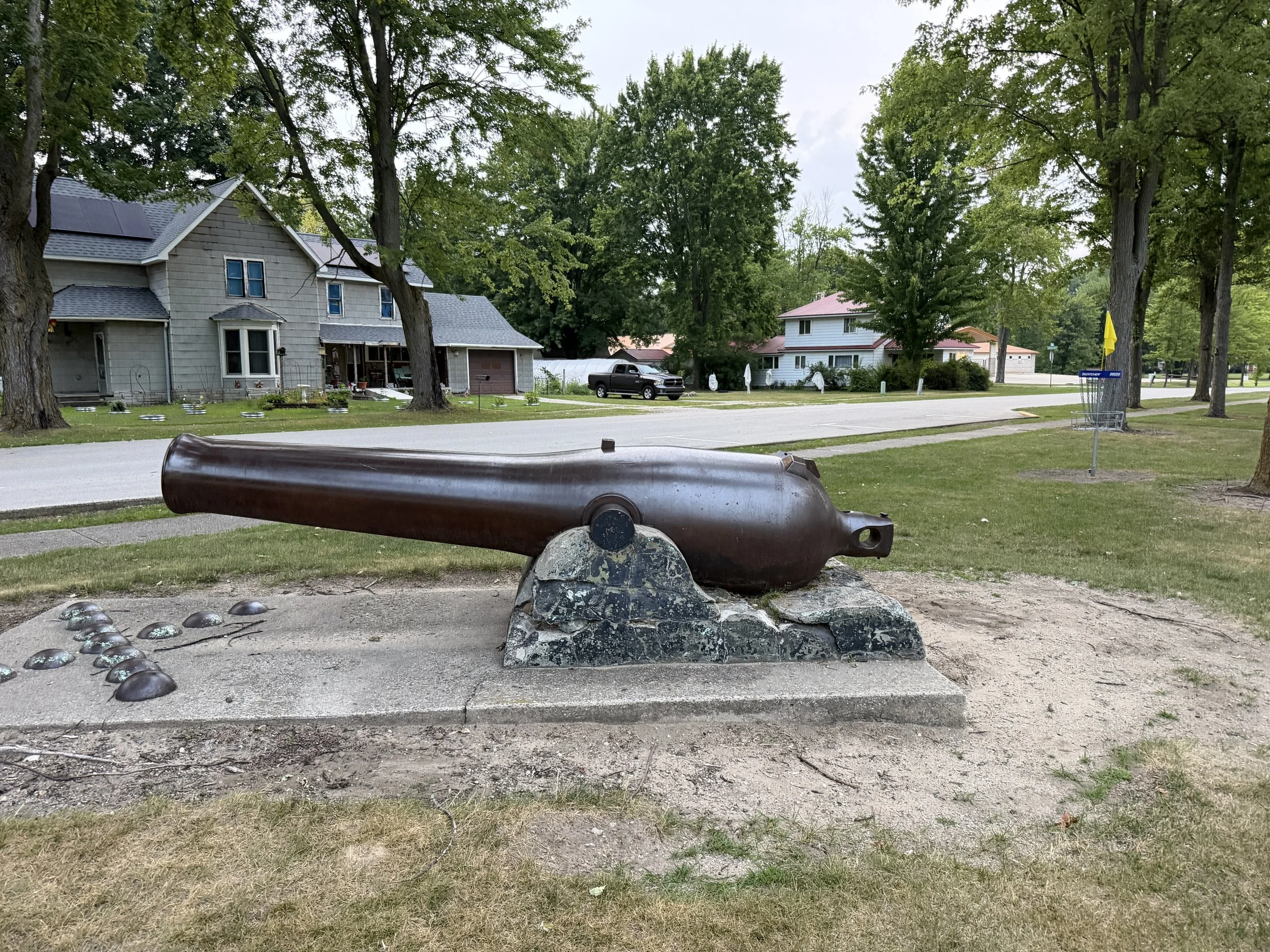
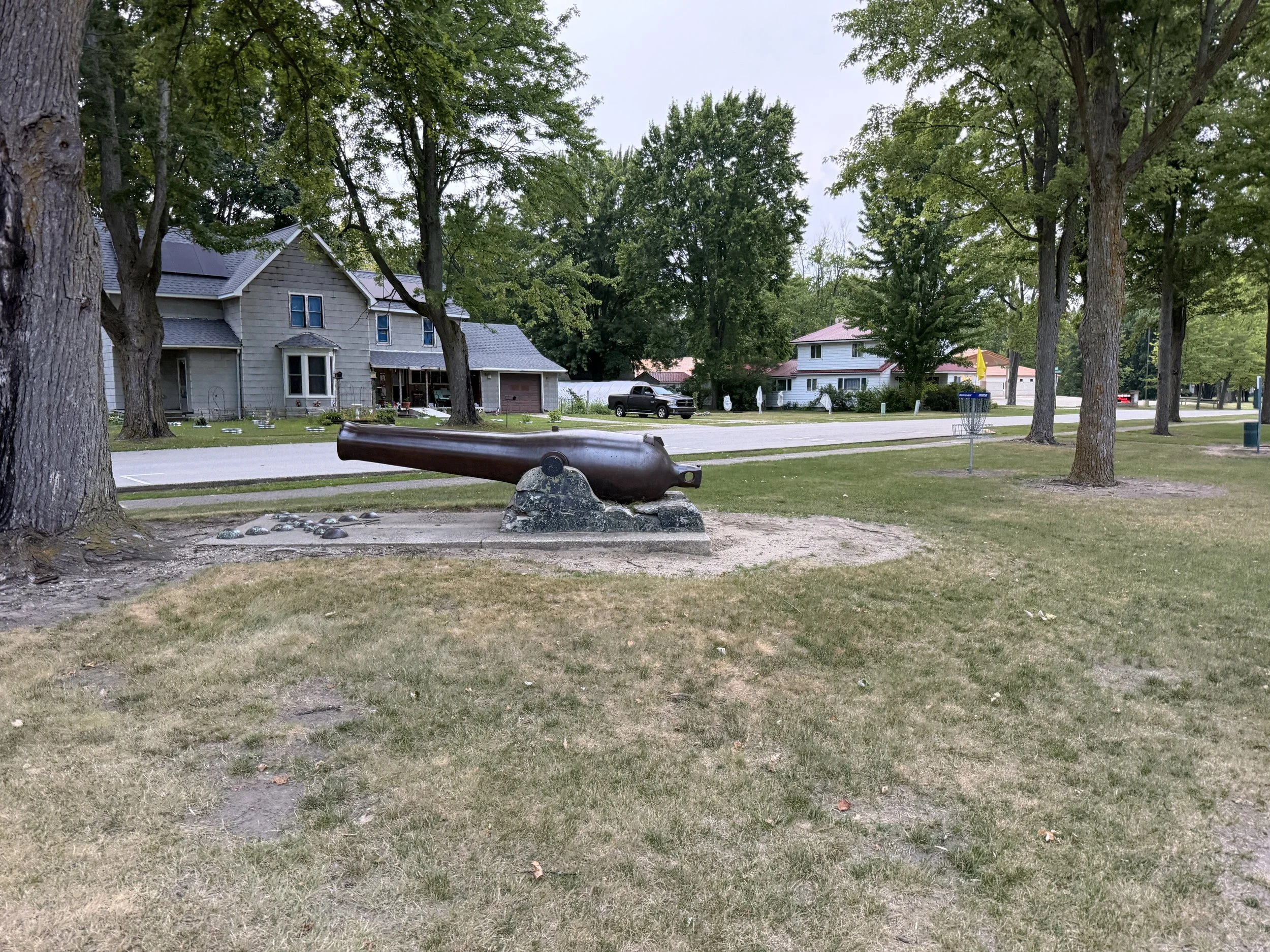
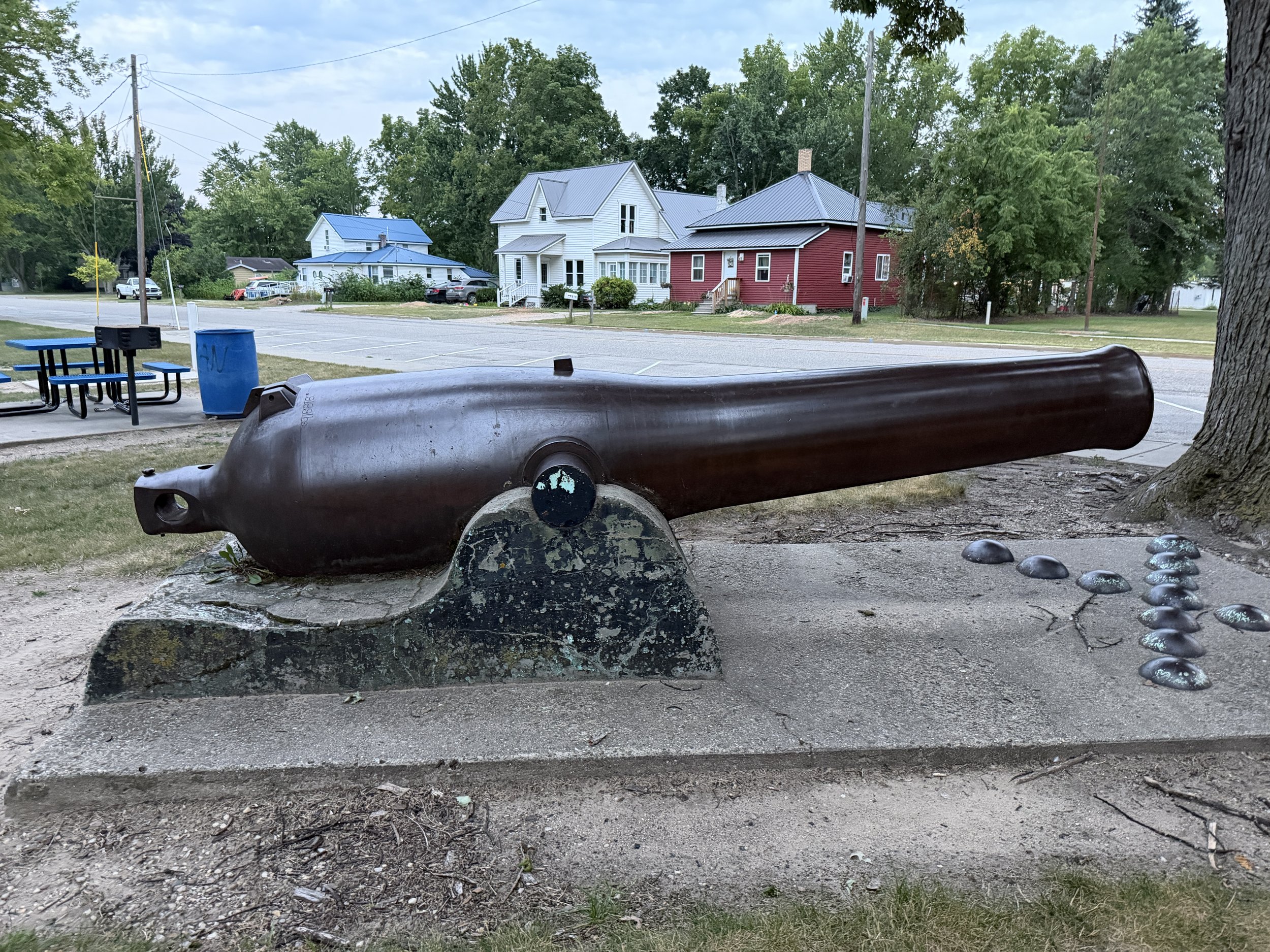
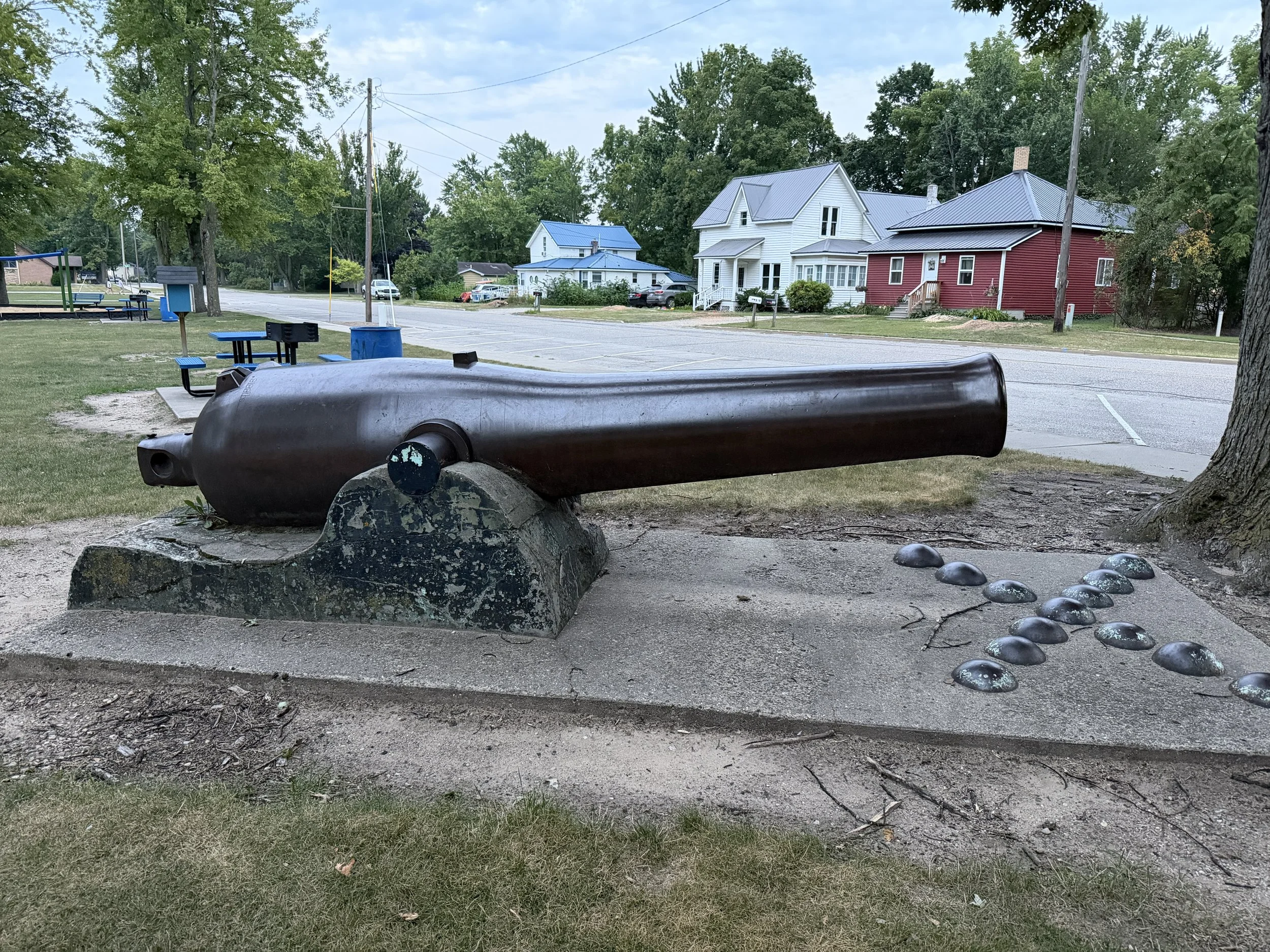
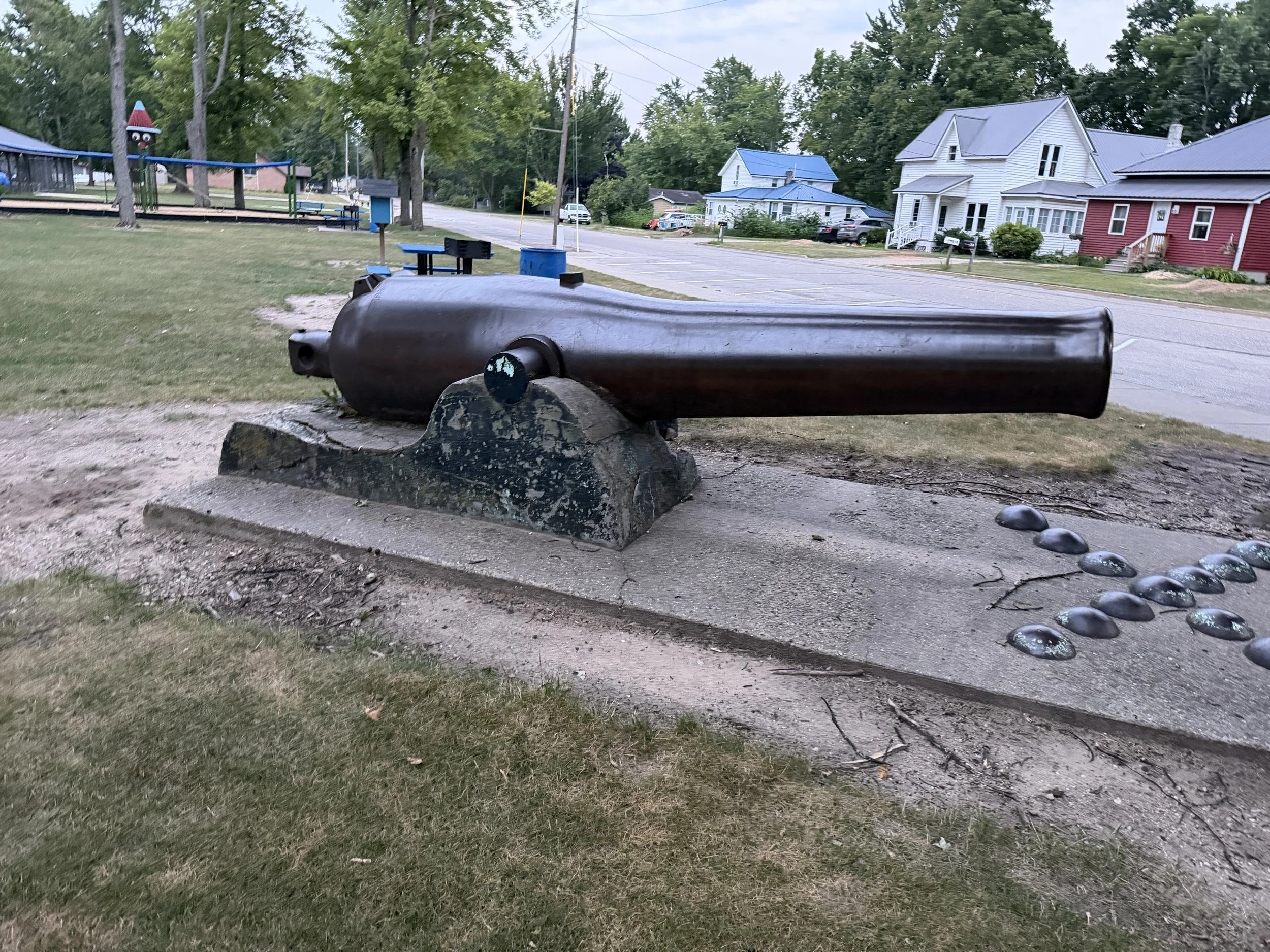
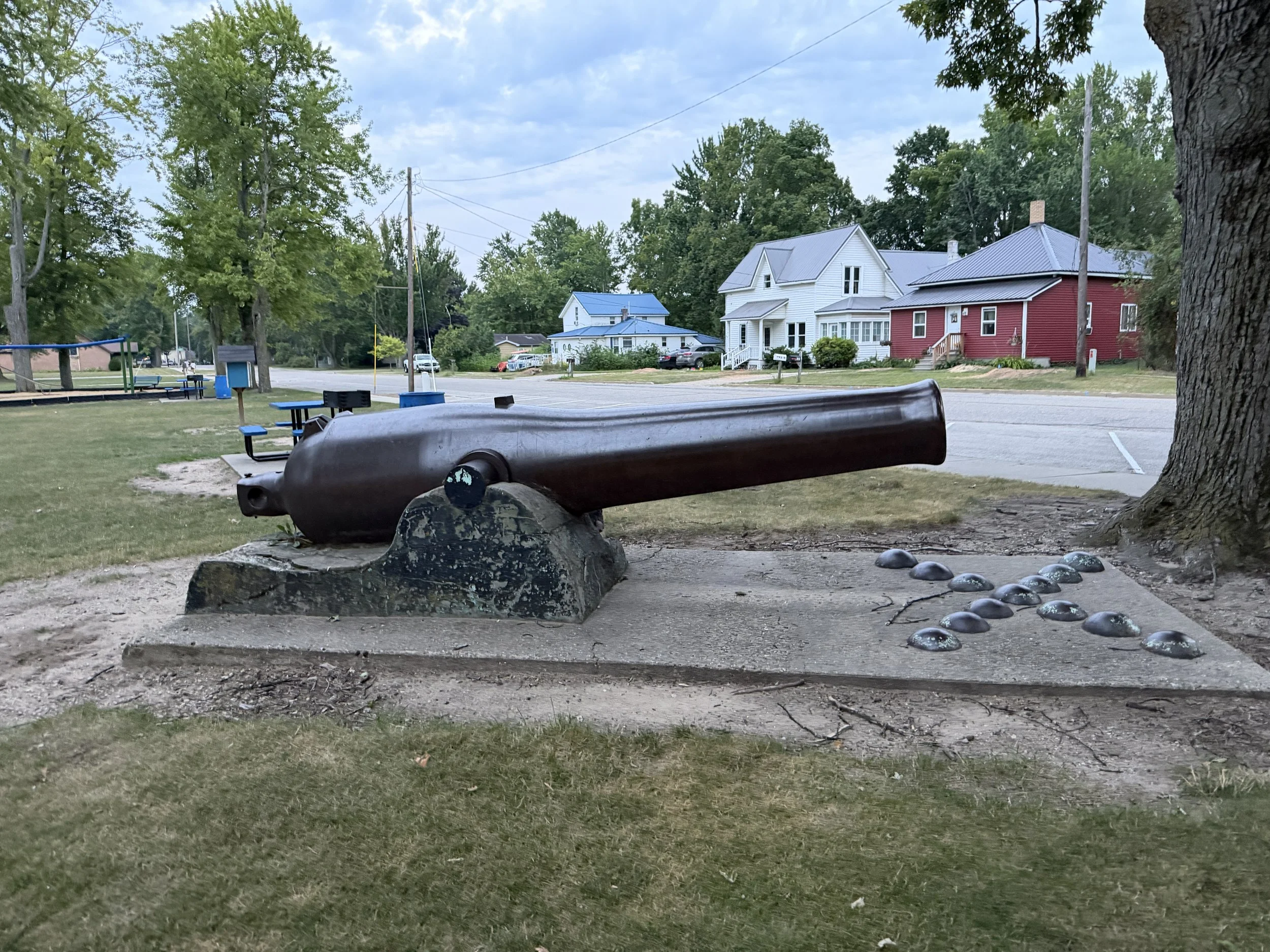
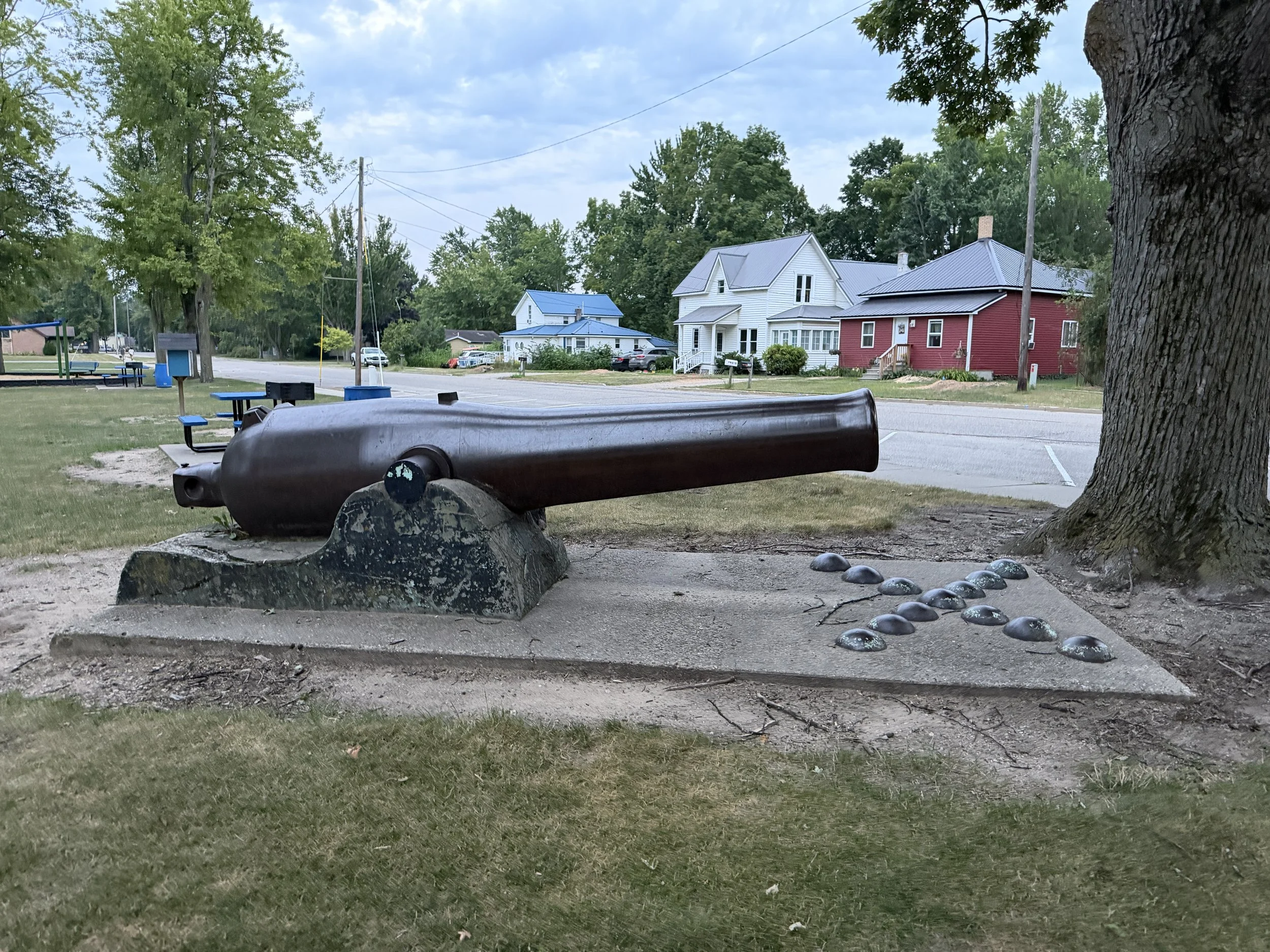
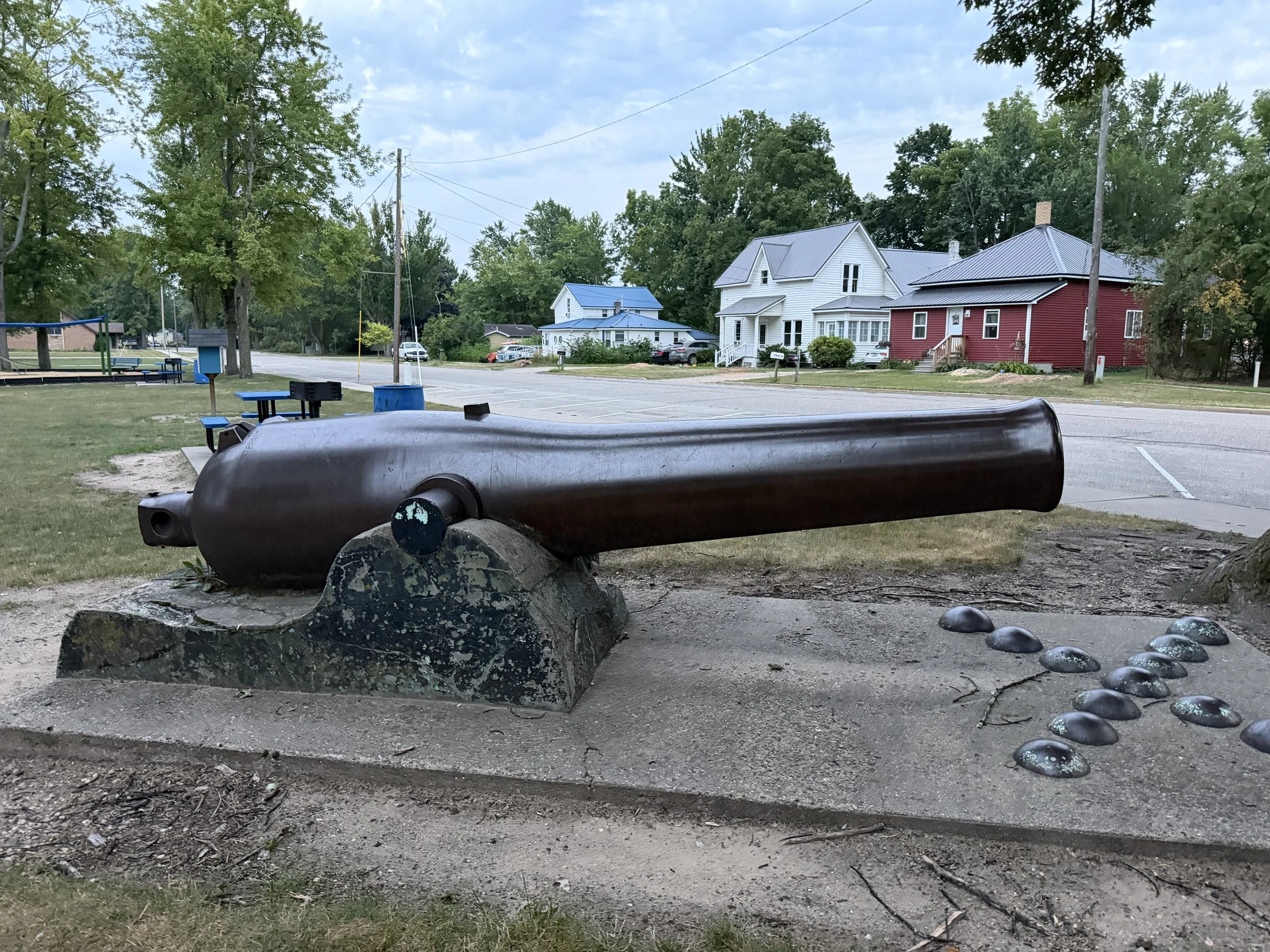
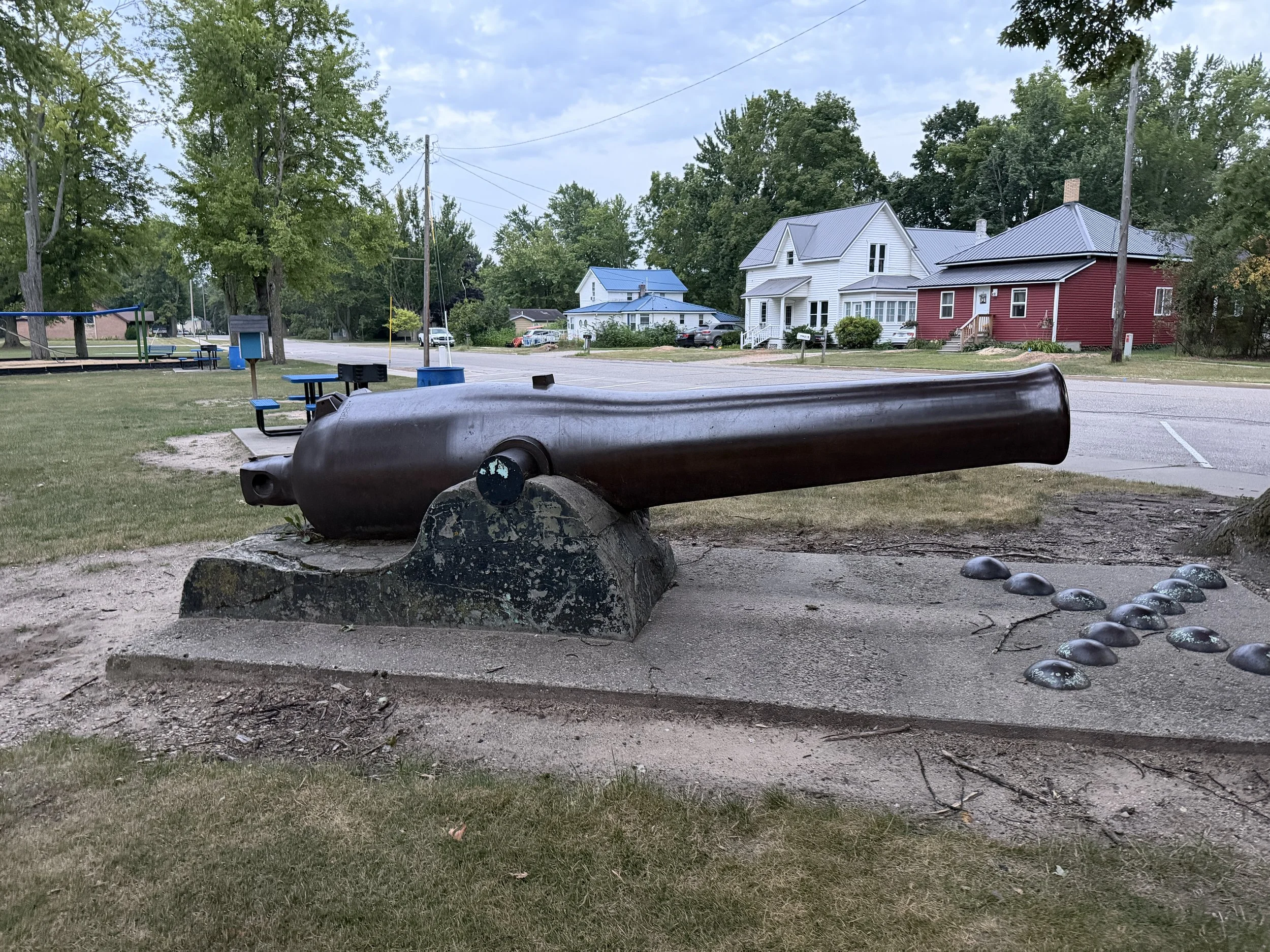
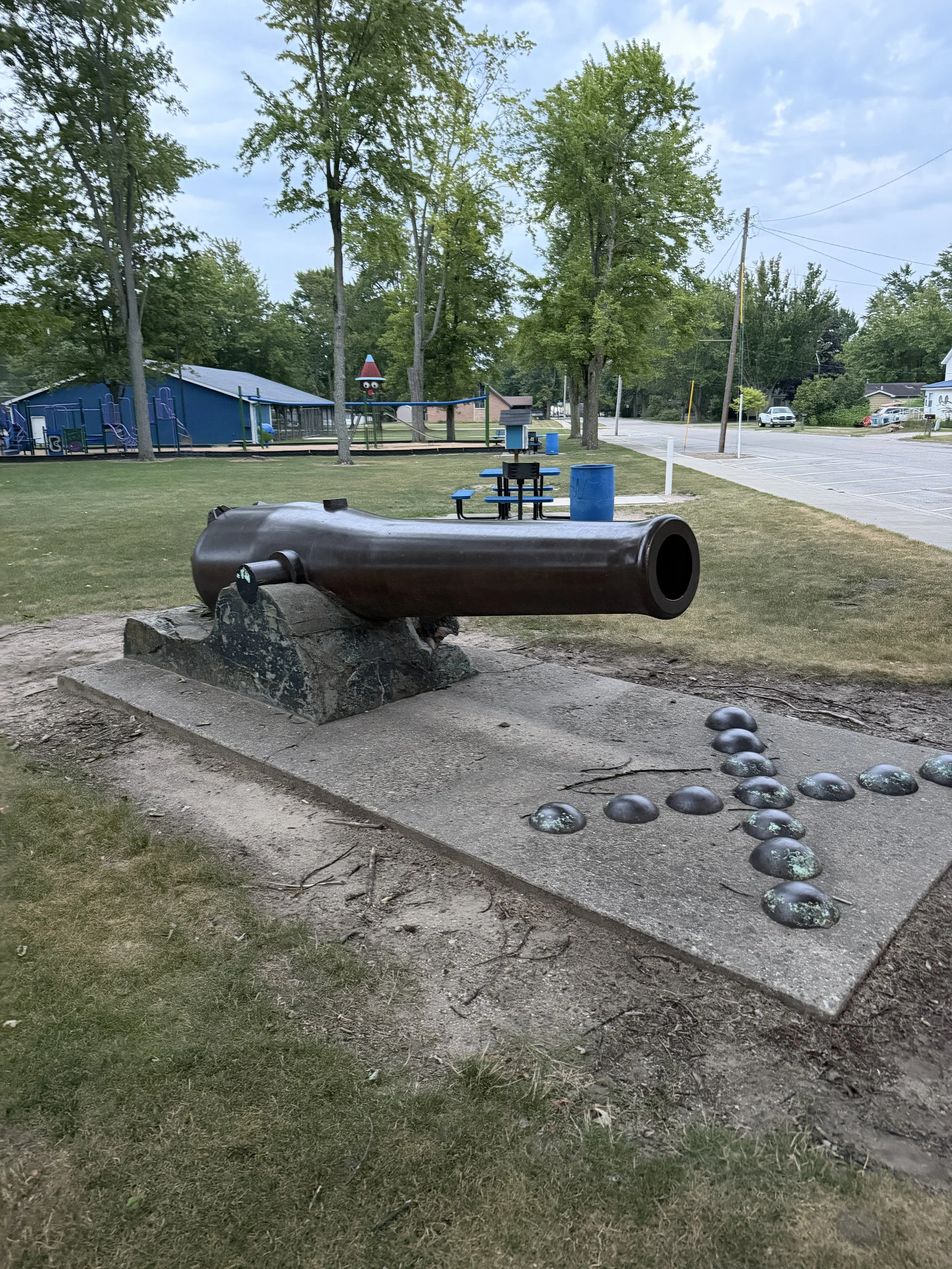
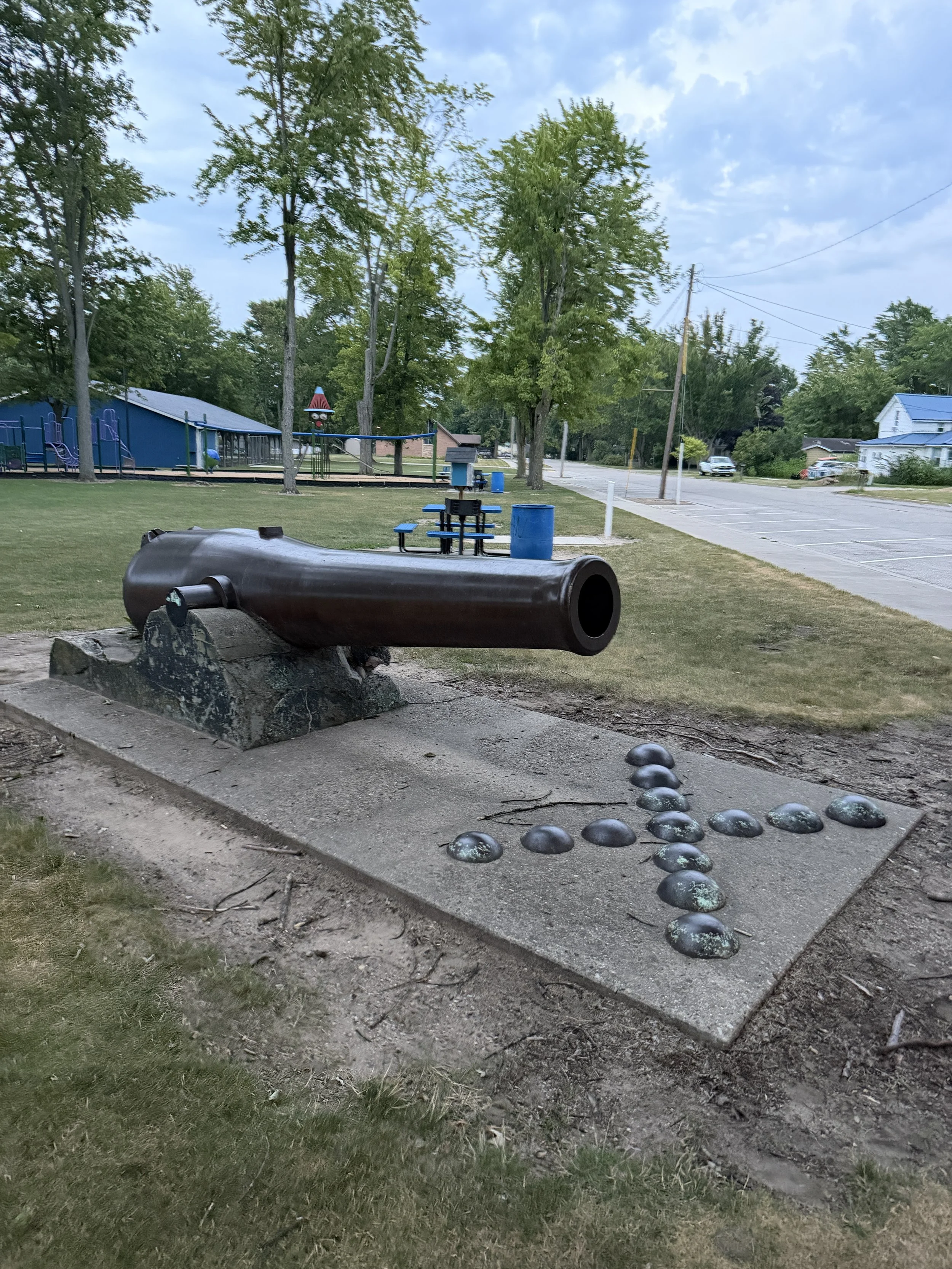
US Navy 9-Inch Dahlgren Number 698 is displayed in Coleman, Michigan
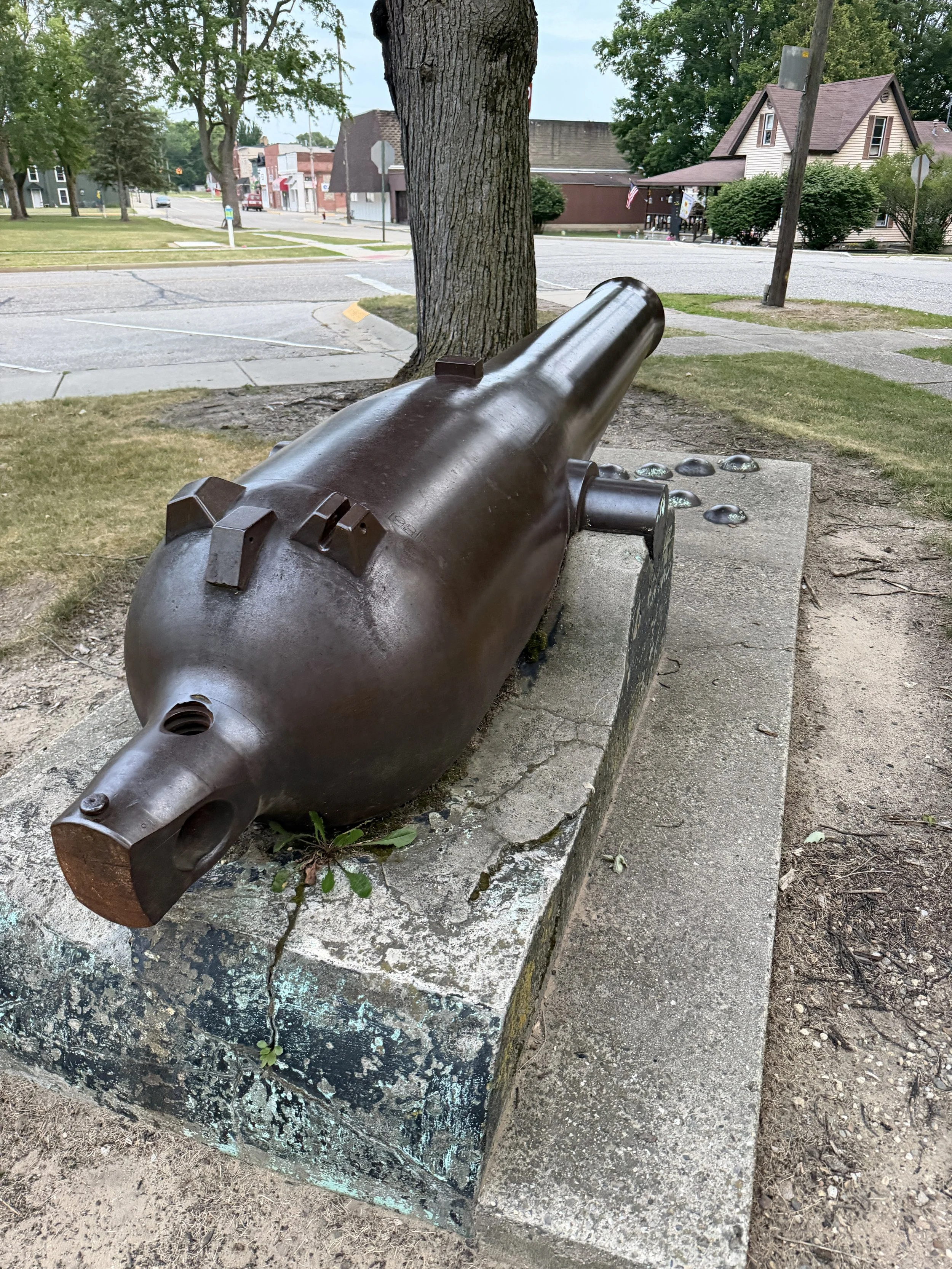
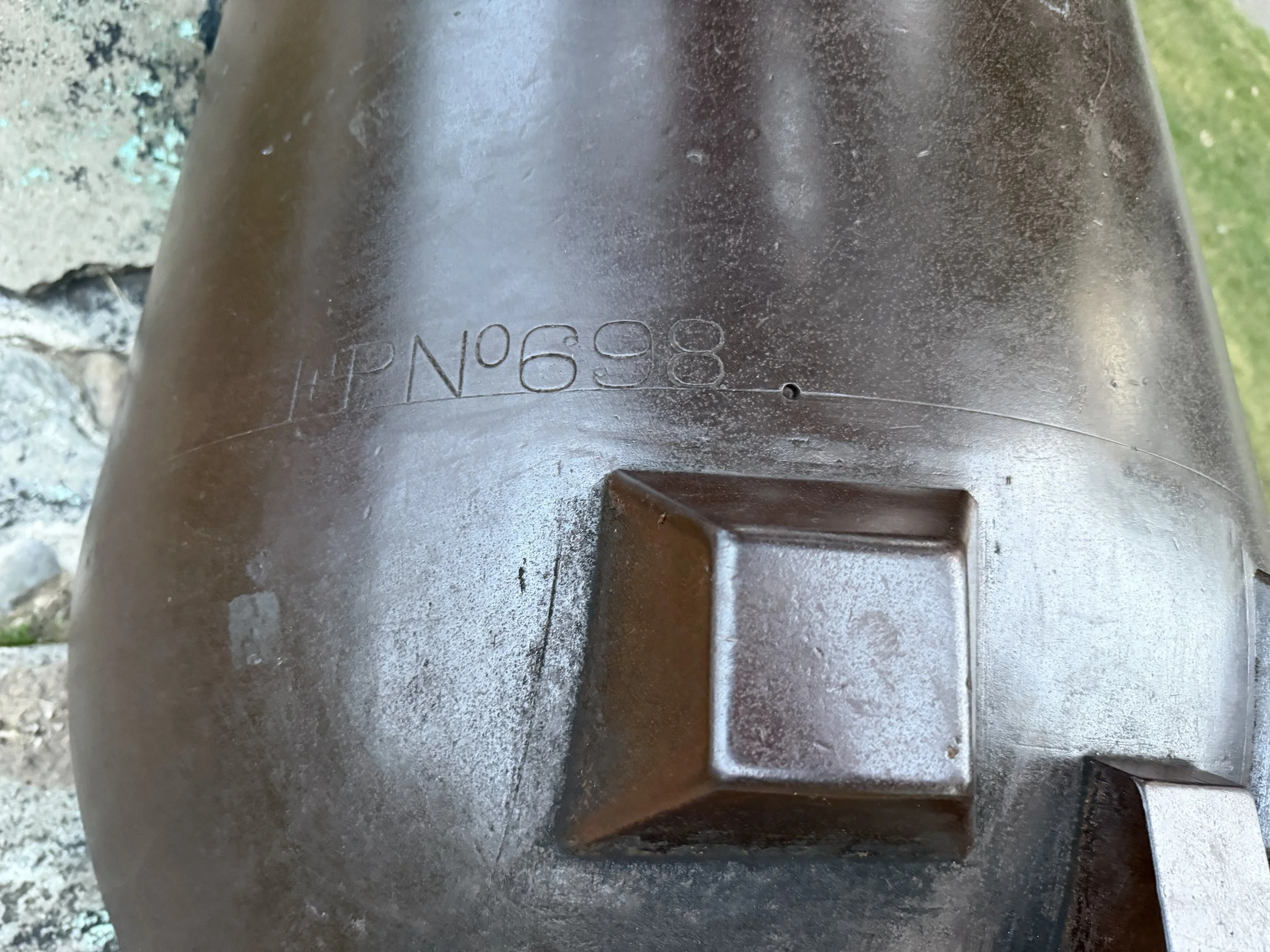
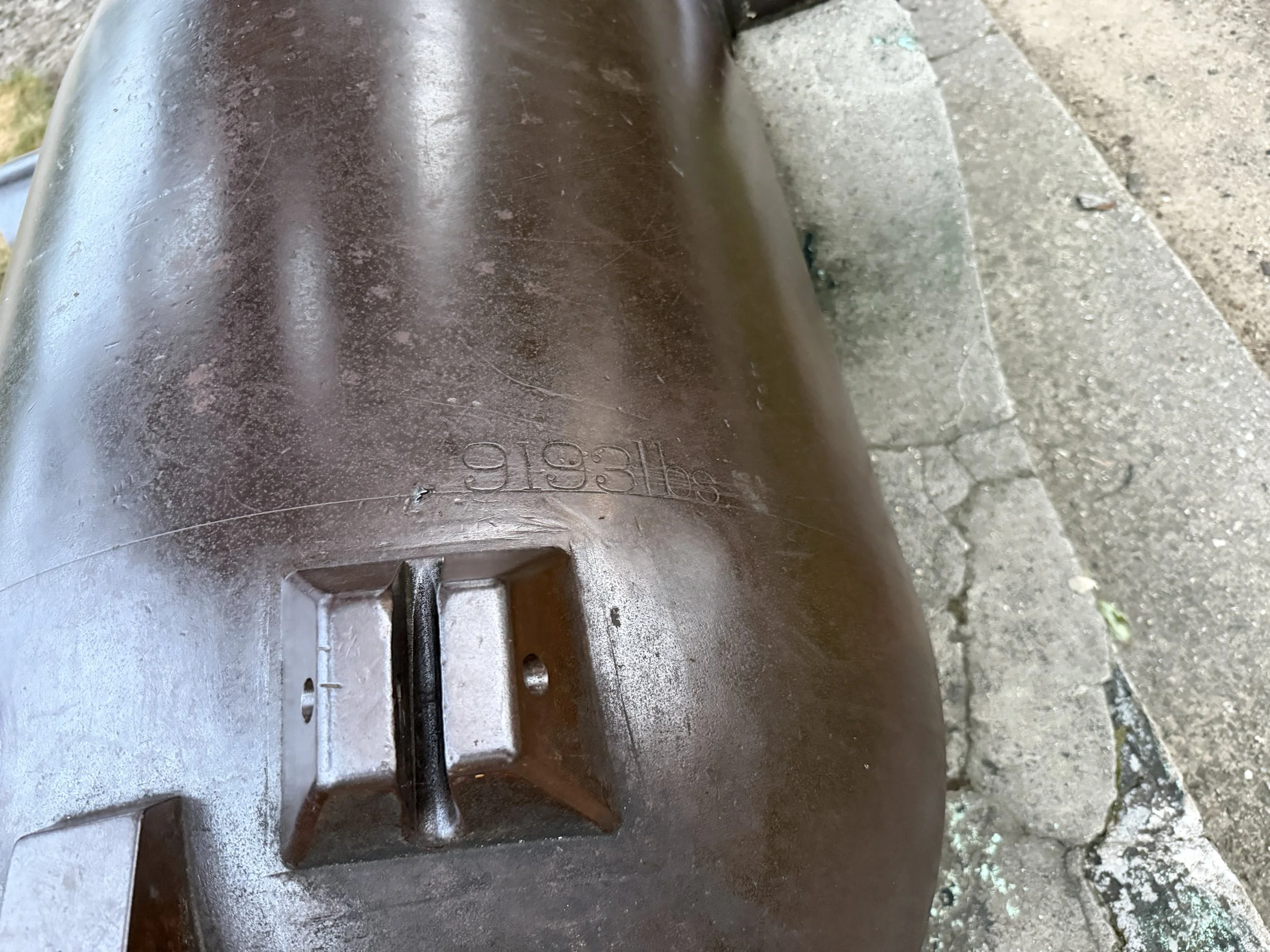
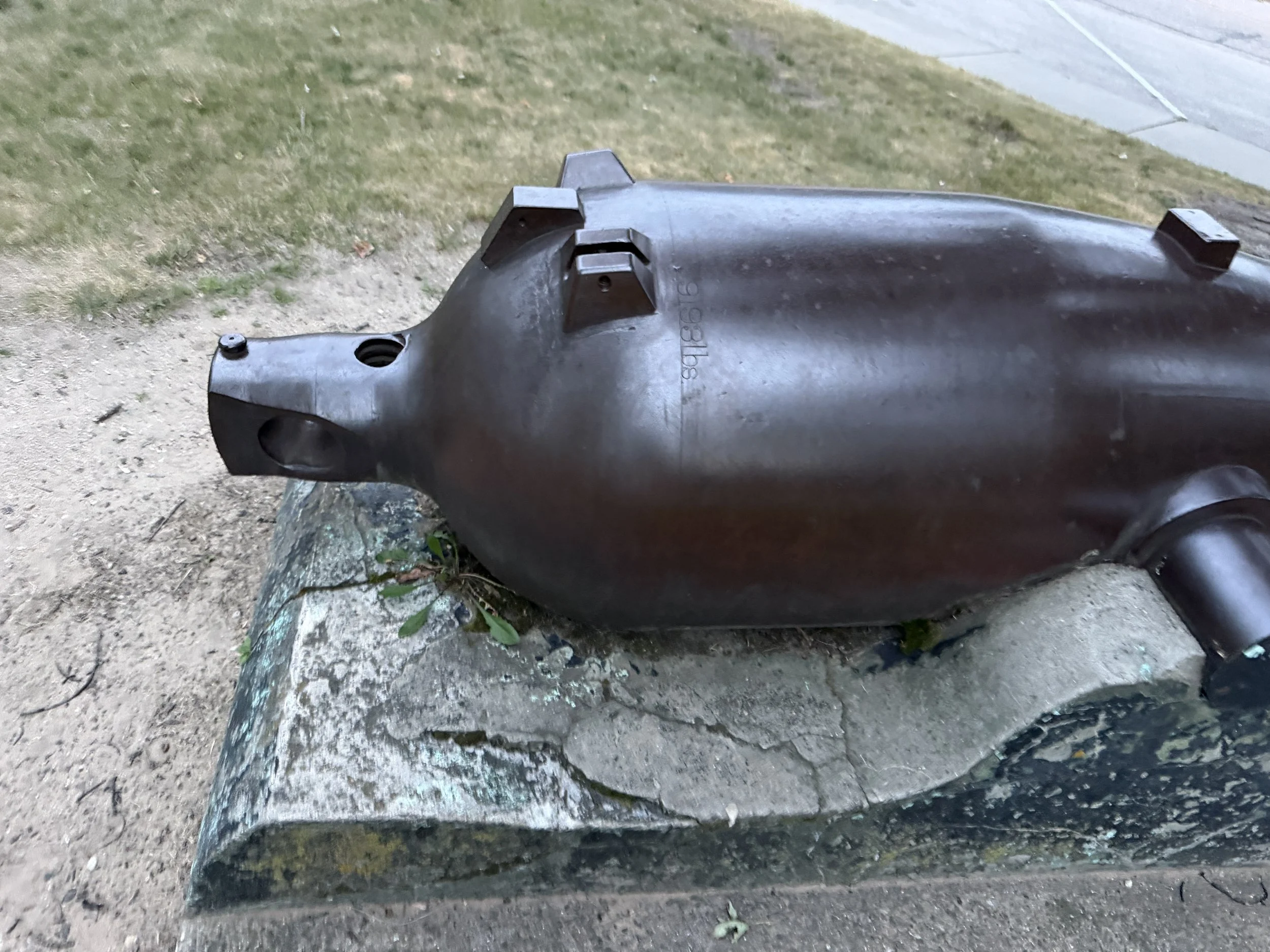
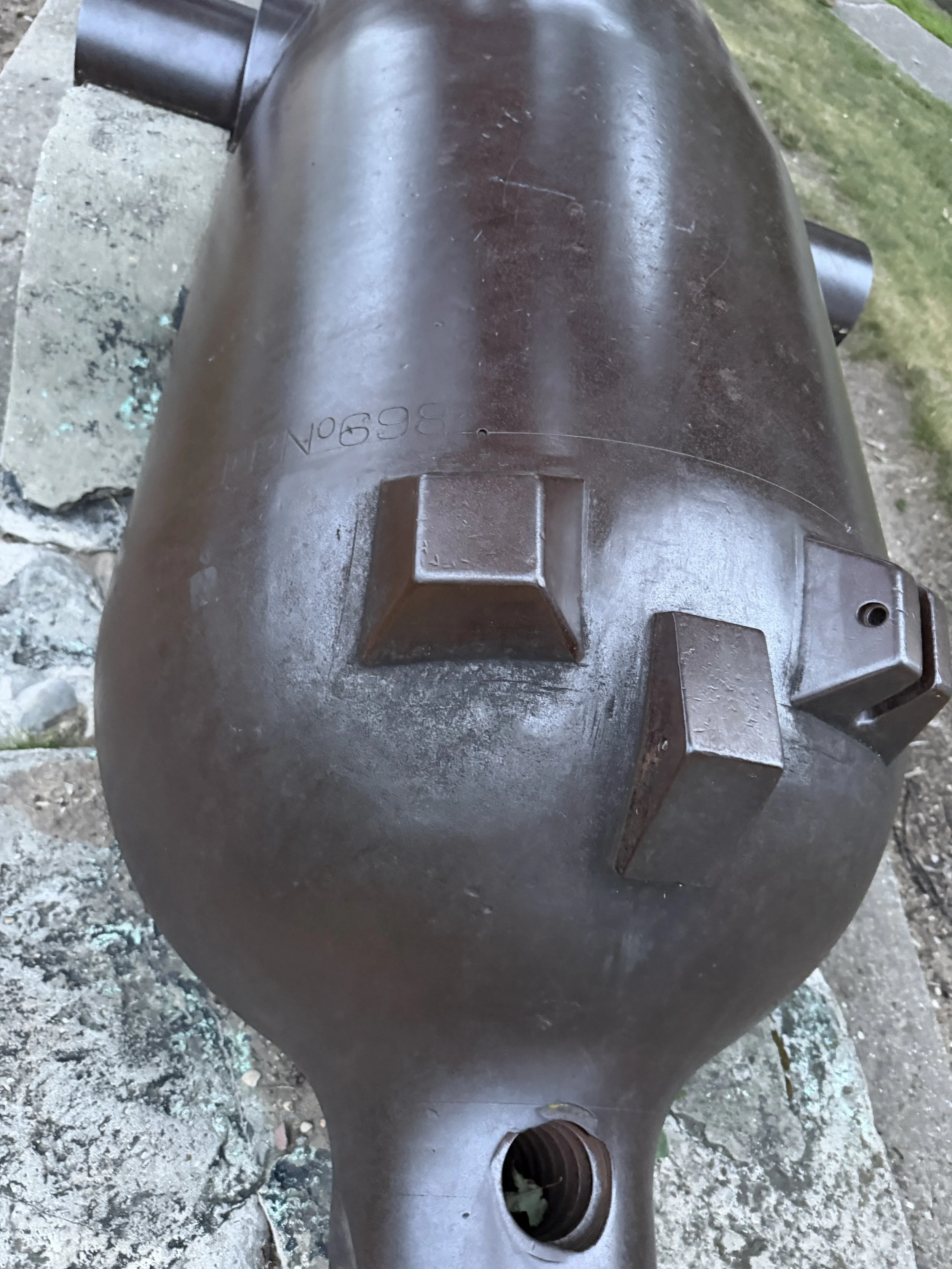
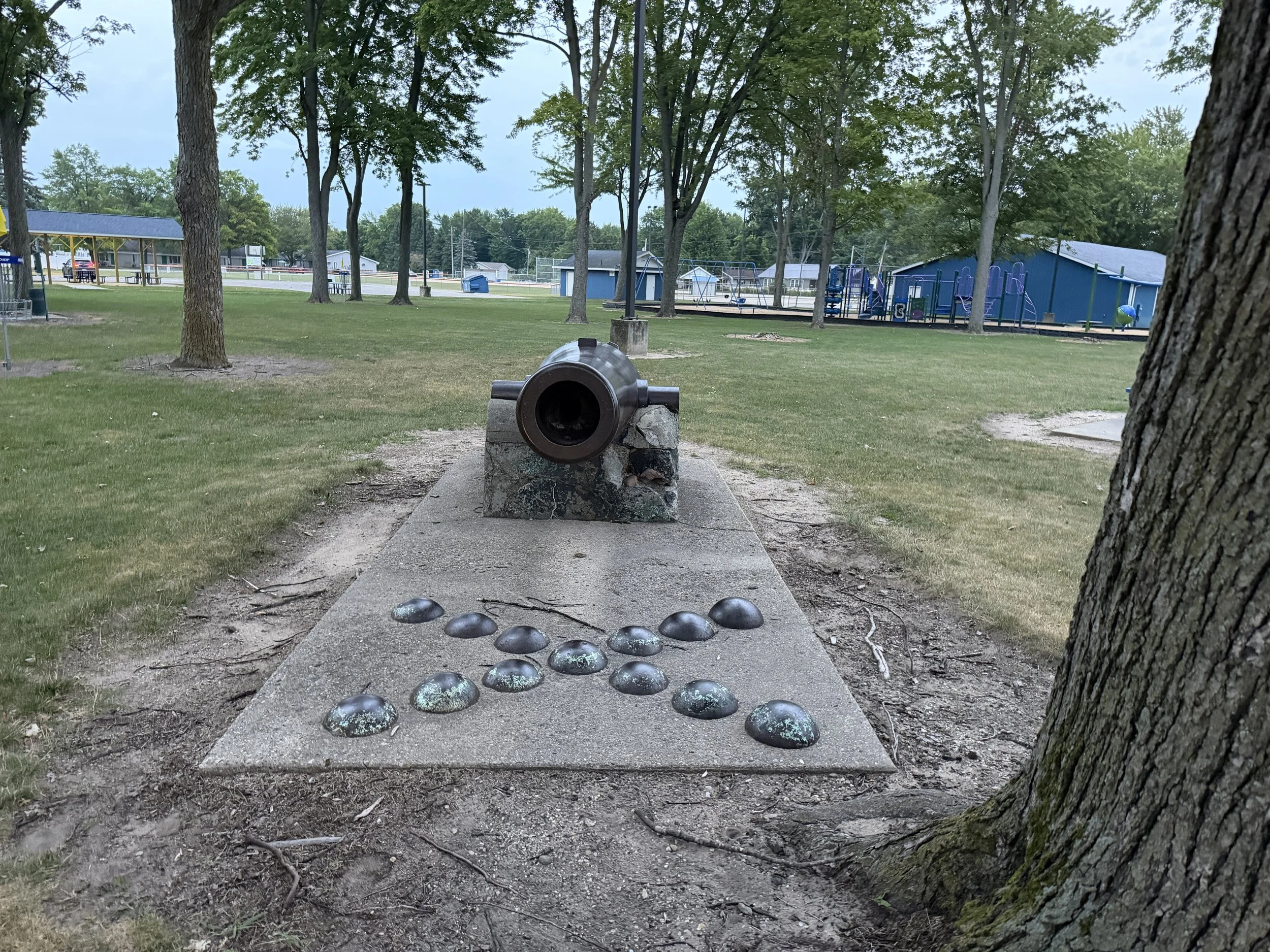
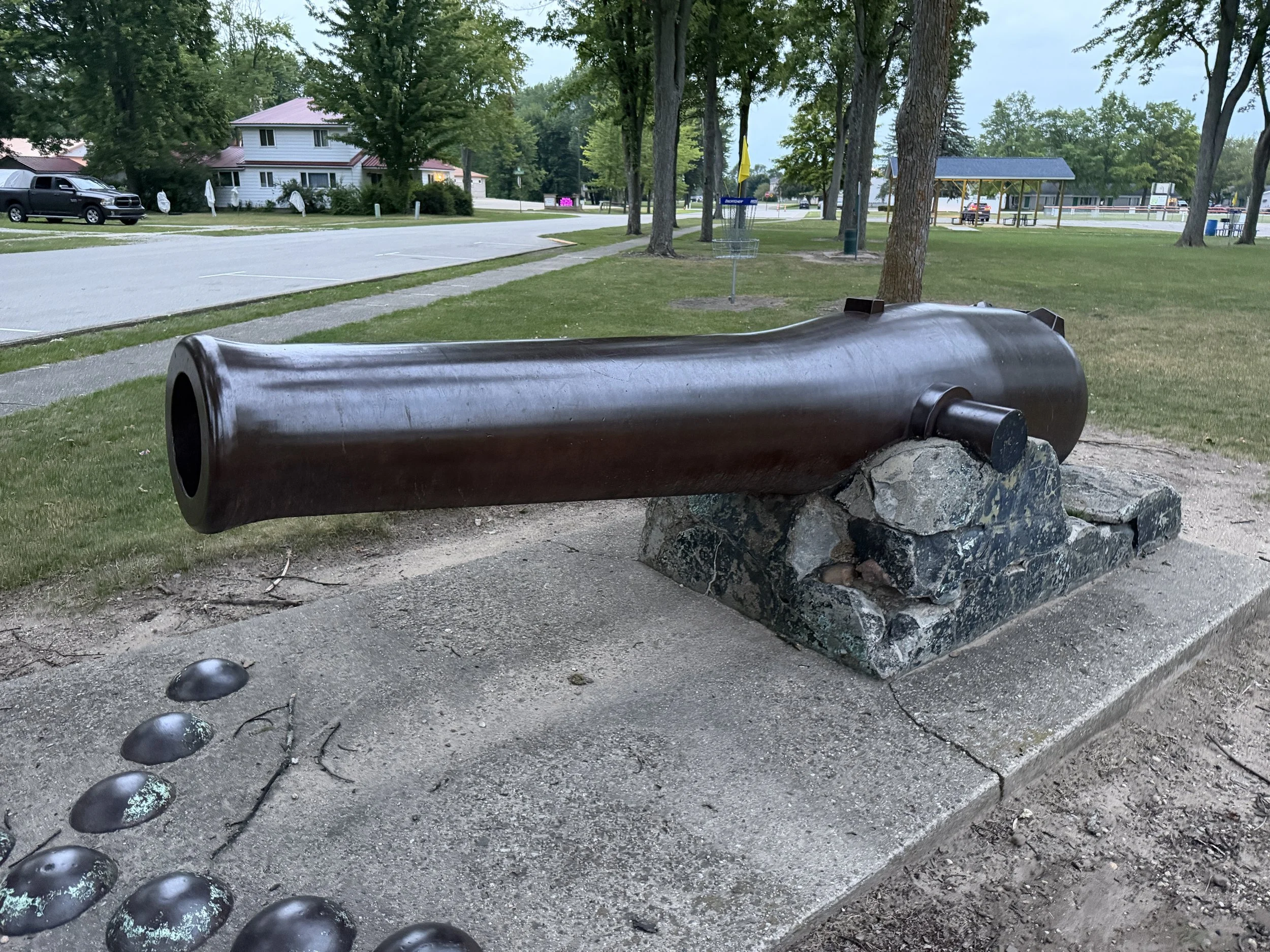
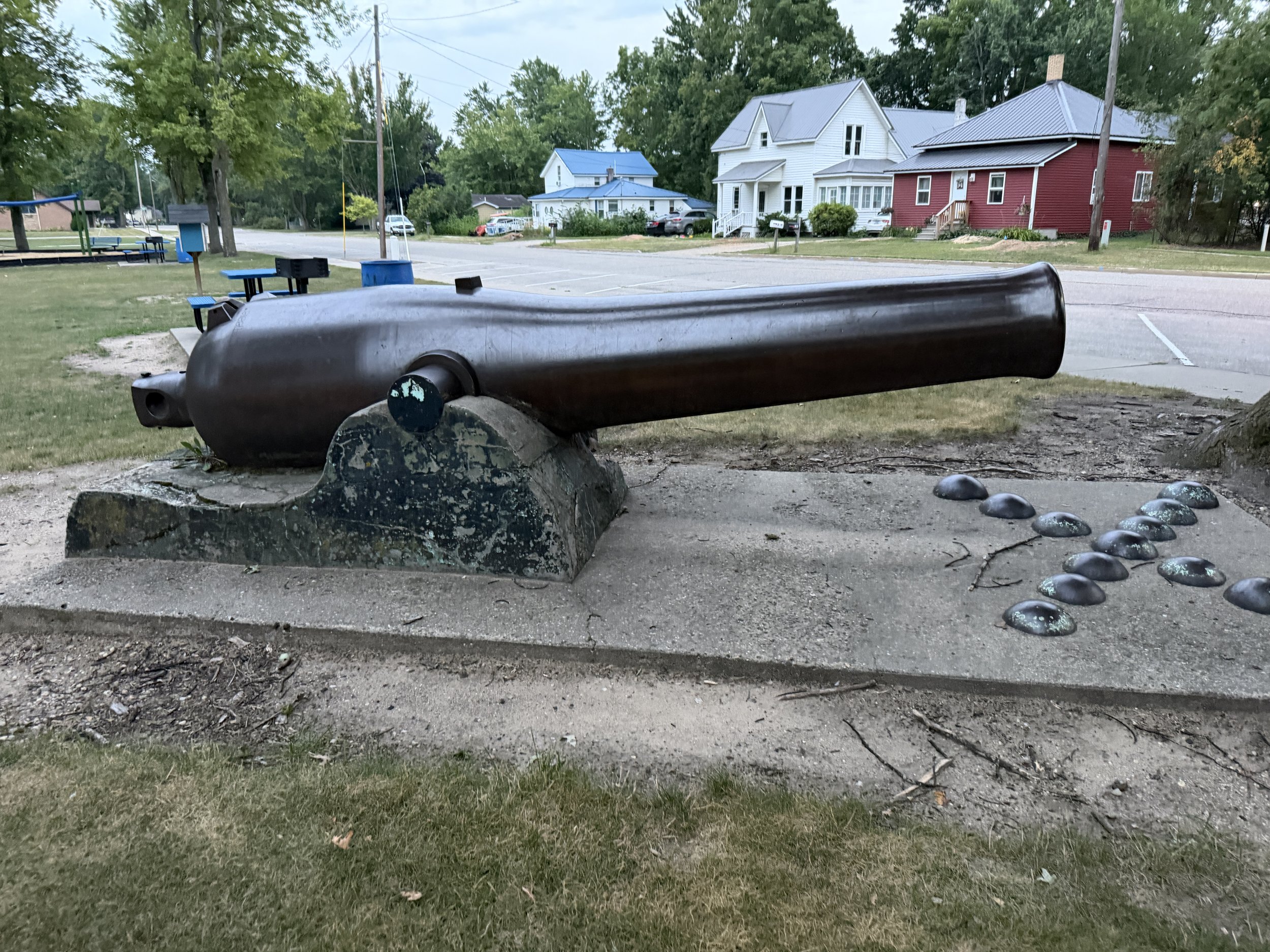
US Navy 9-Inch Dahlgren Number 698 is displayed in Coleman, Michigan. Number 698 was manufactured at Fort Pitt Foundry in 1863. As manufactured it weighed 9,193 pounds. Number 698 was one of twenty 9-Inch Dahlgrens sent to the navy yard at Sackets Harbor, New York in the summer of 1864. It saw no service afloat and Bureau of Ordnance records state that it was sent to “Mr. John P. Lee, City of Midland, Michigan” on August 5th, 1909. Midland is twenty miles from where the gun is displayed in Coleman.
Number 698 is displayed on a concrete pedestal on a concrete slab. Spherical projectiles of an unknown caliber are embedded in the slab. The park in which the Dahlgren sits has a disc golf course nicknamed the “Cannon Run”. Number 698 is near the target basket of the 5th hole.
The question of why twenty 9-Inch Dahlgrens were sent to the navy yard on Lake Ontario in 1864 intrigues me. I’ve written a long post on the guns of Sackets Harbor. The only ship “building” on the lake was the never completed War of 1812 ship of the line USS New Orleans which was still on the stocks under a ship house in the 1860s. Secretary of State William Seward proposed razeeing and converting New Orleans into a steam frigate in 1861 during a time of heightened tensions with the British Empire. Such an idea might not have been so far fetched as similar conversions were actually proposed by the Navy for its salt water ships of the line in 1860. My guess is that battery appropriate for such a ship was ordered to be sent to Sackets Harbor in 1861. However, it was not until 1864 when production of 9-Inch Dahlgrens caught up with demand and the Navy felt that it had enough on hand to send twenty to be stored at Sackets Harbor.
The Type: The 9-Inch Dahlgren could fire either a solid round shot weighing about 90 pounds or an explosive shell weighing around 73 pounds. The shell, a spherical projectile cast with a hollow core for filling with three pounds of gunpowder, was designed to imbed itself in the side of a wooden ship before exploding. Few wooden ships could survive the damage caused by more than a handful of such hits. The 9-Inch Dahlgren was the standard heavy broadside cannon aboard the heavy frigates and sloops of the US Navy during the American Civil War.
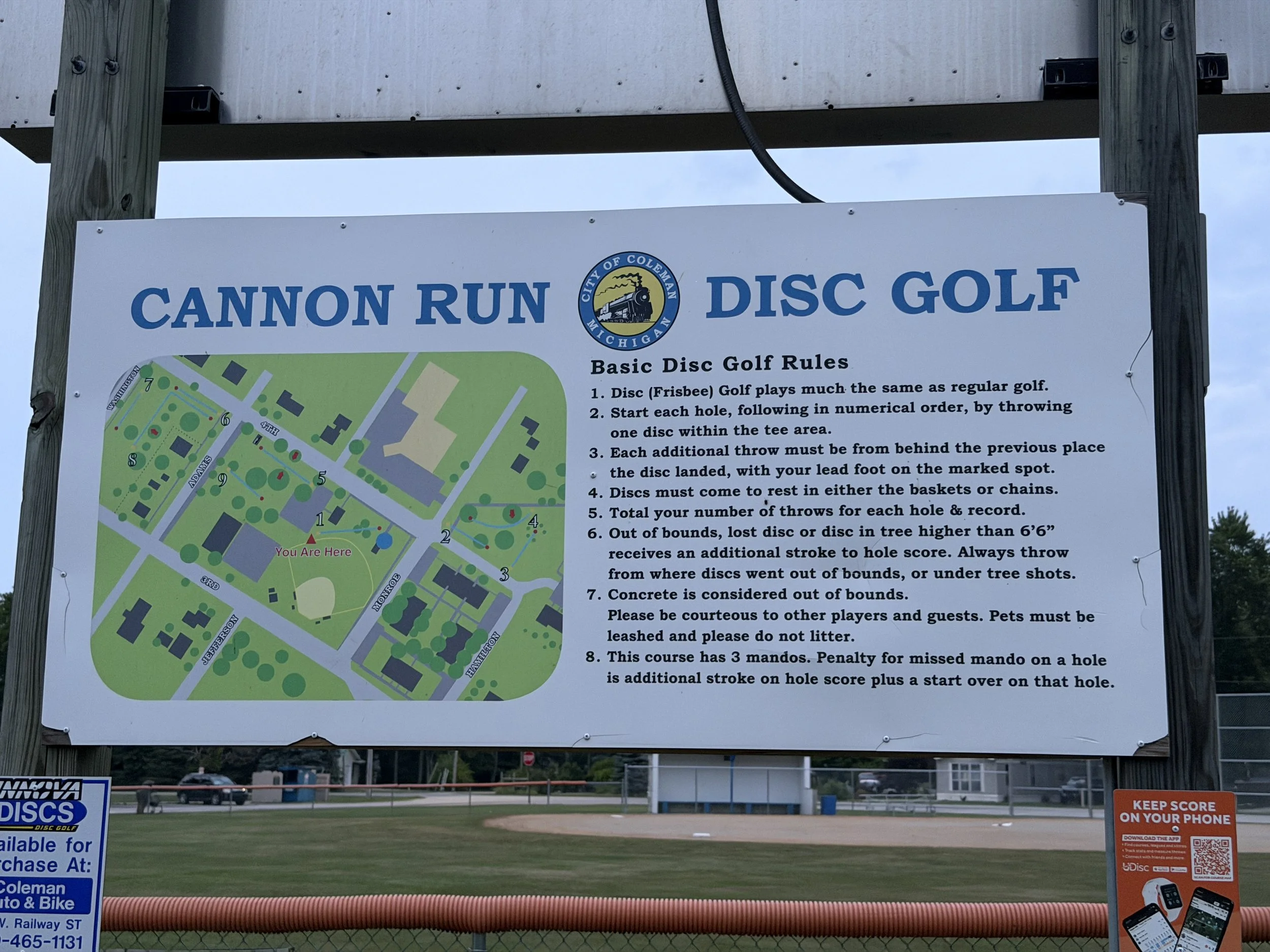
“Cannon Run” Disc Golf rules sign at Coleman Park.