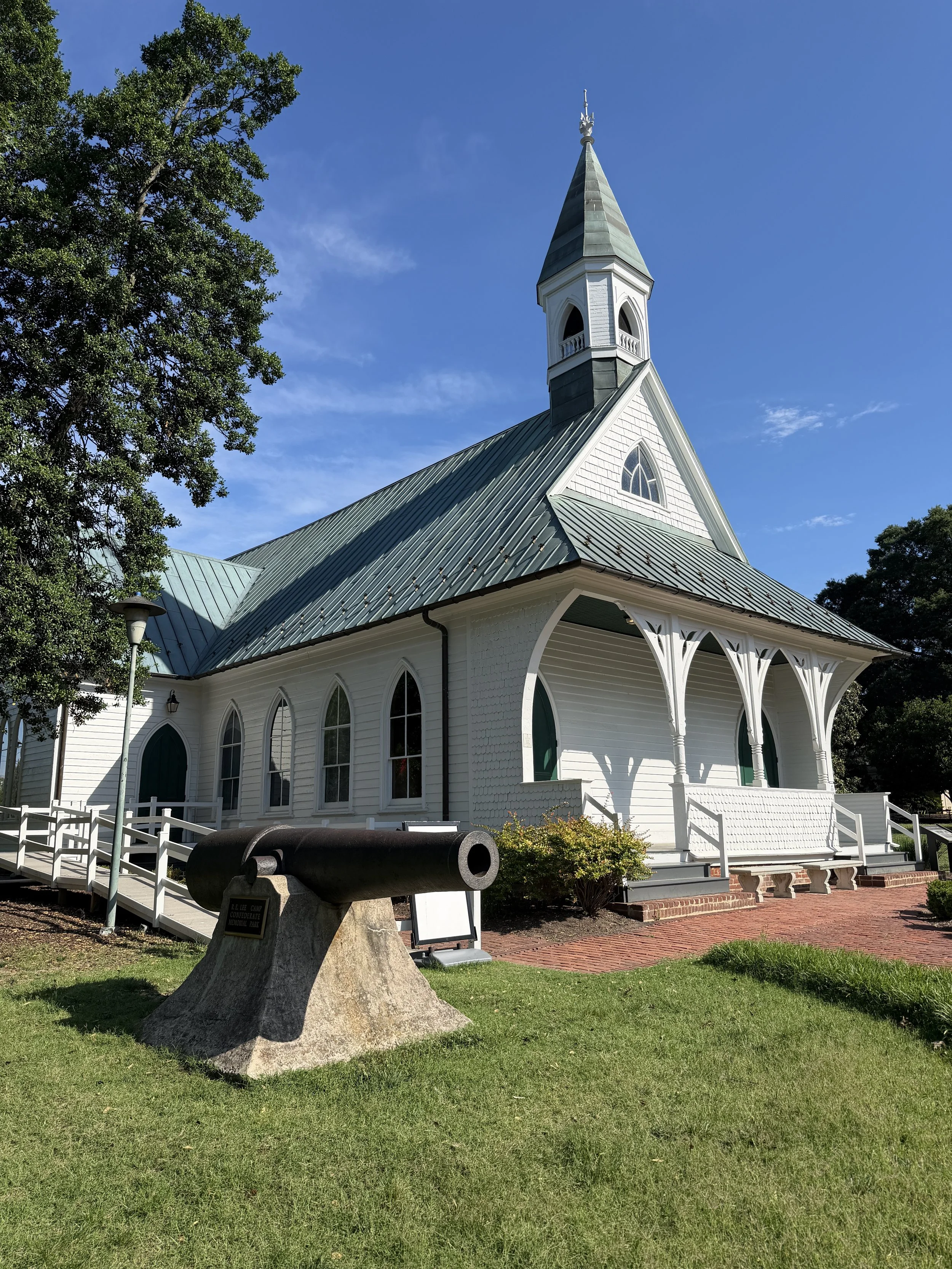
US Army 42-Pounder, Pattern 1845, in Richmond, Virginia
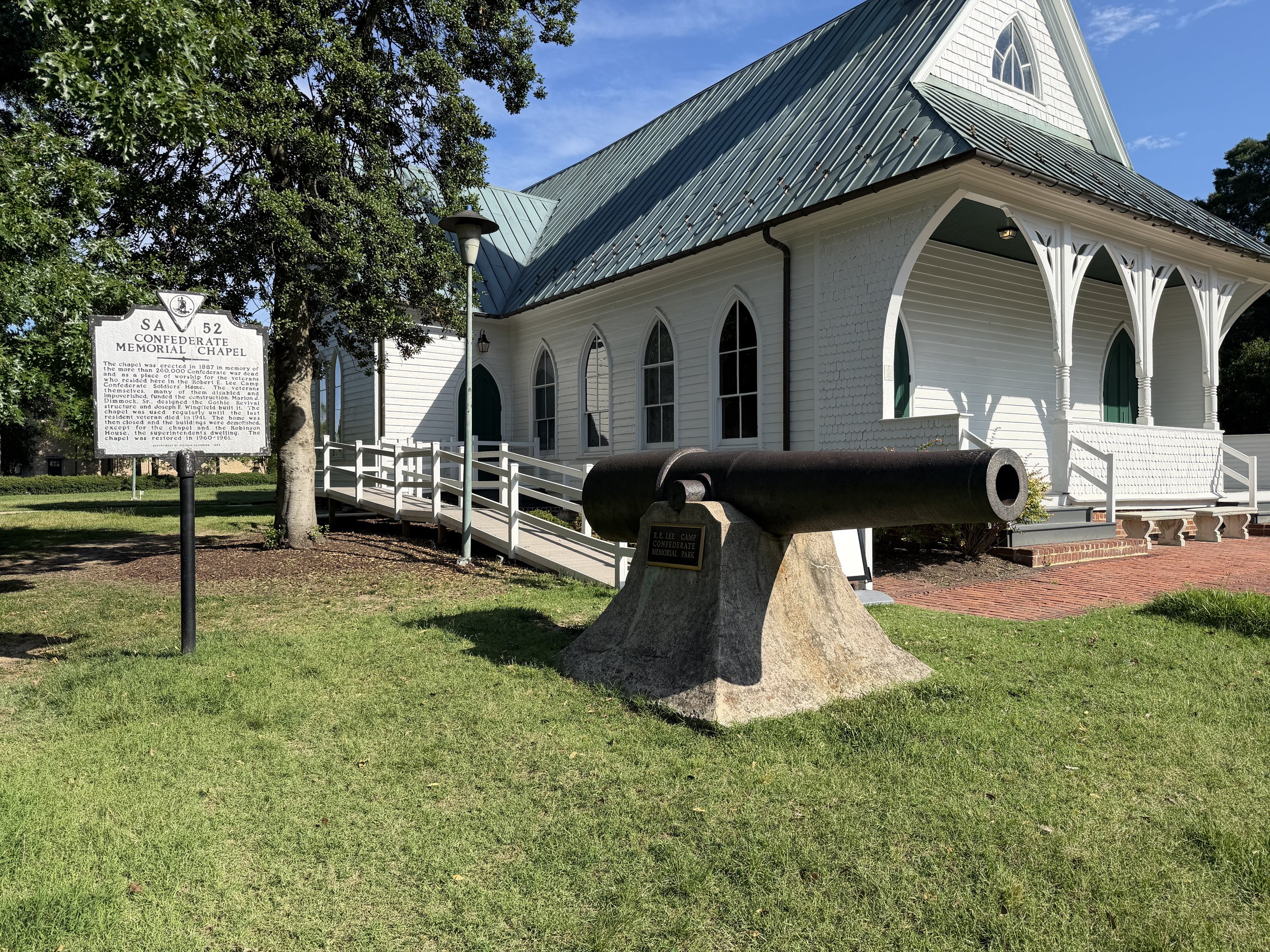
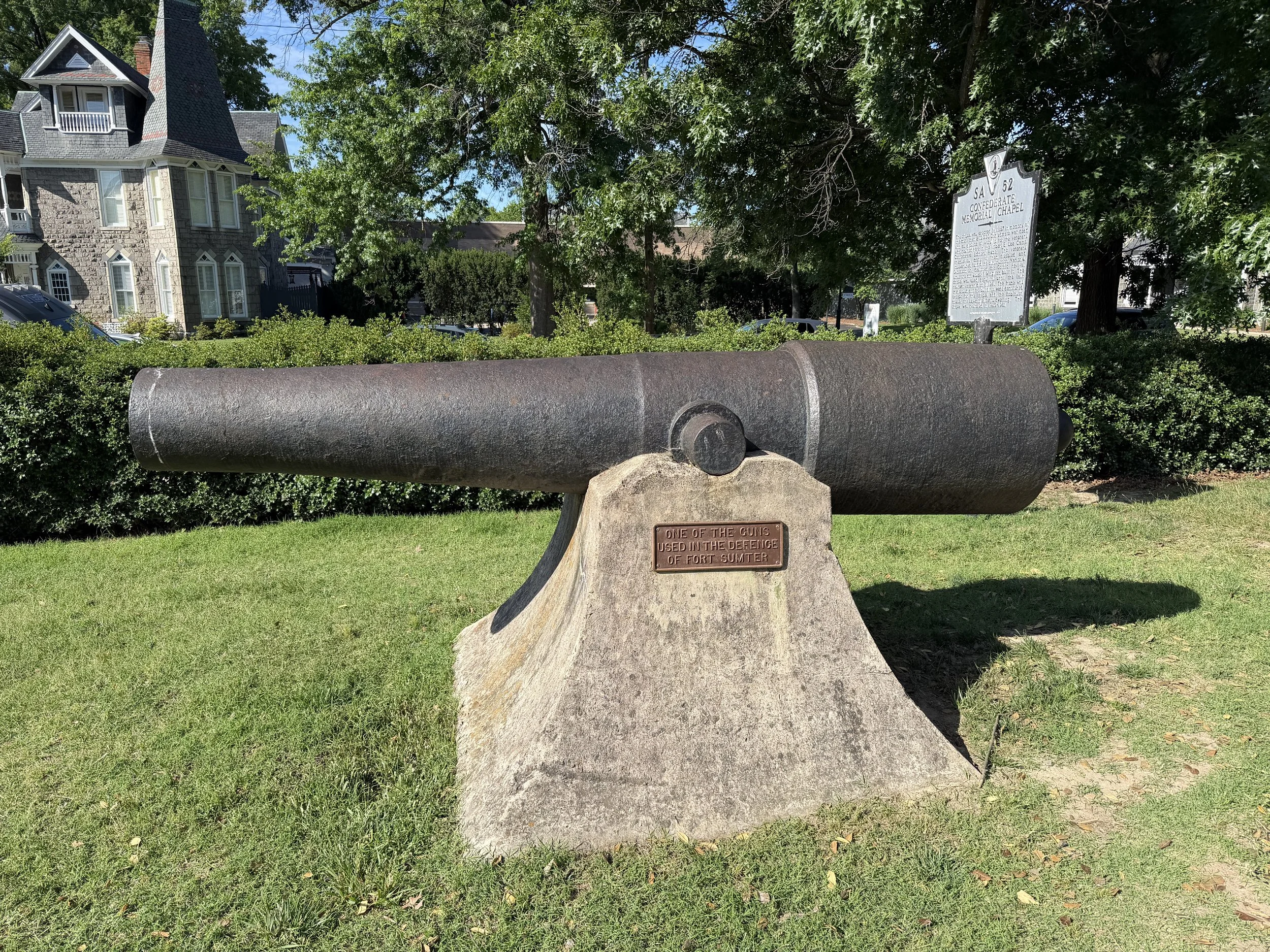
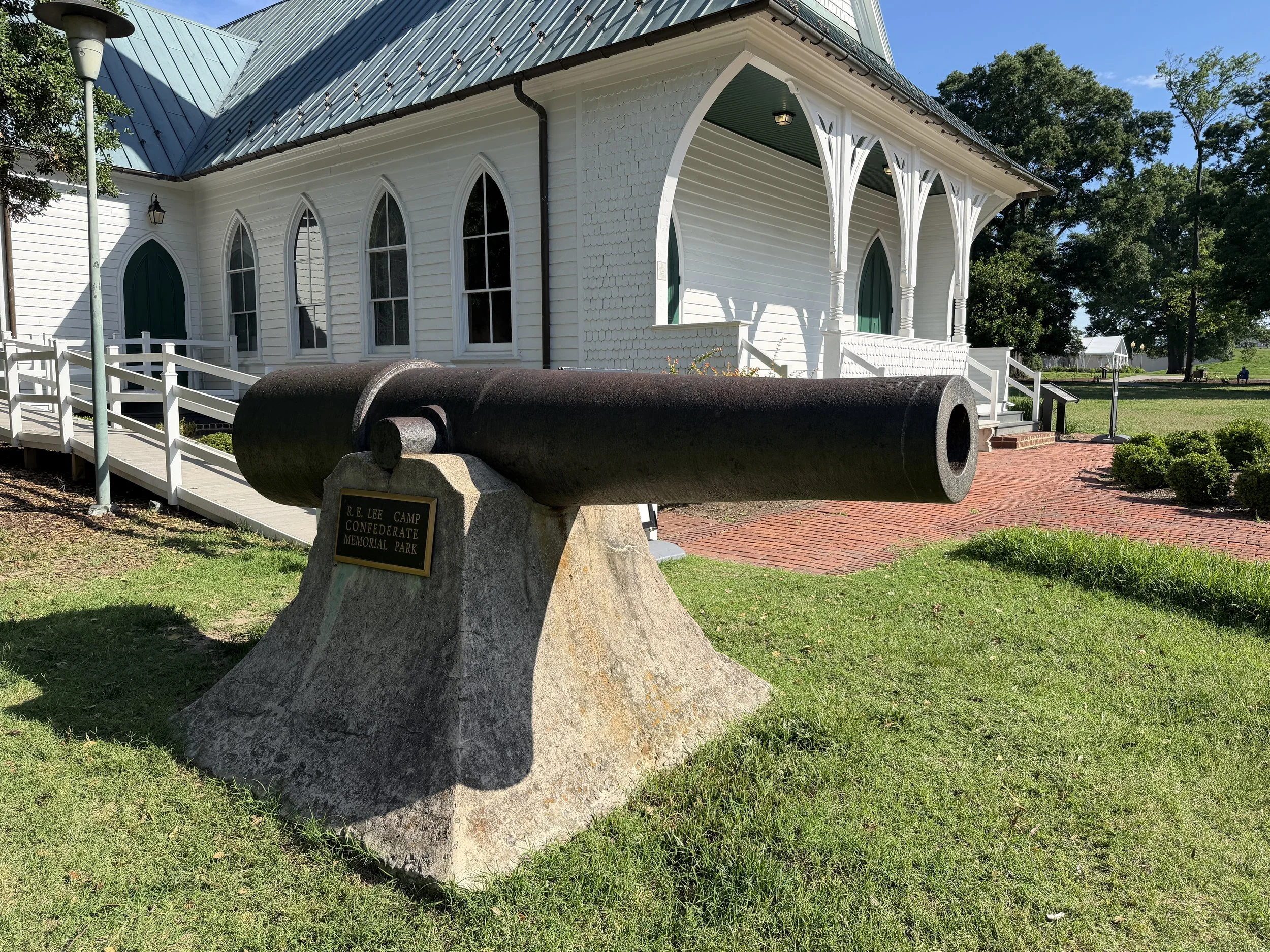
A US Army 42-Pounder, Pattern 1845, which was banded and rifled by the Confederates is displayed in front of the Confederate Memorial Chapel in Richmond, Virginia
A US Army 42-Pounder, Pattern 1845, which was banded and rifled by the Confederates is displayed in front of the Confederate Memorial Chapel in Richmond, Virginia. The 42-Pounder was intended for seacoast fortifications. By the 1850s the 42-Pounder (7-Inch bore, 8,500-pound barrel weight) was being supplemented and eventually supplanted by the 8-Inch Columbiad (around 9,000 pound barrel weight). The 42-Pounder now in Richmond was manufactured by the West Point Foundry in Cold Spring, New York in 1856.
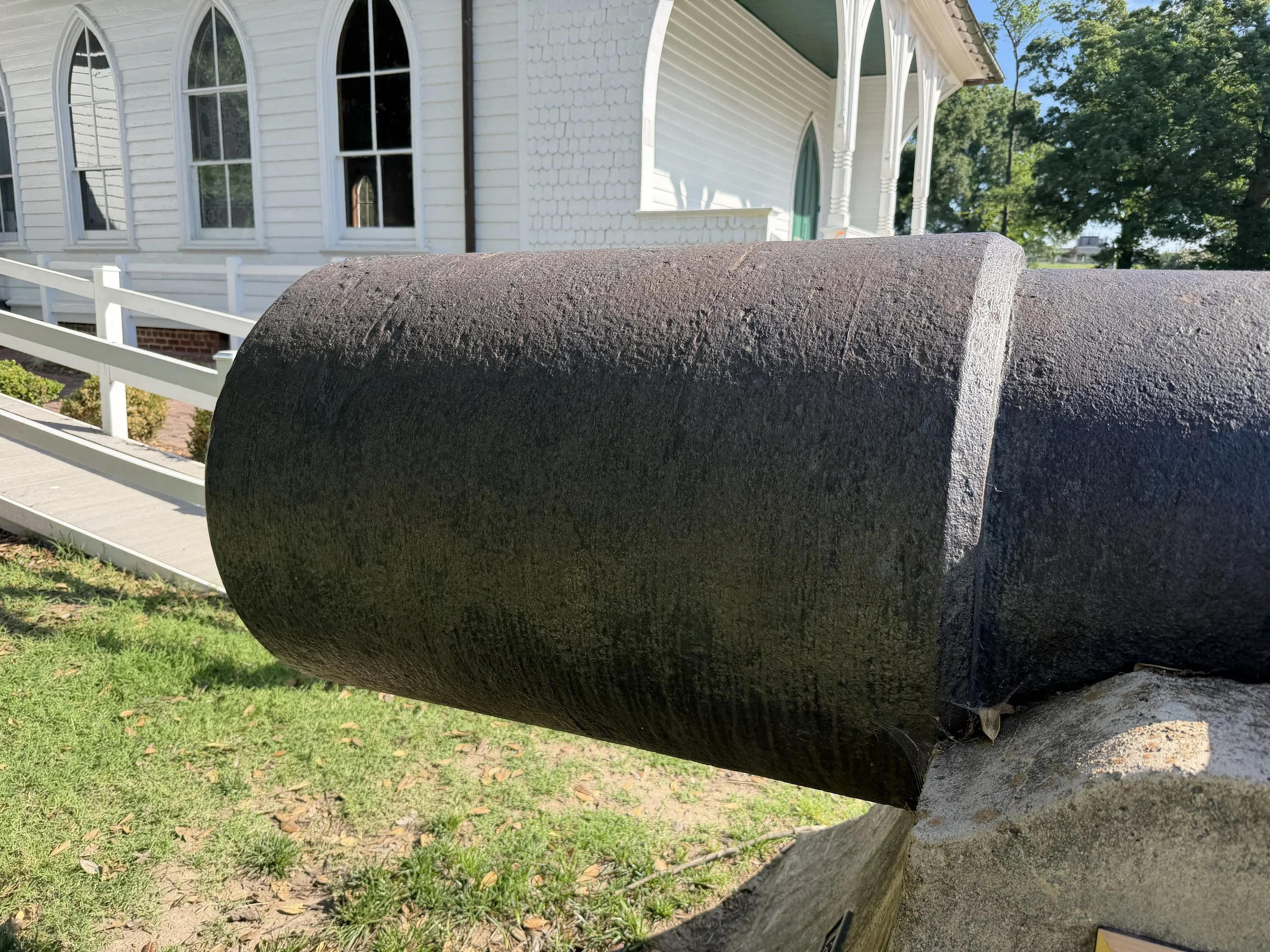
All that can be said with certainty of this gun is that it was banded, rifled, and turned on a lathe to remove its muzzle swell by the Confederates and was present at Fort Sumter at the end of the Civil War. Mike Ryan’s excellent paper on the “Historic Guns of Forts Sumter and Moultrie” states that the gun had been dumped into the shallow waters surrounding the fort at some point in the 19th Century. It was uncovered by a hurricane in 1911 and sent to Richmond in 1912.
What can be said of the gun’s Civil War service? Was it at Fort Sumter at the start of the war? Why was it banded and rifled? Why was its muzzle swell turned off?
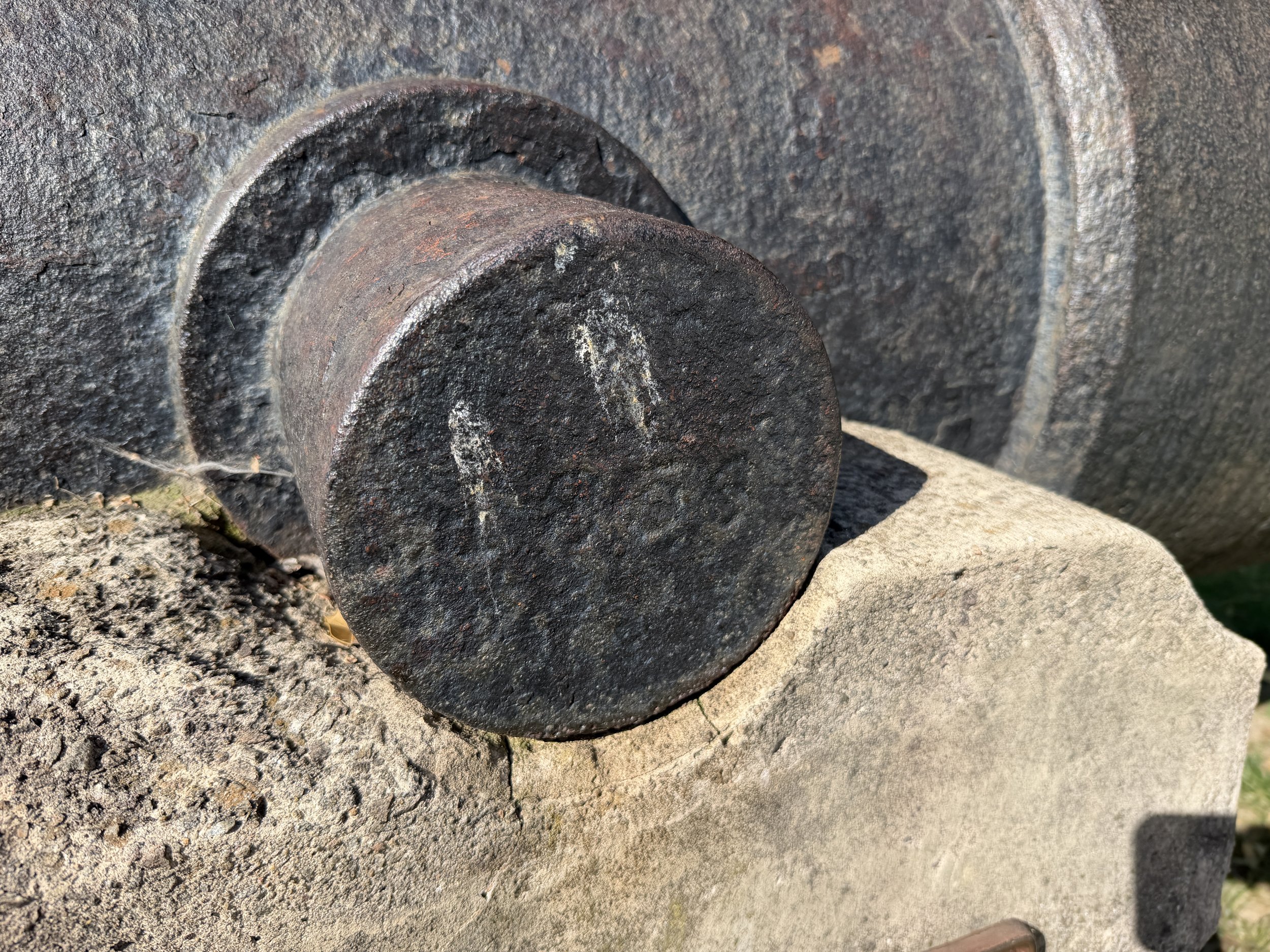
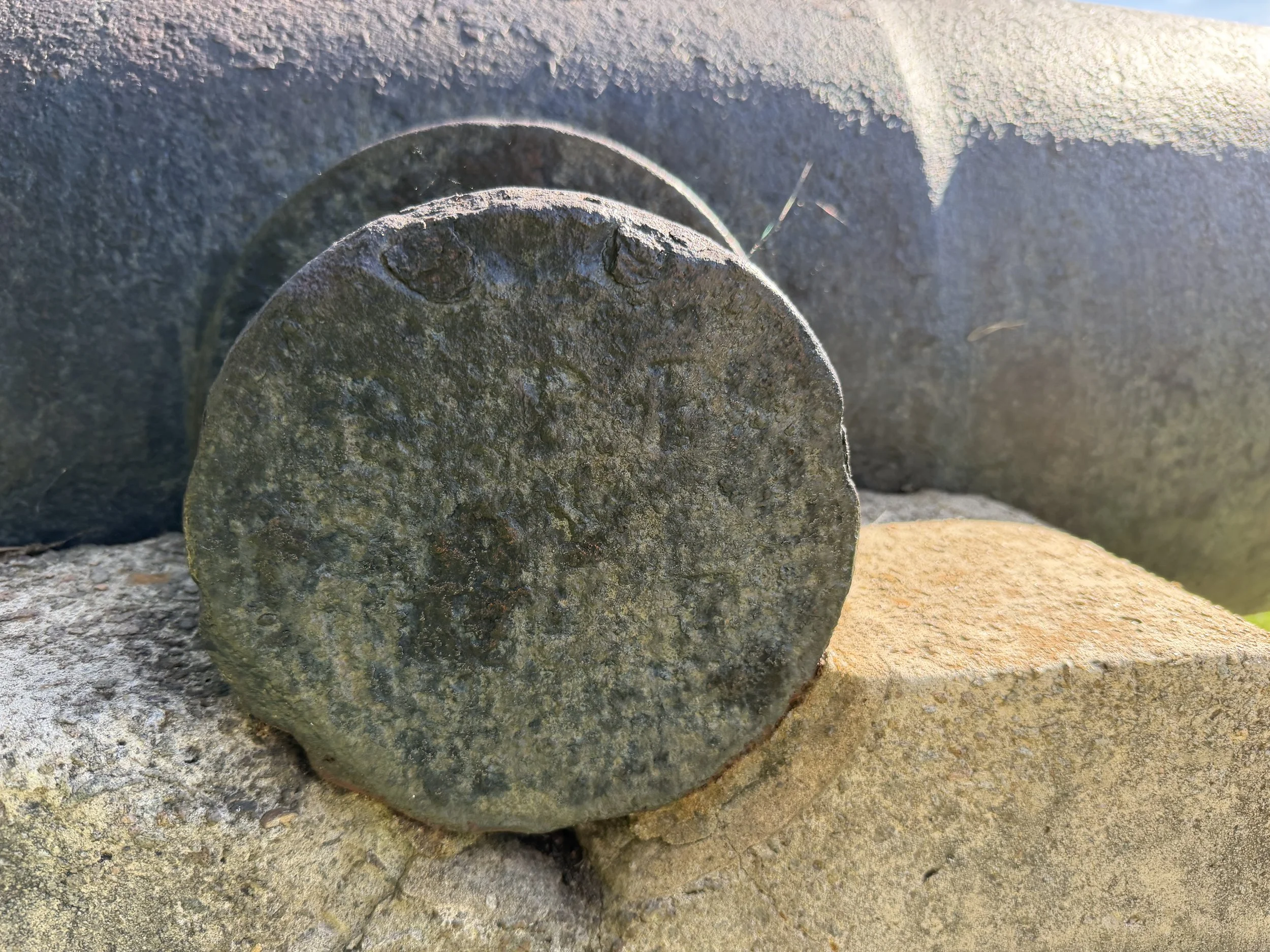
While it is certainly possible that it was at Fort Sumter at the start of the war, it may have been in any of the forts seized by the southern states. I think that I see the marking of “J.M. Eason & Bro.” on the rear of the wrought iron reinforcing band added when the gun was rifled. If the conversion was done at that Charleston shop, it would make it more likely that the gun was at Sumter or one of the other Charleston forts in 1861.
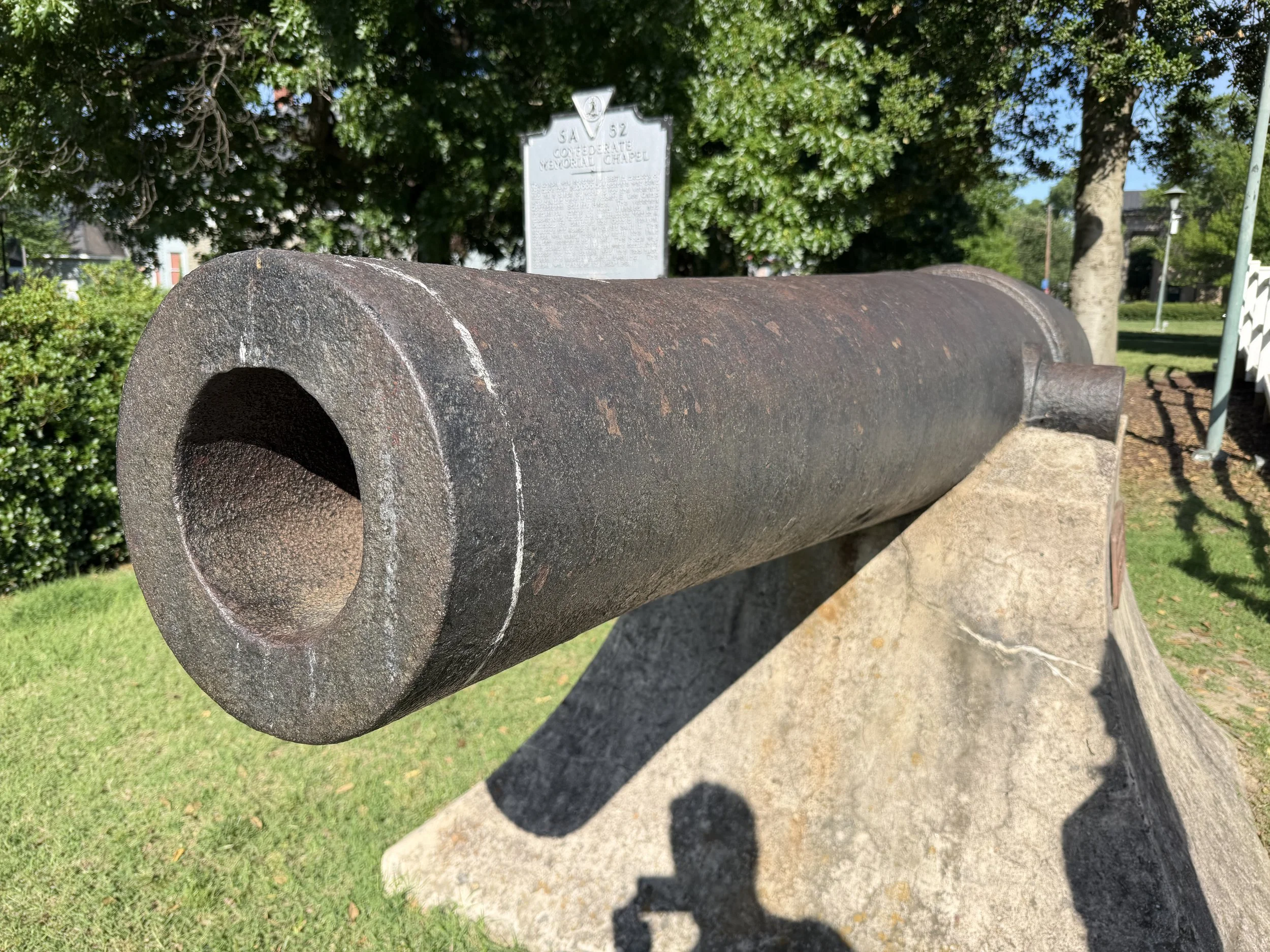
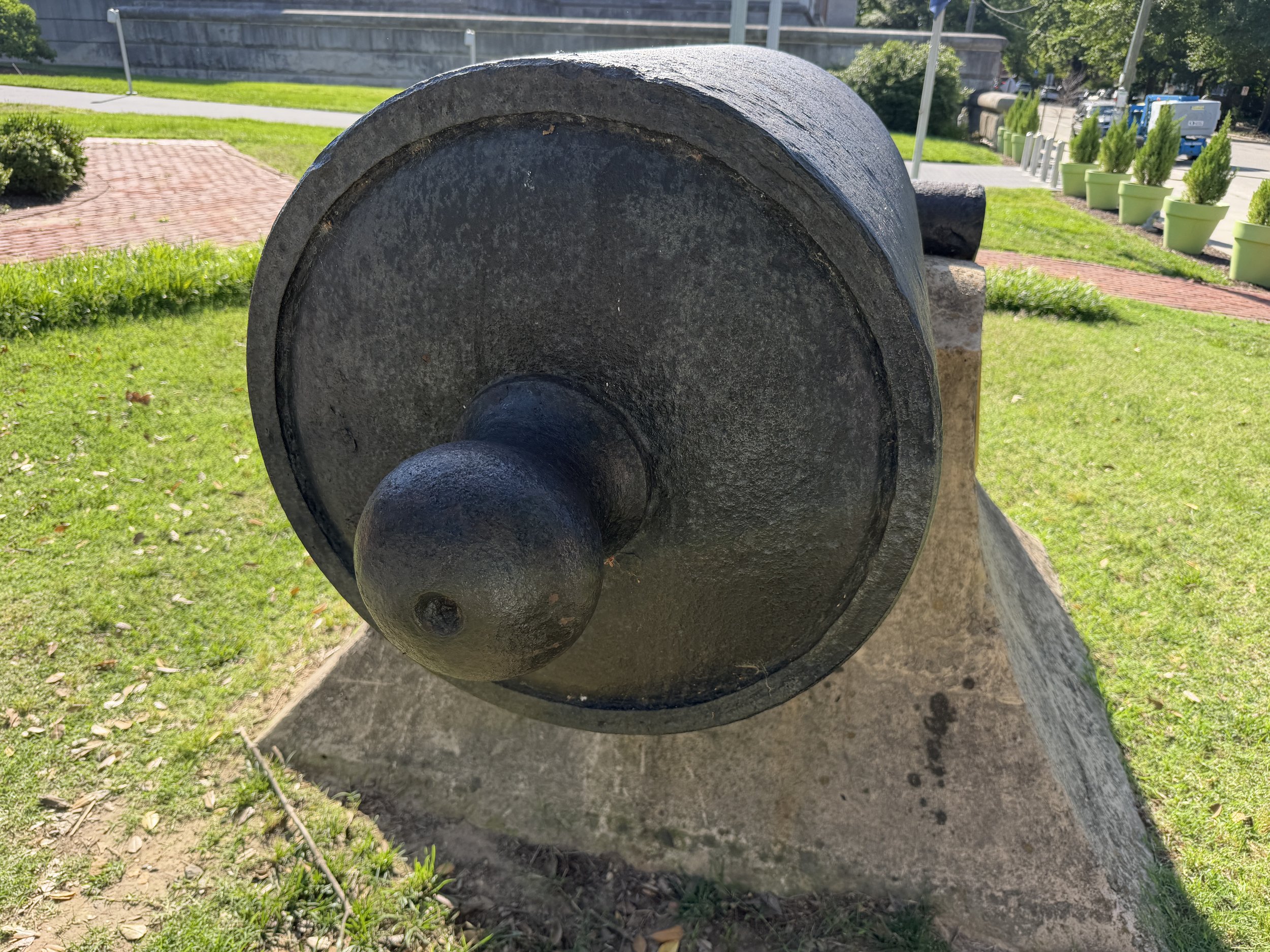
In the early war, 42-Pounders were a common gun to be rifled and in many case given a wrought iron reinforcing band over the breach. This turned the old smoothbore into a reasonably capable 7-Inch rifle. During the April 7th, 1863 battle with the US Navy, Fort Sumter’s barbette was armed with six rifled 42-Pounders, the most numerous single type in action at the fort.
This leaves the question of the removal of the muzzle swell. The Confederates did not place any gun on the lathe for aesthetic reasons. There was too much work to be done and industrial resources were far too limited. So, there must have been a practical reason to remove the swell. Mike Ryan speculated that the work may have been done to fit the gun aboard one of the ironclads of the Charleston squadron. The small gunports of an ironclad made a reduced diameter at the muzzle preferable. Ryan raised the possibility that the gun may have been aboard CSS Palmetto State for a time. Palmetto State’s armament is given implausibly in some sources as ten 7-Inch rifles - there is no way that so many heavy guns could be mounted in that ship’s casemate. However, it is possible that rifled 42-Pounders were a part of the ship’s armament. As General Beauregard was eager to divert the more capable Brookes manufactured for the Navy to the forts of Charleston, it can be imaged that a rifle 42-Pounder was offered in exchange. As the Double Banded 7-Inch Brooke fished out of the harbor in the 1920s at the wreck site of Palmetto State showed, the armament of these vessels changed throughout the war as needs dictated and supply allowed. All of this to say, I find the chance that the muzzle indicates a naval connection intriguing, but nothing in the above paragraph should be taken as anything but speculation.
Do you read “J.M. Eason and Bro”? Compare this gun in West Virginia: https://www.santee1821.net/preserved-artillery/confederate-42-pounder-in-kingwood-west-virginia
A US Army 42-Pounder, Pattern 1845, which was banded and rifled by the Confederates is displayed in front of the Confederate Memorial Chapel in Richmond, Virginia